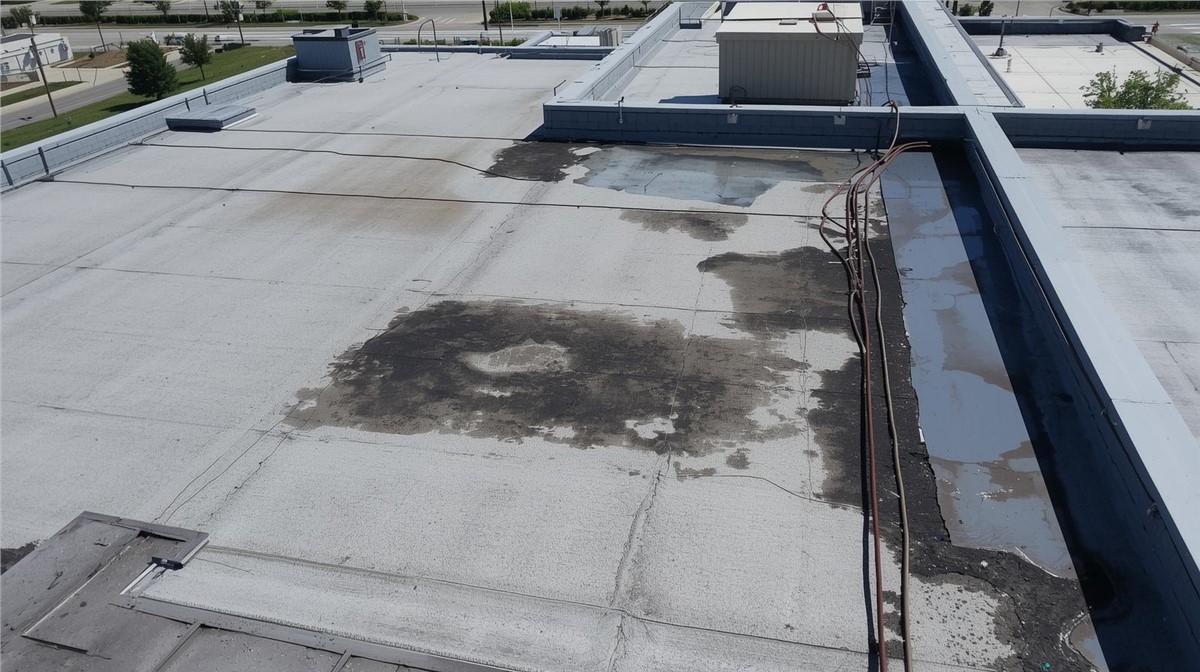
In Schaumburg, IL, the most common flat roof problems on commercial buildings are ponding water, membrane damage, flashing failures, seam separation, punctures around rooftop equipment, and drainage issues. These problems matter because flat and low-slope roofs are more vulnerable to water backup and leak spread than steeper systems, especially when drains, scuppers, or gutters are not working well. Schaumburg’s permit services page says commercial projects are handled through the village’s permit process, so contractors should verify the exact permit path before starting roof repair work.
Why This Matters in Schaumburg, IL
For commercial buildings, a flat roof leak rarely stays a small problem for long. Once water gets past the membrane, it can affect insulation, decking, interior finishes, equipment, and tenant spaces. Current flat-roof repair guidance consistently identifies drainage failure and ponding water as leading causes of commercial leaks, and flashing or seam problems are also common entry points.
This matters even more in northern Illinois, where rain, snowmelt, and freeze-thaw cycles can put extra stress on low-slope roofs. Standing water and blocked drains can speed up membrane wear and increase the chance of water intrusion after storms or seasonal temperature swings.
Common Flat Roof Problems for Commercial Buildings
Ponding Water
Ponding water is one of the biggest flat-roof issues. When water sits on the roof instead of draining properly, it adds weight, stresses seams, weakens the membrane, and increases the chance of leaks. Recent commercial flat-roof guidance identifies poor drainage and standing water as some of the most frequent repair triggers.
Membrane Damage
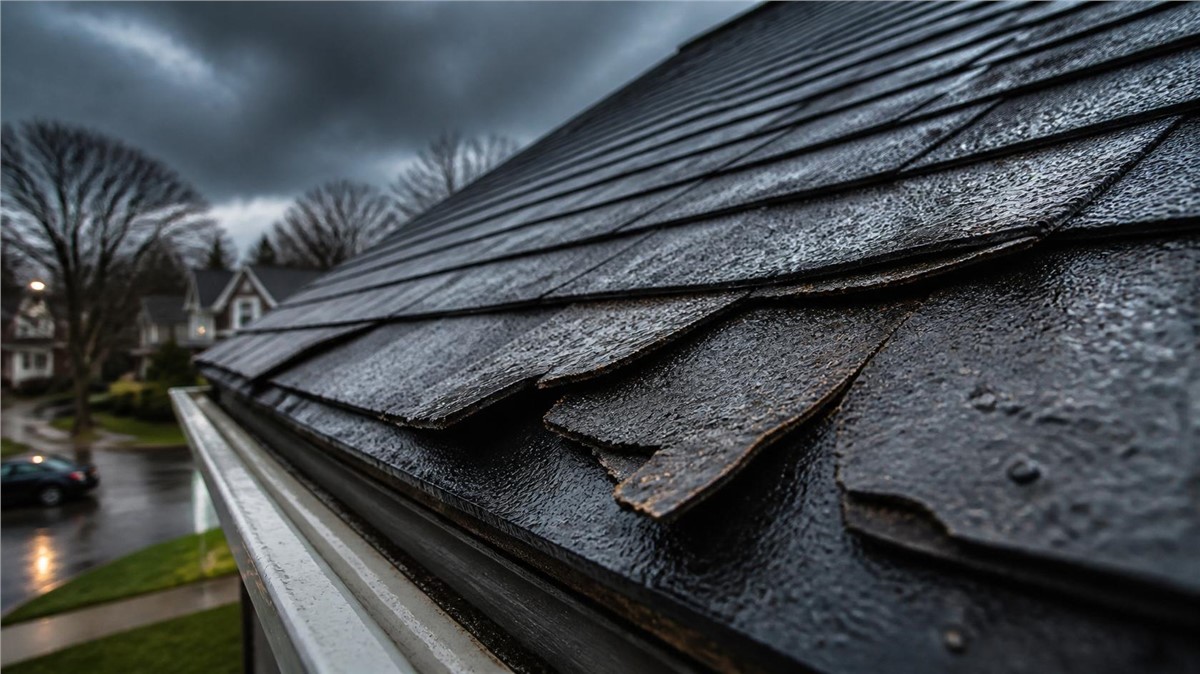
Commercial flat roofs often rely on a membrane to keep water out. Over time, UV exposure, foot traffic, weather, and age can lead to cracks, tears, blistering, or general deterioration. Membrane damage is consistently listed among the most common flat-roof repair issues.
Flashing Failures
Flashing around edges, parapet walls, drains, curbs, vents, and HVAC penetrations is a common weak point. If flashing separates, corrodes, or fails at transitions, water can get in even if the main roof surface still looks mostly intact. Recent repair guidance specifically calls out flashing failure as a frequent commercial leak source.
Seam Separation
Many commercial flat roofs develop leaks at seams. When seams open up or weaken, water can exploit even small defects and move into the roof system. Seam-related issues are among the most frequent flat-roof repair problems.
Punctures and Surface Damage
Flat roofs often have more rooftop traffic than residential roofs because of HVAC service, maintenance access, and equipment. That raises the risk of punctures, tears, and localized damage from tools, debris, or foot traffic. Commercial flat-roof repair sources commonly list punctures among the major repair categories.
Clogged Drains, Scuppers, or Gutters
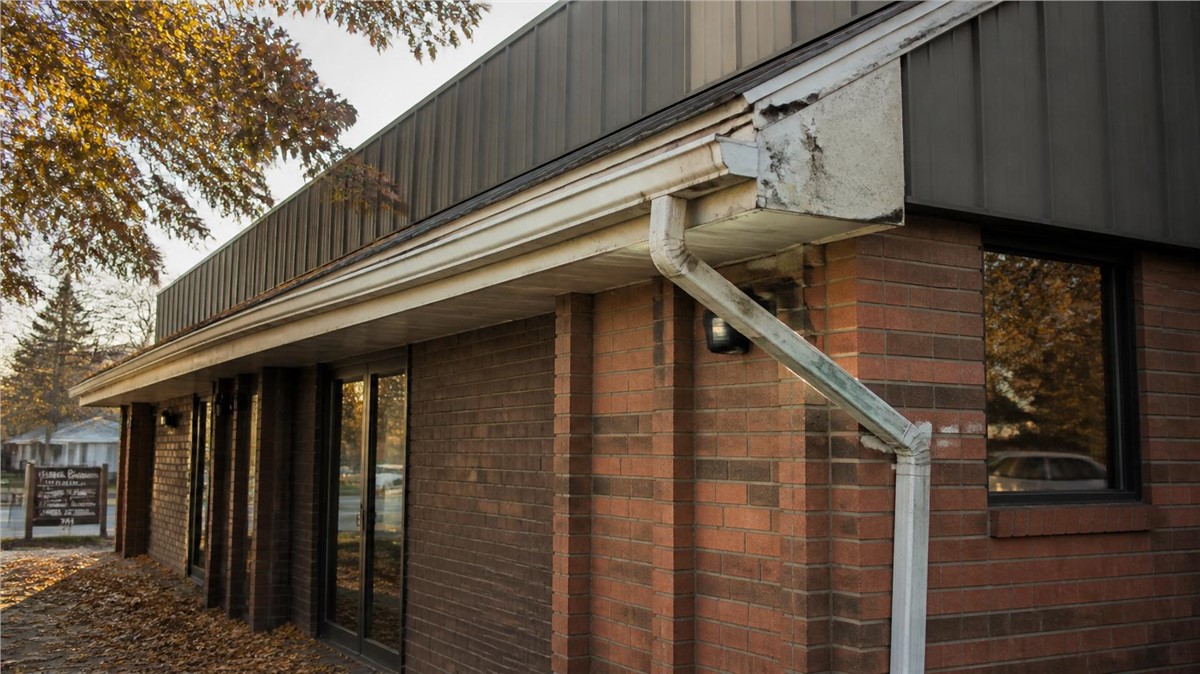
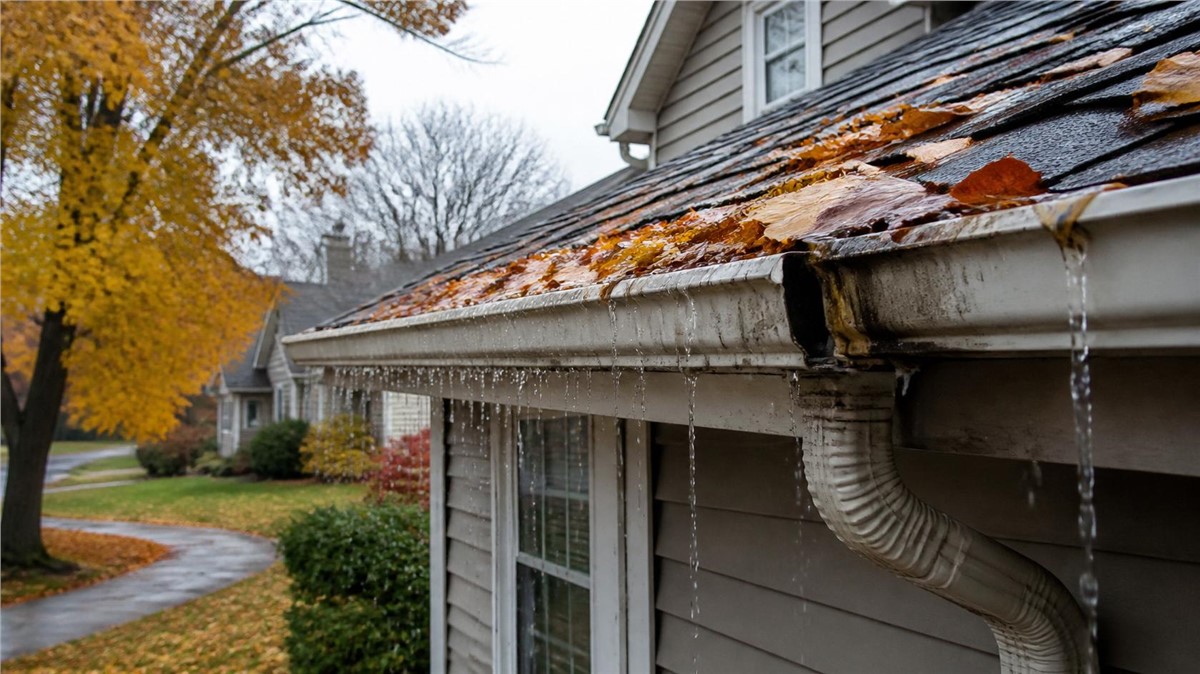
Flat roofs depend heavily on drainage components. When drains, scuppers, or gutters clog, water collects on the roof and makes every other problem worse. Poor drainage is repeatedly identified as one of the most common issues on commercial flat roofs.
Warning Signs Building Owners Should Watch For
Common warning signs include:
- water stains on ceilings or upper walls
- recurring leaks after rain
- visible standing water on the roof
- bubbling, blistering, or wrinkling membrane areas
- flashing pulling loose at edges or penetrations
- overflow from drains, scuppers, or gutters
- soft or sagging-looking roof sections
These signs align with current repair guidance that points to ponding, membrane wear, flashing failures, and drainage trouble as the most common flat-roof warning signals.
When Repair Usually Makes Sense
Repair usually makes sense when:
- the damage is localized
- the membrane issue is limited
- flashing or seam failure is isolated
- the drainage problem can be corrected without major reconstruction
- the rest of the roof still has useful life left
That conclusion follows from current repair guidance describing flat-roof problems such as localized membrane damage, flashing issues, and punctures as common repair-level conditions when caught early.
When the Problem May Be Bigger Than a Repair
A broader restoration or replacement discussion is more likely when:
- ponding water is widespread
- membrane damage appears in multiple areas
- leaks keep coming back
- seams are failing across the roof
- drainage design appears inadequate
- interior water damage is already extensive
This is an inference based on multiple sources showing that repeated ponding, widespread membrane wear, and ongoing seam or flashing failure tend to escalate from isolated repair into larger-scope work.
What a Contractor Will Usually Check
A professional commercial flat-roof inspection should usually check:
- roof drains, scuppers, and gutters
- ponding areas
- membrane condition
- seams and lap areas
- flashing at edges and penetrations
- rooftop equipment curbs
- signs of punctures or foot-traffic damage
- interior leak evidence below suspected problem spots
These inspection points match the failure areas most commonly identified in current commercial flat-roof repair guidance.
Local Notes for Schaumburg, IL
Schaumburg’s official permit services page states that residential and commercial projects are handled through the village’s permit process. The public page surfaced here does not give a simple one-line rule for every type of commercial flat-roof repair scope, so the safest step is to have the contractor confirm the exact permit requirement with Schaumburg before work begins.
FAQs
What is the most common flat roof problem on a commercial building?
Ponding water is one of the most common problems because it increases pressure on the roof, weakens the membrane, and makes leaks more likely.
Why do commercial flat roofs leak so often around penetrations?
Because flashing and seals around HVAC curbs, vents, skylights, and similar transitions are common weak points.
Can clogged drains cause flat-roof leaks?
Yes. Blocked drains, gutters, or scuppers can cause water to back up and sit on the roof, which raises leak risk.
Are membrane cracks and punctures repairable?
Often yes, if the damage is limited and caught early. More widespread damage may point to a larger restoration or replacement need.
Do I need a permit for commercial flat-roof repair in Schaumburg?
Schaumburg handles commercial projects through its permit services process, but the exact requirement depends on the repair scope, so the contractor should verify it before starting.
Get a Free Estimate in Schaumburg, IL
If your commercial building in Schaumburg, IL is dealing with ponding water, membrane damage, flashing failures, or recurring flat-roof leaks, Huskie Exteriors can help with honest inspections and practical repair recommendations built for Midwest weather.
Subscribe to Huskie Exteriors's Blog





Comments