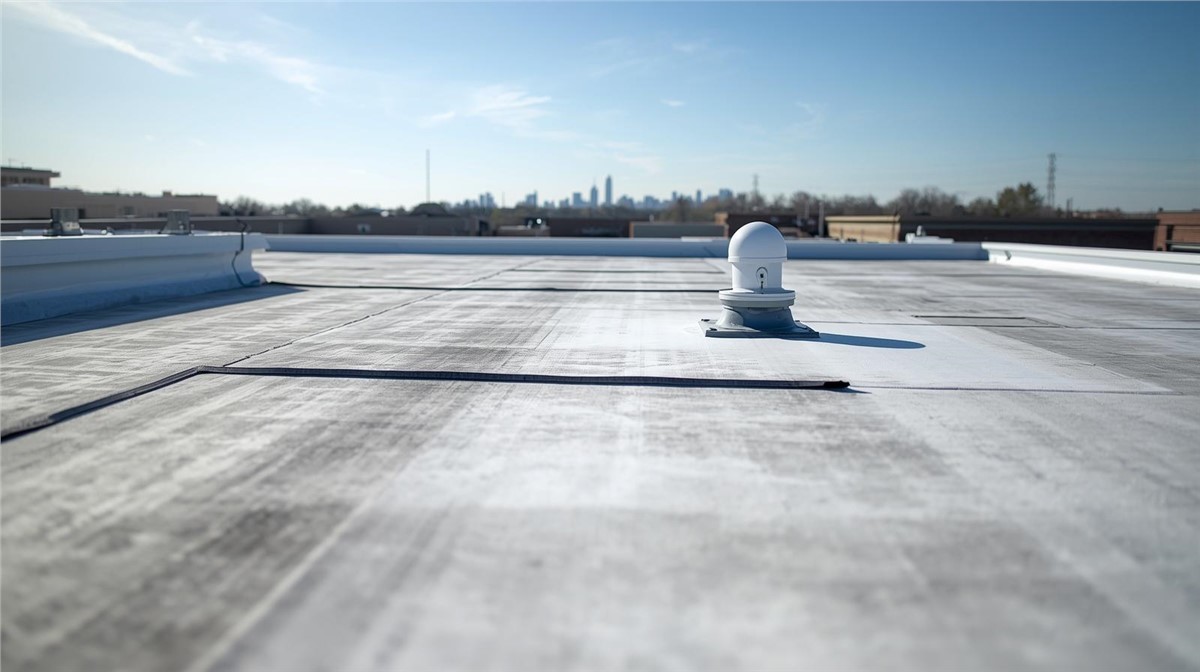
Commercial roof maintenance is one of the most cost-effective investments a South Beloit, IL property owner can make — and one of the most consistently deferred. A structured maintenance program catches minor issues before they become major ones, extends roof service life significantly, and protects the substantial investment a commercial roof replacement represents. This guide covers what commercial roof maintenance actually involves, when to do it, and what it prevents.
The Maintenance Problem Most Commercial Property Owners Have
Commercial roofs are out of sight in a way that residential roofs are not. A homeowner can look up at their shingles from the driveway. A facility manager responsible for a 20,000 square foot flat roof has no equivalent ground-level view of what is happening on that membrane. What cannot be seen tends not to be prioritized — and commercial roofs across northern Illinois accumulate deferred maintenance at a rate that eventually produces repair bills and replacement timelines that proper maintenance would have pushed years into the future.
The financial case for maintenance is straightforward. A minor membrane repair — resealing a lifted seam, re-adhering a flashing transition, clearing a blocked drain — costs a fraction of what the water damage that follows from ignoring it costs. A commercial roof replacement on a mid-size building represents a significant capital expenditure. A maintenance program that extends that roof's service life by five to ten years is worth a significant fraction of that replacement cost — and it delivers that value in incremental annual expenditures rather than a single large capital event.
South Beloit is a city in Winnebago County at the Wisconsin border, in a part of northern Illinois that sees the full range of Midwest weather stress on commercial building systems. Significant winter snowfall and ice loading. Freeze-thaw cycling from November through April. Spring hail and wind events. Summer UV intensity that degrades membrane surfaces and accelerates sealant deterioration at every joint and transition. A commercial roof in South Beloit earns its maintenance program every season.
Why Commercial Roof Maintenance Is Different From Residential
The principles of roof maintenance are consistent across residential and commercial applications — inspect regularly, address minor issues promptly, keep drainage systems clear. The scale, complexity, and consequences are different enough that commercial maintenance deserves specific treatment.
Surface area and access. A commercial flat roof may cover tens of thousands of square feet. Inspecting it thoroughly requires walking the full surface — not a quick perimeter scan — with attention to areas around every penetration, drain, seam, and perimeter edge. Access requires safety protocols that residential inspection does not — anchor points, fall protection, and in some cases equipment that most facility managers should not attempt to deploy independently.
Roofing system complexity. Commercial roofs incorporate internal drain systems, rooftop mechanical equipment, expansion joints, parapet walls with cap flashing, and in many cases multiple roofing system types meeting at transitions. Each element has its own maintenance requirements and its own failure modes. A maintenance program that addresses only the membrane and ignores the drain system or the equipment curb flashings is an incomplete program.
Consequence of failure. A residential roof leak disrupts one household. A commercial roof leak can disrupt business operations, damage inventory or equipment, affect tenants, and trigger liability concerns — all before the repair is scheduled. The consequence asymmetry between a small maintenance investment and a large repair or business interruption event is more pronounced in commercial than residential applications.
Regulatory and warranty implications. Many commercial roofing manufacturer warranties require documented regular maintenance to remain valid. A warranty claim on a commercial roof system that has no maintenance records is a claim the manufacturer may dispute. Maintaining inspection and maintenance records protects warranty rights in addition to the roof itself.
What a Commercial Roof Maintenance Program Includes
A structured commercial roof maintenance program has three components: scheduled inspections, preventive maintenance tasks performed during those inspections, and responsive maintenance addressing findings as they arise.
Scheduled Inspections
The baseline inspection schedule for a commercial roof in South Beloit is twice per year — spring and fall — with additional inspections after any significant storm event. Spring inspection assesses the cumulative damage of the winter season. Fall inspection identifies and addresses any issues before winter arrives and makes them harder to access and more consequential to ignore.
What a thorough commercial roof inspection covers:
Membrane condition across the full surface. Every square foot of membrane is walked and visually assessed — not just the perimeter and obvious high-risk areas. The inspector looks for:
- Punctures, tears, or splits that represent active or potential water infiltration points
- Blistering or bubbling — trapped moisture or air beneath the membrane indicating adhesion failure or prior infiltration
- Membrane shrinkage — visible as pulling away from flashings, walls, and penetrations at the perimeter
- Surface erosion or granule loss on modified bitumen systems — exposing the bitumen beneath to UV degradation
- Ponding water locations that persist more than 48 hours after a rain event — indicating drainage problems that need correction
Seam and lap condition. On single-ply systems — TPO, EPDM, and PVC — seams are the highest-risk points on the membrane. Every seam is assessed for:
- Lifting or separation at the seam edge — the earliest sign of adhesive or weld failure
- Bubbling along the seam length — indicating incomplete bonding
- Edge deterioration — UV and weather degradation of the seam edge that precedes separation
Flashing condition at all transitions. Flashing at parapet walls, equipment curbs, pipe penetrations, drains, and expansion joints is examined individually. This is where the most common commercial roof failures originate — not in the field membrane, but at the transitions where membrane meets vertical elements. The inspector looks for:
- Flashing pulling away from walls or curbs
- Cracks or splits in the flashing membrane at corners and transitions
- Sealant deterioration at the top edge of base flashing — the most common flashing failure point
- Metal counter-flashing that has lifted, corroded, or separated from its reglet
Drain and scupper condition. Every interior drain and perimeter scupper is inspected for:
- Debris accumulation at the drain screen — the most common cause of post-storm ponding
- Drain bowl integrity — cracks or separation at the drain body that allow water to bypass the drain and enter the roof assembly
- Clamping ring condition on drains with membrane clamped at the drain bowl — loose or corroded clamping rings compromise the membrane seal at the drain
- Overflow scupper clearance — overflow scuppers that are blocked prevent emergency drainage during extreme rain events and create structural loading risk from ponded water
Rooftop equipment condition. HVAC units, exhaust fans, condensers, and other rooftop equipment are assessed for:
- Base flashing condition at equipment curbs — curb flashing is a high-frequency failure point and a disproportionate source of commercial roof leaks
- Equipment vibration damage to surrounding membrane — mechanical equipment that transmits vibration to the roof deck can stress membrane at the curb perimeter over time
- Condensate line discharge — condensate from HVAC units discharged onto the roof membrane accelerates UV degradation and biological growth at the discharge point
- Debris accumulation around equipment that retains moisture against the membrane
Interior assessment. Where access allows, the underside of the roof deck is assessed from the interior — looking for water staining, wet insulation, and any evidence of active infiltration that may not yet have produced a visible roof surface symptom.
Preventive Maintenance Tasks
Inspection findings that identify minor issues are addressed during the maintenance visit when the scope is small enough to be handled efficiently. This is the preventive maintenance component — catching problems in their minor state and resolving them at minor-repair cost.
Seam resealing. Seams showing early-stage lifting or edge deterioration are cleaned and resealed with compatible sealant or membrane tape before separation progresses to active water infiltration.
Flashing re-adhesion and resealing. Flashing that has begun to lift or separate from walls and curbs is re-adhered and the top edge resealed with appropriate lap sealant. This is one of the highest-value preventive maintenance tasks on any commercial roof — flashing failures that are addressed in early stages require sealant and adhesive; flashing failures that progress to active leaks require flashing replacement and often interior remediation.
Drain cleaning. All drains and scuppers are cleared of debris accumulated since the previous inspection. Drain screens are cleaned and confirmed seated correctly. This task is performed during every inspection visit regardless of visible debris accumulation — a drain that appeared clear at the last inspection may have accumulated significant debris in the intervening months.
Sealant replacement at deteriorated joints. Sealant at flashing terminations, pipe penetrations, and any joint where the existing sealant shows cracking, shrinkage, or adhesion failure is removed and replaced. Sealant replacement is one of the most cost-effective preventive maintenance tasks available — the material cost is minimal and the labor is straightforward, while the infiltration it prevents can produce damage orders of magnitude more expensive.
Minor membrane repair. Small punctures, cuts, or surface damage identified during inspection are repaired with compatible membrane patches during the maintenance visit. A puncture repaired immediately costs the patch material and the labor to apply it. The same puncture left through a winter of freeze-thaw cycling may have allowed infiltration into the insulation layer that requires insulation replacement alongside the membrane repair.
Debris removal from the roof surface. Organic debris — leaves, seeds, twigs — retains moisture against the membrane and accelerates biological growth and UV degradation at contact points. Removing it during inspection visits is a low-cost task that extends membrane life.
Responsive Maintenance
Between scheduled inspections, responsive maintenance addresses findings that arise from storm events, tenant or employee reports, or facility manager observations. The key principle is prompt response — a storm event that the facility manager knows damaged rooftop equipment or produced unusual interior moisture symptoms should produce a responsive inspection within days, not at the next scheduled visit.
The most important responsive maintenance trigger is any interior evidence of water infiltration — ceiling stains, wet tiles, moisture on equipment or inventory. These findings indicate active infiltration that is ongoing and should produce immediate roof inspection and temporary protection if the source is not quickly identifiable.
Seasonal Maintenance Considerations for South Beloit's Climate
South Beloit's position at the Wisconsin border in a Midwest climate produces seasonal maintenance priorities that are specific to the region.
Fall Maintenance Priorities
Fall maintenance is the most consequential scheduled visit for a commercial property in northern Illinois. Issues identified and addressed in fall are prevented from spending a winter accumulating damage.
Before freeze-up:
- All drains cleared — standing water in drains freezes, expands, and can damage drain bodies and surrounding membrane
- All sealant joints checked and resealed — sealant that is cracked or separating will admit water that freezes and expands through winter
- All flashing terminations resealed — the top edge of base flashing is the most common freeze-thaw failure initiation point
- Any punctures or membrane damage repaired — water infiltrating a small opening freezes, expands the opening, and admits more water in subsequent thaw cycles
- Roof surface cleared of debris — debris that gets wet and then frozen against the membrane is more difficult to remove and more damaging than debris cleared before freeze-up
Snow and ice load assessment. Fall inspection includes a review of the roof's drainage slope and any areas where snow and ice are likely to accumulate based on the building geometry and prevailing wind direction. Areas prone to drifting — downwind of parapet walls and mechanical equipment — can accumulate ice loads that exceed design parameters in significant snow events. Identifying these areas before winter allows the property owner to establish a snow removal protocol if needed.
Spring Maintenance Priorities
Spring inspection assesses what winter delivered and addresses it before the hail and wind season begins.
After final freeze-thaw:
- Full membrane assessment for damage from freeze-thaw cycling — seam lifting, flashing separation, and membrane cracking at perimeter edges are the most common winter-related findings
- Drain assessment and clearing — debris that was frozen in place through winter is now loose and may be blocking drains at spring snowmelt
- Interior inspection for moisture damage from ice dam infiltration — at parapet walls and at any roof penetration where ice accumulation may have forced water under the membrane
- Assessment of any areas where snow removal was performed — mechanical snow removal can damage membrane if not performed with appropriate equipment and technique
Pre-hail season flashing check. Before hail season arrives in earnest — typically May through August in northern Illinois — flashing condition at all transitions is confirmed and any marginal sealant is replaced. Hail events stress flashing at the same time they damage the membrane surface, and flashing that was already marginal is more likely to fail under the combined load.
Post-Storm Inspection
Every significant hail or wind event should trigger a commercial roof inspection within 24 to 48 hours. The findings most commonly produced by storm events:
Hail damage:
- Membrane surface impact — visible impact marks on TPO, dimpling on modified bitumen, and exposed bitumen on gravel-surfaced BUR systems where ballast has been displaced
- Denting of metal flashings and equipment that may have compromised seals at those locations
- HVAC equipment damage that has affected base flashing integrity
Wind damage:
- Membrane blow-off at perimeter edges and corners — wind uplift is most aggressive at roof edges
- Lifted or displaced equipment — HVAC units that have moved on their curbs compromise the base flashing at the curb perimeter
- Debris on the roof surface from adjacent properties or surrounding trees
Post-storm inspection findings should be documented with photographs and a written report — both for internal maintenance records and for insurance claim purposes if the damage is storm-related and claim-eligible.
The Cost Comparison: Maintenance vs. Repair vs. Replacement
The financial case for commercial roof maintenance is most clearly made through the cost comparison across the three intervention levels.
Preventive maintenance. Twice-annual inspections with preventive repairs — seam resealing, drain cleaning, sealant replacement, minor membrane patches — represents a modest annual expenditure relative to the value of the roof system being maintained. The exact cost depends on roof size, system type, and findings, but a consistent maintenance program on a mid-size commercial roof in South Beloit is a predictable, budgeted line item.
Reactive repair. A repair triggered by an active leak — after water has infiltrated the membrane and produced interior symptoms — involves the membrane repair itself plus whatever remediation the interior damage requires. Wet insulation that has been saturated through a winter needs to be removed and replaced. Interior finishes damaged by water infiltration need remediation. Equipment or inventory damaged by active leaks may need replacement. The repair cost on an active leak event routinely exceeds the annual preventive maintenance cost by multiples.
Roof replacement. A commercial roof replacement on a mid-size building represents a significant capital expenditure. Each additional year of service life produced by a maintenance program that extends the roof's effective life is a year of replacement cost deferred. A maintenance program that extends a commercial roof's service life by five years on a building where replacement would cost a significant amount delivers that value in direct capital deferral.
Choosing a Commercial Roof Maintenance Contractor in South Beloit
Not every roofing contractor who does commercial work brings the same capability to a maintenance program. The differentiating factors:
Experience with the specific roofing system on the building. TPO, EPDM, BUR, modified bitumen, and metal roofing systems each have specific maintenance requirements, compatible repair materials, and failure modes that require system-specific knowledge. A contractor who maintains TPO roofs competently may not have the same depth of experience with modified bitumen or BUR systems.
Written inspection reports. A maintenance contractor who provides written inspection reports with photographs after each visit is building the documentation record that protects warranty rights, supports insurance claims, and provides an accurate condition history for replacement planning. A contractor who communicates findings verbally and provides only a repair invoice is not building that record.
Proactive communication. A maintenance contractor who contacts the property owner with findings rather than waiting for the property owner to follow up is a partner in the maintenance program rather than a vendor who shows up when called. This proactive posture is the difference between a maintenance program that catches issues in their minor state and one that accumulates deferred findings between visits.
Local presence and accountability. A contractor with established commercial presence in Winnebago County and the South Beloit market is accountable to a local reputation and reachable when responsive maintenance is needed. Storm events do not respect scheduled visit intervals, and a contractor who is available for responsive inspection after a significant weather event is part of the maintenance program's value.
Huskie Exteriors serves commercial and residential property owners across Illinois and Wisconsin, handling roofing, siding, windows, gutters, and storm damage restoration. For commercial properties in South Beloit and throughout Winnebago County, the team provides structured maintenance programs, thorough written inspection reports, and the commercial roofing expertise to address findings correctly the first time.
Maintenance as a Management Strategy, Not an Afterthought
Commercial property management in South Beloit involves dozens of competing priorities. Roof maintenance tends to lose those competitions because the consequences of deferring it are not immediately visible — until they are, at which point the deferred maintenance has compounded into a repair or replacement event that the maintenance program would have prevented or significantly deferred.
The property owners and facility managers who manage commercial roofing costs most effectively treat maintenance as a management strategy rather than an afterthought — budgeting for it annually, scheduling it proactively, and acting on findings promptly. The roof does not get better between inspections without intervention. But it does get worse — slowly, invisibly, and expensively.
Contact Huskie Exteriors for professional roofing, siding, window, gutter, and storm damage services in Illinois and Wisconsin. If your South Beloit commercial property is overdue for a roof inspection or you are ready to establish a structured maintenance program, our team is ready to assess your current roof condition and build a maintenance approach that fits your building, your system type, and your budget.
Subscribe to Huskie Exteriors's Blog





Comments