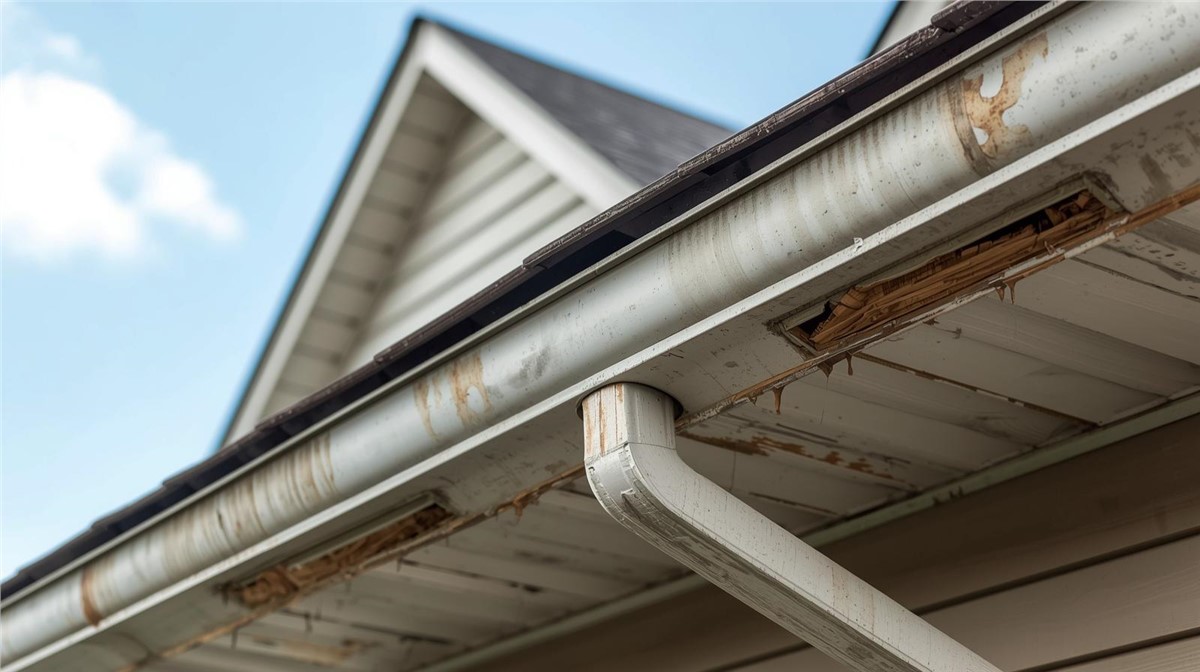
Gutters fail gradually — and in Kirkland, IL, where freeze-thaw cycling, heavy spring rain, and summer storms put sustained stress on every exterior system, a gutter that looks functional from the driveway can be actively directing water against your foundation, saturating your fascia, and undermining your siding from behind. This guide covers the specific signs that gutters are failing, why each one matters, and how to evaluate whether repair or full replacement is the right answer for your home.
The Problem With Gutters That Look Fine
Gutter failure is one of the more deceptive exterior problems a homeowner faces because it rarely announces itself dramatically. A roof that is failing eventually produces a ceiling stain. A window that has failed fogs up visibly. Gutters that are failing just sit there — sagging slightly, leaking at seams, directing water six inches from the foundation instead of four feet away — doing a little less of their job every season without producing a symptom obvious enough to prompt action.
By the time the symptom is obvious — a wet basement, rotted fascia boards, eroded soil at the foundation, or water staining running down siding — the damage has been accumulating for a long time. And the repair cost reflects that timeline.
Kirkland is a small community in DeKalb County, in a part of northern Illinois that sees the full range of Midwest weather stress on exterior systems. Spring snowmelt and heavy rain arrive together, sending large volumes of water off rooflines in a short window. Summer thunderstorms can be intense and brief — exactly the conditions that expose every weakness in a drainage system fastest. Fall brings debris loading that clogs gutters before winter arrives. Winter adds ice, freeze-thaw cycling, and the occasional ice dam that puts structural stress on gutter hangers and fascia simultaneously.
A gutter system that is performing correctly manages all of that. One that is failing under it quietly compounds the damage with every passing season.
The Signs That Gutters Are Failing
Gutters Pulling Away From the Fascia
This is one of the most visible gutter failure signs and one of the most consequential. Gutters that have separated from the fascia — partially or fully — are no longer capturing roof runoff at the eave. Water is running between the gutter back and the fascia, directly against the fascia board and behind the soffit, rather than into the gutter trough.
The cause is almost always one of three things: failed gutter spikes or screws that have pulled out of the fascia; rotted fascia that can no longer hold fasteners regardless of their condition; or the accumulated weight of debris, standing water, or ice that has exceeded what the hanger system was designed to carry.
When gutters pull from the fascia, the fascia itself is typically already damaged — soft, discolored, or visibly deteriorated at the attachment points. New gutters hung on rotted fascia will pull free again within a season. The fascia needs to be replaced before the gutter system is rehung.
Sagging Sections
Gutters that sag between hangers — visibly lower at the midpoint of a run than at the hanger locations — have lost their designed slope and are collecting standing water rather than draining it toward downspouts.
Standing water in a gutter does several things, none of them beneficial. It adds weight that stresses hangers further. It promotes mosquito breeding in warmer months. It accelerates corrosion of aluminum gutters from the inside. And in winter, it freezes — expanding and stressing both the gutter itself and the hanger attachment to the fascia. Ice in a sagging gutter section adds significant weight at the point of maximum mechanical disadvantage.
Sagging is caused by hanger spacing that was too wide at installation, hangers that have failed over time, or fascia that has softened and can no longer provide solid anchor points. Isolated sagging sections can sometimes be corrected by adding or replacing hangers. Widespread sagging across multiple runs is a system-level problem that replacement addresses more effectively than individual hanger repairs.
Leaking at Seams
Sectional gutters — assembled from pre-cut lengths joined at connectors — have seams at every joint. Those seams are sealed with caulk or gutter sealant at installation. That sealant dries, shrinks, and cracks over time. In a DeKalb County climate where freeze-thaw cycling works at every joint through a northern Illinois winter, sealant deterioration accelerates significantly.
A leaking seam is visible as a drip or stream of water emerging from the joint during rain events — or as a water stain and paint failure on the fascia directly below the joint. Early-stage seam leaks can be resealed when the gutter is cleaned and dried. Seams that have been leaking for extended periods often have corroded or deformed metal at the joint that resealing cannot fully address.
On an older sectional gutter system with multiple leaking seams, the math on repeated resealing versus full replacement with a seamless system deserves an honest evaluation. Every resealed joint is a temporary fix on a system that will continue producing new failures at adjacent seams.
Water Staining or Rot on Fascia and Soffit
The fascia and soffit behind and below the gutters are the first building components to show the consequences of gutter failure — and their condition is one of the most reliable indicators of how long the gutter system has been underperforming.
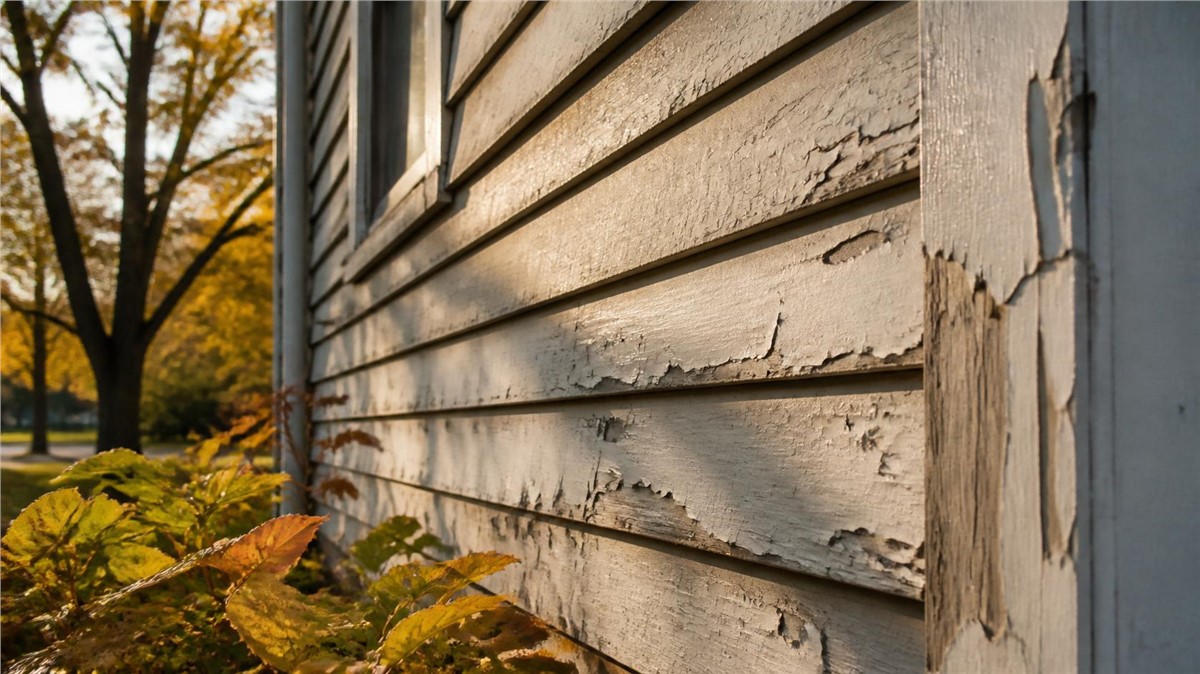
Water staining on fascia boards — discoloration, paint peeling, or visible moisture marks — indicates that water has been running behind or over the gutters rather than through them. Soft fascia that gives under finger pressure has absorbed enough moisture to begin structural deterioration.
Soffit panels that are stained, bubbling, or soft indicate that water has been getting into the eave assembly — either from overflowing gutters above or from ice dam infiltration that has been working at the eave line in winter.
These findings matter for gutter replacement planning because new gutters cannot be properly installed on deteriorated fascia. The fascia needs to be replaced first — a scope addition that is predictable when the inspection findings indicate it, and that a contractor should identify and communicate before work begins rather than discover mid-project.
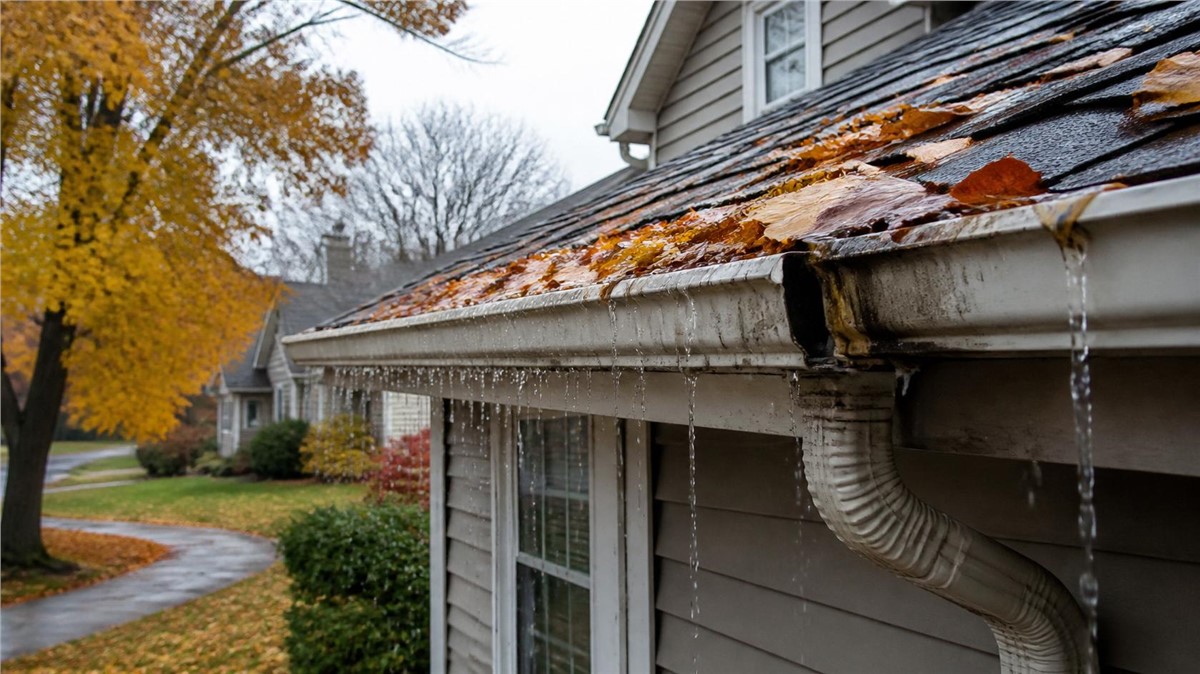
Overflow During Rain Events
Gutters that overflow during moderate rain events — not just extreme storms — are either undersized, improperly sloped, clogged at the downspout, or some combination of all three.
Overflow in a single location on a long run usually indicates a clog or a slope problem at that point. Overflow across the full gutter length indicates undersizing or a downspout bottleneck. Overflow only during heavy storms but not moderate rain can indicate an adequately sized system that is functioning at its design limit — which may or may not be appropriate depending on what the roof area and rainfall intensity in DeKalb County actually demand from it.
The consequence of regular overflow is water running down the face of the siding below the gutter, saturating the soil at the foundation, and potentially finding pathways into below-grade spaces. A gutter that overflows regularly is not performing its primary function regardless of how structurally sound it appears.
Visible Corrosion, Holes, or Cracks
Aluminum gutters do not rust, but they corrode. Older aluminum gutters that have had standing water sitting in low spots for extended periods develop white oxidation and, eventually, pitting that progresses to holes. Steel gutters rust where the protective coating has been compromised — at cut edges, at fastener points, and anywhere the finish has been damaged by impact or prolonged moisture contact.
Holes in a gutter — regardless of size — are direct water discharge points. A small hole that drips onto the fascia continuously during rain events causes more fascia damage over a season than a leaking seam that drips intermittently. Holes can be patched with gutter sealant or patch material, but patching a hole in an otherwise deteriorating gutter is a temporary measure rather than a solution.
Cracked gutter sections — typically at end caps, downspout outlets, and anywhere the gutter has been deformed by ice loading — are similarly patchable in the short term but indicative of a system that is at or past end of life.
Downspouts That Are Disconnected, Damaged, or Draining Incorrectly
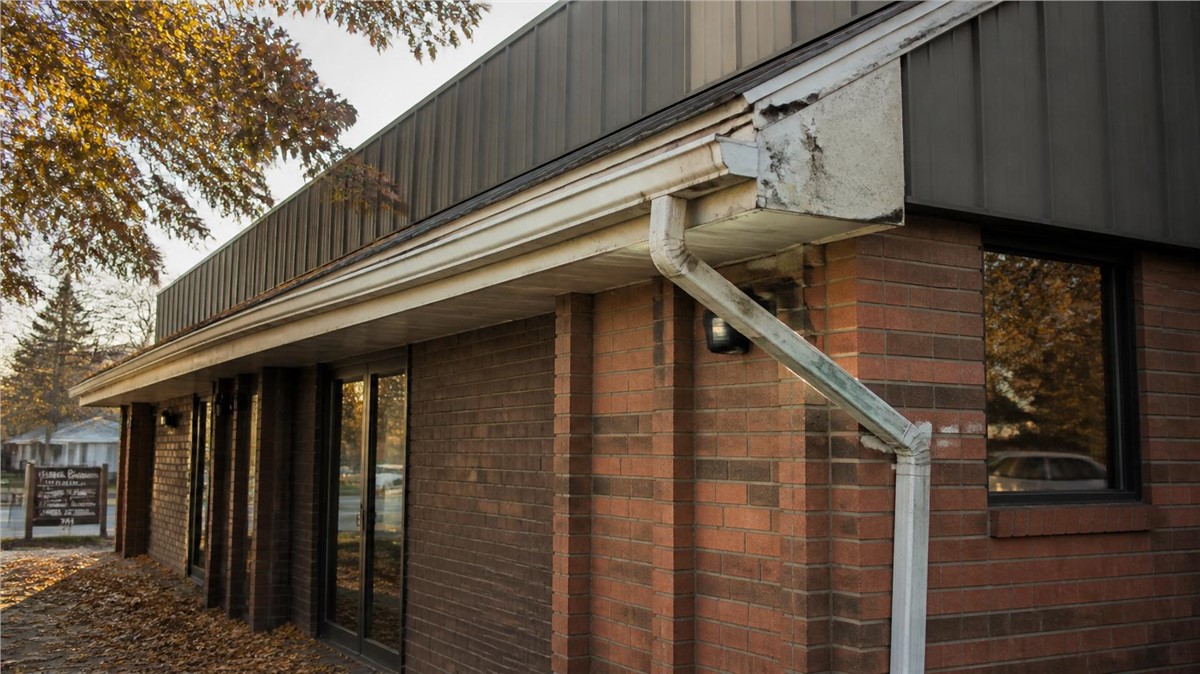
The downspout is where the water the gutter has collected goes — and where many drainage systems fail silently. Downspouts that have separated at joints, that are damaged from impact or ice loading, or that discharge water within a foot or two of the foundation wall are not completing the drainage function the gutter started.
A disconnected downspout section that allows water to discharge mid-height on the wall is directing concentrated water flow directly against the siding and into the soil at the foundation. A downspout that terminates at the foundation rather than extending four to six feet away is depositing the full volume of roof runoff at the most structurally sensitive location on the property.
Downspout condition is part of any complete gutter inspection — and downspout extensions or underground discharge systems are part of a complete drainage solution, not optional add-ons.
Granule Accumulation in Gutters
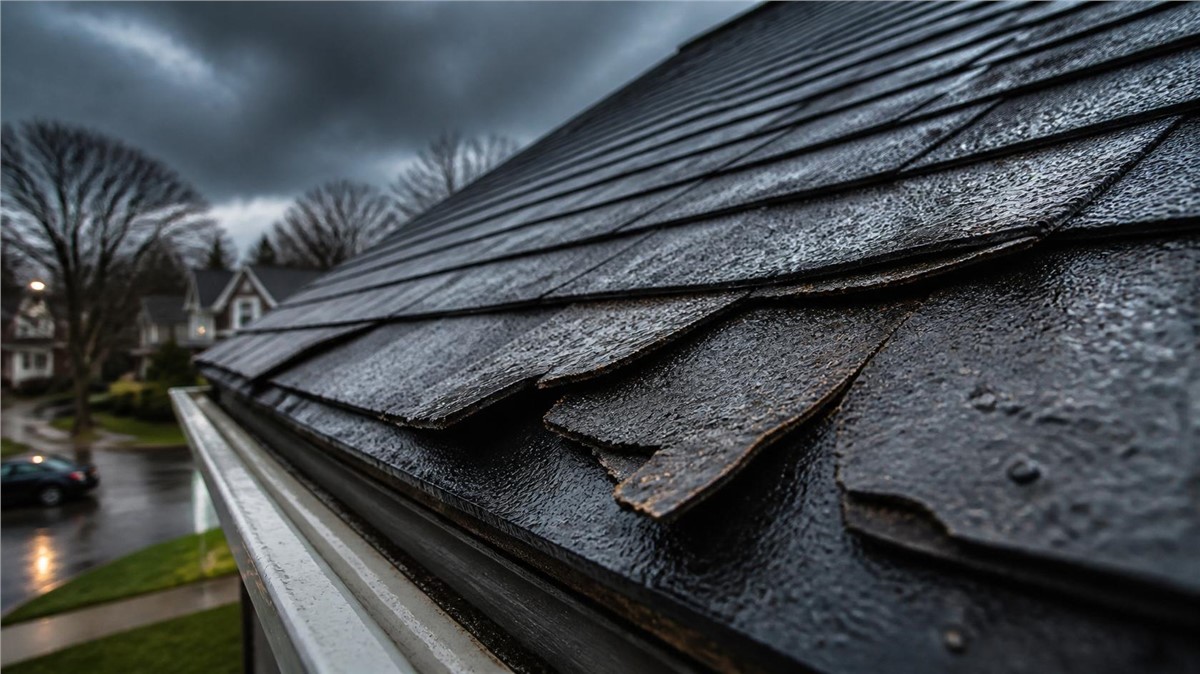
Significant granule accumulation in gutters — shingle granules from the roof above washing into the gutter trough — is worth noting not as a gutter failure sign but as a roof condition indicator. A gutter cleaning that produces an unusually large volume of granules suggests the roof above has sustained impact damage or is experiencing accelerated granule loss that warrants a separate inspection.
This finding during a gutter replacement assessment is information that serves the homeowner's interests — a contractor who mentions it is giving the homeowner a fuller picture of their exterior system condition than the gutter scope alone would produce.
Repair or Replace: Making the Right Call
Not every gutter problem requires full replacement. The decision depends on the age of the system, the scope and distribution of problems found, and the condition of the fascia and soffit behind it.
Repair is the appropriate answer when:
- The system is less than 10 to 15 years old
- Problems are isolated — one leaking seam, one sagging section, one disconnected downspout
- The fascia is sound and capable of holding fasteners
- The gutter material itself — aluminum, steel, or copper — is structurally intact outside the specific failure point
Replacement is the stronger answer when:
- The system is 20 or more years old and showing multiple concurrent failure signs
- Seam leaks are widespread across multiple joints in a sectional system
- Sagging is present across multiple runs rather than at isolated points
- Fascia replacement is required — at which point new gutters are installed on new fascia as a complete system
- The existing system is undersized for the roof area it serves, producing regular overflow that repairs cannot address
- A seamless system replacing an aging sectional system will eliminate the seam failure pattern permanently
The middle-ground answer — the one worth asking a contractor for explicitly — is an honest system assessment: here is what is failing now, here is what is marginal, and here is whether the cost of repairs over the next five years approaches or exceeds the cost of replacement. That conversation produces better decisions than either reflexive repair or automatic replacement.
What a Gutter Replacement Involves in Kirkland
For homeowners who have reached the replacement decision, understanding what the project involves helps evaluate proposals and set realistic expectations.
Removal of existing gutters and downspouts. The existing system is removed and the fascia condition fully assessed — the first point at which the true scope of fascia repair or replacement is known.
Fascia repair or replacement. Any fascia sections that are soft, rotted, or structurally compromised are replaced before new gutters are installed. This scope addition is predictable in its likelihood on homes with older gutter systems; a contractor who builds a fascia repair allowance into the estimate and commits to notifying the homeowner before proceeding beyond it is operating transparently.
Seamless gutter fabrication. For a new installation in Kirkland, seamless aluminum gutters — fabricated on-site to the exact length of each run — are the standard recommendation. The roll-forming equipment comes to the job, and each run is produced as a single continuous piece without intermediate seams. Seams exist only at corners and downspout connections — three or four points rather than a dozen or more on a comparable sectional system.
Sizing assessment. A replacement project is an opportunity to correct any undersizing in the existing system. Standard 5-inch K-style gutters are appropriate for most residential applications in DeKalb County. Homes with larger roof areas, steeper pitches, or long uninterrupted runs benefit from 6-inch gutters. A contractor who asks about overflow history before specifying size is gathering information needed to size the replacement correctly.
Downspout placement and discharge. Downspout locations are confirmed or revised based on the roof drainage pattern and the discharge requirements at grade. Extensions or underground discharge systems are discussed where the existing discharge arrangement has been inadequate.
Gutter guard option. For Kirkland homes with significant tree coverage — common in DeKalb County — gutter protection is worth discussing alongside a replacement project. Quality micro-mesh guards reduce cleaning frequency and the risk of clogged downspouts during storm events. Adding them at the time of new gutter installation is more cost-effective than retrofitting them to an existing system later.
Working With a Local Contractor in Kirkland
DeKalb County homeowners benefit from the same contractor selection principles that apply across the northern Illinois region. A contractor with established local presence, verifiable references from projects in the area, and the equipment to fabricate seamless gutters on-site is a different proposition from one who installs sectional gutters from stock material without assessing fascia condition or discussing sizing.
Huskie Exteriors serves homeowners and commercial property owners across Illinois and Wisconsin, handling roofing, siding, windows, gutters, and storm damage restoration. For Kirkland homeowners, the team provides complete gutter system assessment, honest repair versus replacement recommendations, and seamless gutter installation sized correctly for the home's roof area and DeKalb County's rainfall demands.
Protecting Your Kirkland Home Starts With the Drainage
A properly functioning gutter system is doing its job invisibly every time it rains or snows. When it stops doing that job — gradually, quietly, without dramatic announcement — the damage it allows accumulates in the foundation, the fascia, the siding, and below-grade spaces at a rate that reflects how long the problem went unaddressed.
The homeowners who avoid the expensive version of that outcome are the ones who pay attention to the signs described above, act on them before a full season of damage accumulates, and work with a contractor who treats the gutter system as the consequential infrastructure it actually is.
Contact Huskie Exteriors for professional roofing, siding, window, gutter, and storm damage services in Illinois and Wisconsin. If your Kirkland home has gutters that are showing any of the signs described above — or if you simply have not had the system assessed in several years — our team is ready to take a look and give you an honest picture of where things stand.
Subscribe to Huskie Exteriors's Blog





Comments