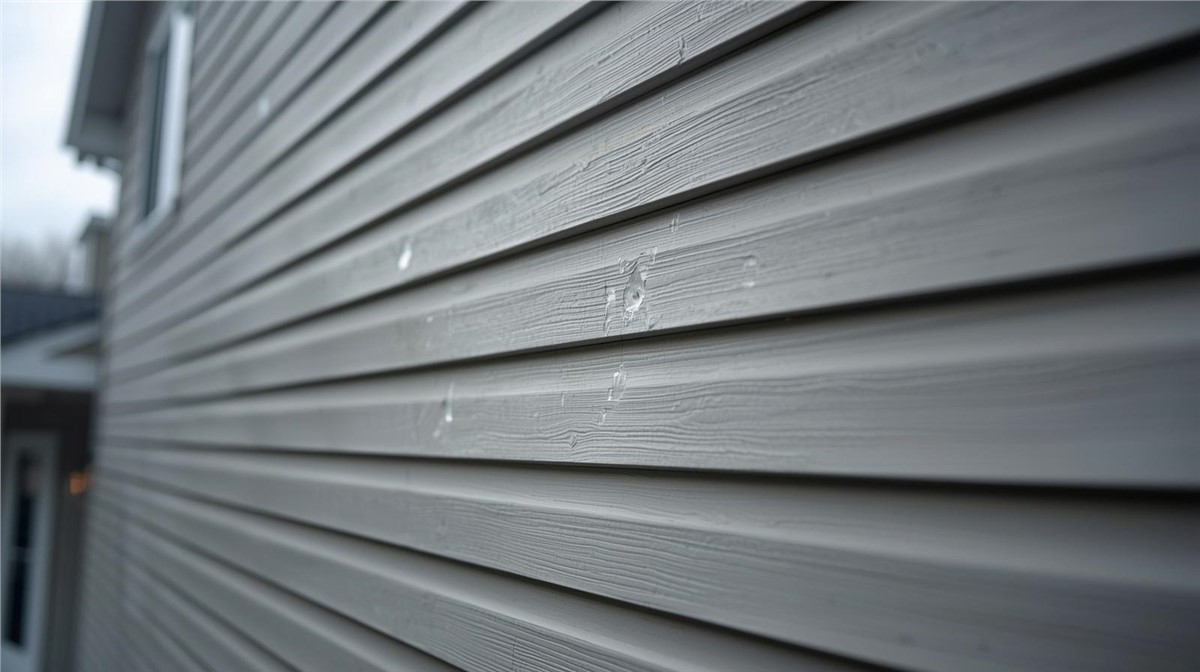
Hail damage to siding is more deceptive than most Marengo homeowners realize. Visible cracks and obvious dents are only part of the story — the more consequential damage is often hidden behind panels, inside wall cavities, or buried in trim and flashing details where it quietly allows moisture infiltration for months before any interior symptom appears. This guide covers what hail actually does to different siding materials, where hidden damage hides, and how to assess your home's exterior honestly after a storm.
The Hidden Damage Problem
When a hailstorm moves through Marengo, most homeowners do a quick walk around the house. They look for obvious cracks in vinyl, check for dents on aluminum surfaces, glance at the windows. If nothing dramatic is visible, the conclusion is often that the siding came through fine.
That conclusion is frequently wrong — and the cost of being wrong reveals itself months later, not immediately.
Hail damage to exterior siding operates on two levels simultaneously. The first level is visible impact damage: the cracked vinyl panel, the dented aluminum soffit, the chipped fiber cement surface. These are real and worth documenting. The second level is the infiltration pathway the visible damage has opened — and the moisture that has been working through that pathway with every subsequent rain event since the storm.
By the time water staining appears on an interior wall, or a soft spot develops in drywall adjacent to the exterior, moisture has typically been accumulating in the wall cavity for weeks or months. The visible surface damage was the entry point. The hidden damage is the consequence.
McHenry County and the surrounding northern Illinois region — including Marengo and the broader McHenry County market — see meaningful hail activity across spring and summer storm seasons. Understanding what hail actually does to the materials on your home, where the damage hides, and how a professional assessment differs from a homeowner walk-around is practical knowledge that protects both the property and the insurance claim.
What Hail Does to Each Siding Material
Hail behaves differently across siding materials, and the damage signature varies accordingly. Knowing what to look for on your specific material type helps direct the inspection.
Vinyl Siding
Vinyl is the most commonly installed siding material in the Marengo area and the one whose hail damage is most variable — visible impact at one extreme, entirely hidden at the other.
Direct impact cracking. Large hailstones — typically above one inch — crack vinyl outright at the impact point. The crack may be a clean break, a star-fracture pattern, or a puncture that leaves the panel partially intact but with an open gap. These are visible and clearly actionable.
Impact without cracking. Moderate hail on thicker vinyl panels, or hail hitting at an oblique angle, may not crack the surface but still compromises the material at the impact point — creating micro-fractures in the panel structure that are not visible from normal viewing distance but have weakened the panel's resistance to subsequent weather stress. This category of damage is what most homeowners miss and what makes professional inspection valuable.
Cold weather vulnerability. Vinyl becomes more brittle at low temperatures. Hail events in early spring or late fall — when temperatures are near or below freezing — produce more cracking damage on vinyl panels than the same hailstone size would in warmer conditions. A mid-April hailstorm in McHenry County can crack panels that the same storm in July would leave intact.
Trim and accessory damage. J-channels, corner posts, window and door surrounds, and soffit panels are thinner than field siding panels and show impact damage more readily. Damage to these components is often the most visible hail indicator on a vinyl-sided home — and their damage is strong corroborating evidence that field panels have also sustained impact, even when that damage is less obvious.
Fiber Cement Siding
Fiber cement is more impact-resistant than vinyl, but it is not immune to hail damage — and its damage presentation is different enough that homeowners unfamiliar with the material can easily miss it.
Surface chipping and fracturing. Hailstone impact on fiber cement produces chipping or fracturing at the impact point — a localized area where the surface material has been knocked away, exposing the substrate beneath. On painted fiber cement, this shows as a circular area where paint and surface material have been removed, often with a raw gray substrate visible at the center.
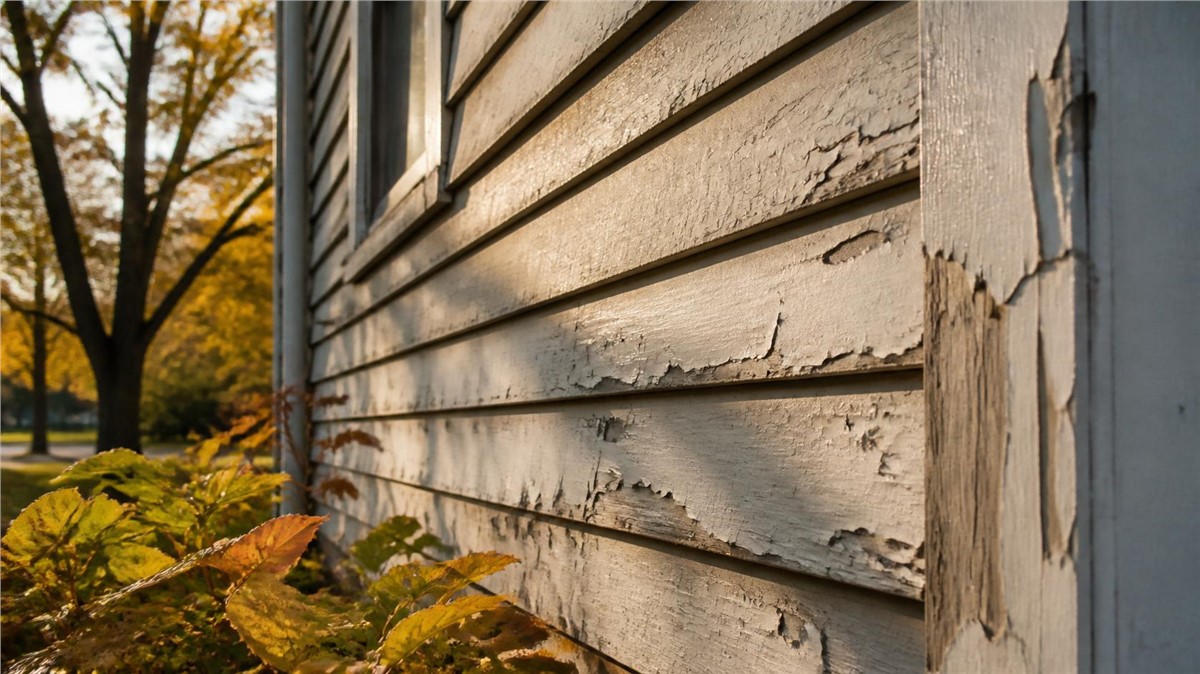
Paint failure at impact points. Even where hail does not chip the surface material outright, the impact can break the bond between paint and substrate at the contact point — creating a small area of delaminated paint that will peel progressively and allow moisture into the substrate below. This damage is subtle in the weeks after a storm and more obvious months later when peeling has progressed.
Edge and cut surface vulnerability. Fiber cement's most moisture-vulnerable points are cut edges and the bottom edge of each course. Hail impact near these edges — particularly at the bottom of panels and around penetrations — can fracture the substrate in ways that accelerate moisture infiltration at the points where the material is already most at risk.
Aluminum Siding and Soffit
Aluminum siding and soffit produce the most visible hail damage of any common exterior material — denting. The circular dent pattern that hail leaves on aluminum is the single most reliable ground-level indicator that a hail event of meaningful intensity has affected a property.
Denting pattern. Hail leaves circular dents distributed across aluminum surfaces in a pattern that mirrors the hailstone size and storm direction. Consistent denting across horizontal gutter runs and aluminum soffit panels is one of the first things a contractor looks for when assessing a property for hail damage — it confirms hail exposure across the full building exterior simultaneously.
Coating compromise. Beyond cosmetic denting, hail impact breaks the paint or anodized finish on aluminum at the impact point — exposing the raw aluminum to oxidation. On older aluminum siding where the finish has already been compromised by UV weathering, hail impact accelerates corrosion at every impact point.
Wood and Engineered Wood Siding
Wood and engineered wood siding show hail damage as splits, dents, and surface fracturing at impact points. On painted surfaces, the paint failure pattern is similar to fiber cement — circular areas of delaminated or missing paint at impact points. On stained or clear-finished surfaces, raw wood color at the impact site is the visual indicator.
The moisture risk with wood siding hail damage is immediate — exposed wood absorbs moisture readily, and the cycle of wetting and drying at the impact site accelerates deterioration from that point forward.
Where Hidden Damage Hides
The visible surface impact is only part of the hail damage story on a sided home. Here is where the damage that most homeowners miss tends to be located.
Behind Cracked or Displaced Panels
A cracked vinyl panel or a chipped fiber cement panel is an open entry point for water. The visible damage is on the outer surface. What accumulates behind it — against the housewrap, on the sheathing, in the wall cavity — is what determines the long-term consequence.
Housewrap behind a cracked panel may remain intact initially but is now managing water it was not designed to handle at sustained volume. Repeated wetting and drying cycles stress the housewrap at the opening, and water that finds any lap joint, fastener penetration, or imperfect seal in the housewrap layer reaches the sheathing below.
Sheathing that has been repeatedly wetted begins to soften, and in extreme cases develops mold on its interior surface — not visible from outside, discoverable only when the siding is removed.
At Trim, Corner Posts, and Window Surrounds
These are the most structurally vulnerable points in any siding system — where two surfaces meet, where caulk is relied on to maintain a watertight joint, and where panel ends are exposed rather than overlapped. Hail that cracks or displaces a corner post or damages a window surround creates an opening at a point where water management is already more complex than on a flat field panel.
Failed caulk joints at window surrounds — whether caused by hail impact or simply accelerated by the same storm's thermal stress — allow water into the rough opening around windows, where it contacts framing lumber and insulation that are never designed for direct moisture exposure.
Behind Soffit Panels
Soffit panels are a direct pathway to the attic assembly when compromised. Hail-damaged soffit — cracked vinyl, dented aluminum, or displaced panels — allows wind-driven rain to enter the eave area and contact the roof deck, attic insulation, and rafter framing from below. This damage pathway is entirely invisible from ground level and is one of the reasons professional inspection of soffit condition after a hail event is genuinely important.
At Penetrations — Hose Bibs, Dryer Vents, Electrical
Every utility penetration through siding — hose bibs, dryer vents, electrical boxes, cable entries — is a point where the panel system has been cut and the opening sealed with caulk or a cover plate. Hail impact near these penetrations can crack panels adjacent to the opening, displace cover plates, or break the caulk seal around the penetration — any of which creates a water entry pathway at a point that already required extra attention.
In the Fascia and Soffit System
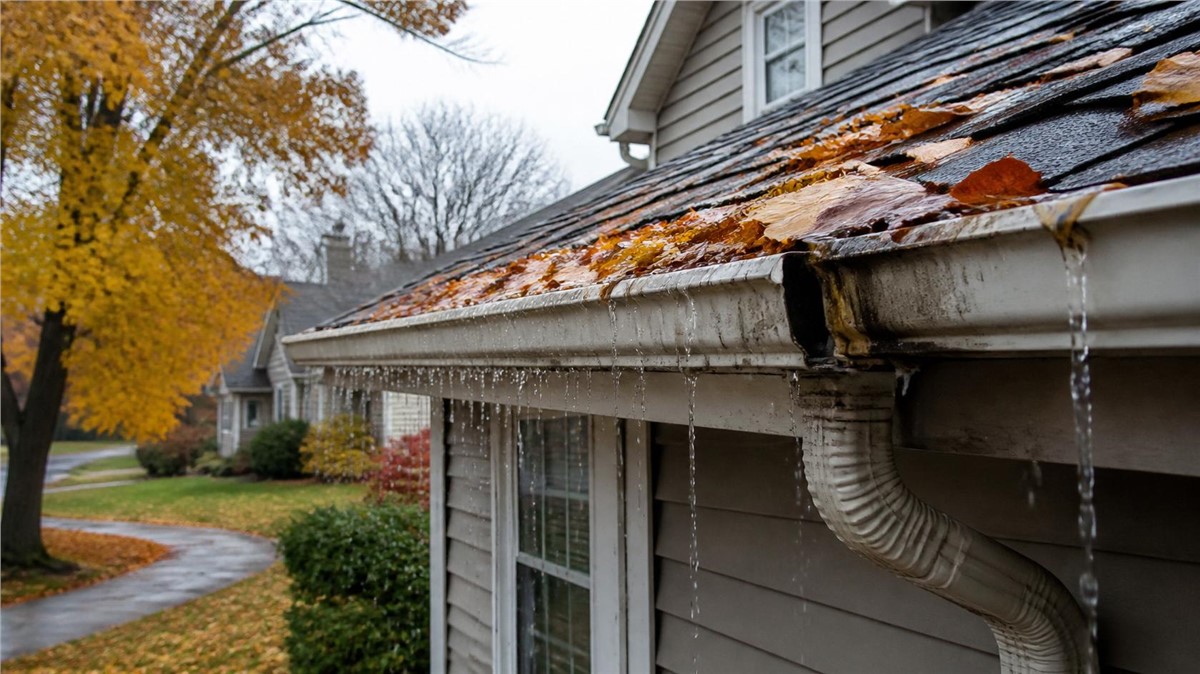
Hail events that damage siding also damage fascia boards and soffit panels. Fascia that has been dented, cracked, or had its paint finish compromised by hail impact becomes a moisture absorption point — particularly problematic if gutters have also been damaged and are allowing water to back up against the fascia rather than flowing through.
What a Professional Hail Damage Assessment Covers
A professional exterior inspection after a hail event covers more than a homeowner walk-around can, for two reasons: access and technique.
Access — a contractor can get close to every elevation, including upper floors and roof-adjacent areas that are not safely accessible from the ground. Upper courses of siding, soffit panels at the eave, and flashing at the roofline are all points where hail damage occurs and where ground-level inspection is insufficient.
Technique — assessing siding for hail damage involves more than looking at it. Pressing on panels to feel for micro-fractures beneath the surface, checking trim engagement in locking channels, testing caulk joint integrity at window surrounds, and probing for soft spots behind suspect areas all require close-contact assessment that a walk-around cannot provide.
A thorough professional assessment covers:
- All siding elevations from close range — not just the most accessible slopes
- All trim components: corner posts, J-channels, window and door surrounds, soffit panels
- Fascia condition including paint integrity and any soft spots indicating moisture infiltration
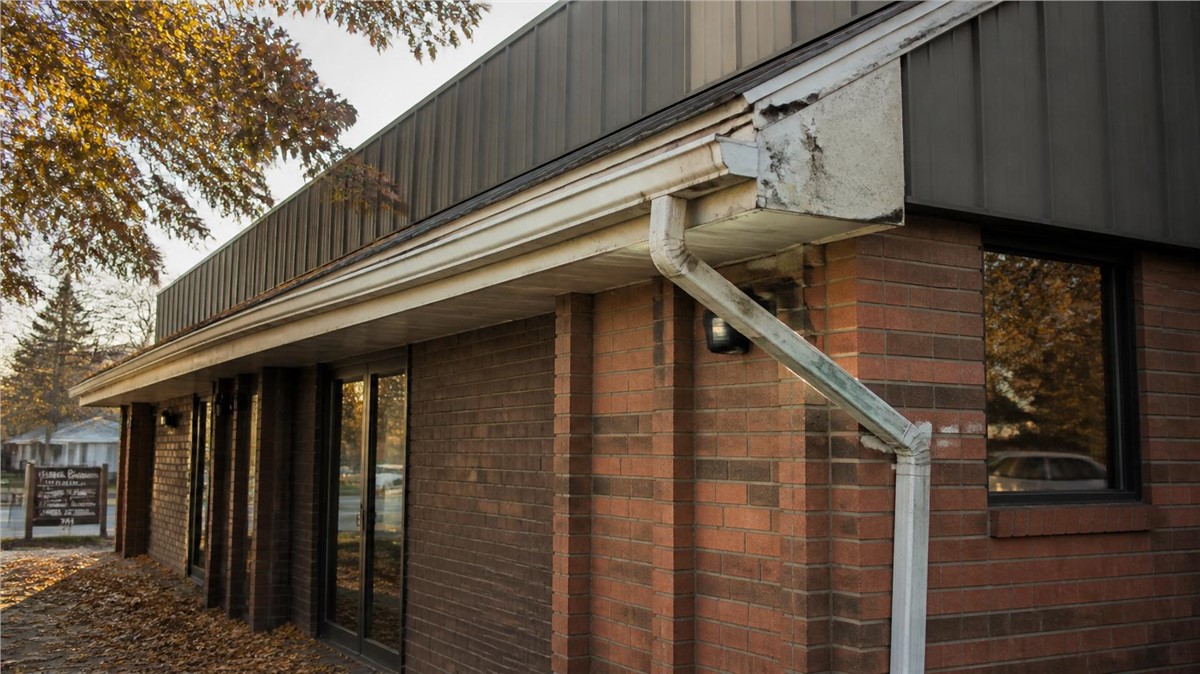
- Gutter condition — hail denting pattern, hanger condition, downspout integrity
- Flashing at utility penetrations and at roof-to-wall transitions
- Window frames and glazing for impact damage
- Documentation with photographs of each damage finding — wide context shots and close-up detail shots
That documentation serves two purposes: it gives the homeowner an accurate picture of what the storm did to their home, and it provides the evidentiary basis for an insurance claim that can survive adjuster scrutiny.
The Insurance Claim Dimension
Hail damage to siding is covered under most standard homeowners insurance policies in Illinois as sudden storm damage. But filing a claim effectively requires documentation that is timely, thorough, and consistent across multiple exterior systems.
Why documentation across systems matters. A claim that shows hail damage to siding alongside consistent findings on the roof and gutters — all consistent with the same storm event — is far more defensible than a claim that addresses siding alone. Insurance adjusters look for consistency. Corroborating damage patterns across roofing, siding, and gutters tell a coherent story about a single storm event.
Why timing matters. Secondary deterioration — moisture damage that develops from an original hail impact over subsequent weeks and months — is more difficult to attribute to the storm event as time passes. Documentation completed within days or a few weeks of the storm is more useful to a claim than documentation prepared months later when additional weathering has altered the damage picture.
What to avoid. Beginning permanent repairs before the insurance adjuster has assessed the damage can complicate the claim. Temporary protective measures — covering cracked panels, sealing open areas — are appropriate and expected. Permanent repairs that cover or remove evidence of damage before adjuster assessment make it harder to establish what the storm caused.
Acting on What You Find
Hail damage to siding in Marengo follows a predictable pattern when left unaddressed: the visible surface damage opens an entry point, moisture works through that entry point with each subsequent rain event, and the hidden damage in the wall assembly accumulates until an interior symptom makes it impossible to ignore.
At that point, what was a siding repair has become a siding repair plus sheathing repair plus potential mold remediation — a project significantly more expensive and disruptive than the original damage would have required.
The homeowners who avoid that sequence are the ones who treat post-storm inspection as an immediate priority, document what they find comprehensively, and act on confirmed damage before the next rain event has the opportunity to compound it.
Contact Huskie Exteriors for professional roofing, siding, window, gutter, and storm damage services in Illinois and Wisconsin. If your Marengo home was in the path of a recent hailstorm — or if you have concerns about siding damage from a previous storm season — our team is ready to inspect, document, and walk you through your options clearly and honestly.
Subscribe to Huskie Exteriors's Blog





Comments