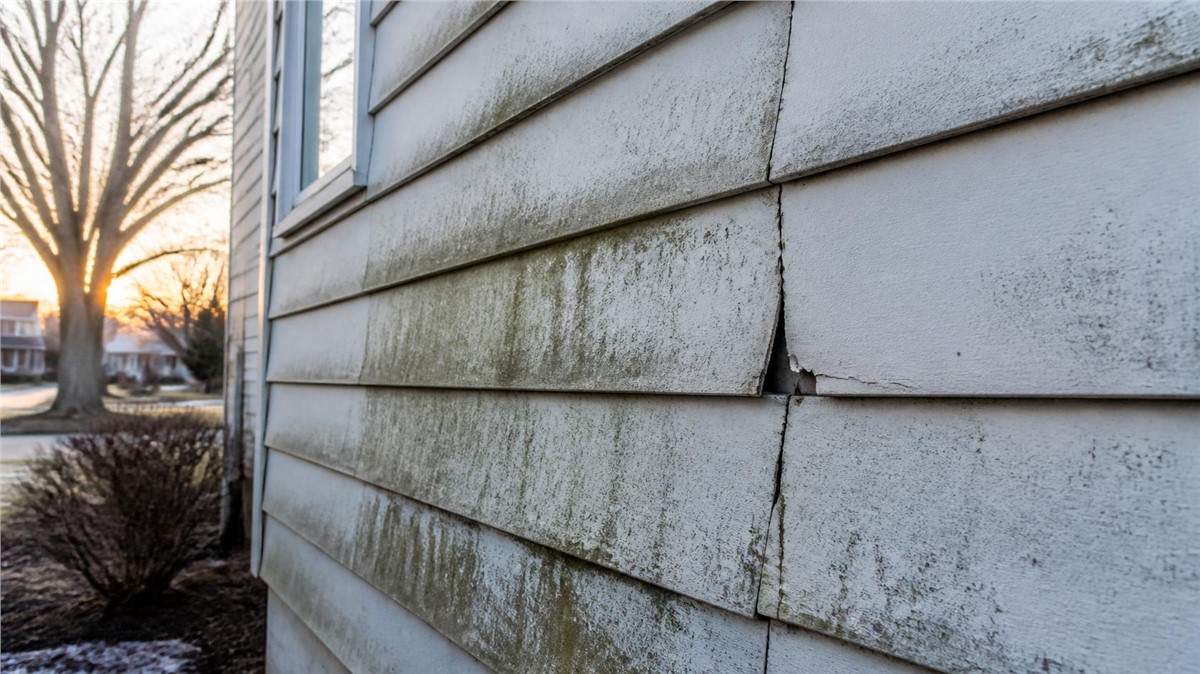
Siding problems in Whitefish Bay, WI, can develop from age, moisture, hail, strong winds, snow, ice, and repeated freeze-thaw cycles. Homeowners should watch for cracks, loose panels, warping, fading, rot, water stains, and gaps around windows or doors before small issues lead to more extensive exterior damage.
Why Siding Problems Should Not Be Ignored
Siding does more than improve a home's appearance. It helps protect the wall system from rain, wind, snow, ice, moisture, and changing temperatures.
When siding becomes damaged, water may reach the materials underneath, including house wrap, sheathing, insulation, and wall framing.
Homes in Whitefish Bay experience a wide range of Wisconsin weather throughout the year. Strong winds, hail, heavy rain, winter snow, ice buildup, and freeze-thaw cycles can gradually weaken exterior materials.
Some siding problems are easy to notice. Others develop behind panels or around windows, doors, rooflines, and exterior penetrations.
Regular inspections can help homeowners identify issues before moisture damage spreads.
Cracked or Broken Siding
Cracks are one of the most common siding problems homeowners may notice.
Vinyl siding can crack after hail impacts, falling branches, lawn equipment damage, or exposure to extreme temperatures. Fiber cement and engineered siding can also develop cracks if they are damaged or improperly installed.
Small cracks should not automatically be dismissed.
Water can enter through an opening and reach the wall assembly behind the siding. During cold weather, moisture inside cracks may freeze and expand, making the damage larger.
Look closely around:
- Corners
- Windows
- Doors
- Lower wall sections
- Roof-to-wall connections
- Utility penetrations
- Areas exposed to hail or debris
A small damaged section may sometimes be repairable, while widespread cracking may require a larger evaluation.
Loose or Missing Siding Panels
Strong winds can loosen siding even when panels do not completely detach from the home.
Loose siding may rattle during windy weather, shift out of alignment, or create visible gaps between sections.
Missing panels leave the wall underneath directly exposed to rain and snow.
Signs of loose siding include:
- Panels moving in the wind
- Uneven horizontal lines
- Open seams
- Gaps at corners
- Siding pulling away from trim
- Loose sections around roof edges
After a strong windstorm in Whitefish Bay, homeowners should walk around the property and look for siding pieces in the yard or panels that no longer sit flat.
Wind-driven rain can enter behind loose siding, so damaged sections should be evaluated promptly.
Warping and Buckling
Siding should normally sit flat and maintain consistent spacing.
Warped or buckled panels may indicate installation problems, temperature expansion, moisture, or damage behind the siding.
Vinyl siding expands and contracts as temperatures change. If it is fastened too tightly, it may not have enough room to move.
This can cause panels to:
- Bow outward
- Ripple
- Buckle
- Pull at fasteners
- Shift out of alignment
Warping can also develop when heat from grills, reflected sunlight, or nearby equipment affects vinyl siding.
If only one area is distorted, the problem may be localized. Widespread warping may indicate installation or material concerns that require a closer inspection.
Rot in Wood Siding or Trim
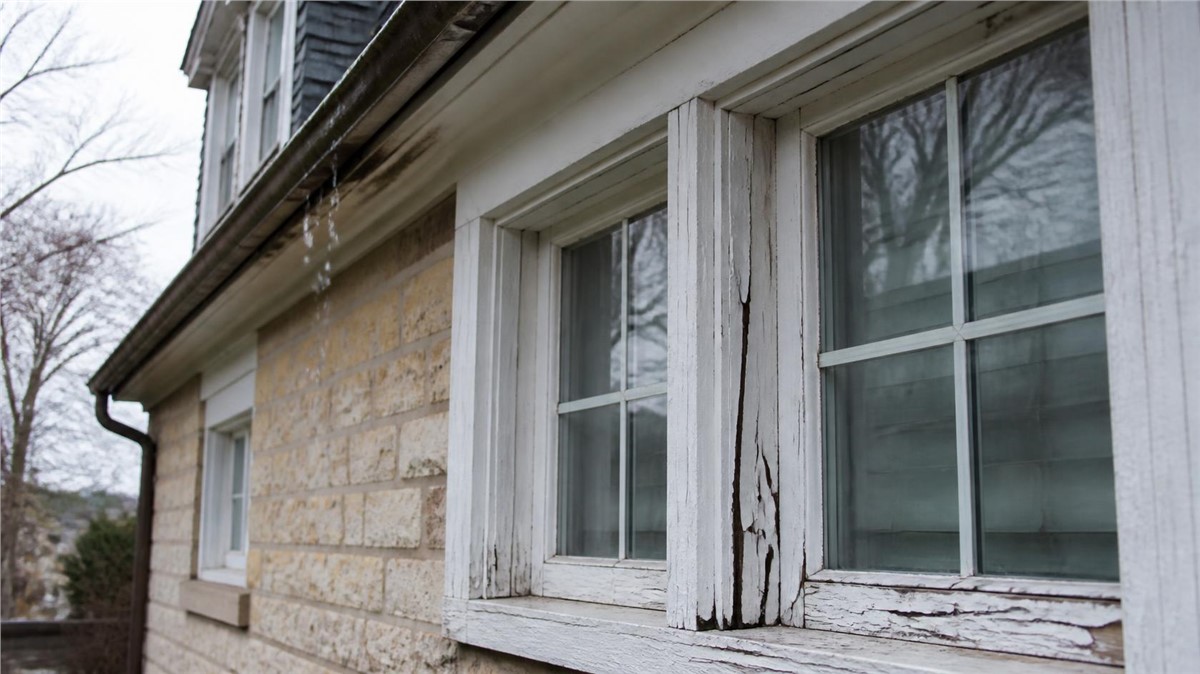
Wood siding and exterior trim can deteriorate when moisture remains trapped in the material.
Rot commonly develops around:
- Window trim
- Door frames
- Lower siding boards
- Roof intersections
- Gutters
- Downspouts
- Deck connections
- Areas near landscaping
Homeowners may notice soft wood, peeling paint, dark staining, swelling, or crumbling surfaces.
Rot is usually a moisture problem rather than simply an age problem.
Possible sources include overflowing gutters, failed caulk, damaged flashing, siding gaps, roof leaks, or water splashing repeatedly against the lower wall.
Replacing rotted wood without correcting the moisture source may allow the problem to return.
Hail Damage
Hail can damage several siding materials.
Vinyl siding may crack, chip, or develop holes. Metal siding may become dented. Fiber cement products may chip or fracture depending on the impact.
Hail damage can sometimes be difficult to see, especially on upper walls.
After a hailstorm, check for damage on:
- Siding
- Gutters
- Downspouts
- Window screens
- Exterior trim
- Roof vents
- Fascia
Damage on these nearby components may suggest that the siding was also affected.
A small hail impact may not immediately create a visible interior leak, but it can weaken the exterior protection and create a pathway for future moisture.
Wind Damage
Strong winds are another common siding concern in Wisconsin.
Wind can pull siding away from the wall, loosen trim pieces, damage soffit or fascia, and drive rain into small openings.
Pay particular attention to:
- Building corners
- Gable walls
- Roof edges
- Upper siding sections
- Areas around windows
- Sections facing open exposure
Wind damage can be especially difficult to identify when panels settle back into place after the storm.
If siding begins rattling, shifting, or separating after severe weather, it should be inspected before another storm causes more damage.
Fading and Discoloration
Siding naturally changes appearance over time.
Sunlight can gradually fade certain colors, while moisture, dirt, algae, and environmental exposure may cause uneven discoloration.
Fading alone does not necessarily mean the siding has failed.
However, uneven staining can sometimes indicate a larger issue.
Watch for:
- Dark streaks
- Water stains
- Green or black growth
- Rust-colored marks
- Discoloration beneath gutters
- Stains around windows
- Uneven patches after storms
Water stains may point to leaking gutters, damaged flashing, siding gaps, or roof drainage problems.
Cleaning may solve surface discoloration, but recurring stains should be investigated.
Moisture Behind the Siding
One of the more serious siding problems may be hidden completely from view.
Water can move behind siding through damaged flashing, open joints, failed caulk, roof leaks, or improperly detailed window and door openings.
Possible interior warning signs include:
- Peeling paint
- Soft drywall
- Musty odors
- Water stains
- Swollen trim
- Damp insulation
- Mold-like discoloration
Exterior clues may include siding that feels soft, swollen, warped, or loose.
If moisture remains trapped behind siding, it may damage the wall sheathing or framing.
A professional evaluation may require temporarily removing siding to inspect the materials underneath.
Problems Around Windows and Doors
Windows and doors are common areas for siding-related leaks.
These openings require proper flashing and integration with the wall's water-management system.
Check for:
- Gaps around trim
- Cracked caulk
- Loose siding
- Rot around window frames
- Water stains
- Peeling paint
- Damaged flashing
- Swollen materials
Wind-driven rain can enter around poorly sealed openings.
During Whitefish Bay winters, repeated freezing and thawing can make small gaps larger. Water entering during a warmer period may freeze when temperatures drop and create additional separation.
Recurring moisture around a window or door should be investigated rather than repeatedly covered with new caulk.
Siding Problems Near the Roofline
Roof and siding systems meet in several vulnerable areas.
Problems may develop around:
- Dormers
- Chimneys
- Roof-to-wall intersections
- Second-story walls
- Porch roofs
- Additions
These areas depend on flashing to direct water away from the wall.
If flashing is missing, bent, damaged, or covered with failing sealant, water may move behind the siding.
Snow and ice can increase the risk during winter because melting water may remain against these transitions for longer periods.
If siding deterioration is concentrated near a roofline, the roofing and flashing should be inspected along with the siding.
Gutter Problems Can Damage Siding
Gutters play an important role in protecting exterior walls.
When gutters are clogged, loose, damaged, or improperly sloped, water may overflow directly onto siding.
Over time, repeated exposure can cause:
- Staining
- Rot
- Peeling paint
- Mold-like growth
- Moisture behind siding
- Foundation drainage problems
Downspouts should also move water away from the structure.
During winter, clogged gutters may freeze and develop heavy ice buildup. This can pull gutters away from the fascia and redirect melting water onto the exterior walls.
Cleaning and maintaining the gutter system can help protect both the roof and siding.
Freeze-Thaw Cycles and Exterior Damage
Freeze-thaw cycles are a major concern for Wisconsin homes.
Moisture can enter small cracks or joints during rain or melting snow. When temperatures fall below freezing, that moisture expands.
Repeated cycles can:
- Widen siding cracks
- Open trim joints
- Damage caulk
- Loosen fasteners
- Worsen masonry gaps
- Increase water intrusion
Small exterior defects noticed during fall may become significantly worse by spring.
Homeowners in Whitefish Bay should consider inspecting siding after winter and again after major summer storms.
Mold, Mildew, and Organic Growth
Green, black, or brown growth may appear on shaded sections of siding, especially where moisture remains for extended periods.
Surface growth may develop due to:
- Shade
- Poor airflow
- Nearby vegetation
- Gutter overflow
- Sprinklers
- Persistent dampness
In some cases, cleaning may be enough.
However, homeowners should determine why the area remains wet.
If growth repeatedly returns in one location, check nearby gutters, siding seams, roof drainage, window flashing, and landscaping.
Persistent moisture behind siding requires more attention than surface staining.
Damage at the Bottom of the Wall
Lower siding sections can be affected by water splash, snow accumulation, landscaping, lawn equipment, and soil contact.
Siding should have proper clearance from the ground where required by the material and installation system.
Problems near the bottom of the wall may include:
- Cracks
- Rot
- Impact damage
- Swelling
- Stains
- Insect activity
- Moisture damage
Snow piled against the exterior can keep lower siding wet for extended periods.
Homeowners should avoid allowing mulch, soil, or vegetation to cover areas that need drainage and airflow.
When Can Siding Be Repaired?
Repair may be appropriate when damage is limited to a small area.
Examples include:
- A few cracked panels
- One missing siding section
- Localized storm damage
- Damaged trim
- A small area of rot
Before repairing the visible siding, the contractor should determine whether water reached the materials underneath.
If the sheathing and wall system remain dry and sound, replacing the damaged exterior material may be enough.
Color matching can sometimes be challenging on older siding because existing panels may have faded over time.
When Should Siding Replacement Be Considered?
Replacement may make more sense when damage is widespread or the existing siding has multiple recurring problems.
Signs that homeowners may want to consider replacement include:
- Extensive cracking
- Widespread warping
- Frequent repairs
- Large areas of rot
- Major storm damage
- Persistent moisture problems
- Loose siding across multiple walls
- Severe fading or deterioration
- Damage to the underlying wall system
Replacement also provides an opportunity to inspect house wrap, sheathing, insulation, window flashing, and other hidden components.
A contractor should explain whether repair or replacement is recommended and why.
Should Siding Be Inspected After a Storm?
Yes.
Even when the roof receives most of the attention after severe weather, siding may also suffer damage.
After hail or strong winds in Whitefish Bay, homeowners should check all sides of the property.
Look for:
- Cracks
- Dents
- Loose panels
- Missing sections
- Broken trim
- Damaged gutters
- Window damage
- Debris impacts
Photograph visible problems and avoid pulling damaged materials away from the wall.
A professional exterior inspection can evaluate the roof, siding, windows, gutters, flashing, and related areas together.
How Homeowners Can Help Protect Their Siding
Routine maintenance can help extend the life of siding and identify problems early.
Helpful steps include:
- Inspect siding every spring and fall
- Check after severe storms
- Keep gutters clean
- Repair damaged downspouts
- Trim vegetation away from the walls
- Direct sprinklers away from siding
- Replace failed sealant where appropriate
- Maintain painted wood surfaces
- Check window and door trim
- Address roof leaks promptly
Homeowners should also watch for changes rather than waiting for major damage to become obvious.
A loose panel or small crack is generally easier to address before moisture reaches deeper layers of the wall.
Schedule a Siding Inspection in Whitefish Bay, WI
Siding problems can begin with a small crack, loose panel, hail impact, or drainage issue and eventually affect the wall system behind the exterior surface.
Huskie Exteriors provides siding, roofing, window, gutter, and storm damage restoration services for homeowners and commercial property owners throughout Illinois and Wisconsin.
If you notice cracked, loose, warped, faded, rotted, or storm-damaged siding on your property in Whitefish Bay, WI, contact Huskie Exteriors through huskieexteriors.com. A professional exterior inspection can help identify the source and extent of the problem and determine whether repair or replacement is the appropriate next step.
Subscribe to Huskie Exteriors's Blog






Comments