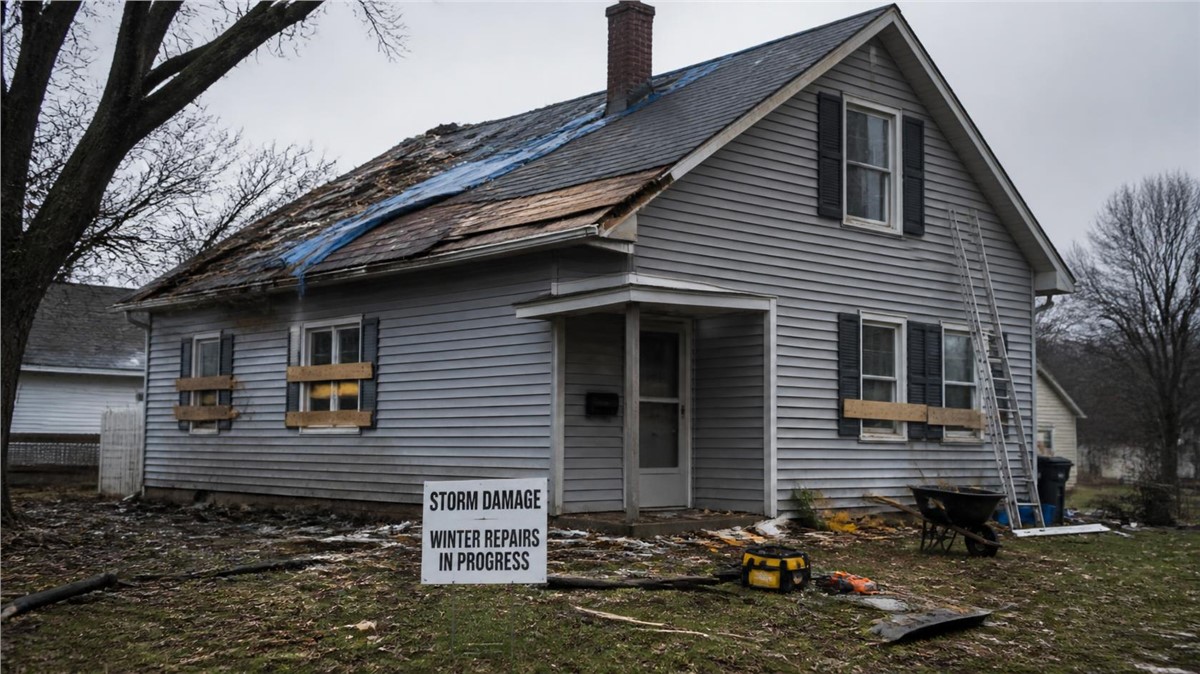
Storm damage should be inspected and repaired before winter because snow, ice, freezing temperatures, and repeated freeze-thaw cycles can turn small roof, siding, window, or gutter problems into larger issues. For homeowners and commercial property owners in Whitewater, WI, handling repairs early can help prevent leaks, heat loss, structural damage, and emergency work during severe winter weather.
Why Storm Damage Is Easy to Miss
Storm damage is not always obvious from the ground. A property may look normal after a strong storm even though roofing materials, flashing, siding, windows, or gutters have been weakened.
Hail may create small impact marks that do not immediately leak. Wind may lift shingles without removing them completely. Gutters may remain attached while becoming loose, dented, or improperly sloped.
These problems can become more serious once winter arrives in Whitewater, WI. Snow, ice, and freezing temperatures place additional stress on damaged materials. Moisture can also enter small openings, freeze, expand, and make the damage worse.
A professional inspection before winter helps identify problems while conditions are still safer and repairs are often easier to complete.
Common Types of Storm Damage in Whitewater
Properties in southern Wisconsin can be affected by several types of severe weather throughout the year.
Hail Damage
Hail can damage asphalt shingles, metal roofing, siding, gutters, window trim, and exterior fixtures.
On asphalt shingles, hail may:
- Knock away protective granules
- Bruise the shingle surface
- Crack older materials
- Weaken the fiberglass mat
- Damage roof vents or flashing
Granule loss exposes more of the shingle to sunlight and moisture. While one small impact may not create an immediate leak, widespread hail damage can shorten the useful life of the roof.
Hail can also dent metal gutters and downspouts, crack vinyl siding, damage window screens, and leave marks on fascia or trim.
Wind Damage
Strong winds may lift, crease, loosen, or remove roofing materials. Shingles can be damaged even when they remain on the roof.
Wind-driven rain may enter beneath lifted shingles, around flashing, through damaged siding, or near window openings.
Common wind-related problems include:
- Missing shingles
- Creased shingle tabs
- Loose ridge caps
- Bent flashing
- Detached gutters
- Damaged soffit or fascia
- Loose siding panels
- Fallen tree limbs
- Damage around roof edges
Commercial buildings may also experience loose membrane seams, damaged rooftop equipment, displaced metal panels, or problems around parapet walls.
Heavy Rain and Water Intrusion
Heavy rain may reveal weaknesses that were already present or create new water entry points after hail or wind damage.
Water may enter through:
- Damaged shingles
- Open roof seams
- Cracked flashing
- Loose siding
- Worn window seals
- Overflowing gutters
- Damaged roof valleys
- Openings around vents or chimneys
The visible water stain may not be directly below the damaged area. Moisture can travel along roof decking, framing, insulation, or interior walls before appearing indoors.
Fallen Branches and Debris
Tree limbs and windblown debris can puncture roofing, crack siding, damage gutters, break windows, or create hidden structural problems.
Even when a branch does not break through the roof, the impact may loosen shingles or damage the roof deck below the surface.
After a major storm, property owners should check the ground for roofing debris, broken siding, gutter pieces, or tree limbs near the building.
Why Repairs Should Be Completed Before Winter
Delaying storm damage repairs may allow a manageable issue to become more expensive and disruptive.
Freezing Water Can Widen Small Openings
Water can enter small cracks in roofing, masonry, siding, sealant, or flashing. When temperatures drop below freezing, that trapped water expands.
This freeze-thaw process may:
- Enlarge cracks
- Loosen materials
- Separate flashing
- Damage masonry
- Open roof seams
- Weaken exterior sealants
Whitewater frequently experiences changing temperatures during fall and winter. Repeated freezing and thawing can be especially hard on damaged building materials.
Snow Adds Weight to Weakened Areas
Snow creates additional weight on the roof. Wet, heavy snow can place more stress on areas already weakened by wind, hail, falling branches, or water damage.
A roof with damaged decking, compromised flashing, or loose roofing materials may be more vulnerable during winter weather.
Commercial roofs may hold snow longer because of their lower slope. Drifting snow can also collect near rooftop equipment, parapet walls, roof drains, or transitions between roof sections.
Ice Can Block Normal Drainage
Ice dams may form when melting snow refreezes near the roof edge. This can prevent water from draining properly and force moisture beneath shingles or behind exterior materials.
Storm-damaged gutters can make drainage problems worse. A loose or clogged gutter may allow water to collect near the roof edge, overflow against siding, or freeze into heavy sections of ice.
Commercial roof drains and scuppers can also become blocked by leaves, debris, snow, or ice. Standing water may then collect on the roof surface.
Cold Weather Can Limit Repair Options
Some roofing materials, adhesives, sealants, and coatings perform best within certain temperature ranges.
Emergency winter repairs may still be possible, but cold temperatures, snow-covered surfaces, and icy conditions can make the work more complicated.
Completing repairs during fall gives contractors better access to damaged areas and allows materials to be installed under more suitable conditions.
Signs Your Property May Have Storm Damage
Property owners should inspect their building after hail, strong wind, heavy rain, or falling debris.
Look for exterior warning signs such as:
- Missing or lifted shingles
- Shingle granules in gutters
- Dented gutters or downspouts
- Loose siding
- Cracked exterior panels
- Damaged window screens
- Bent flashing
- Broken roof vents
- Loose fascia or soffit
- Fallen tree limbs
- Water overflowing from gutters
Interior signs may include:
- Ceiling stains
- Damp drywall
- Peeling paint
- Musty odors
- Wet insulation
- Water near windows
- Discolored roof decking
- Dripping during rain
- Unexplained cold drafts
A small stain should not be ignored. It may indicate that water has already moved through insulation, framing, or roofing materials.
Roof Damage to Address Before Snowfall
The roof is the first line of defense against winter weather. Any storm-related weakness should be evaluated before snow and ice cover the surface.
Missing or Lifted Shingles
Missing shingles leave the roof underlayment exposed to rain, snow, and ice. Lifted shingles may allow wind-driven moisture to enter beneath the roofing system.
A shingle that has been creased by wind may not seal properly again, even if it remains attached.
Damaged Flashing
Flashing is installed around roof openings and transitions, including:
- Chimneys
- Skylights
- Plumbing vents
- Roof valleys
- Sidewalls
- Dormers
- Roof edges
Bent, cracked, rusted, or loose flashing can allow water into vulnerable joints.
Snow and ice may remain around these areas longer, increasing the chance of moisture intrusion.
Damaged Roof Decking
Falling branches, prolonged leaks, and storm impacts may weaken the wood decking beneath the roof covering.
Soft, stained, or rotted decking may not properly support roofing materials or snow loads. Damaged sections should be identified before winter weather adds more stress.
Commercial Membrane Damage
Flat and low-slope commercial roofs may develop:
- Punctures
- Open seams
- Loose flashing
- Damaged edge metal
- Membrane separation
- Wet insulation
- Blocked drainage areas
Small punctures may allow water to spread beneath the roof membrane. Because the damage is often hidden, a commercial roof inspection is especially important after a major storm.
Siding Damage Can Affect More Than Appearance
Storm-damaged siding can expose the wall system to moisture, wind, and cold air.
Cracked, loose, missing, or punctured siding may allow water to reach the sheathing or insulation behind it. During winter, trapped moisture may freeze and cause further deterioration.
Damage may also reduce energy efficiency by allowing drafts into the building.
Common siding concerns include:
- Cracks from hail
- Loose panels
- Missing sections
- Dents in metal siding
- Warped vinyl siding
- Damage around corners
- Open seams
- Loose trim
- Water stains below damaged areas
Commercial metal siding and exterior panels should also be checked around fasteners, joints, loading areas, and roof-to-wall connections.
Check Windows and Exterior Openings
Windows may be affected by hail, wind-driven debris, water intrusion, or building movement during severe weather.
Look for:
- Cracked glass
- Torn screens
- Damaged frames
- Loose trim
- Water stains
- Failed seals
- Condensation between glass panes
- Drafts around the frame
- Difficulty opening or closing the window
Damaged window seals can allow cold air and moisture into the property. In winter, this may lead to condensation, frost, higher heating demand, or damage to surrounding walls.
Doors, vents, skylights, and other exterior openings should be inspected as well.
Gutters Are Important Before Winter
Gutters and downspouts direct rainwater and melting snow away from the roof, siding, foundation, and walkways.
Storm-damaged gutters may sag, leak, overflow, or pull away from the fascia.
Before winter, check for:
- Dents
- Loose fasteners
- Separated joints
- Improper slope
- Clogs
- Cracked downspouts
- Missing sections
- Water collecting near the foundation
Leaves and storm debris should be removed before temperatures drop. Clogged gutters can hold water that later freezes, adding weight and increasing the risk of gutter separation.
Commercial drainage systems should also be checked, including roof drains, scuppers, downspouts, and ground-level discharge areas.
Residential Storm Damage Considerations
For homeowners in Whitewater, storm damage can affect comfort, safety, and the condition of the home.
Important areas to inspect include:
- Main roof sections
- Attached garages
- Porches
- Chimneys
- Skylights
- Siding
- Windows
- Gutters
- Fascia and soffit
- Attic insulation
Homeowners should also look inside the attic for daylight, wet insulation, dark wood, mold-like staining, or signs of active moisture.
Do not walk on a steep, wet, damaged, or icy roof. Many storm-related problems are difficult to identify safely without the proper equipment and experience.
Commercial Property Considerations
Commercial buildings often have larger roof surfaces, more drainage points, and multiple exterior systems that may be affected by storms.
A commercial inspection may include:
- Roof membrane
- Metal roofing
- Flashing
- Parapet walls
- Rooftop equipment
- Roof drains
- Scuppers
- Exterior wall panels
- Windows and entrances
- Loading areas
- Interior ceiling systems
Leaks can damage inventory, equipment, offices, electrical systems, tenant spaces, and insulation.
Because water can travel beneath a commercial roof membrane, the visible interior damage may be far from the actual entry point.
Completing repairs before winter can help reduce disruption to employees, customers, tenants, and daily operations.
What to Do After a Severe Storm
After a storm, take practical steps to document and protect the property.
- Photograph visible exterior and interior damage
- Note when the storm occurred
- Save damaged material that has fallen to the ground
- Move furniture or equipment away from leaks
- Use containers to catch active dripping
- Avoid damaged electrical areas
- Schedule a professional inspection
- Keep records of temporary and permanent repairs
Temporary tarps or patches may help limit immediate water entry, but they should not be treated as permanent solutions.
A full inspection can identify whether the property needs isolated repairs, replacement of damaged materials, drainage corrections, or broader storm restoration work.
Repairing Damage Now Can Prevent Winter Emergencies
Winter weather can make roofing and exterior problems harder to manage. Snow may hide damage, ice may block drainage, and freezing temperatures may limit access to affected areas.
Repairing storm damage before winter can help:
- Reduce the risk of active leaks
- Protect insulation and framing
- Improve roof drainage
- Prevent freeze-thaw damage
- Limit heat loss
- Protect interior finishes
- Reduce emergency repair needs
- Preserve business operations
Early repairs also allow property owners to prepare for winter with a clearer understanding of the building’s condition.
Schedule a Storm Damage Inspection in Whitewater, WI
Storm damage does not always lead to an immediate leak, but winter weather can quickly expose weaknesses in roofing, siding, windows, and gutters.
Huskie Exteriors serves homeowners and commercial property owners throughout Illinois and Wisconsin with roofing, siding, window, gutter, and storm damage restoration services.
If your property in Whitewater, WI, has been affected by hail, wind, heavy rain, or fallen debris, contact Huskie Exteriors through huskieexteriors.com. A professional inspection can help identify damage, explain the available repair options, and prepare your property before winter conditions arrive.
Subscribe to Huskie Exteriors's Blog






Comments