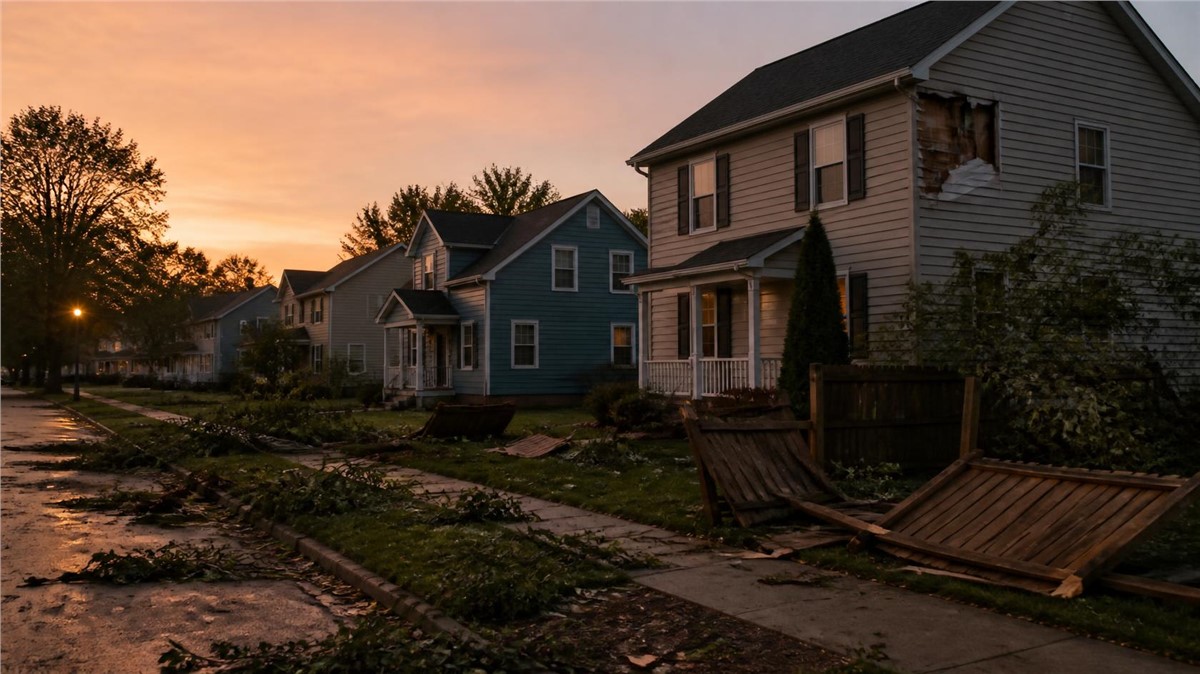
High winds can affect more than just the roof. A strong storm can damage shingles, siding, gutters, fascia, soffit, windows, doors, trim, and exterior drainage. Some damage is easy to see, like missing shingles or loose siding. Other problems may be hidden until the next heavy rain causes a leak.
For homeowners in Stoughton, WI, wind damage should be checked carefully because Wisconsin weather can bring wind-driven rain, hail, snow, ice, humidity, and freeze-thaw cycles. When wind damage is missed, water can enter through lifted shingles, open siding seams, loose flashing, or damaged roof edges.
This checklist explains what to inspect after high winds and when to call a contractor.
Start with Safety First
Before checking anything outside, make sure conditions are safe. Do not climb onto the roof or use a ladder during wet, windy, icy, or unstable conditions.
Avoid:
- Walking on the roof
- Touching downed wires
- Standing under hanging branches
- Pulling loose siding or gutters
- Entering areas with active water near electrical fixtures
- Inspecting during lightning or strong wind
A ground-level inspection is a safe first step, but a professional should inspect hard-to-reach areas.
Checklist Item 1: Look for Missing Shingles
Missing shingles are one of the clearest signs of wind damage. When shingles are gone, the roof surface may be exposed to rain and moisture.
Look for:
- Bare spots on the roof
- Shingles in the yard
- Shingle pieces near downspouts
- Missing ridge cap shingles
- Exposed roof areas
- Uneven roof sections
Missing shingles should be repaired quickly to reduce the chance of leaks.
Checklist Item 2: Check for Lifted or Creased Shingles
Wind can lift shingles without removing them completely. These areas may settle back down, making the damage harder to see from the ground.
Warning signs include:
- Raised shingle edges
- Creased tabs
- Uneven shingle rows
- Shingles that flap in the wind
- Exposed nail areas
- Loss of seal
- Loose ridge caps
Lifted shingles can allow wind-driven rain underneath the roof surface.
Checklist Item 3: Inspect Flashing Areas
Flashing protects vulnerable areas where water is more likely to enter. Wind can loosen flashing, crack sealant, or expose gaps.
Check around:
- Chimneys
- Skylights
- Roof vents
- Pipe boots
- Roof valleys
- Wall transitions
- Dormers
- Roof edges
Loose or damaged flashing should be inspected before the next storm.
Checklist Item 4: Review Roof Vents and Pipe Boots
Roof vents and pipe boots create openings through the roof. If wind loosens or damages them, water may enter the attic or ceiling areas.
Look for:
- Dented roof vents
- Loose vent covers
- Cracked pipe boots
- Open gaps
- Missing fasteners
- Rusted metal
- Moisture below vents in the attic
These small roof details can cause noticeable leaks if they fail.
Checklist Item 5: Check Gutters and Downspouts
Gutters help move water away from the roof edge, siding, foundation, and landscaping. Wind can loosen gutters, bend downspouts, or fill the system with debris.
Check for:
- Sagging gutters
- Gutters pulling away
- Loose hangers
- Leaking seams
- Bent downspouts
- Missing extensions
- Water behind gutters
- Debris blocking drainage
Gutter damage should be repaired because it can affect multiple areas of the home.
Checklist Item 6: Look for Fascia and Soffit Damage
Fascia and soffit sit near the roof edge and can be damaged when wind pulls gutters or roof materials loose.
Warning signs include:
- Loose soffit panels
- Soft fascia
- Peeling paint
- Water stains
- Gaps near the roofline
- Dark streaks
- Pest entry points
- Sagging gutter attachments
If fascia or soffit is damaged, the roof edge should also be checked.
Checklist Item 7: Inspect Siding
Wind can loosen siding panels, widen seams, break corners, or pull siding away from the wall. Even small gaps can allow moisture behind the exterior surface.
Look for:
- Loose siding
- Open seams
- Cracked panels
- Warped sections
- Broken corners
- Siding pieces in the yard
- Rattling during wind
- Water stains after rain
Siding damage should be repaired before another storm makes the opening larger.
Checklist Item 8: Check Windows and Doors
Wind-driven rain can enter around windows and doors if trim, caulking, flashing, or siding has been damaged.
Check for:
- Water on window sills
- Stains below windows
- Drafts
- Loose trim
- Failed caulking
- Fogging between panes
- Damp drywall
- Peeling paint indoors
If moisture appears around windows after a windstorm, the surrounding siding and flashing should also be inspected.
Checklist Item 9: Look for Debris Around the Property
Storm debris can show where damage may have occurred. Shingle pieces, siding pieces, trim, branches, and gutter parts should not be ignored.
Check for:
- Shingles in the yard
- Loose siding pieces
- Gutter parts
- Branches near the roof
- Nails or fasteners
- Broken trim
- Damaged screens
- Debris near downspouts
Take photos before cleanup if storm damage may need to be documented.
Checklist Item 10: Check the Attic If Safe
The attic can reveal roof damage before water reaches living areas. Only check the attic if it is safe and accessible.
Look for:
- Wet insulation
- Water trails
- Dark roof decking
- Rusted nails
- Damp rafters
- Musty smells
- Daylight through roof gaps
- Moisture near vents
Attic moisture after high winds may point to roof, flashing, or ventilation problems.
Interior Warning Signs After High Winds
Wind damage may not show up outside right away. Sometimes the first clue is inside the home after rain follows the storm.
Interior warning signs include:
- Ceiling stains
- Damp drywall
- Bubbling paint
- Musty odors
- Water near light fixtures
- Moisture around windows
- Stains near exterior walls
- Wet attic insulation
If water appears near electrical fixtures, avoid touching the area and contact a professional.
What to Document After Wind Damage
Documentation helps homeowners stay organized and explain concerns to a contractor or insurance provider if needed.
Helpful records include:
- Date of the wind event
- Photos of visible exterior damage
- Photos of shingles or siding in the yard
- Interior leak photos
- Gutter damage photos
- Notes about when leaks appeared
- Temporary repair receipts
- Contractor inspection findings
If storm damage may involve insurance, contact your insurance provider for policy-specific guidance.
Temporary Steps Before Repairs
If wind damage has exposed part of the exterior, temporary protection may help reduce additional damage before permanent repairs are made.
Temporary steps may include:
- Moving belongings away from leaks
- Catching dripping water if safe
- Protecting floors
- Keeping children and pets away from damaged areas
- Avoiding wet electrical areas
- Redirecting downspouts if safe
- Taking photos before cleanup
Temporary protection should not replace a full inspection or repair.
Repair vs Replacement
Not every wind damage issue requires replacement. Some problems can be repaired if they are isolated and the exterior system is still in good condition.
Repair may make sense if:
- A few shingles are missing
- One flashing area is loose
- One gutter section is damaged
- Siding damage is limited
- No hidden moisture is present
- Materials are still in good condition
Replacement may be better if:
- Damage is widespread
- Shingles are failing across several areas
- Siding is brittle or cracked throughout
- Gutters are bent or pulling away
- Leaks keep returning
- Repairs no longer last
A professional inspection can help determine the right scope.
Why a Full Exterior Inspection Helps
Wind can damage multiple exterior systems during the same storm. Looking only at the roof may miss siding, gutters, windows, fascia, soffit, flashing, or drainage issues.
A full exterior inspection may include:
- Roofing and roof edges
- Gutters and downspouts
- Siding and trim
- Windows and doors
- Flashing
- Fascia and soffit
- Attic and interior moisture signs
- Foundation drainage
- Storm damage areas
Huskie Exteriors provides roofing, siding, window, gutter, and storm damage restoration services, helping homeowners evaluate the full exterior after high winds.
Why Local Exterior Experience Matters
A local contractor understands how Wisconsin weather affects home exteriors. In Stoughton, WI, homes need roofing, siding, gutters, and windows that can handle high winds, heavy rain, hail, snow, ice, humidity, and freeze-thaw cycles.
Local experience helps homeowners determine whether damage is caused by wind, aging materials, storm impact, poor drainage, flashing failure, gutter problems, or hidden moisture.
Conclusion
A wind damage exterior checklist for homes in Stoughton, WI should include shingles, flashing, roof vents, gutters, downspouts, fascia, soffit, siding, windows, doors, attic moisture, and ground-level debris. Even small signs of wind damage should be checked before the next storm brings water into the home.
If your home has missing shingles, loose siding, damaged gutters, window leaks, fascia damage, attic moisture, or other storm damage concerns, Huskie Exteriors can inspect your exterior and recommend the right next step.
Contact Huskie Exteriors for professional roofing, siding, window, gutter, and storm damage services in Illinois and Wisconsin.
Subscribe to Huskie Exteriors's Blog








Comments