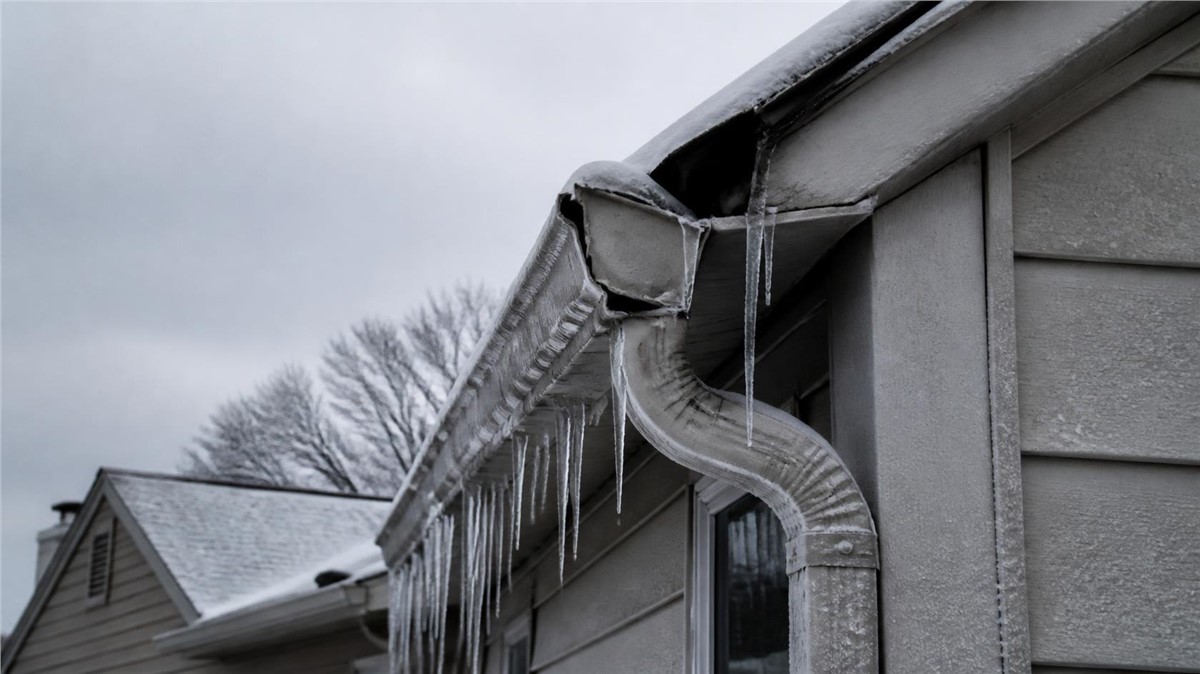
Winter weather can be hard on gutters. Snow, ice, freezing rain, and repeated freeze-thaw cycles can add weight, block drainage, and pull gutter systems out of position. Once gutters are damaged, they may not move water away from the home properly when snow melts or heavy rain arrives.
For homeowners in Darien, IL, ice-damaged gutters should be checked carefully because local homes face snow, ice, wind, heavy rain, humidity, and seasonal temperature swings. A gutter problem may start at the roof edge, but it can quickly affect siding, fascia, soffit, windows, landscaping, foundations, and basement areas.
This guide explains common signs of ice-damaged gutters and the repair options homeowners should consider.
Why Ice Damages Gutters
Gutters are designed to carry water, not heavy blocks of ice. When snow melts and refreezes, ice can build up inside the gutter or downspout. Over time, that weight can pull gutters loose, bend metal, open seams, and damage fascia boards.
Ice damage may be caused by:
- Clogged gutters
- Frozen downspouts
- Poor gutter pitch
- Heavy snowmelt
- Ice dams near roof edges
- Weak hangers
- Sagging gutter runs
- Short downspout extensions
- Poor attic ventilation
- Repeated freeze-thaw cycles
The cause matters because repairing the gutter without fixing the drainage problem may allow damage to return.
Sign 1: Gutters Pulling Away from the House
One of the most common signs of ice damage is a gutter pulling away from the fascia. Ice adds weight, and that weight can loosen hangers or fasteners.
Look for:
- Gaps between gutter and fascia
- Loose gutter sections
- Visible fasteners backing out
- Sagging along the roofline
- Water running behind the gutter
- Gutter movement during wind
If gutters are pulling away, they should be repaired before heavy rain causes more water damage.
Sign 2: Sagging Gutter Sections
Sagging gutters often mean the system has been overloaded by ice, debris, or standing water. A sagging section may no longer drain correctly.
Sagging can cause:
- Standing water
- Overflow during rain
- Ice buildup in the same area
- Loose hangers
- Fascia strain
- Roof edge damage
- Water spilling near the foundation
A contractor may need to resecure the gutter, replace hangers, or correct the pitch.
Sign 3: Bent or Warped Gutters
Ice can bend or twist gutter sections, especially when heavy ice forms inside the channel or along the front edge. Once the gutter loses its shape, water may not flow properly.
Bent gutters may show:
- Uneven lines
- Dips or bulges
- Crushed areas
- Separated corners
- Water spilling over one side
- Gaps near joints
- Poor downspout flow
Minor bending may be repaired, but badly deformed sections may need replacement.
Sign 4: Leaking Seams and Corners
Ice expansion can stress gutter seams, corners, and end caps. When those areas separate, leaks may appear during rain or snowmelt.
Watch for:
- Drips at corners
- Water stains below seams
- Separated joints
- Rust or corrosion
- Loose end caps
- Wet siding below the gutter
- Ice forming beneath a leak
Leaking seams may be resealed if the gutter is still solid. If seams repeatedly fail, replacement may be a better option.
Sign 5: Frozen or Blocked Downspouts
Downspouts are critical during snowmelt. If they freeze, water may back up into the gutter and refreeze, adding more weight.
Signs of blocked downspouts include:
- Gutters overflowing during snowmelt
- Water releasing slowly
- Ice buildup at elbows
- Downspouts bulging or splitting
- Water pooling near the home
- Ice patches near walkways
- Frozen extensions
Downspouts may need clearing, repositioning, repair, or replacement.
Sign 6: Icicles Along the Roofline
Icicles can form when melting snow refreezes along the roof edge or gutter. Some icicles may happen during winter, but large or recurring icicles can signal drainage or ice dam concerns.
Icicles may point to:
- Clogged gutters
- Poor drainage
- Ice dams
- Heat loss from the attic
- Poor ventilation
- Water backing up at roof edges
- Frozen downspouts
Large icicles can also create safety concerns near entrances, walkways, and driveways.
Sign 7: Water Running Behind Gutters
If water runs behind the gutter instead of into it, the gutter may be loose, improperly pitched, or separated from the roof edge.
This can damage:
- Fascia boards
- Soffit panels
- Siding
- Window trim
- Foundation areas
- Landscaping
- Basement walls
Water behind gutters should be inspected because it may involve gutter placement, drip edge problems, or roof edge damage.
Sign 8: Fascia and Soffit Damage
Fascia and soffit are closely connected to gutters. When ice pulls gutters loose or water backs up near the roof edge, these areas may become damaged.
Warning signs include:
- Soft fascia
- Peeling paint
- Water stains
- Loose soffit panels
- Dark streaks
- Rot concerns
- Gaps near the roof edge
- Pest entry points
If fascia is damaged, simply reattaching the gutter may not be enough. The damaged material may need repair first.
Sign 9: Siding Stains Below Gutters
Ice-damaged gutters may overflow or leak, sending water down the siding. Over time, this can create stains, mildew, or moisture concerns.
Look for:
- Dark streaks on siding
- Green or black buildup
- Water stains below gutters
- Soft trim
- Peeling paint
- Warped siding
- Moisture near windows
- Repeated stains after cleaning
If siding stains return after every thaw or rainstorm, the gutter system should be checked.
Sign 10: Foundation Pooling or Basement Moisture
Gutters and downspouts are supposed to move water away from the home. If ice damage prevents proper drainage, water may collect near the foundation.
Foundation and basement warning signs include:
- Water pooling near the house
- Soil erosion
- Damp basement walls
- Musty odors
- Water near basement windows
- Efflorescence on masonry
- Peeling basement paint
- Moisture after snowmelt
Downspout extensions and drainage direction should be part of the inspection.
Repair Option 1: Clear Clogs and Frozen Downspouts
If ice damage was caused by debris buildup or blocked downspouts, cleaning may be the first step. Gutters should be cleared safely and only when conditions allow.
This may include:
- Removing leaves and debris
- Clearing downspout openings
- Checking elbows
- Flushing downspouts
- Removing roofline debris
- Checking gutter guards
- Confirming water flow
Cleaning helps, but it will not fix bent gutters, loose hangers, failed seams, or damaged fascia.
Repair Option 2: Replace Loose Hangers or Fasteners
If gutters pulled away from the home, the attachment system may need repair. Strong hangers help keep gutters secure during rain, snow, and ice conditions.
This repair may include:
- Replacing damaged hangers
- Securing loose fasteners
- Reattaching gutter runs
- Checking fascia strength
- Reinforcing weak areas
- Correcting sagging sections
If the fascia is soft or rotted, it should be repaired before the gutter is reattached.
Repair Option 3: Reseal Leaking Seams
Small leaks at seams, corners, or end caps may be repaired with proper sealing if the gutter material is still in good condition.
Resealing may help with:
- Minor seam leaks
- Small corner leaks
- Loose end caps
- Water dripping from joints
- Isolated leakage after thawing
If the gutter is old, warped, or repeatedly leaking, sealing may only be a short-term fix.
Repair Option 4: Correct Gutter Pitch
Gutters need the right slope to move water toward downspouts. Ice can pull sections out of alignment, causing water to sit and refreeze.
Pitch correction may help if you notice:
- Standing water
- Overflow in the middle of a run
- Ice forming in the same area
- Slow drainage
- Sagging sections
- Water flowing away from downspouts
Correct pitch helps reduce future ice buildup and overflow.
Repair Option 5: Replace Damaged Gutter Sections
If ice has bent, crushed, split, or badly warped the gutter, replacement may be more practical than repair.
Section replacement may be needed when:
- Metal is deformed
- Seams no longer align
- Water cannot flow properly
- Hangers cannot hold securely
- The gutter is cracked or split
- Damage affects several connected areas
Replacing damaged sections can restore better drainage and roof edge protection.
Repair Option 6: Repair Fascia or Soffit
If ice damage affected the fascia or soffit, those areas should be repaired before the gutter system is fully restored.
Fascia and soffit repairs may include:
- Replacing soft fascia boards
- Repairing loose soffit panels
- Correcting water-stained areas
- Checking ventilation
- Securing roof edge materials
- Addressing pest entry points
This helps create a solid base for gutter attachment.
Repair Option 7: Improve Downspout Drainage
Downspouts should direct water away from the home, especially during snowmelt and heavy rain.
Drainage improvements may include:
- Adding extensions
- Repositioning outlets
- Replacing crushed sections
- Clearing elbows
- Adding splash blocks
- Redirecting water away from walkways
- Checking foundation slope
Better drainage helps protect siding, landscaping, basement areas, and foundations.
Ice Dams and Gutters
Ice-damaged gutters are sometimes connected to ice dams. Ice dams form when snow melts on the roof and refreezes near the edge. This can cause water to back up under shingles and into the home.
Possible ice dam warning signs include:
- Large icicles
- Water stains near exterior walls
- Ice along roof edges
- Ceiling stains after snowmelt
- Frozen gutters
- Water backing up near eaves
- Attic moisture
Ice dam concerns may involve roofing, gutters, attic insulation, and ventilation.
When Cleaning Is Not Enough
Gutter cleaning is important, but it does not solve every ice-related problem. If gutters continue to leak, sag, overflow, or freeze after cleaning, another issue may be present.
Cleaning may not fix:
- Wrong gutter pitch
- Damaged hangers
- Bent gutter sections
- Weak fascia
- Ice dam problems
- Undersized gutters
- Poor downspout placement
- Roof edge damage
A professional inspection can identify the cause and recommend the right repair.
Repair vs Replacement
The best option depends on the age of the gutter system, the extent of damage, and whether related exterior issues are present.
Repair may make sense if:
- Damage is isolated
- Hangers are loose
- One seam is leaking
- Pitch needs adjustment
- Downspouts need clearing
- Fascia is still solid
- The system is otherwise draining well
Replacement may be better if:
- Gutters sag in several areas
- Metal is bent or warped
- Seams leak repeatedly
- Fascia damage is present
- Downspouts are poorly placed
- Overflow keeps returning
- The gutter system is old or undersized
A professional inspection can help homeowners compare the options.
What Should Be Included in a Gutter Inspection?
A gutter inspection should review more than the gutter channel. Ice damage can affect the full roof edge and drainage system.
A contractor may check:
- Gutter alignment
- Gutter pitch
- Hangers and fasteners
- Seams and corners
- Downspouts
- Downspout extensions
- Fascia and soffit
- Roof edges
- Drip edge
- Siding stains
- Foundation drainage
- Ice dam warning signs
This helps determine whether the problem is isolated or connected to the larger exterior system.
Preventing Future Ice Damage
Homeowners can reduce the risk of future ice damage with regular maintenance and proper drainage.
Helpful steps include:
- Clean gutters before winter
- Keep downspouts clear
- Add downspout extensions
- Trim branches near the roof
- Check gutter pitch
- Repair loose hangers
- Inspect fascia and soffit
- Review attic ventilation
- Watch for large icicles
- Schedule inspections after severe winter weather
Prevention is often easier than emergency repair during freezing conditions.
Why a Full Exterior Inspection Helps
Ice-damaged gutters can affect roofing, siding, windows, fascia, soffit, flashing, trim, foundation drainage, and basement areas. Looking only at the gutter may miss related damage.
A full exterior inspection may include:
- Gutters and downspouts
- Roofing and roof edges
- Fascia and soffit
- Siding and trim
- Windows and doors
- Flashing
- Attic moisture signs
- Foundation drainage
- Storm damage areas
Huskie Exteriors provides roofing, siding, window, gutter, and storm damage restoration services, helping homeowners evaluate the full exterior system.
Why Local Exterior Experience Matters
A local contractor understands how Illinois winter weather affects gutter systems. In Darien, IL, homes need gutters and drainage systems that can handle snow, ice, freezing rain, heavy rain, wind, humidity, and freeze-thaw cycles.
Local experience helps homeowners determine whether gutter damage is caused by ice buildup, clogged downspouts, poor pitch, weak fascia, roof edge problems, storm damage, or drainage issues.
Conclusion
Ice-damaged gutters in Darien, IL should be inspected when homeowners notice sagging sections, leaks, loose fasteners, bent gutters, frozen downspouts, large icicles, fascia damage, siding stains, or water pooling near the foundation. Depending on the damage, repair may involve cleaning, resealing seams, replacing hangers, correcting pitch, repairing fascia, improving downspout drainage, or replacing damaged gutter sections.
If your gutters are leaking, sagging, frozen, pulling away, overflowing, or showing signs of winter damage, Huskie Exteriors can inspect your exterior and recommend the right next step.
Contact Huskie Exteriors for professional roofing, siding, window, gutter, and storm damage services in Illinois and Wisconsin.
Subscribe to Huskie Exteriors's Blog





Comments