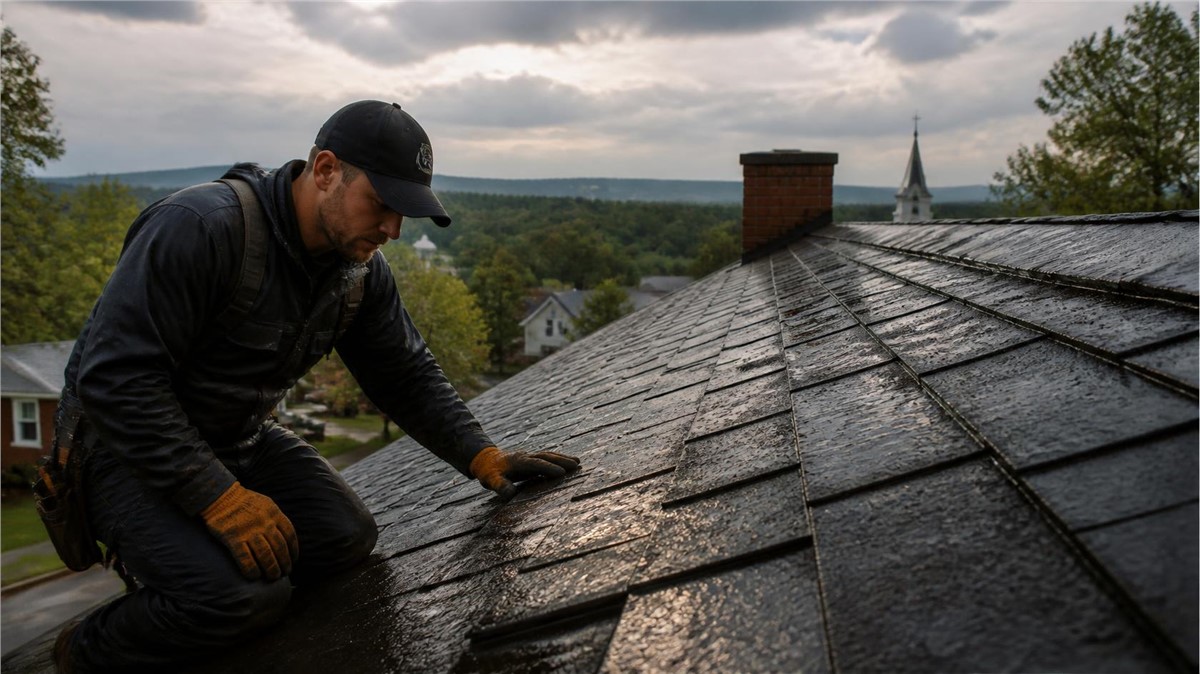
Heavy rain can test every part of your home’s exterior. Even if your roof looked fine before the storm, water may reveal weak spots around shingles, flashing, vents, gutters, valleys, and roof edges. Small problems can become more serious if moisture continues to enter the home.
For homeowners in Stockton, IL, roof maintenance is especially important because northern Illinois weather can bring heavy rain, wind, hail, snow, ice, humidity, and freeze-thaw cycles. These conditions can wear down roofing materials and expose hidden damage over time.
This guide explains what homeowners should check after heavy rain and when it may be time to call a contractor.
Why Roof Maintenance Matters After Heavy Rain
A roof is designed to shed water, but it depends on several connected parts working correctly. Shingles, flashing, gutters, underlayment, vents, fascia, soffit, and drainage all help protect the home.
After heavy rain, maintenance helps catch:
- Small roof leaks
- Missing or lifted shingles
- Damaged flashing
- Gutter overflow
- Water near the foundation
- Attic moisture
- Ceiling stains
- Loose roof edge materials
- Siding stains
- Drainage problems
Finding these issues early can help prevent moisture from spreading into the home.
Check for Missing or Lifted Shingles
Shingles protect the roof surface from rain, wind, and debris. After heavy rain, especially if wind was involved, homeowners should look for shingles that are missing, lifted, curled, cracked, or loose.
From the ground, check for:
- Uneven shingle lines
- Bare spots
- Shingle pieces in the yard
- Lifted corners
- Cracked shingles
- Dark exposed areas
- Damage near ridges or edges
Avoid climbing onto the roof. A professional can inspect safely if anything looks unusual.
Check Roof Valleys
Roof valleys carry a large amount of water during heavy rain. Because water naturally flows through these areas, even small damage can lead to leaks.
Valley problems may include:
- Debris buildup
- Loose shingles
- Granule loss
- Cracked shingles
- Damaged flashing
- Water stains below the valley
- Moss or algae growth
If water is not flowing properly through roof valleys, the area should be inspected before the next storm.
Check Flashing
Flashing protects roof areas where water is more likely to enter. Heavy rain often exposes flashing problems because water can collect around transitions and openings.
Important flashing areas include:
- Chimneys
- Skylights
- Roof valleys
- Dormers
- Pipe boots
- Wall transitions
- Roof vents
- Roof edges
Warning signs include loose metal, cracked sealant, rust, gaps, stains, or leaks near these areas.
Check Roof Vents and Pipe Boots
Roof vents and pipe boots are common leak points because they create openings through the roof. Over time, rubber boots can crack, sealants can fail, and flashing can loosen.
Look for signs such as:
- Water stains near vent areas
- Cracked rubber boots
- Loose vent covers
- Dented roof vents
- Rusted metal
- Gaps around penetrations
- Moisture in the attic below vents
These areas should be checked carefully after heavy rain and wind.
Check Gutters for Clogs and Overflow
Gutters are a major part of roof maintenance. If gutters clog or overflow, water may back up near roof edges or run down siding and foundation areas.
After heavy rain, check for:
- Overflow marks
- Leaves or debris in gutters
- Sagging sections
- Leaking seams
- Water behind gutters
- Loose hangers
- Granules near downspouts
- Gutters pulling away from fascia
Gutter problems should be fixed before they cause roof edge or siding damage.
Check Downspouts and Extensions
Downspouts should move water away from the home. If they are clogged, disconnected, crushed, or too short, water may pool near the foundation.
Look for:
- Water collecting near the house
- Downspouts draining too close
- Missing extensions
- Soil erosion
- Basement moisture
- Loose elbows
- Blocked outlets
- Water stains below downspouts
Good drainage helps protect the roof, siding, foundation, basement, and landscaping.
Check Fascia and Soffit
Fascia and soffit are located near the roof edge and can be affected when gutters overflow or roof edges leak. These areas also help complete the ventilation and exterior protection system.
Warning signs include:
- Peeling paint
- Soft fascia
- Water stains
- Loose soffit panels
- Dark streaks
- Gaps near roof edges
- Pest entry points
- Sagging gutter attachments
If fascia or soffit damage is present, the gutter and roof edge should also be inspected.
Check the Attic for Moisture
The attic can reveal leaks before they become visible in living areas. After heavy rain, homeowners should check the attic if it is safe and accessible.
Look for:
- Wet insulation
- Dark roof decking
- Water trails
- Rusted nails
- Musty odors
- Damp rafters
- Mold or mildew concerns
- Light coming through roof openings
Moisture in the attic should not be ignored, even if the ceiling below still looks dry.
Check Ceilings and Walls Indoors
Interior stains are often one of the first signs of roof or exterior water entry. After heavy rain, walk through the home and check ceilings, upper walls, closets, and rooms near exterior walls.
Look for:
- Brown ceiling stains
- Bubbling paint
- Damp drywall
- Peeling paint
- Musty smells
- Water near light fixtures
- Soft spots
- Stains around windows
If moisture appears near electrical fixtures, avoid touching the area and contact a professional.
Check Around Windows
Heavy rain can expose leaks around windows, especially when wind pushes water against the home. Sometimes the problem is the window itself. Other times, it may involve siding, flashing, trim, or gutters above the window.
Window warning signs include:
- Water on sills
- Stains below windows
- Peeling paint
- Soft trim
- Drafts
- Failed caulking
- Fogging between panes
- Damp drywall
Window areas should be inspected as part of the full exterior system.
Check Siding Near the Roofline
Water from roof or gutter problems can run down siding and create stains, moisture, or damage. After heavy rain, siding below gutters and roof edges should be checked.
Look for:
- Water streaks
- Loose siding
- Warped panels
- Mold or mildew growth
- Cracked siding
- Soft trim
- Stains below roof edges
- Water marks near corners
If the same siding area gets stained after every storm, the source may be above it.
Check for Granules Near Downspouts
Asphalt shingles naturally lose some granules over time, but heavy granule loss may indicate aging shingles or storm damage. After heavy rain, granules often wash into gutters and downspout areas.
Watch for:
- Granules near downspout exits
- Excessive grit in gutters
- Bare-looking shingle areas
- Dark spots on the roof
- Recent hail or wind exposure
Some granule loss is normal, but heavy buildup should be inspected.
Check Chimneys and Skylights
Chimneys and skylights need careful attention because they have flashing, sealants, and transitions where water can enter.
Check for:
- Water stains nearby
- Cracked sealant
- Loose flashing
- Rust
- Damp interior areas
- Stains around skylight trim
- Peeling paint
- Musty odors
Leaks near chimneys and skylights often involve flashing, not only shingles.
Check for Ponding or Poor Drainage
Most residential roofs are sloped, but low-slope areas, porches, additions, or flat sections may collect water if drainage is poor.
Ponding water may lead to:
- Material wear
- Soft areas
- Leaks
- Algae growth
- Debris buildup
- Ice problems in winter
- Faster deterioration
Any area where water sits after heavy rain should be inspected.
Check Landscaping and Ground Drainage
Roof maintenance does not stop at the roofline. Water must also move away from the home once it reaches the ground.
Check for:
- Pooling near the foundation
- Washed-out mulch
- Soil erosion
- Water near basement windows
- Downspouts draining uphill
- Low spots near the home
- Water flowing toward walkways
- Damp basement areas
Poor ground drainage can make roof and gutter problems worse.
Document What You Find
Good documentation helps homeowners track problems and explain the issue to a contractor.
Take note of:
- Date of heavy rain
- Areas where water appeared
- Photos of stains
- Photos of gutter overflow
- Missing shingle locations
- Siding stains
- Basement moisture
- Any temporary steps taken
If storm damage may be involved, contact your insurance provider for policy-specific guidance.
When to Call a Contractor
Some roof maintenance tasks are simple to observe from the ground, but repairs should be handled carefully. Call a contractor if you notice signs that water may be entering the home.
Call for help if you see:
- Active leaks
- Ceiling stains
- Wet attic insulation
- Missing shingles
- Damaged flashing
- Gutter overflow
- Water behind gutters
- Loose siding
- Soft fascia
- Repeated basement moisture
A professional inspection can help find the source, not just the visible symptom.
Repair vs Replacement
Not every issue after heavy rain means the roof needs replacement. Some problems can be repaired if they are isolated and the roof is otherwise in good condition.
Repair may make sense if:
- A few shingles are missing
- One flashing area failed
- One gutter section is leaking
- A pipe boot is cracked
- Damage is limited
- No widespread moisture is found
Replacement may be better if:
- Leaks keep returning
- Shingles are failing throughout
- Granule loss is heavy
- Decking is damaged
- Storm damage is widespread
- Repairs no longer last
- The roof is near the end of its life
A professional inspection can help homeowners choose the right next step.
What Should Be Included in a Roof Maintenance Inspection?
A roof maintenance inspection after heavy rain should review both the roof and connected exterior systems.
A contractor may check:
- Shingles
- Flashing
- Roof valleys
- Roof vents
- Pipe boots
- Gutters and downspouts
- Fascia and soffit
- Attic moisture
- Interior stains
- Siding near roof edges
- Drainage around the home
This helps identify where water is coming from and what repairs may be needed.
Why a Full Exterior Inspection Helps
Heavy rain can affect roofing, gutters, siding, windows, fascia, soffit, flashing, trim, attic areas, and foundation drainage. Looking at only one area may miss the cause of the problem.
A full exterior inspection may include:
- Roofing and roof edges
- Gutters and downspouts
- Siding and trim
- Windows and doors
- Flashing
- Fascia and soffit
- Attic and interior moisture signs
- Foundation drainage
- Storm damage areas
Huskie Exteriors provides roofing, siding, window, gutter, and storm damage restoration services, helping homeowners evaluate the full exterior after heavy rain.
Why Local Exterior Experience Matters
A local contractor understands how Illinois weather affects roofs after heavy rain. In Stockton, IL, homes need exterior systems that can handle wind-driven rain, hail, snow, ice, humidity, and freeze-thaw cycles.
Local experience helps homeowners determine whether moisture problems are caused by roof damage, flashing failure, clogged gutters, siding gaps, window leaks, poor drainage, or hidden storm damage.
Conclusion
Roof maintenance after heavy rain in Stockton, IL should include checking shingles, flashing, roof valleys, vents, gutters, downspouts, fascia, soffit, attic moisture, ceiling stains, siding, windows, and drainage around the home. Heavy rain can reveal small problems before they become major repairs.
If your home has roof leaks, gutter overflow, missing shingles, damaged flashing, attic moisture, siding stains, or drainage problems after heavy rain, Huskie Exteriors can inspect your exterior and recommend the right next step.
Contact Huskie Exteriors for professional roofing, siding, window, gutter, and storm damage services in Illinois and Wisconsin.
Subscribe to Huskie Exteriors's Blog








Comments