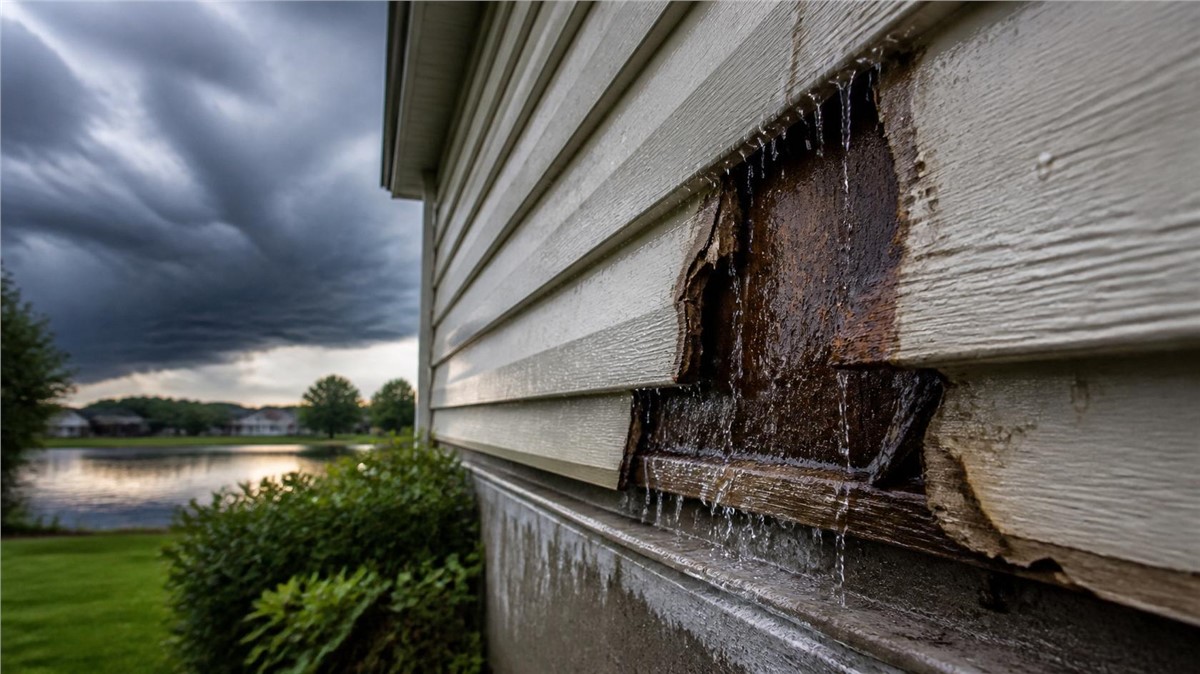
Siding is designed to protect your home from rain, wind, snow, ice, and moisture. But when water gets behind siding, the problem can stay hidden for a long time. By the time signs appear, the wall system behind the siding may already be affected.
For homeowners in Crystal Lake, IL, water behind siding should not be ignored. Northern Illinois weather can bring heavy rain, hail, wind, snow, ice, humidity, and freeze-thaw cycles. These conditions can make small siding gaps or flashing problems worse over time.
This guide explains the warning signs of water behind siding, common causes, and what homeowners should do next.
Why Water Behind Siding Is a Problem
Siding is not just about curb appeal. It helps protect the wall system underneath. When moisture gets behind it, the damage may spread into areas that are not visible from the outside.
Water behind siding can affect:
- House wrap
- Wall sheathing
- Insulation
- Interior drywall
- Window trim
- Exterior trim
- Framing
- Paint
- Indoor air quality
- Structural materials
The longer moisture stays trapped, the more likely it is to cause larger repairs.
Warning Sign 1: Bulging or Warped Siding
Siding should look flat and even. If panels are bulging, buckling, or waving, moisture may be affecting the wall underneath.
Look for:
- Wavy siding panels
- Bulging sections
- Uneven siding lines
- Panels pulling away
- Siding that looks swollen
- Warped areas near windows or gutters
Warping can also be caused by heat or poor installation, but moisture should always be considered.
Warning Sign 2: Loose Siding Panels
Loose siding can allow wind-driven rain to enter behind the exterior. It can also be a sign that moisture has weakened the materials beneath the panels.
Loose siding may appear as:
- Panels rattling during wind
- Gaps between rows
- Sections pulling away from trim
- Panels that no longer lock together
- Missing siding pieces
- Open seams
If siding is loose after wind or storms, it should be inspected before more water enters.
Warning Sign 3: Stains Below Windows
Water stains below windows are one of the most common signs of a siding or flashing problem. These stains may appear on siding, trim, interior walls, or window sills.
Possible causes include:
- Failed window flashing
- Cracked caulking
- Loose siding around windows
- Poor trim sealing
- Window leaks
- Gutter overflow above the window
- Wind-driven rain
If water stains keep returning after rain, the source should be identified before repairs are made.
Warning Sign 4: Soft or Rotted Trim
Exterior trim around windows, doors, corners, and rooflines can become soft when exposed to repeated moisture.
Signs of trim damage include:
- Soft wood
- Peeling paint
- Swelling
- Cracking
- Rot near corners
- Loose trim boards
- Dark stains
- Mold or mildew growth
Replacing trim without fixing the water source may allow the problem to return.
Warning Sign 5: Interior Wall Stains
Water behind siding can eventually show up inside the home. Interior stains may appear far from the original entry point because water can travel behind walls.
Interior warning signs include:
- Brown wall stains
- Bubbling paint
- Peeling drywall
- Damp window trim
- Musty odors
- Soft drywall
- Water marks near exterior walls
- Mold or mildew concerns
Interior stains should be inspected quickly because hidden moisture may already be present.
Warning Sign 6: Musty Odors
A musty smell near exterior walls, windows, closets, or corners can suggest trapped moisture. Even if no visible stain is present, odor may be an early clue.
Musty odors may point to:
- Moisture behind siding
- Wet insulation
- Mold or mildew growth
- Hidden wall leaks
- Poor ventilation
- Water around window openings
If the smell gets worse after rain, the exterior should be checked.
Warning Sign 7: Peeling Paint or Bubbling Drywall
When moisture reaches interior surfaces, paint and drywall may begin to fail. This can happen slowly or appear after heavy rain.
Watch for:
- Bubbling paint
- Peeling wall paint
- Soft drywall
- Cracking around windows
- Blistering near exterior walls
- Paint that will not stay repaired
Painting over these signs will not solve the moisture source.
Warning Sign 8: Mold or Mildew Growth
Mold or mildew near exterior walls, window trim, or siding can indicate moisture is present. Outdoor mildew may also appear when water repeatedly runs over the same siding area.
Look for:
- Dark spots near windows
- Mildew on siding
- Mold odors indoors
- Staining near trim
- Growth near shaded or damp areas
- Recurring spots after cleaning
Mold or mildew should be treated as a warning sign that water may not be draining properly.
Common Cause 1: Damaged Siding
Cracked, loose, warped, or missing siding can create openings where water enters.
Siding damage may be caused by:
- Hail
- Wind
- Impact damage
- Aging materials
- Poor installation
- Heat exposure
- Freeze-thaw cycles
- Storm debris
Even small cracks can allow moisture behind the siding during wind-driven rain.
Common Cause 2: Failed Flashing
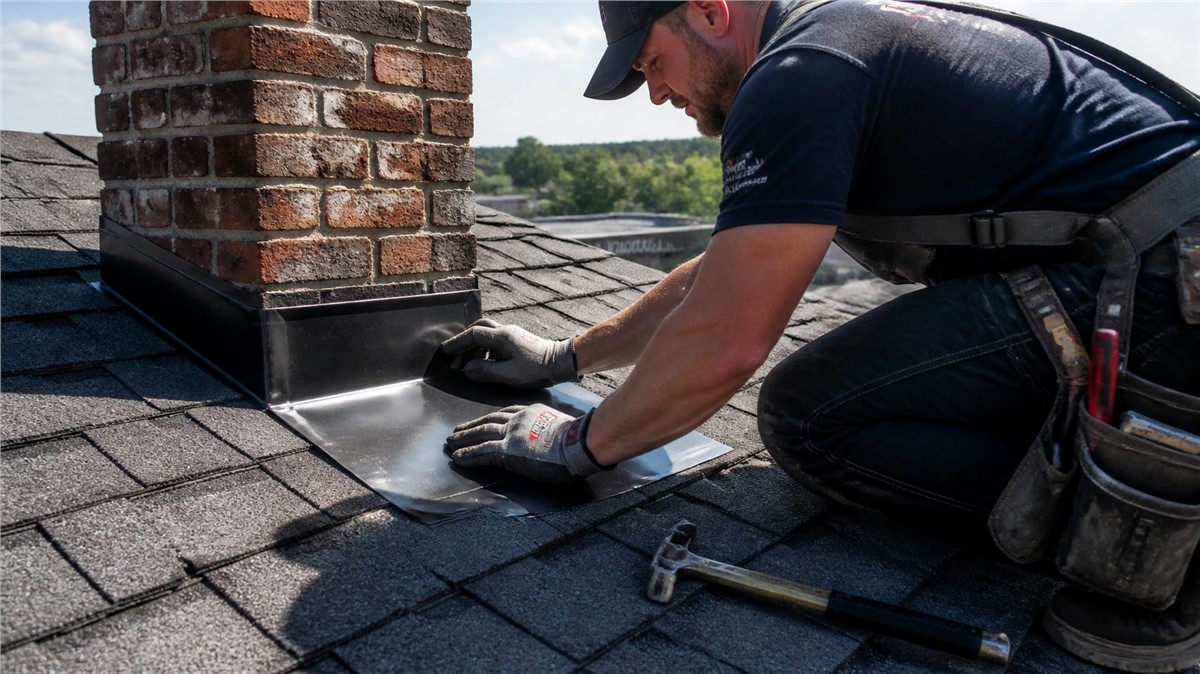
Flashing helps guide water away from vulnerable areas. If flashing is missing, damaged, or installed poorly, water can get behind siding.
Flashing problems often happen around:
- Windows
- Doors
- Roof-to-wall transitions
- Deck connections
- Chimneys
- Exterior trim
- Siding joints
- Wall penetrations
Because flashing is often hidden, a professional inspection may be needed to confirm the problem.
Common Cause 3: Gutter Overflow
Gutters are supposed to move water away from the home. When they clog, overflow, leak, or pull away, water can run down siding and enter behind panels.
Gutter problems may include:
- Overflow during rain
- Leaking seams
- Sagging sections
- Short downspouts
- Water running behind gutters
- Ice buildup
- Fascia damage
- Water pooling near the foundation
If siding damage appears below gutters, drainage should be checked.
Common Cause 4: Window and Door Leaks
Windows and doors are common moisture entry points because they interrupt the siding system. If they are not flashed or sealed correctly, water can enter around the opening.
Warning signs include:
- Stains below windows
- Soft window trim
- Drafts
- Foggy glass
- Failed caulking
- Loose siding around openings
- Interior moisture near frames
Window leaks may involve the window unit, siding, flashing, trim, or gutters above the area.
Common Cause 5: Storm Damage
Crystal Lake homes can be affected by hail, wind, heavy rain, snow, and ice. Storms can loosen siding, crack panels, damage trim, and force water behind the exterior.
Storm-related siding damage may include:
- Cracked panels
- Holes or punctures
- Loose siding
- Missing pieces
- Dented trim
- Water stains after rain
- Damaged gutters
- Damaged roof edges
If siding issues appear after a storm, the full exterior should be inspected.
Common Cause 6: Poor Installation
Siding must be installed with proper spacing, fastening, flashing, and drainage details. If it is fastened too tightly or installed without proper water management, moisture problems may develop.
Installation problems may include:
- Nails driven too tightly
- Poor panel overlap
- Missing flashing
- Improper house wrap
- Bad trim transitions
- No room for expansion
- Open seams
- Poor drainage paths
Improper installation can cause repeated siding issues even if the material itself is still good.
What to Do First
If you suspect water behind siding, act quickly but safely. Do not pull siding apart or climb ladders if conditions are unsafe.
Helpful first steps include:
- Take photos of visible damage
- Note when stains or leaks appear
- Check interior walls near the affected area
- Look for gutter overflow during rain
- Avoid painting over stains
- Avoid sealing random gaps without diagnosis
- Schedule a professional inspection
Finding the source matters more than covering the visible symptom.
Why You Should Not Wait
Water behind siding can worsen quietly. The visible damage may look small, but moisture may continue spreading behind the wall.
Waiting can lead to:
- Larger siding repairs
- Damaged sheathing
- Wet insulation
- Interior drywall repairs
- Mold or mildew concerns
- Trim replacement
- Higher repair costs
- More difficult insurance documentation after storms
Early inspection can help limit the scope.
Repair vs Replacement
The right solution depends on the cause and extent of moisture damage.
Siding repair may make sense if:
- Damage is isolated
- Matching siding is available
- No hidden moisture damage is found
- Flashing can be corrected
- The surrounding siding is still in good condition
Siding replacement may be better if:
- Moisture damage is widespread
- Siding is old or brittle
- Several areas are warped or loose
- Storm damage affects multiple walls
- Matching material is difficult
- Repairs keep returning
- House wrap or sheathing needs major work
A professional inspection can help homeowners choose the right option.
What a Contractor Should Inspect
A moisture-related siding inspection should look beyond the surface.
A contractor may check:
- Siding panels
- Window and door trim
- Flashing
- House wrap
- Wall sheathing
- Gutters and downspouts
- Roof edges
- Fascia and soffit
- Interior water stains
- Storm damage areas
The goal is to identify where water is entering and how far it has spread.
What Should Be Included in the Estimate?
A siding repair or replacement estimate should clearly explain the problem and the recommended solution.
A good estimate may include:
- Damage locations
- Moisture findings
- Siding material
- Matching availability
- Flashing details
- Trim repair needs
- House wrap concerns
- Gutter or roof-related issues
- Repair or replacement recommendation
- Cleanup details
- Warranty information
The estimate should explain how the work will help prevent future moisture problems.
Why Roofing and Gutters Should Be Checked Too
Water behind siding may begin above the siding area. Roof edge problems, gutter overflow, damaged flashing, or fascia issues can send water down the wall.
Roof and gutter concerns may include:
- Missing shingles
- Loose flashing
- Clogged gutters
- Water behind gutters
- Sagging gutter sections
- Damaged fascia
- Ice buildup
- Short downspouts
A full inspection helps trace the water path instead of guessing.
Why a Full Exterior Inspection Helps
Water behind siding can involve multiple exterior systems. Roofing, siding, windows, gutters, flashing, fascia, soffit, trim, and drainage all work together to protect the home.
A full exterior inspection may include:
- Siding
- Roofing and roof edges
- Gutters and downspouts
- Windows and trim
- Flashing
- Fascia and soffit
- Interior moisture signs
- Storm damage areas
- Foundation drainage
Huskie Exteriors provides roofing, siding, window, gutter, and storm damage restoration services, helping homeowners evaluate the full exterior system.
Why Local Exterior Experience Matters
A local contractor understands how Illinois weather affects siding and moisture problems. In Crystal Lake, IL, homes need exterior systems that can handle hail, wind, heavy rain, snow, ice, humidity, heat, and freeze-thaw cycles.
Local experience helps homeowners determine whether water behind siding is caused by storm damage, failed flashing, gutter overflow, damaged siding, poor installation, window leaks, or hidden wall damage.
Conclusion
Water behind siding in Crystal Lake, IL can lead to warped panels, soft trim, interior stains, wet insulation, damaged sheathing, mold or mildew concerns, and larger exterior repairs. Warning signs like bulging siding, loose panels, stains below windows, musty odors, peeling paint, and soft trim should be inspected before the problem spreads.
If your siding shows signs of moisture, storm damage, warping, stains, loose panels, or hidden water problems, Huskie Exteriors can inspect your home and recommend the right next step.
Contact Huskie Exteriors for professional roofing, siding, window, gutter, and storm damage services in Illinois and Wisconsin.
Subscribe to Huskie Exteriors's Blog





Comments