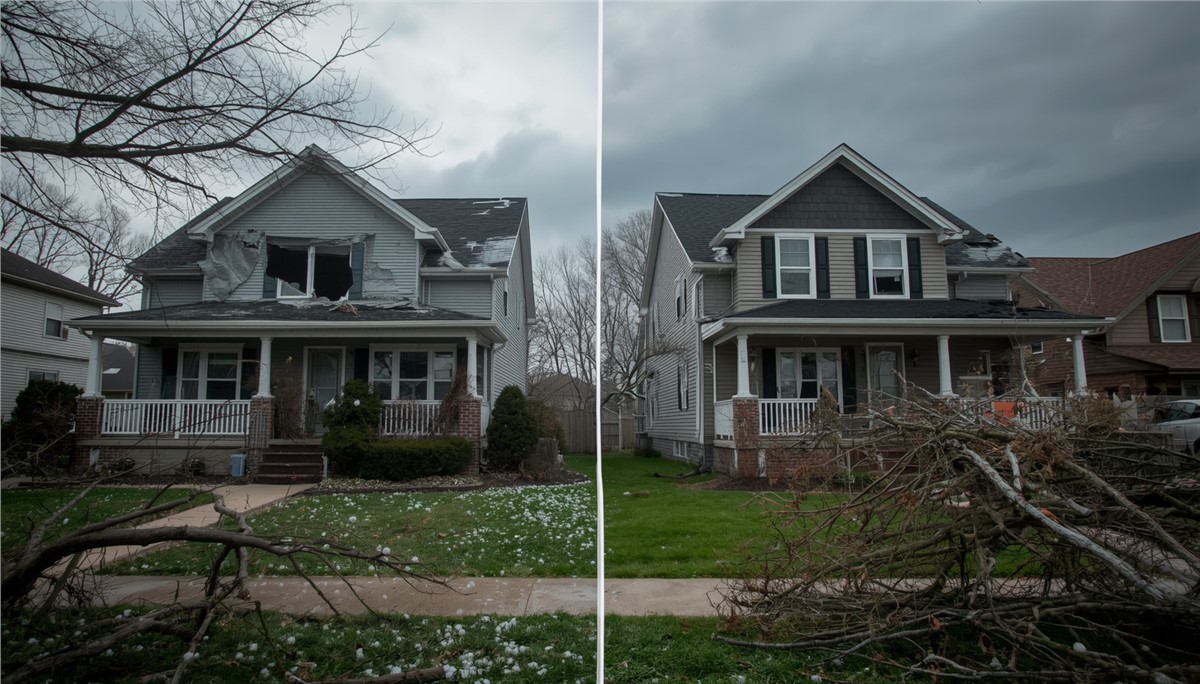
After a severe storm, it is not always easy to know what kind of damage your home has. Missing shingles may point to wind. Dented gutters may point to hail. Cracked siding, loose panels, water stains, or roof leaks may involve both.
For homeowners in New Berlin, WI, understanding the difference between wind damage and hail damage can help you know what to look for after a storm. Wisconsin weather can bring strong wind, hail, heavy rain, snow, ice, and freeze-thaw cycles, and each can affect the exterior in different ways.
This guide explains common signs of wind damage, hail damage, and why a full exterior inspection matters after severe weather.
Why Storm Damage Can Be Hard to Identify
Storm damage is not always obvious from the ground. A roof may look fine but still have lifted shingles, hail bruising, loose flashing, or weakened roof vents. Siding may look mostly intact while small cracks allow moisture behind the wall.
Damage can also overlap. A storm with both hail and high wind may damage several areas at once.
Common affected areas include:
- Roofing
- Siding
- Gutters
- Downspouts
- Windows and screens
- Fascia and soffit
- Flashing
- Exterior trim
- Roof vents
- Interior ceilings and walls
Because storm damage can be hidden, homeowners should inspect safely from the ground and schedule a professional evaluation when damage is suspected.
What Wind Damage Usually Looks Like
Wind damage often involves movement. Strong wind can lift, loosen, bend, shift, or remove exterior materials.
Common signs of wind damage include:
- Missing shingles
- Lifted shingle edges
- Shingles found in the yard
- Loose flashing
- Siding panels pulling away
- Rattling siding
- Bent gutters
- Loose downspouts
- Damaged roof edges
- Fallen branches or debris
Wind-driven rain can also push water into small gaps around roofing, siding, windows, and trim.
Wind Damage on Roofing
Roofing is especially vulnerable to strong wind. Wind can break the seal between shingles, lift edges, or tear shingles away completely.
Roof wind damage may appear as:
- Missing shingles
- Creased shingles
- Lifted tabs
- Exposed underlayment
- Loose ridge caps
- Damaged flashing
- Roof edge damage
- Leaks after wind-driven rain
Even if lifted shingles settle back down, they may no longer seal correctly. This can create a weak point during the next storm.
Wind Damage on Siding
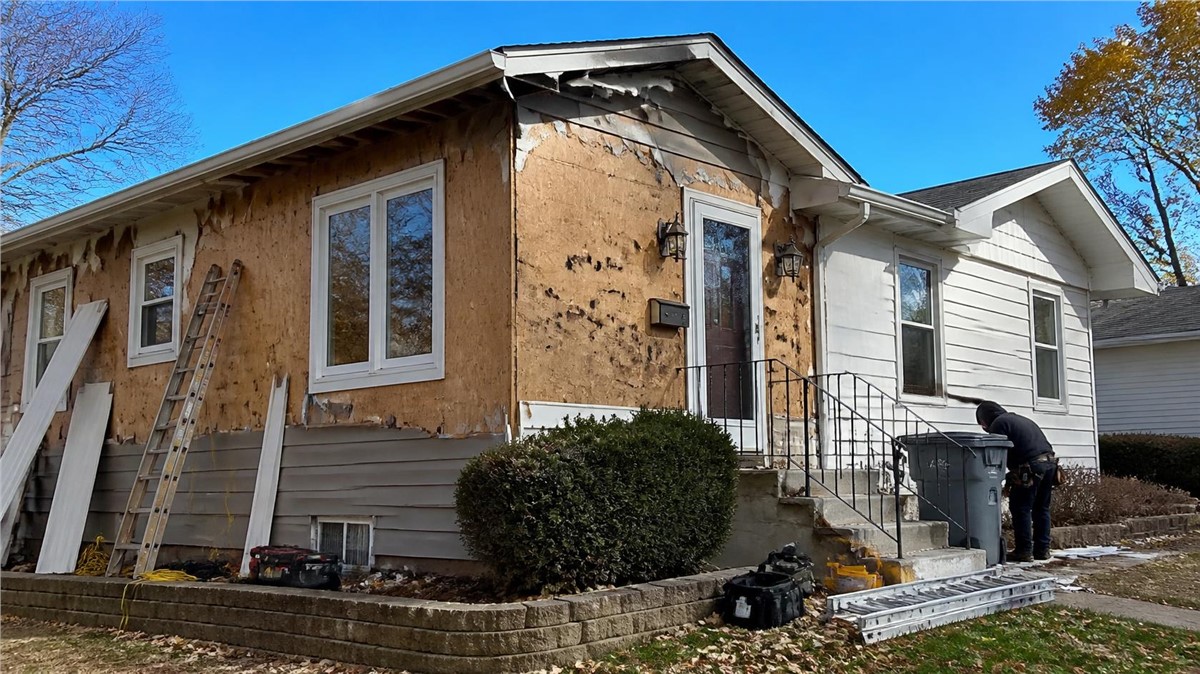
Wind can affect siding by pulling panels loose, opening seams, or removing sections from the wall. Loose siding may allow rain, pests, and debris behind the exterior.
Siding wind damage may include:
- Loose panels
- Missing siding sections
- Open seams
- Broken corner pieces
- Siding pieces on the ground
- Rattling during storms
- Gaps around trim
- Water stains after rain
If siding moves easily by hand or appears uneven after a storm, it should be inspected.
What Hail Damage Usually Looks Like
Hail damage is usually caused by impact. Hailstones can hit roofing, siding, gutters, windows, screens, trim, and vents with enough force to crack, dent, bruise, or weaken materials.
Common signs of hail damage include:
- Dented gutters
- Dented downspouts
- Dented roof vents
- Cracked siding
- Holes or punctures in siding
- Torn window screens
- Granule loss near downspouts
- Impact marks on shingles
- Chipped trim
- Marks on outdoor metal surfaces
Hail damage may be easier to spot on gutters and siding than on roofing.
Hail Damage on Roofing
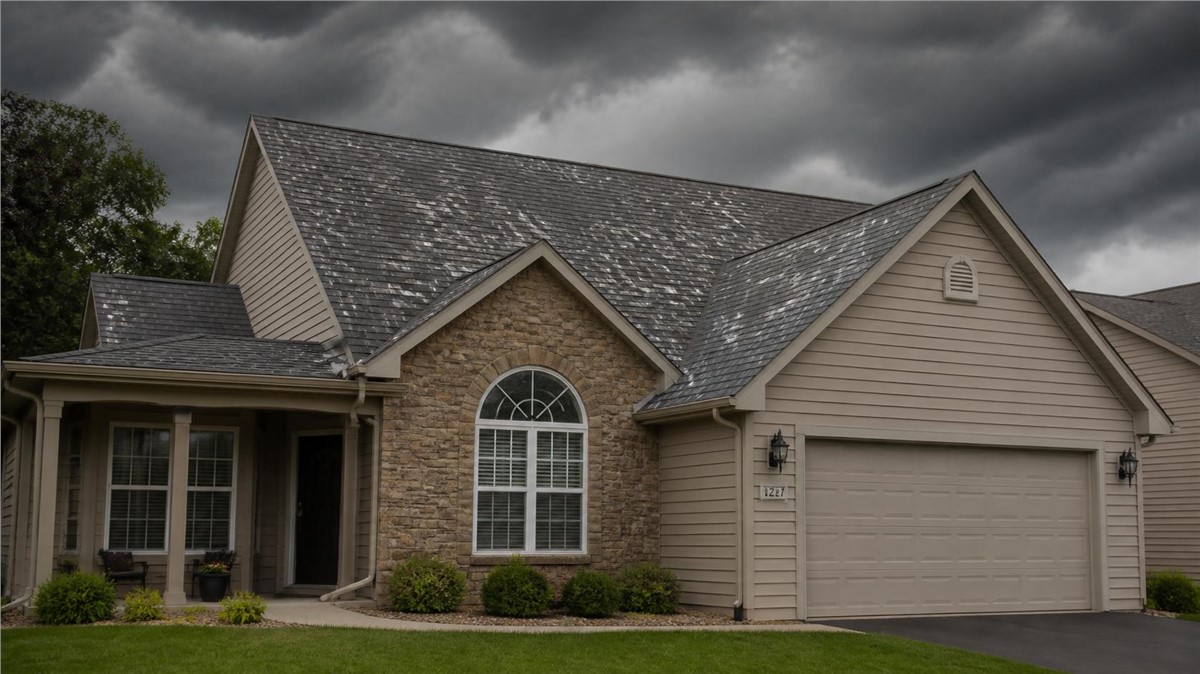
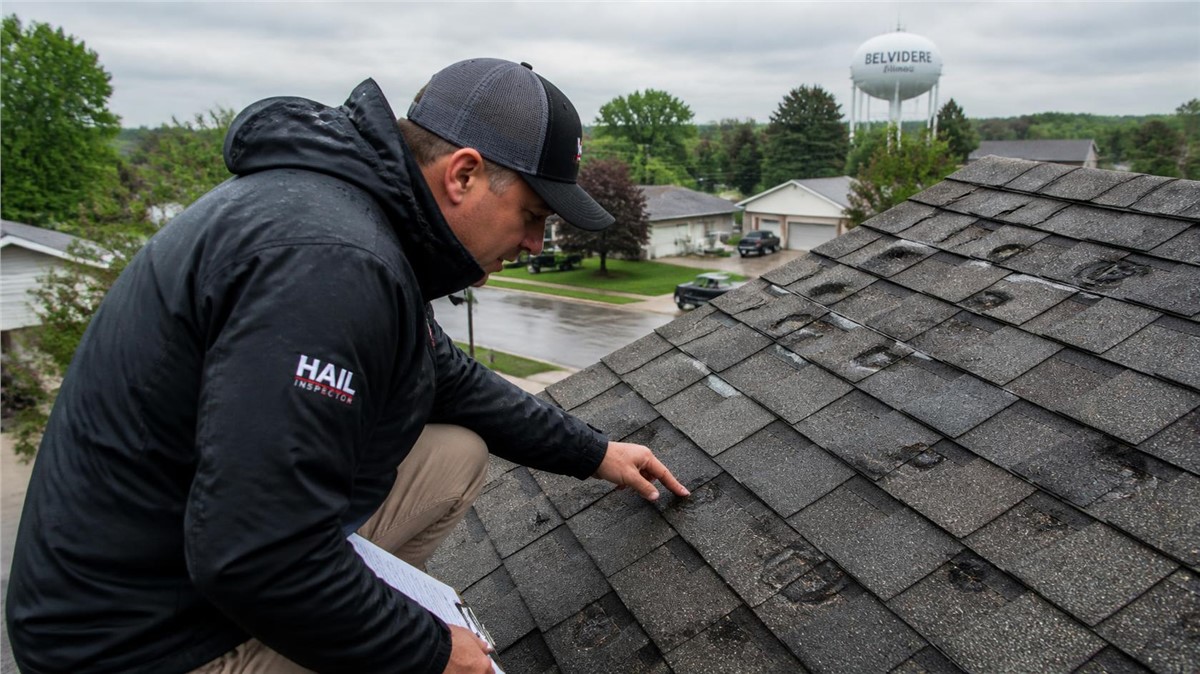
Hail can damage shingles without causing an immediate leak. The damage may weaken the shingle surface and reduce its ability to protect the roof over time.
Roof hail damage may include:
- Bruised shingles
- Dark impact marks
- Granule loss
- Cracked shingles
- Damaged ridge caps
- Dented vents
- Dented flashing
- Granules collecting in gutters
Because hail damage can be subtle, a professional roof inspection is often needed.
Hail Damage on Siding
Hail can damage siding differently depending on the material, age, and storm direction.
Siding hail damage may include:
- Cracks in vinyl siding
- Holes or punctures
- Dents in metal siding or trim
- Chipped edges
- Broken corners
- Damaged shutters
- Moisture entry points
Older or brittle siding may crack more easily during hail impact. Even small cracks can allow wind-driven rain behind the siding.
Gutters Can Help Reveal the Difference
Gutters often show clues about the type of storm damage.
Wind may cause:
- Sagging sections
- Loose fasteners
- Gutters pulling away
- Disconnected downspouts
- Bent or twisted sections
Hail may cause:
- Round dents
- Dented downspouts
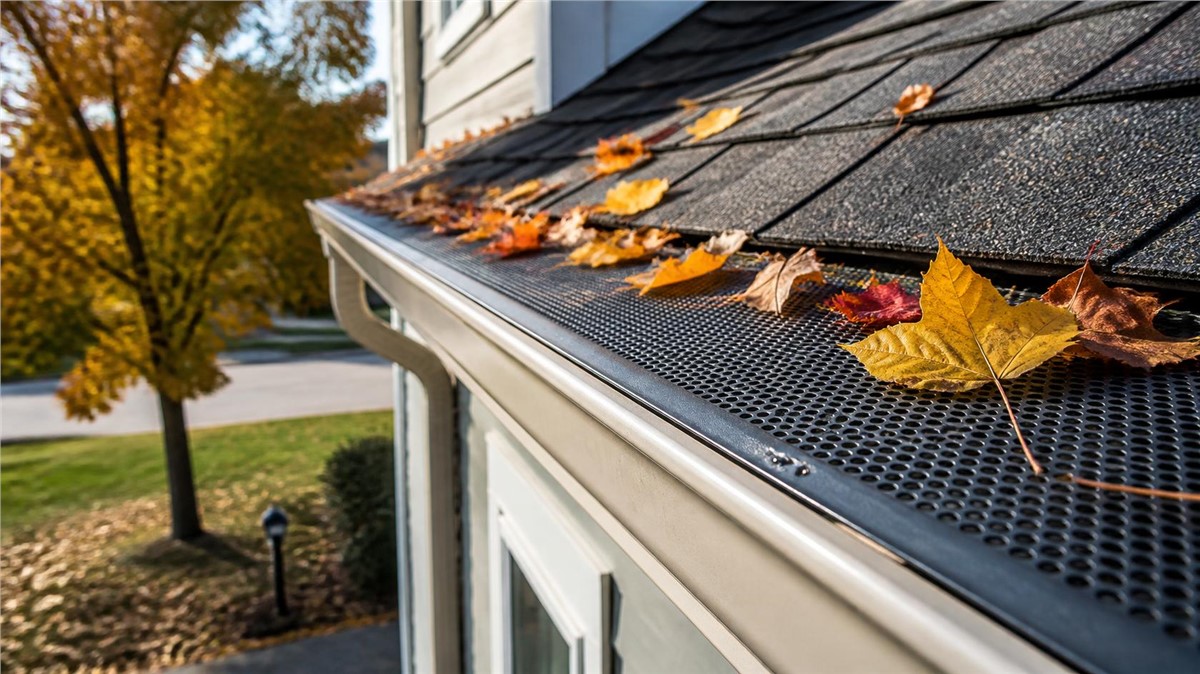
- Damaged gutter guards
- Impact marks on metal surfaces
- Granules collecting near outlets
If gutters show damage, the roof, siding, windows, fascia, and soffit should also be inspected.
Window and Screen Damage
Windows and screens can also show whether hail, wind, or both affected the home.
Wind damage may include:
- Water leaking around windows
- Loose trim
- Failed caulking
- Drafts after a storm
- Debris impact damage
Hail damage may include:
- Torn screens
- Cracked glass
- Dented trim
- Chipped paint
- Damaged window frames
A leak near a window may involve siding, gutters, flashing, roof edges, or trim, not just the window itself.
Interior Signs After Wind or Hail
Sometimes storm damage appears inside the home before it is obvious outside. Water can travel through roofing, attic spaces, siding, or wall cavities before showing up indoors.
Interior warning signs include:
- Ceiling stains
- Active dripping
- Damp attic insulation
- Bubbling paint
- Musty odors
- Water near windows
- Damp drywall
- Peeling paint near exterior walls
Interior moisture should be inspected quickly, even if the exterior damage looks minor.
Can Wind and Hail Damage Happen Together?
Yes. Many severe storms include both high wind and hail. This can create mixed damage across the home.
For example:
- Wind may lift shingles while hail bruises them.
- Hail may crack siding while wind loosens panels.
- Wind may pull gutters loose while hail dents them.
- Wind-driven rain may enter gaps created by hail damage.
Because both types of damage can happen during the same storm, a full inspection is important.
What Homeowners Should Do After a Storm
After severe weather, start with a safe ground-level inspection. Do not climb onto the roof or use ladders in unsafe conditions.
Helpful steps include:
- Check for missing shingles
- Look for cracked or loose siding
- Check gutters and downspouts
- Look for torn screens
- Check for interior water stains
- Take photos of visible damage
- Note the storm date
- Keep children and pets away from damaged areas
- Schedule a professional inspection if damage is suspected
Photos and notes can help you keep track of what changed after the storm.
Repair vs Replacement
Storm damage may require repair or replacement depending on the scope and severity.
Repair may make sense if:
- Damage is isolated
- Only a few shingles are missing
- A few siding panels are cracked
- One gutter section is loose
- Window or trim damage is minor
- No hidden moisture damage is found
Replacement may be better if:
- Roof damage affects multiple slopes
- Siding damage is widespread
- Gutters are damaged throughout
- Materials are aging or brittle
- Leaks are present
- Repairs would not match well
- Damage keeps returning
A professional inspection can help determine the best next step.
Why a Full Exterior Inspection Helps
Wind and hail can affect more than one part of the home. Even if the most visible damage is on the roof, the siding, gutters, windows, trim, fascia, soffit, and flashing may also be affected.
A full exterior inspection may include:
- Roofing
- Siding
- Gutters and downspouts
- Windows and screens
- Flashing
- Fascia and soffit
- Exterior trim
- Attic moisture signs
- Interior water stains
Huskie Exteriors provides roofing, siding, window, gutter, and storm damage restoration services, helping homeowners evaluate the full exterior system after severe weather.
Why Local Exterior Experience Matters
A local contractor understands how Wisconsin storms affect homes. In New Berlin, WI, homes may face hail, strong wind, heavy rain, snow, ice, and freeze-thaw cycles that can worsen small exterior damage over time.
Local experience helps homeowners identify whether damage is wind-related, hail-related, moisture-related, or connected to aging materials.
Conclusion
Wind damage and hail damage can look different, but both can weaken your home’s exterior. Wind often lifts, loosens, or removes materials, while hail usually leaves dents, cracks, bruises, punctures, and impact marks. In some storms, both types of damage may happen at the same time.
If your New Berlin, WI home has missing shingles, cracked siding, dented gutters, torn screens, leaks, or possible storm damage, Huskie Exteriors can inspect the full exterior and recommend the right next step.
Contact Huskie Exteriors for professional roofing, siding, window, gutter, and storm damage services in Illinois and Wisconsin.
Subscribe to Huskie Exteriors's Blog






Comments