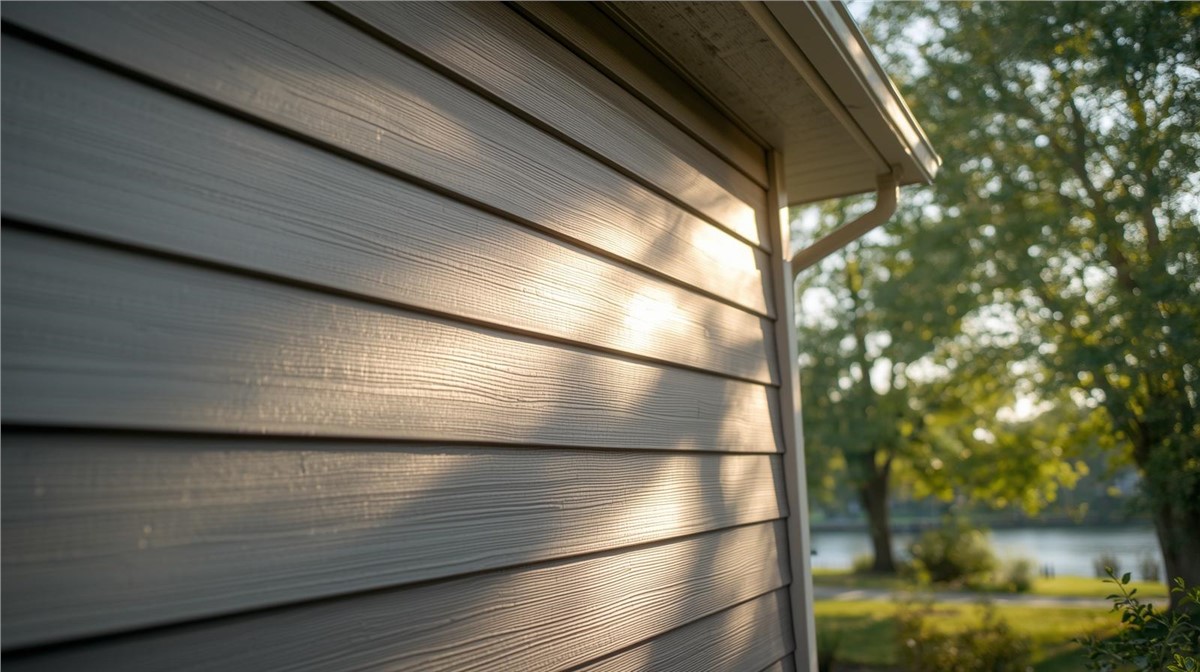
Energy-efficient siding is not just a marketing term — in Lake Summerset, IL, where northern Illinois winters push heating costs higher and summers add meaningful cooling loads, the right siding system genuinely affects how much energy your home uses and how comfortable it feels year-round. This guide covers what energy-efficient siding actually involves, which options perform best in this climate, and what homeowners should look for when evaluating a siding project.
What "Energy-Efficient Siding" Actually Means
The term gets used loosely in contractor marketing. Before evaluating products, it helps to understand what energy-efficient siding actually does — and what it does not.
Siding's primary job is weather protection — managing moisture, wind, and temperature extremes at the building envelope. Its contribution to energy efficiency comes from two mechanisms: reducing air infiltration through the wall system, and adding insulating value that slows heat transfer between inside and outside.
Standard siding — vinyl, fiber cement, wood — contributes minimally to thermal performance on its own. A standard vinyl panel has negligible R-value. What makes a siding system energy-efficient is the combination of the siding material, the continuous insulation behind it, the integrity of the weather barrier beneath it, and the quality of the installation at every seam and penetration.
Lake Summerset is a residential community in Winnebago County in northern Illinois. Winters here regularly produce sustained sub-zero wind chills. Summers bring heat and humidity that add meaningful cooling loads. A wall system that manages both effectively — keeping conditioned air in and unconditioned air out — reduces the work your HVAC system does across every season.
The Components That Deliver Energy Performance
Insulated Vinyl Siding
Insulated vinyl siding — standard vinyl panels with a contoured rigid foam backer — is the most accessible energy-efficiency upgrade available in the residential siding market. The foam backer adds R-2 to R-3 of insulating value per panel, improves panel rigidity, reduces the hollow sound that standard vinyl produces on impact, and makes the panel more resistant to denting and cracking.
For Lake Summerset homes, the rigidity benefit is nearly as valuable as the thermal benefit. Thicker, foam-backed panels handle impact from hail and windborne debris better than standard vinyl — a meaningful consideration given the hail exposure that Winnebago County properties experience across spring and summer storm seasons.
The thermal improvement from insulated vinyl alone is modest — R-2 to R-3 is not a dramatic addition to a wall system already insulated with R-13 or more in the cavity. The more significant energy benefit comes from the foam backer's role in reducing thermal bridging — heat that escapes through wall framing rather than through the insulated cavity between studs. Continuous insulation, even at modest R-values, addresses thermal bridging in a way that cavity insulation alone does not.
Continuous Insulation Boards
For homeowners pursuing a more meaningful energy upgrade, continuous rigid insulation installed between the housewrap and the siding delivers R-values that insulated vinyl backing cannot. Rigid foam boards — XPS, EPS, or polyisocyanurate — installed at one to two inch thicknesses add R-5 to R-13 of continuous insulation to the wall assembly.
This approach adds cost and requires attention to window and door extension jambs — windows need to be extended outward to account for the added wall thickness — but delivers genuine envelope performance improvement that is particularly valuable in a Winnebago County heating climate.
When combined with quality siding and a properly installed weather barrier, continuous insulation board produces a wall system that performs noticeably better across a northern Illinois winter than a standard siding replacement on the same wall.
Weather Barrier Integrity
No siding system — insulated or standard — delivers its rated energy performance over a compromised weather barrier. Housewrap that is torn, improperly lapped, or untaped at seams allows air infiltration behind the siding at every gap. That air infiltration bypasses all of the insulation above it and drives heat loss and drafts that no amount of foam backing can compensate for.
A siding replacement project that installs new material over old, degraded housewrap without replacing it is not an energy upgrade — it is new siding on a compromised air barrier. The housewrap replacement is the foundational step that makes every energy-efficiency measure above it functional.
Installation Quality at Penetrations and Transitions
Every utility penetration — hose bibs, dryer vents, electrical boxes — and every transition between siding and adjacent surfaces — roofline, windows, foundation — is a potential air infiltration point. Energy-efficient siding installed with sloppy caulking at penetrations and open gaps at window surrounds delivers less thermal performance than a standard installation done correctly.
The detail work — sealant at every penetration, flashing at every window and door, continuity of the weather barrier at every transition — determines whether the air barrier functions as a system or just as a collection of individual components with gaps between them.
What This Means for a Lake Summerset Home
A siding replacement project that addresses weather barrier integrity, specifies insulated vinyl or adds continuous insulation, and executes installation details correctly delivers several measurable benefits for a Lake Summerset homeowner:
Reduced heating and cooling costs. The reduction depends on starting conditions — homes with failing or damaged existing siding on a compromised weather barrier see the largest improvement. Homes replacing sound siding with insulated siding on an already-intact weather barrier see more modest savings.
Improved comfort in rooms adjacent to exterior walls. Air infiltration reduction has an immediate comfort effect — rooms that were drafty near exterior walls in winter become noticeably more comfortable when the wall system is sealed correctly.
Reduced moisture risk. A properly installed weather barrier and correctly detailed siding system manages moisture more effectively than an aging system with gaps, failed caulk, and compromised housewrap. Reduced moisture in the wall system protects the structure and reduces the conditions that support mold growth.
Better impact and weather performance. Insulated vinyl panels handle the hail and wind exposure that Lake Summerset homes face better than builder-grade standard panels — a durability benefit that compounds the energy benefit over the siding's service life.
Choosing the Right Product and Contractor
The energy performance of a siding system is determined as much by installation quality as by product specification. A premium insulated vinyl product installed over torn housewrap with open gaps at penetrations does not deliver its rated performance. A mid-grade product installed over a new, properly lapped and taped weather barrier with correctly detailed transitions performs closer to its specification.
When evaluating a siding proposal for a Lake Summerset home, ask specifically:
- Is the existing housewrap being replaced or retained — and if retained, what is its condition?
- Is insulated vinyl or continuous insulation board included in the scope?
- How are window and door surrounds being flashed and sealed?
- What sealant is being used at utility penetrations and what is the application standard?
A contractor who answers these questions specifically and in writing is one whose energy-efficiency claims are grounded in installation practice rather than marketing language.
Huskie Exteriors serves homeowners and commercial property owners across Illinois and Wisconsin, handling roofing, siding, windows, gutters, and storm damage restoration. For Lake Summerset homeowners evaluating a siding project with energy performance as a priority, the team provides honest product recommendations, correct installation practice, and a complete exterior system approach that addresses the details that actually determine how the wall performs.
Siding That Works as Hard as the Weather Demands
Lake Summerset's northern Illinois climate does not give exterior wall systems an easy life. A siding replacement done right — with a sound weather barrier, appropriate insulation, and correctly detailed installation — produces a home that manages that climate more effectively, costs less to heat and cool, and holds up through decades of Midwest weather without the moisture and infiltration problems that a marginal installation produces over time.
Contact Huskie Exteriors for professional roofing, siding, window, gutter, and storm damage services in Illinois and Wisconsin. If your Lake Summerset home is ready for a siding evaluation, our team is ready to assess what you have and recommend what will actually perform.
Subscribe to Huskie Exteriors's Blog





Comments