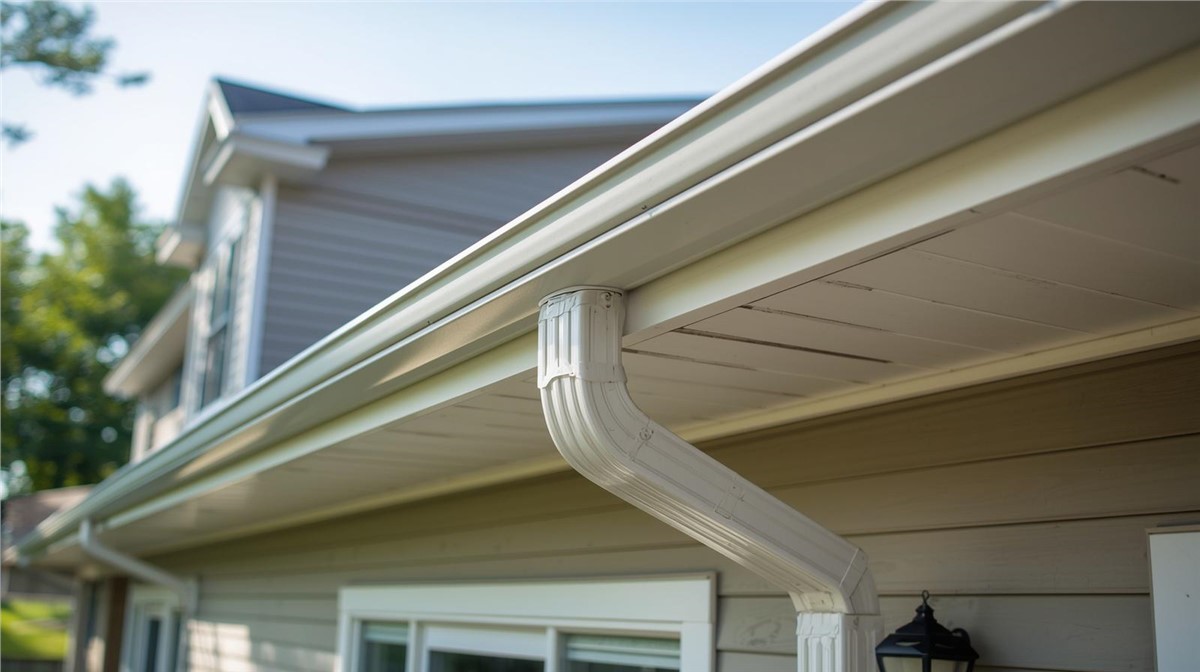
Seamless gutters cost more upfront than sectional gutters, but for homes in Roscoe, IL, the difference in long-term performance is meaningful. Fewer leak points, better appearance, and reduced maintenance make them the standard recommendation for most residential installations in northern Illinois. This guide covers what seamless gutters actually are, how they compare to sectional systems, what they cost, and what to look for in a quality installation — so you can decide whether the upgrade is worth it for your home.
The Gutter Question Most Homeowners Skip
When homeowners think about exterior improvements, gutters rarely make the short list of exciting projects. Roofing, siding, and windows all change how a home looks and feels. Gutters just sit there, moving water from one place to another.
That framing undersells what gutters actually do. A properly functioning gutter system protects the foundation, prevents fascia and soffit rot, manages water away from siding, and reduces the risk of basement moisture problems. When that system fails — through leaks, overflow, or structural failure — the damage it allows is expensive and slow to reveal itself.
For homeowners in Roscoe, IL, a community in Winnebago County along the Rock River that sees meaningful precipitation across all four seasons, the gutter question is genuinely worth taking seriously. And for most homes in this area that are due for gutter replacement, seamless gutters are worth considering — not because they are the premium option, but because they are the practical one.
What Makes a Gutter "Seamless"
The distinction between seamless and sectional gutters is exactly what it sounds like.
Sectional gutters are assembled from pre-cut lengths — typically ten feet — that are joined together with connectors and sealed at each junction with caulk or gutter sealant. Every junction is a seam, and every seam is a potential failure point. Over time, sealant dries, shrinks, and cracks. The freeze-thaw cycling that Roscoe experiences through a northern Illinois winter accelerates that degradation — water in a joint freezes and expands, widening the gap incrementally with each cycle. A sectional gutter system on a typical home might have a dozen or more seams, each aging independently and each capable of becoming a drip point or a full leak.
Seamless gutters are fabricated on-site from a continuous coil of aluminum using a portable roll-forming machine that the contractor brings to the job. The machine extrudes the gutter profile to the exact length needed for each run — from corner to downspout, with no intermediate joints. The result is a single continuous piece of aluminum for each run, with seams only at corners and downspout connections. On a typical home, that reduces the number of seam points from a dozen or more to three or four.
Fewer seams means fewer failure points, less maintenance to keep joints sealed, and a cleaner appearance along the roofline. It is a meaningfully different product, not just a marketing distinction.
Seamless vs. Sectional: The Practical Comparison
For a Roscoe homeowner deciding between the two systems, the comparison comes down to several factors.
Leak performance over time. Sectional gutters leak at seams — it is a question of when, not if. In a climate with Roscoe's freeze-thaw cycling, "when" is typically sooner than the manufacturer's optimistic projections. Seamless gutters eliminate most of those failure points. The seams that remain — at corners and downspout outlets — are still potential failure points, but three or four points require far less maintenance attention than a dozen or more.
Appearance. Seamless gutters present a clean, uninterrupted line along the roofline that sectional gutters cannot match. The visible connectors and slight misalignments inherent in sectional installation are absent. For homeowners who have invested in new siding or are doing a complete exterior renovation, this matters.
Maintenance burden. Both systems require periodic cleaning. But seamless gutters eliminate the maintenance task of resealing joints — a recurring job with sectional systems that most homeowners defer until leaks make it impossible to ignore. Reduced maintenance burden is a real benefit over a 20 to 30 year service life.
Upfront cost. Seamless gutters cost more than sectional gutters to install. The material cost difference is modest — aluminum coil is not dramatically more expensive than pre-cut sectional stock — but seamless gutters require a contractor with the roll-forming equipment and the skill to install them correctly. This means seamless installation is not a DIY option and carries a higher labor cost than a homeowner installing sectional gutters from a home improvement store. For most homes, the cost difference is meaningful but not prohibitive, and it needs to be weighed against the reduced maintenance and longer effective service life of the seamless system.
Longevity. A quality seamless aluminum gutter system, properly installed and maintained, should last 20 years or more in a northern Illinois climate. Sectional systems tend to have shorter effective lives driven by seam failure, often requiring resealing or partial replacement well before the aluminum itself would need replacing.
For most Roscoe homeowners who are replacing an existing system or installing gutters on a renovated or new home, seamless is the practical recommendation — not the luxury option.
Material Options for Seamless Gutters
Seamless gutters are available in several materials, each with its own performance profile and cost point.
Aluminum is by far the most common choice for residential seamless gutters in northern Illinois, and for good reason. It does not rust, handles freeze-thaw cycling well, is available in a wide range of colors, and is cost-effective relative to alternatives. Standard residential aluminum gutter stock is .027 inches thick. Heavier gauge aluminum — .032 inches — is available and worth considering for homes with significant debris load or hail exposure. For most Roscoe homes, standard gauge aluminum is the appropriate specification.
Copper is the premium end of the seamless gutter market. It is exceptionally durable — a quality copper gutter system can last 50 years or more — and develops a distinctive patina over time that many homeowners find attractive. The cost is significantly higher than aluminum, and copper requires a contractor with specific fabrication experience. Copper gutters make sense for high-end homes where the aesthetic and longevity premium justifies the cost. For most residential applications in Roscoe, aluminum is the appropriate choice.
Steel gutters are more durable than aluminum against impact — a consideration in hail-prone areas — but are heavier and subject to rust over time if the finish is compromised. Galvanized steel gutters were common in older construction and are still available, but for new seamless installations, aluminum has largely replaced steel in residential applications across northern Illinois.
Vinyl gutters are available in sectional form but are not typically offered in seamless installation. Vinyl becomes brittle in cold weather and is not well-suited to the temperature extremes of a Winnebago County winter. For a home in Roscoe, vinyl gutters are not the appropriate material choice regardless of cost.
Sizing: Getting It Right for Your Home
One of the most consequential decisions in a gutter installation — and one that is often made incorrectly on builder-grade and budget installations — is sizing. Gutters that are undersized for the roof area they serve will overflow during peak rainfall events regardless of how well they are installed or maintained.
Standard 5-inch K-style gutters are appropriate for most residential applications — homes with moderate roof area, typical roof pitch, and no unusually large uninterrupted drainage runs. The K-style profile, named for its cross-sectional shape, is the most common residential gutter profile in use across northern Illinois and handles the water volume of most standard residential roofs adequately.
6-inch K-style gutters are worth specifying for homes with larger roof areas, steeper pitches that accelerate water runoff, or long uninterrupted runs where a single downspout is handling significant volume. The capacity difference between 5-inch and 6-inch gutters is substantial — a 6-inch K-style gutter carries roughly 40 percent more water than a 5-inch equivalent. On a home where the existing 5-inch system overflows regularly during moderate rain events, upgrading to 6-inch is often the correct solution rather than simply replacing like-for-like.
Downspout sizing needs to match gutter sizing. A 5-inch gutter typically pairs with a 2x3-inch or 3-inch round downspout. A 6-inch gutter should pair with a 3x4-inch or 4-inch round downspout. Undersized downspouts create a bottleneck that causes gutters to back up and overflow even when the gutter trough itself has adequate capacity.
Slope. Gutters need consistent slope toward downspouts — approximately one quarter inch of drop per ten feet of run. Too little slope and water sits and stagnates, promoting mosquito breeding, accelerating corrosion, and adding weight that strains hangers. Too much slope and water rushes past the downspout entrance or the high end of the gutter appears visually to sag from the street. Getting slope right requires careful layout before installation begins.
A contractor who asks about your experience with the existing system — does it overflow in moderate rain? does water pool in certain sections? — is gathering information needed to size the replacement correctly. One who simply measures and quotes without those questions may be sizing to replace what is there rather than what the home actually needs.
Gutter Guards: Worth Adding With Seamless Gutters?
Roscoe's tree coverage — particularly in established neighborhoods near the Rock River — makes gutter guards worth a serious conversation. The question is not whether they work in principle but whether a specific product works well enough to justify its cost in your specific situation.
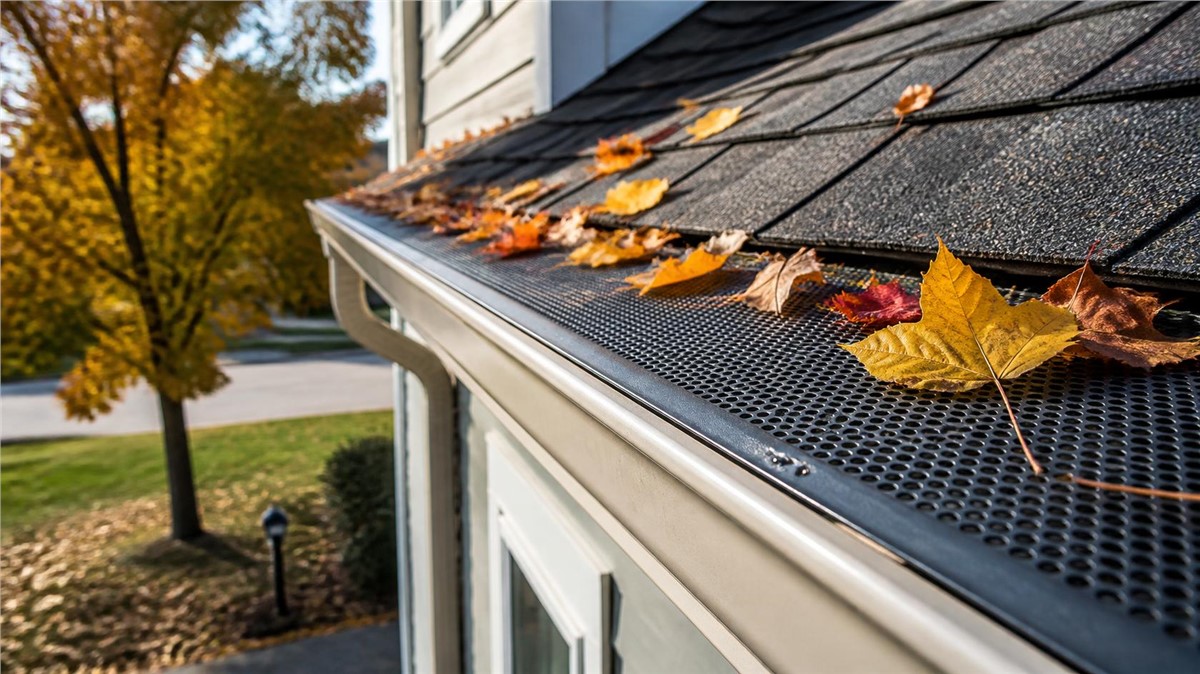
What gutter guards actually do. Quality gutter protection systems reduce the frequency of cleaning by preventing leaves, seeds, and debris from accumulating in the gutter trough. They do not make gutters maintenance-free — fine debris, shingle granules, and organic material can still accumulate on guard surfaces and at downspout connections, requiring periodic attention. But reducing cleaning frequency from twice per year to once every two or three years is a real benefit for homeowners with significant tree coverage.
Product quality matters enormously. The gutter guard market includes products that range from genuinely effective to essentially useless. Cheap foam inserts and plastic screen covers have poor long-term track records. Micro-mesh systems with a fine stainless steel mesh surface over a solid aluminum body perform significantly better and are the category worth considering for a permanent installation. They allow water through while blocking virtually all debris above a very small particle size.
Cost and payback. Quality micro-mesh gutter guards add meaningful cost to a gutter installation. Whether that cost makes sense depends on tree coverage, gutter accessibility, and how much you value avoiding the cleaning task. For a home with heavy tree coverage in Roscoe where gutters fill with leaves and seeds multiple times per year, the investment in quality guards often makes practical sense alongside a new seamless gutter installation. For a home with minimal tree exposure, the payback period is longer and the benefit is less clear.
Installation timing. Adding gutter guards at the time of new gutter installation is more cost-effective than adding them to an existing system later. The labor to install guards on new gutters is incremental; installing them on an existing system requires additional mobilization and setup cost.
Downspout Placement and Drainage: The Detail Most Installations Get Wrong
The gutter trough is the visible part of the system. The downspout placement and discharge management is where the system either succeeds or fails at its primary purpose — getting water away from the foundation.
Downspout placement. Downspouts should be positioned to handle the volume of their gutter run without backing up, and placed at locations that allow effective discharge away from the structure. Corners are natural downspout locations, but the discharge point matters as much as the collection point. A downspout that terminates six inches from the foundation wall is not managing drainage effectively regardless of how well the rest of the system is installed.
Extensions. Downspout extensions should direct water at least four to six feet from the foundation and toward a slope that carries it further away. Flexible elbow extensions are functional but require periodic repositioning. Rigid aluminum extensions are more durable and maintain their discharge direction reliably.
Underground discharge. Burying downspout lines underground with a pop-up emitter at the termination point is the cleanest solution for homes where above-ground extensions create tripping hazards or aesthetic concerns. Underground lines should be installed with adequate slope to drain fully — standing water in an underground line will freeze in winter and can back up into the downspout and gutter system.
Splash blocks. At minimum, a concrete or plastic splash block at the downspout outlet protects the soil below from erosion and directs water away from the foundation. It is the minimum effective discharge solution, not the optimal one, but it is substantially better than a downspout that terminates directly against the foundation.
What a Quality Seamless Gutter Installation Looks Like
Homeowners evaluating gutter installation proposals are not always sure what distinguishes a quality installation from a marginal one. A few markers of a contractor who does this work correctly:
- Measures the roof area and calculates water volume before specifying gutter and downspout size — rather than defaulting to what is already there
- Asks about the performance of the existing system before specifying the replacement
- Specifies the aluminum gauge and gutter profile in writing
- Discusses downspout placement and discharge management, not just the gutter trough
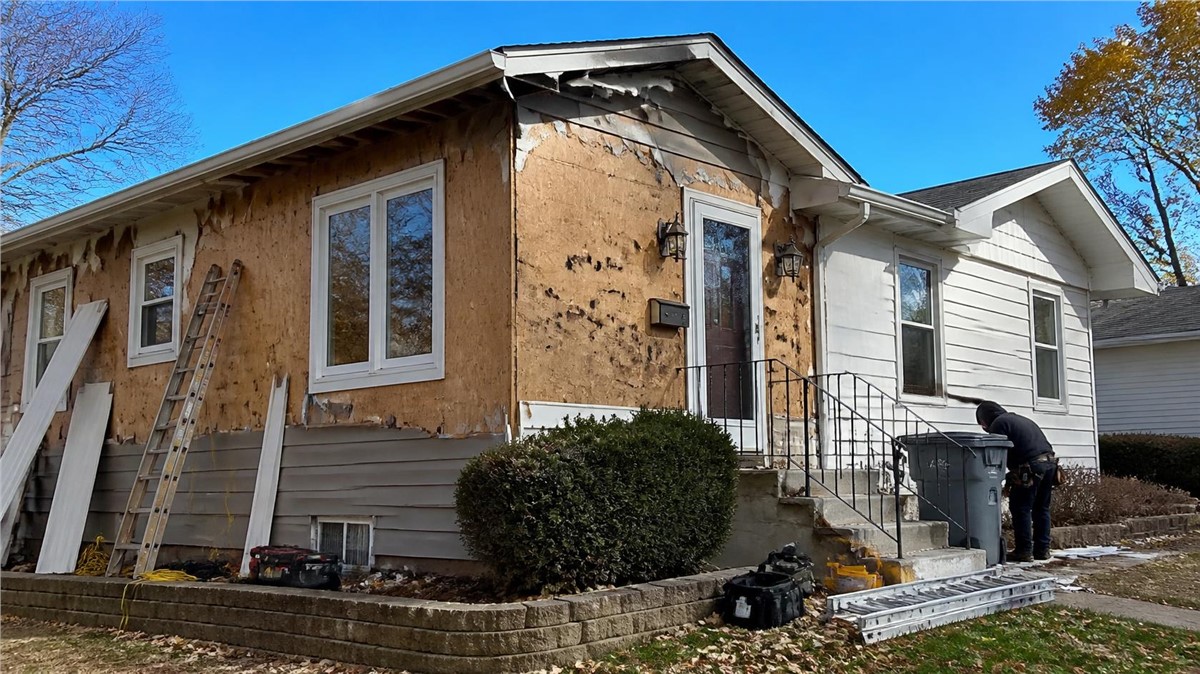
- Addresses fascia condition before installing — new gutters hung on rotted fascia will not stay in place
- Provides a written warranty on both materials and installation labor
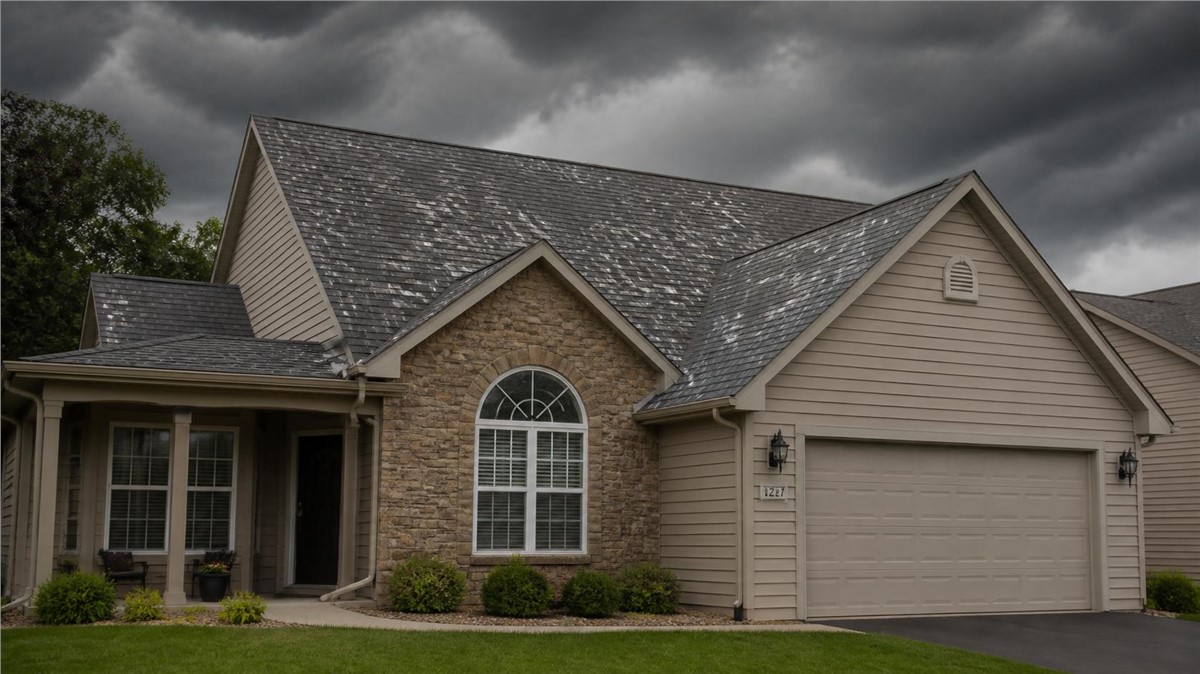
Huskie Exteriors serves homeowners and commercial property owners across Illinois and Wisconsin, handling roofing, siding, windows, gutters, and storm damage restoration. For Roscoe homeowners, the team brings the equipment, material knowledge, and installation experience to size and install a seamless gutter system that handles what northern Illinois weather actually delivers — not just what the weather is like on a calm day.
The Honest Answer to "Are Seamless Gutters Worth It?"
For most Roscoe homeowners replacing an aging or failing gutter system, yes — seamless gutters are worth the additional cost over sectional alternatives. The performance difference is real, the maintenance advantage compounds over time, and the appearance improvement is meaningful on a home where other exterior components are in good condition.
The more important variables are sizing, downspout placement, and installation quality. A seamless gutter system that is undersized, improperly sloped, or hung on rotted fascia will underperform a correctly installed sectional system. The product type matters less than getting the fundamentals right.
Contact Huskie Exteriors for professional roofing, siding, window, gutter, and storm damage services in Illinois and Wisconsin. If your Roscoe home is ready for a gutter upgrade — or if you want an honest assessment of whether your current system is doing its job — our team is ready to take a look and walk you through what makes sense for your home.
Subscribe to Huskie Exteriors's Blog






Comments