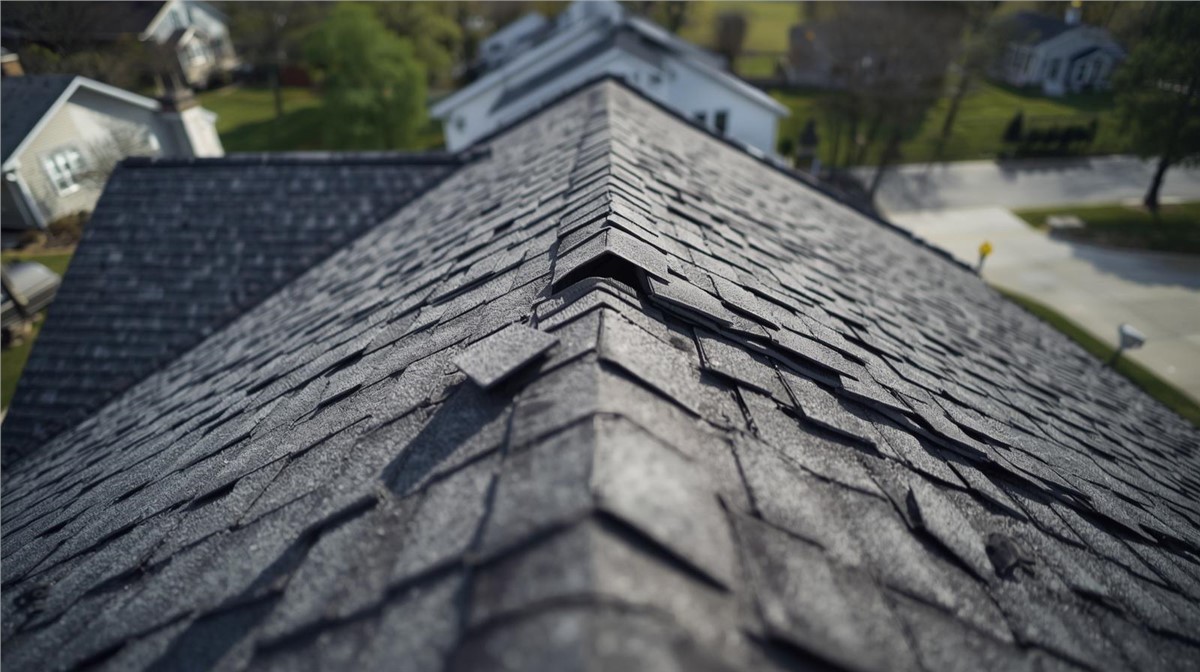
Wind damage to a roof is deceptive — it rarely looks dramatic from the ground, but even moderate wind events can lift shingle tabs, break adhesive seals, displace flashing, and create conditions for water infiltration that show up weeks later. For homeowners in Poplar Grove, IL, knowing what to check after a significant wind event and acting on what you find promptly is the most reliable way to keep a manageable situation from becoming a costly one. This guide walks through what wind actually does to a roof, where to look first, and how to navigate repair and insurance effectively.
Why Wind Damage Is So Easy to Underestimate
There is a common pattern after a wind event in northern Boone County. The storm passes, the power may flicker, a few branches come down in the yard. Homeowners walk outside, look up at the roof, see shingles still in place, and conclude that everything is fine.
What they cannot see from the ground: the shingle tabs that lifted during the peak gust and did not reseat cleanly when the wind dropped. The ridge cap shingle whose adhesive seal snapped under lateral wind pressure. The flashing at the chimney base that shifted a quarter inch and is no longer making full contact with the adjacent roofing surface. The drip edge that bent slightly at the corner and is now directing water behind the fascia rather than over it.
None of these failures produce a visible leak immediately. Some will not produce a visible leak until the next significant rain event. Others will allow slow, intermittent infiltration through multiple rain cycles before any interior symptom appears. By that point, the damage has progressed well beyond what it would have been if it had been identified and addressed the week after the wind event.
Poplar Grove sits in Boone County, in a part of northern Illinois where terrain is relatively open and wind has fewer natural barriers to slow it before it reaches residential neighborhoods. The area sees regular high-wind events — both from summer thunderstorm systems and from fast-moving cold fronts in fall and winter that can produce sustained winds and gusts well above 50 mph. Understanding what those events do to a roof, and knowing where to look afterward, is practical knowledge for any homeowner here.
What Wind Actually Does to a Roof
Wind does not damage a roof uniformly. It acts on specific areas with specific mechanisms, and knowing those mechanisms helps you inspect more effectively.
Uplift at shingle tabs. Asphalt shingles are held in place by two things: roofing nails through the nail strip, and a factory-applied adhesive bead that bonds the tab of each shingle to the course below it. The adhesive seal is what keeps shingle tabs flat and weather-tight during wind events. When wind pressure exceeds the adhesive bond strength — which happens at lower wind speeds on older shingles whose adhesive has dried and degraded — the tab lifts. A lifted tab that snaps back down may look fine from the ground but has broken its adhesive seal and will lift again in the next wind event, more easily each time.
Corner and edge vulnerability. Wind acts most aggressively on roofs at corners, ridges, and edges — the zones where pressure differentials between the windward and leeward sides of the structure are greatest. Shingles along the eaves, rakes, and ridge line are the first to be affected and the first to be displaced in severe events. This is why ridge cap shingles are disproportionately represented in wind damage findings — they sit at the highest-pressure zone on the entire roof.
Ridge and hip cap displacement. Ridge cap shingles are individually cut pieces that wrap the peak of the roof and are more exposed to lateral wind forces than field shingles. They are also, in older installations, frequently the first component to have degraded adhesive. Wind events that leave the main field of shingles intact will often displace or crack ridge cap sections.
Flashing movement. Metal flashing at chimneys, skylights, plumbing vents, and wall transitions is mechanically fastened and sealed. High winds create pressure and suction cycles that work at fasteners and sealant over time. A wind event that does not physically displace flashing may crack the sealant at a joint that was already marginal, creating a leak pathway that will not be obvious until water finds it in the next rain.
Lifted drip edge. Drip edge is the metal flashing installed along eaves and rakes to direct water off the roof edge and into the gutter rather than behind the fascia. A section of drip edge that has been lifted or bent by wind begins directing water incorrectly — behind the fascia rather than over it — contributing to the fascia and soffit rot that develops gradually and invisibly.
Debris impact. Wind carries material — branches, gravel, construction debris, objects from adjacent properties. Impact from wind-carried debris can crack or puncture shingles, damage flashing, dent metal components, and compromise gutters. Debris impact damage is often more localized and visually identifiable than the pressure-related damage described above, but it can be easy to miss on sections of the roof not directly visible from accessible ground positions.
What to Check First After a Wind Event in Poplar Grove
Work through this inspection sequence from safe, accessible positions. Stay on the ground for the initial assessment — a wet or potentially compromised roof is not a safe surface to walk, and the most important initial information can be gathered without climbing.
From the Ground: The Walk-Around
Walk the full perimeter of your home slowly, looking up at every roof elevation. Take your time. Binoculars are genuinely useful here — they bring the ridge line and upper slopes into view in a way that a naked eye scan from the ground does not.
What to look for:
- Missing shingles or sections of shingles — bare patches where the underlayment is visible
- Shingles that are lifted at one edge or corner and have not reseated flat
- Ridge cap shingles that are cracked, displaced, or missing sections
- Flashing that is visibly bent, lifted, or pulled away from adjacent surfaces
- Shingles that have slid out of position — partially displaced but still attached
- Debris resting on the roof surface that may have caused impact damage
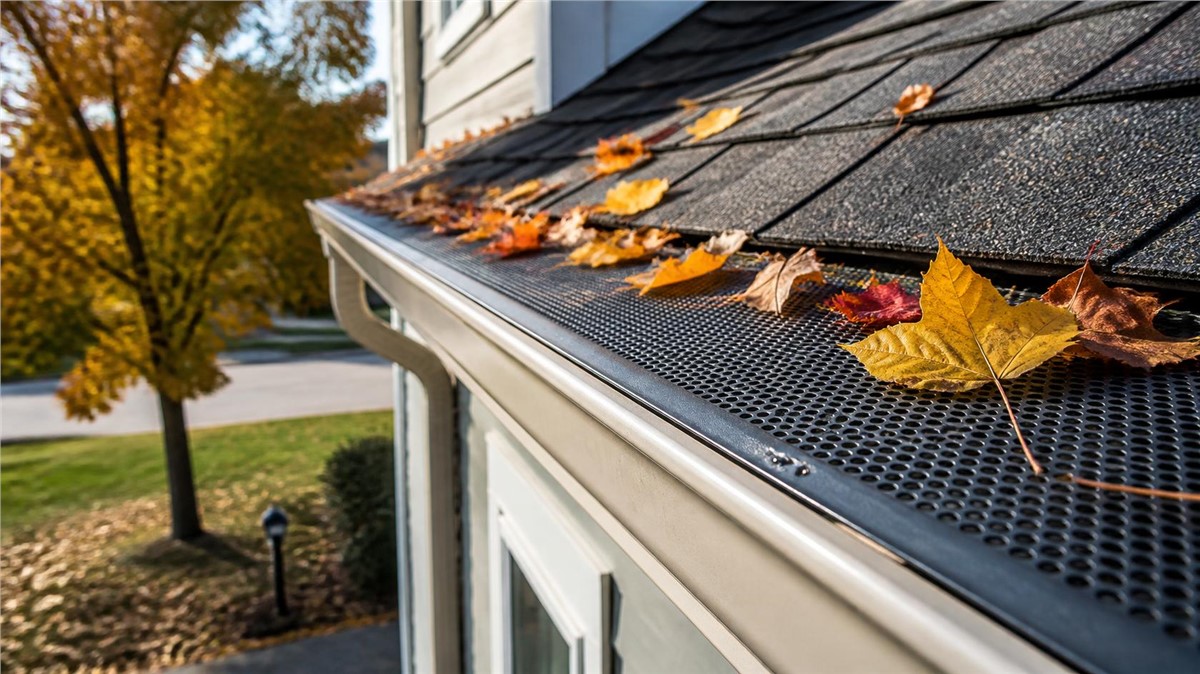
- Gutters that have shifted, pulled away from the fascia, or been dented by debris
- Drip edge sections that appear bent or separated from the fascia
Also look at the yard and surrounding areas:
- Shingle material or fragments in the yard, in gutters, or against the foundation
- Granules accumulated at downspout outlets — a higher than normal volume after a wind event suggests shingles were mechanically stressed
- Sections of ridge cap or flashing material that landed in the yard
From the Attic: The Interior Check
The attic provides information the exterior inspection cannot. Check it within 24 to 48 hours of the wind event, and again after the next significant rain if you had any concerns from the exterior inspection.
What to look for:
- Daylight visible through the roof deck — any light penetrating from outside indicates a gap that did not exist or was not as open before the storm
- Fresh water staining on the underside of the decking or on attic framing members
- Wet or compressed insulation, particularly near eaves and at wall transitions
- New staining patterns that were not present before the storm — compare against your memory or any prior documentation of attic condition
At Gutter Level: Debris and Structural Check
If you can safely access gutters by ladder, the gutter-level view provides the closest accessible look at the eave condition and lower roof surface.
What to look for:
- Granule accumulation inside gutters — a reliable indicator of shingle stress during the wind event
- Gutter sections that have pulled away from their hangers or separated at joints
- Drip edge condition along the eave — lifted, bent, or missing sections
- The condition of the first few courses of shingles at the eave — these are the most accessible from ladder height and often show early signs of tab lifting or seal failure
Wind Damage Signs That Require Professional Inspection
Some wind damage findings from a ground-level inspection are clear enough to act on directly — a section of missing shingles, a displaced ridge cap section visible from the street, gutters clearly pulled away from the fascia. These warrant a call to a contractor.
Others require a professional with roof access to assess accurately:
- Broken adhesive seals on shingle tabs — not visible without walking the roof and pressing on individual tabs to check for the give that indicates a failed seal
- Flashing sealant failure — hairline cracks in sealant at chimney or vent flashing are not visible from the ground or from the attic side, only from the roof surface
- Subtle decking damage — soft spots or deflection between rafters that indicate moisture infiltration has begun affecting the structural layer
- Ridge vent displacement — ridge vent sections that have shifted slightly under wind pressure may not be visually obvious but can allow water infiltration at the ridge line
A professional inspection after any wind event significant enough to cause visible yard damage — downed branches, displaced outdoor furniture, fence sections down — is a reasonable investment regardless of what the ground-level inspection shows. What the ground-level inspection cannot rule out is more consequential than what it can confirm.
The Relationship Between Wind Damage and Subsequent Rain
This is the dynamic that makes prompt post-wind inspection so important: wind creates the vulnerability, rain exploits it.
A shingle tab with a broken adhesive seal is not leaking during the wind event. It is a mechanical failure waiting for the next rain. When that rain arrives — particularly if it is wind-driven, which drives water at angles that gravity-only rain would not — the lifted tab allows water under the shingle, past the nail strip, and onto the underlayment below. If the underlayment is intact and the rain is brief, the underlayment may shed the water without interior infiltration. If the rain is sustained, if the underlayment has been stressed by previous events, or if there are multiple compromised tabs in the same area, infiltration is likely.
This sequence means that homeowners who inspect after the wind event but before the next rain have the best opportunity to identify and address vulnerabilities before they translate into water damage. The window between a wind event and the next significant rain in northern Illinois is not always long — spring and fall weather systems often arrive in succession — which makes the post-wind inspection a same-week priority, not something to schedule for next month.
Navigating the Insurance Claim After Wind Damage
Wind damage is covered under most standard homeowners insurance policies in Illinois as a sudden weather event. The process for making a claim effectively follows the same principles as hail damage claims, with a few wind-specific considerations.
Document before you repair. Photograph all findings from the ground-level inspection as soon as possible after the storm. Include wide shots that establish the full roof condition and close-ups of specific damage areas. Note the date and time of the storm and the date of your inspection.
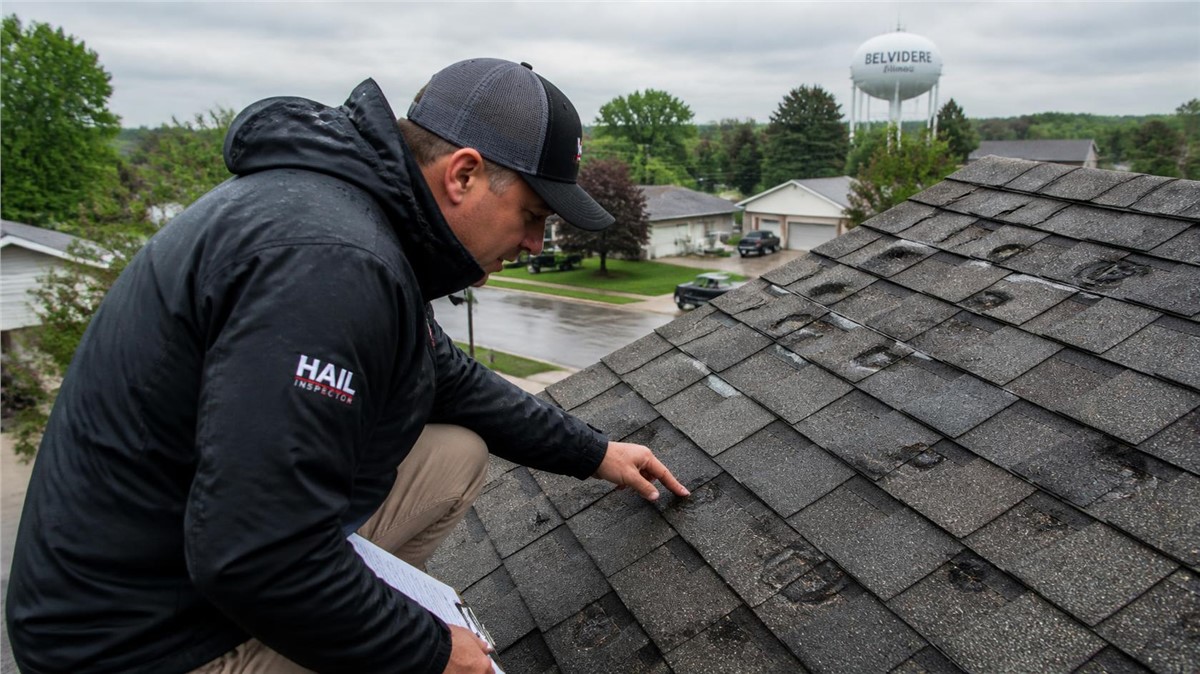
Get a professional inspection and written report. An experienced roofing contractor can access the full roof surface, identify damage that is not visible from the ground, and provide a written report that documents findings with photographs. This report is what your insurer's adjuster will use alongside their own assessment to evaluate the claim.
Know your policy's wind damage provisions. Some policies have separate wind deductibles. Some specify requirements around the minimum number of shingles displaced before replacement coverage applies. Understanding your specific policy terms before filing helps you set realistic expectations and ask the right questions.
File promptly. Insurance policies in Illinois generally require claims to be reported within a reasonable time after the damage event. "Reasonable" is defined by policy language, but prompt reporting — within days or a few weeks of the storm — is always better than delayed reporting. Delayed claims invite questions about whether the damage is attributable to the claimed storm or to subsequent events or deterioration.
Be cautious of contractors who show up unsolicited. Wind events in Boone County, as in the rest of northern Illinois, attract storm-chasing contractors who move through storm-affected areas offering quick repairs and easy insurance approvals. An unsolicited knock on the door from a contractor you have never heard of, the day after a significant wind event, is not the procurement process a project of this scope deserves.
Repair Scope for Common Wind Damage Findings
Wind damage to residential roofs in Poplar Grove typically falls into a few predictable repair categories:
Ridge cap replacement. Missing or cracked ridge cap shingles are among the most common wind damage findings and among the more straightforward repairs when addressed promptly. The repair involves removing any remaining compromised ridge cap sections, inspecting the underlying field shingles and ridge vent for secondary damage, and installing new ridge cap with proper fastening and sealing.
Shingle tab re-sealing or replacement. Tabs with broken adhesive seals that are otherwise structurally intact can be re-sealed with roofing adhesive in some cases. Tabs that have been lifted repeatedly, are cracked, or have lost significant granule coverage in the impact zone should be replaced rather than re-sealed.
Flashing repair or replacement. Flashing that has shifted, lifted, or had its sealant cracked by wind stress needs to be reset and resealed, or replaced if the flashing itself has been bent or compromised. Flashing repairs at chimneys and skylights often require closer inspection of the surrounding shingles to confirm no infiltration has occurred at the joint.
Drip edge repair. Lifted or bent drip edge sections should be renailed and re-sealed, or replaced if the metal has been deformed significantly. This is a straightforward repair that has an outsized effect on long-term fascia and soffit protection.
Gutter rehang or replacement. Gutters that have pulled from hangers can often be rehung if the fascia is sound. If the fascia has rotted — a common finding when gutter separation has been gradual rather than sudden — the fascia needs to be replaced before the gutters are rehung.
After the Wind, Before the Rain
The homes in Poplar Grove that come through wind events with the least damage and the cleanest insurance outcomes tend to be the ones whose owners treat post-storm inspection as an immediate task rather than a deferred one. The inspection itself — a careful walk-around, an attic check, a call to a local contractor for anything that warrants roof access — takes a few hours. The alternative, discovering wind-related infiltration damage after several subsequent rain events have had time to work through a compromised roof, takes considerably more time and money to resolve.
Contact Huskie Exteriors for professional roofing, siding, window, gutter, and storm damage services in Illinois and Wisconsin. If your Poplar Grove home was in the path of a recent wind event — or if you have concerns about roof condition going into storm season — our team is ready to inspect, document, and give you a clear picture of what your roof needs.
Subscribe to Huskie Exteriors's Blog





Comments