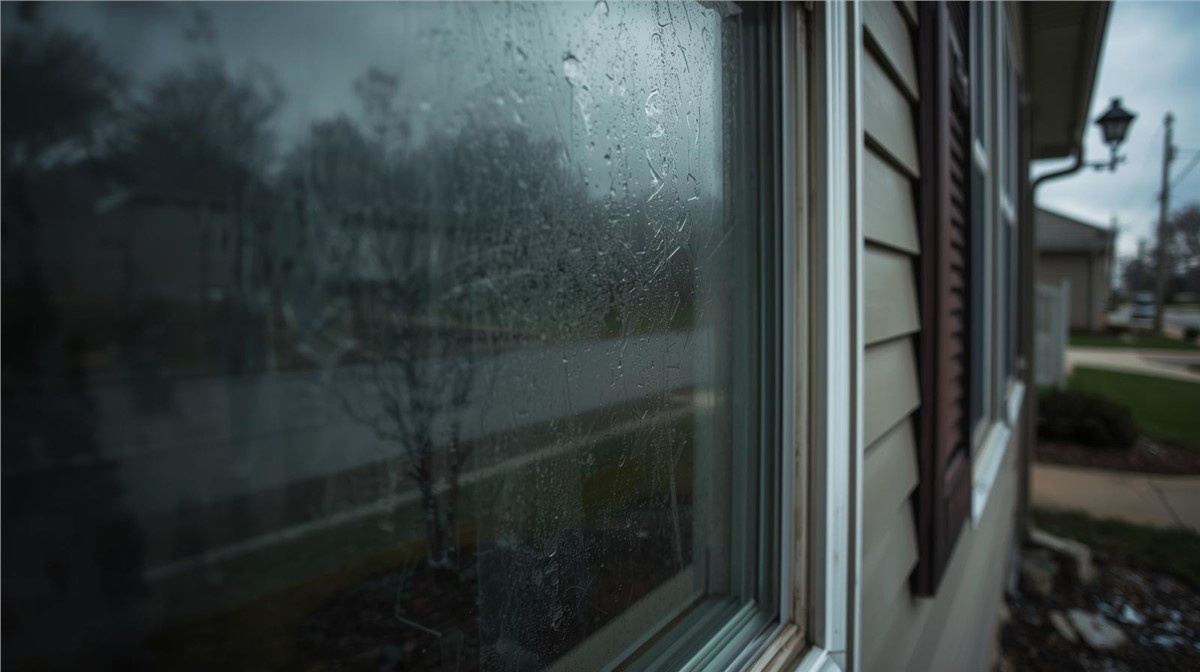
If your Machesney Park home has windows that fog between the panes, let in cold drafts, or seem to be driving up your heating and cooling costs, those are not minor inconveniences — they are signs that your windows have stopped doing their job. This guide covers what each of those symptoms actually means, what causes window failure in northern Illinois, and how to evaluate whether repair or full replacement is the right next step for your home.
When Windows Stop Working
Windows are one of those home components that degrade so gradually that most homeowners adjust to the symptoms without realizing it. You add a throw blanket to the chair nearest the window. You stop sitting in that corner of the room in January. You notice the heating bill has crept up over the past few winters but attribute it to energy costs generally.
Then a contractor points out that your windows are 25 years old, the seals have failed on most of them, and the frames have absorbed enough moisture to compromise the surrounding trim — and suddenly the blanket and the heating bill make a lot more sense.
Machesney Park is a community in Winnebago County that experiences the full range of northern Illinois weather: winters that push well below zero with wind chill, freeze-thaw cycling through March and April, and summers that swing into the high eighties and nineties with humidity that makes cooling loads substantial. Windows that are performing well handle all of that. Windows that are failing make every season more uncomfortable and more expensive.
What Each Symptom Is Actually Telling You
The three most common complaints homeowners in Machesney Park have about their windows — drafts, fogging, and high energy bills — each point to a specific type of failure. Understanding what is happening mechanically makes it easier to have a productive conversation with a contractor about what to do about it.
Drafts: What They Mean and Where They Come From
A draft near a window almost always has one of two sources: the window unit itself has failed at the seal between sash and frame, or the installation has failed at the joint between the window frame and the surrounding wall opening.
Frame and sash seal failure occurs when the weatherstripping that creates an airtight seal between the operable sash and the frame compresses, deteriorates, or pulls away from the channel. On older double-hung and casement windows, weatherstripping is one of the first components to wear out — it is under constant mechanical stress every time the window is operated, and UV exposure and temperature cycling accelerate its breakdown.
Installation failure at the rough opening is a different problem. If the flashing, insulation, and sealant at the joint between the window frame and the wall were inadequate at installation or have failed over time, air can move around the window unit rather than through it. This type of draft is often felt at the corners of the window or along the interior trim — areas that correspond to the perimeter of the frame rather than the sash.
Both types of drafts increase heating and cooling loads significantly. A window that leaks air is not just uncomfortable to sit near — it is actively drawing conditioned air out of your home and drawing unconditioned air in, continuously, regardless of whether anyone is using the room.
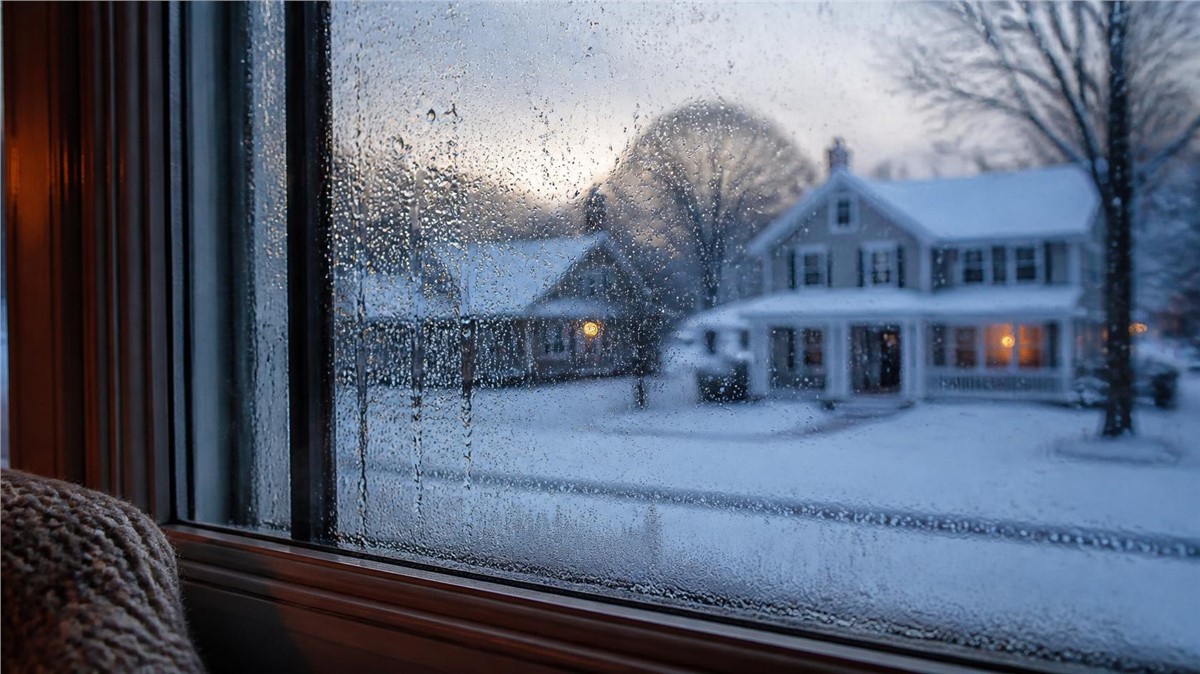
Fogging Between Panes: A Failed Insulating Seal
Fogging or condensation that appears between the panes of a double or triple-pane window is a specific and non-repairable failure: the insulating seal around the edge of the glass unit has failed, and the inert gas — typically argon or krypton — that was sealed between the panes at the factory has escaped and been replaced by ambient air carrying moisture.
This matters for several reasons. The inert gas fill is what gives a modern insulated glass unit most of its thermal performance. Argon and krypton conduct heat far less readily than air, which is why double-pane windows with gas fill perform so much better than the single-pane windows they replaced. When the gas escapes, that thermal advantage is largely gone — the window becomes functionally similar to an unsealed double-pane unit, which performs substantially worse than a properly sealed one.
The fogging itself is moisture from that infiltrated air condensing on the interior glass surfaces — surfaces that are now at significantly different temperatures because the insulating value of the unit has been compromised. The fog can be intermittent in mild weather but tends to become more persistent and visible as temperatures drop.
There is no practical field repair for a failed insulating glass unit. The glass unit can be replaced — the sash or frame is removed, the failed unit is pulled out, and a new sealed unit is installed in its place. This is sometimes cost-effective on relatively new windows with otherwise sound frames. On older windows where the frame, hardware, and weatherstripping are also nearing end of life, replacing the glass unit alone often makes less financial sense than replacing the full window.
High Energy Bills: The Window Contribution
Windows are the weakest thermal link in any wall system. Even a high-performance triple-pane window has an insulating value far below that of an insulated wall — typically R-5 to R-8 for a quality window compared to R-13 to R-20 or more for a well-insulated wall. Older single-pane windows perform at around R-1. Failed double-pane windows fall somewhere between those extremes depending on how severely the seal has failed.
In a Machesney Park home facing a northern Illinois winter, the difference between a home with functional modern windows and one with aging, failed windows can be substantial in heating cost terms — not because windows are a large share of the wall area, but because the heat loss per square foot through a failed window is so much higher than through the surrounding insulated wall.
Summer cooling tells a similar story. Windows that are not providing adequate solar heat gain control — either because they lack low-e coatings or because their coatings have degraded — allow radiant heat from direct sun to enter the home and add directly to cooling loads. South and west facing windows are the most significant contributors in summer.
If your energy bills have been rising gradually and you cannot attribute the increase to rate changes, usage changes, or HVAC system degradation, windows are one of the first components worth evaluating.
Other Window Failure Signs Worth Knowing
Beyond the three main symptoms, there are additional indicators that windows are approaching or past the end of their useful life.
Difficulty operating. Windows that are hard to open, will not stay open, or do not close and latch securely have hardware or frame issues that affect both comfort and security. Vinyl and wood frames that have absorbed moisture can warp and swell, making operation difficult and seal integrity impossible.
Visible condensation on interior glass surfaces. Condensation on the room-side surface of the glass — as opposed to between the panes — indicates that the glass surface is cold enough to cause moisture in the interior air to condense on it. This is a sign of poor thermal performance and is most common on single-pane windows or severely failed double-pane units during cold weather.
Decaying or damaged frames. Wood frames that have been painted and repainted for decades often have compromised underlying material — rot in the sill, soft corners, and paint that is holding a deteriorating frame together rather than protecting a sound one. Vinyl frames do not rot but can become brittle, crack, and fade to a chalky, degraded surface over time. Once the frame itself has lost structural integrity, replacement of the glass unit alone is not a viable solution.
Interior water damage around window openings. Staining, soft drywall, or paint failure on the wall surface immediately around a window frame indicates that water has been infiltrating at the frame-to-wall joint. This is a more serious finding than a failed glass seal because it means the wall system around the window may have sustained moisture damage that needs to be addressed alongside the window replacement.
Single-pane windows. Homes in Machesney Park that still have original single-pane windows — common in homes built before the 1980s — are operating with the lowest-performing window technology available. The energy efficiency gap between single-pane and modern double or triple-pane windows is not marginal; it is the difference between R-1 and R-5 or better. Replacing single-pane windows typically produces the most noticeable improvement in comfort and energy performance of any window upgrade.
How Northern Illinois Climate Stresses Windows
Windows in Machesney Park face conditions that accelerate failure relative to more temperate climates.
Extreme temperature differentials. Window frames — particularly vinyl — expand and contract with temperature. The annual temperature range in Winnebago County spans well over 100 degrees Fahrenheit between the coldest winter and hottest summer days. Every material in the window assembly is cycling through that range repeatedly, stressing seals, hardware, and frame joints with every seasonal transition.
Freeze-thaw cycling at the frame perimeter. Any moisture that gets into the joint between the window frame and the wall opening will freeze and expand in winter, gradually widening the gap. This is how a minor installation deficiency becomes a significant air and water infiltration pathway over several seasons.
Wind pressure. Winnebago County and the Machesney Park area sit in a part of northern Illinois where wind is a consistent factor. Sustained wind pressure on window units stresses sash seals and hardware and can accelerate weatherstripping wear on the windward elevations of a home. Windows facing northwest — directly into the prevailing winter wind — tend to show weatherstripping and seal failure earlier than windows on protected elevations.
Solar exposure on south and west faces. Summer sun on south and west facing windows drives UV degradation of frame materials and sealants, fades interior finishes, and adds meaningfully to cooling loads in homes without adequate low-e glass coatings.
Repair or Replace: Making the Right Call
Window decisions follow the same general logic as other exterior components, but with a few considerations specific to windows.
Repair is worth considering when:
- The failure is limited to weatherstripping or hardware on a relatively new window with a sound frame
- A single glass unit has failed on an otherwise functional window that is less than 15 years old
- The frame is structurally sound and there is no moisture damage at the rough opening
Replacement is the clearer answer when:
- Multiple windows in the home have failed seals or fogging
- The frames are degraded, warped, or showing rot
- The windows are original to a home built before 1990 — at that age, frames, hardware, and seals are all at or past end of life together
- There is evidence of moisture infiltration at the frame-to-wall joint that requires opening the wall to remediate
- Energy performance is a priority — new windows with low-e coatings, gas fill, and thermally broken frames perform in a completely different category than windows from the 1980s or 1990s
One consideration worth raising with a contractor: window replacement done in conjunction with exterior trim, siding, or roofline work produces better results than windows replaced in isolation. Proper flashing integration at the window head and jambs — the most critical element in preventing water infiltration at the rough opening — is far easier to execute correctly when the surrounding cladding is also being addressed.
What to Look for in a Window Replacement Product
Not all replacement windows are equivalent, and the differences matter in a Winnebago County climate.
Frame material. Vinyl is the most common and offers good thermal performance with minimal maintenance. Fiberglass frames are dimensionally more stable across temperature extremes and tend to hold up better in harsh climates — worth considering for Machesney Park homes. Wood-clad windows offer traditional aesthetics with better thermal performance than solid vinyl but require more maintenance attention.
Glass package. Double-pane with argon fill and low-e coating is the minimum reasonable specification for a northern Illinois home. Triple-pane offers meaningfully better performance on north-facing windows or in particularly cold areas of the home. Low-e coating selection matters — coatings optimized for heating climates differ from those optimized for cooling, and northern Illinois is primarily a heating climate with a meaningful cooling season.
U-factor and Solar Heat Gain Coefficient (SHGC). U-factor measures how readily the window conducts heat — lower is better for winter performance. SHGC measures how much solar heat the window admits — for a northern Illinois climate, a moderate SHGC on south-facing windows can be a net benefit in winter while a lower SHGC is preferable on west-facing windows to limit summer afternoon heat gain.
Better Windows, Better Winters in Machesney Park
For homeowners in Machesney Park who have been living with drafty rooms, fogged glass, and energy bills that seem out of proportion to usage, the window conversation is worth having sooner rather than later. The comfort improvement from replacing failed windows with properly specified modern units is immediate and noticeable — particularly through a northern Illinois winter.
The energy savings, reduced condensation, quieter interior environment, and improved ability to use the full living space of the home year-round make window replacement one of the more impactful exterior investments available to homeowners in this climate.
Contact Huskie Exteriors for professional roofing, siding, window, gutter, and storm damage services in Illinois and Wisconsin. If your Machesney Park home has windows that are underperforming — whether through drafts, fogging, energy loss, or operational failure — our team is ready to assess what you have and walk you through what makes sense for your home and budget.
Subscribe to Huskie Exteriors's Blog





Comments