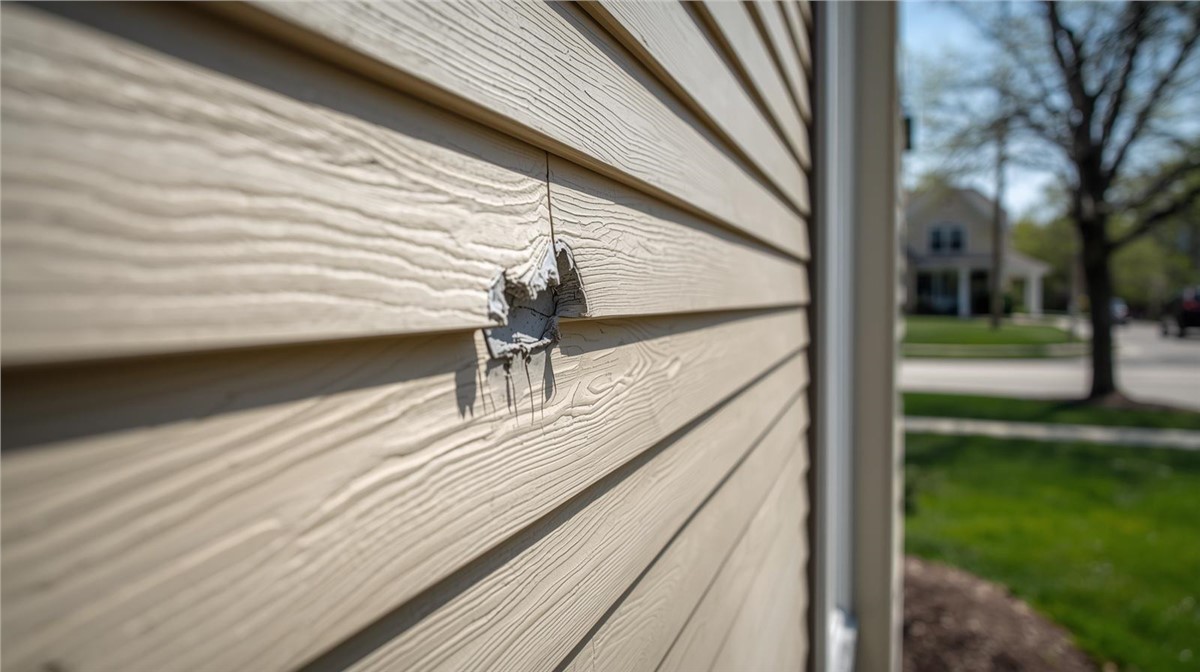
A cracked panel, a small gap at a seam, or a section of siding that has pulled slightly away from the wall can look like minor cosmetic issues on a Huntley home. Left unaddressed in a northern Illinois climate, each one is a reliable entry point for moisture, cold air, and the kind of slow structural damage that does not announce itself until it has already spread. This guide covers the siding problems most worth taking seriously, why Huntley's climate accelerates the damage cycle, and how to know when a repair is the right call versus when replacement is the more honest answer.
Why Siding Problems Don't Stay Small in the Midwest
There is a particular pattern to how siding damage unfolds in northern Illinois. A panel cracks in a summer hailstorm. The homeowner notes it, plans to deal with it, and the season moves on. Fall arrives, temperatures drop, and water begins working its way into the gap left by that crack. By December, freeze-thaw cycling has widened the gap. By March, the housewrap behind the panel has been saturated repeatedly. By the following summer, when the homeowner finally schedules a contractor, the damage has moved from a cracked panel into the sheathing beneath it.
This is not an unusual sequence. It is the standard progression when siding damage in a climate like Huntley's goes unaddressed for a full seasonal cycle.
Huntley sits in McHenry County at the edge of the Chicago metro, exposed to the same weather systems that affect the broader northern Illinois region — hail-producing thunderstorms in spring and summer, sustained high winds from fast-moving fronts, and winters that cycle repeatedly through freezing and thawing from November through March. Siding on a Huntley home is not in a forgiving environment. Small problems have a reliable mechanism for becoming large ones, and the timeline is shorter than most homeowners expect.
The Most Common Siding Damage That Deserves Prompt Attention
Cracked or Broken Panels
A crack in a vinyl siding panel is the most visible and most commonly deferred siding repair. The logic for deferring it usually sounds like: it's just one panel, the house is still keeping out most of the weather, it can wait until spring.
The problem is that a cracked panel is an open seam in your home's weather barrier. Rain does not need a large gap to find its way behind siding. Water tension and wind pressure together can drive moisture through openings far smaller than a visible crack. Once behind the panel, that moisture has nowhere to go quickly in a well-installed wall system — it sits against the housewrap, works at the sheathing, and eventually finds its way into wall cavities.
In cold weather, cracked vinyl becomes more brittle and the gap tends to widen as the panel contracts. A small crack in October can be a significant opening by January without any additional impact or weather event.
Individual panel replacement is one of the more straightforward siding repairs when the surrounding material is in compatible condition. The complication, as with all siding repairs, is matching existing material. Vinyl profiles and colors are discontinued regularly, and weathered panels rarely match new ones exactly. A contractor worth working with will be honest about what the match will look like before proceeding.
Gaps at Seams, Corners, and Around Windows
The joints between siding panels, at inside and outside corners, and around window and door frames are the highest-risk points in any siding system. They are where two surfaces meet, where caulk ages and shrinks, and where thermal movement creates the most stress over time.
A gap at a siding seam that is wide enough to see daylight through is wide enough to admit wind-driven rain. A failed caulk joint around a window frame is a direct water pathway into the rough opening, where it can saturate framing lumber and insulation without producing any immediate interior symptom.
These joints should be part of any annual exterior walk-around. Failed caulk is inexpensive to address when caught early. The rot and mold remediation that follows from years of water infiltration at an uncaulked window frame is not.
Panels Pulling Away From the Wall
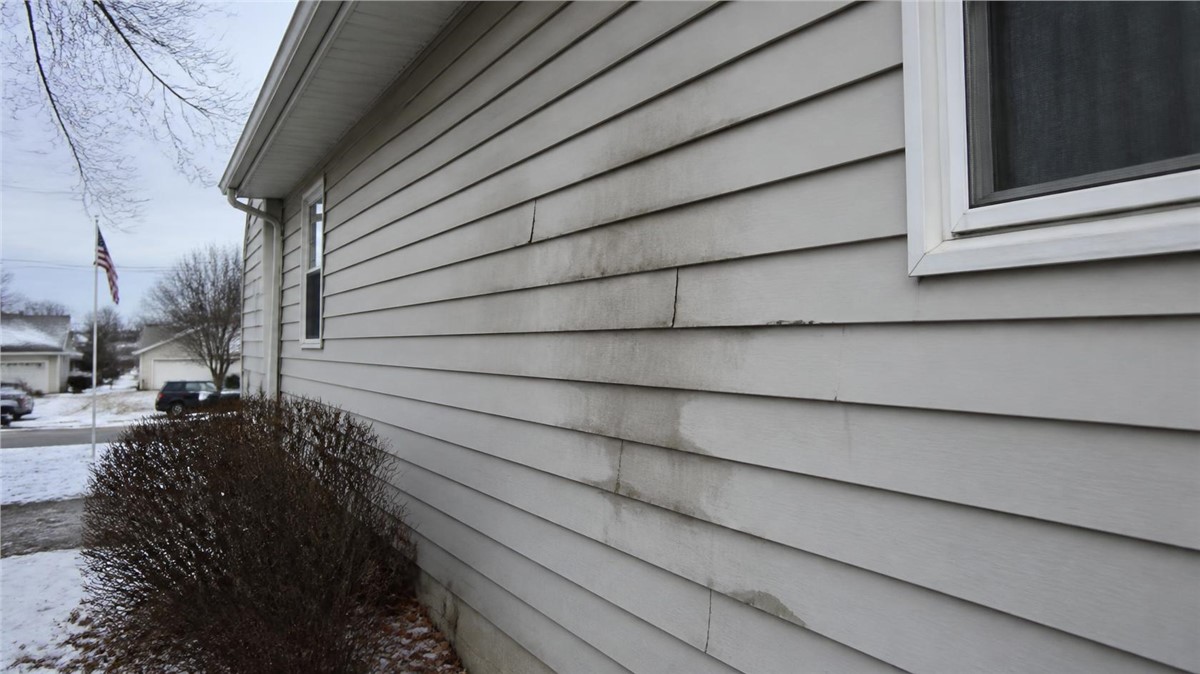
Siding that has bowed outward, separated at the bottom edge, or lost contact with the locking channel of the panel below it is allowing air and water behind the cladding continuously — not just during rain events, but through wind-driven infiltration whenever there is a pressure differential between inside and outside.
This type of damage is frequently caused by improper installation — nailing too tightly, which prevents vinyl from expanding and contracting thermally, eventually forces panels out of alignment. It can also result from wind events that get under a panel edge and break the lock, or from substrate movement when sheathing or framing shifts.
Panels that have pulled away need to be re-seated or replaced. More importantly, the reason they pulled away needs to be identified. If the cause was installation error or substrate movement, simply re-seating the panel addresses the symptom without the underlying problem.
Moisture-Related Damage: Rot, Mold, and Soft Spots
When moisture has been behind siding for long enough, the damage moves from the siding material into the structure beneath it. This is the progression that turns a repair into a significantly larger project.
On homes with wood or fiber cement siding, rot can develop in the siding material itself when it has been exposed to sustained moisture — particularly at lower courses near grade, around penetrations, and at the base of wall sections where water collects. On any siding type, the sheathing and framing beneath can begin to rot when moisture infiltration has been occurring for an extended period.
Signs that moisture damage has moved behind the siding surface include:
- Soft or spongy feel when pressing against siding panels
- Visible mold or staining at panel edges or seams
- Interior wall discoloration or mold smell in rooms along exterior walls
- Paint bubbling or peeling on the interior wall surface adjacent to the exterior
- Visible deterioration at the base of wall sections, particularly near grade or at deck attachments
When these signs are present, a repair that addresses only the siding surface is insufficient. The sheathing, housewrap, and possibly framing beneath need to be assessed and repaired before new siding is installed. A contractor who replaces damaged panels without investigating what is behind them is leaving the root problem in place.
Impact Damage From Hail and Debris
Hail is a regular occurrence in McHenry County, and it affects siding differently depending on the material. Vinyl siding cracks or punctures under direct hail impact. Aluminum siding dents. Fiber cement chips or fractures at impact points. Wood siding can dent, split, or have its paint finish compromised.
Impact damage from hail should be assessed in conjunction with roofing and gutter inspection after any significant storm. The pattern of damage across multiple exterior systems — dented gutters, cracked siding panels, and roof granule loss occurring simultaneously — is what insurance adjusters use to confirm a hail event and support a claim. Having each system documented together by a single contractor is more effective than separate assessments from multiple trades.
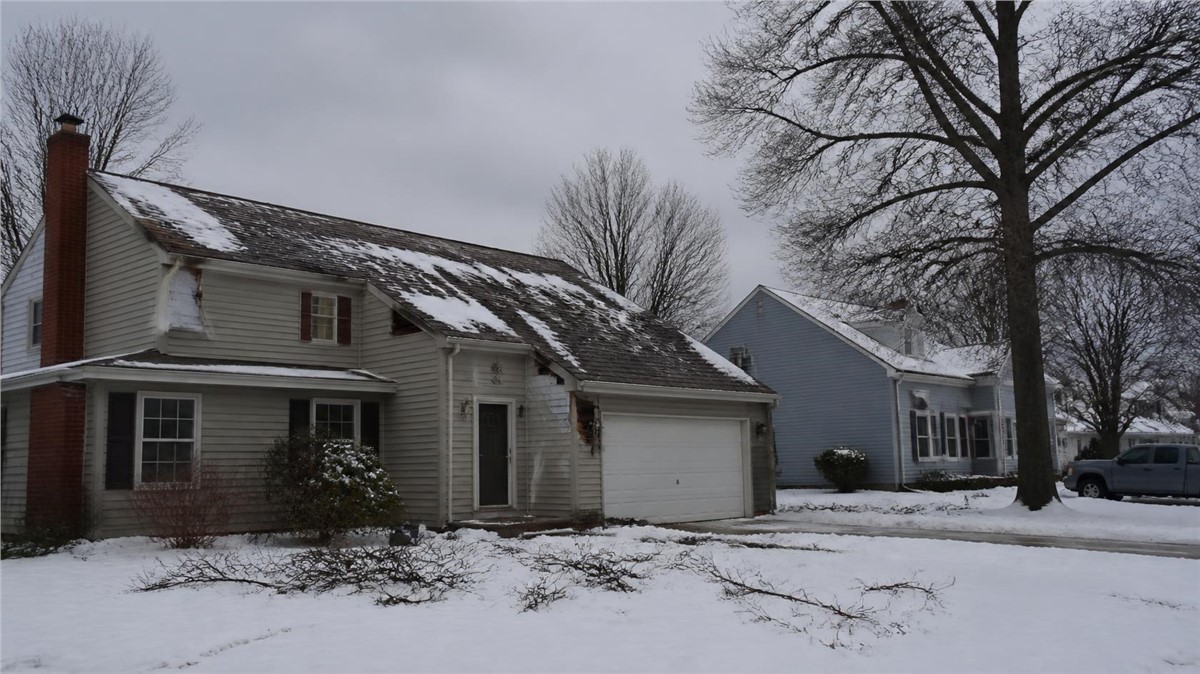
Debris impact — branches, objects carried by wind, or material from adjacent construction — can cause localized panel damage that is clearly repair-scope. These situations are more straightforward than widespread hail damage, but the same principle applies: prompt repair prevents moisture infiltration.
Fading, Chalking, and Surface Degradation
Cosmetic deterioration — severe fading, chalking, or a surface that has become rough and porous — does not create an immediate moisture problem the way a crack or gap does. But it is a reliable indicator that the siding material is approaching the end of its effective service life, and it is worth factoring into the repair-versus-replace decision.
Vinyl siding that has faded severely cannot be painted effectively without surface preparation that most homeowners are not aware of. Fiber cement that has been allowed to go too long between repaints can have its surface integrity compromised. If cosmetic deterioration is widespread and the siding is approaching 20 years old, the calculus on repair versus replacement changes significantly.
How Huntley's Climate Accelerates Siding Damage
Every climate stresses exterior cladding. Northern Illinois stresses it across all four dimensions simultaneously.
Thermal cycling is the most constant force. Vinyl siding expands and contracts with temperature — in northern Illinois, across a range that can span 100 degrees Fahrenheit between the coldest winter day and the hottest summer afternoon. Every fastener, seam, and joint in the system is moving with that cycling. Over years, this movement works at caulk joints, fatigues sealants, and gradually loosens panels that were installed with insufficient allowance for expansion.
Freeze-thaw cycling amplifies any existing vulnerability. Water in a gap expands by roughly nine percent when it freezes. A hairline crack becomes a slightly larger crack. A slightly larger crack becomes a visible gap. This process is patient and relentless through a northern Illinois winter.
Wind in the open terrain around Huntley arrives with meaningful force. High winds find every loose panel edge, every improperly locked seam, every section where installation left a panel slightly out of its channel. Wind-driven rain is more penetrating than rain alone — it can force water through gaps that would not leak under normal rainfall conditions.
Hail arrives in spring and summer with the potential to damage an entire elevation of siding in a single storm. McHenry County's position in northern Illinois puts it in a corridor that sees regular hail-producing thunderstorm activity, particularly from May through August.
Repair or Replace: How to Think Through the Decision in Huntley
The repair-versus-replace question for siding follows a similar logic to roofing: it depends on the extent of the damage and the condition of the surrounding material.
Repair makes sense when:
- Damage is limited to a small number of discrete panels or a localized section of one wall
- The surrounding siding is in sound structural condition — no widespread cracking, brittleness, or moisture compromise
- The siding is less than 15 years old
- Matching material is available and the visual result will be acceptable
Replacement is the stronger answer when:
- Damage is widespread across multiple elevations or wall sections
- The siding is 20 or more years old and showing consistent age-related deterioration across the whole system
- Moisture has infiltrated behind panels and affected sheathing or framing in multiple areas
- Matching material is unavailable and the visual result of repairs would be noticeably inconsistent
- You are already planning other exterior work — combining siding replacement with window, roofing, or gutter projects produces better results and is more cost-effective than tackling them separately over several years
The middle answer — the one worth asking a contractor for explicitly — is an honest assessment of the full system: what is failing now, what is approaching failure, and what is the most cost-effective path across a five-to-ten-year horizon. That conversation is more useful than a repair quote in isolation.
What to Expect From a Professional Siding Inspection
A thorough siding inspection goes beyond standing back and looking at the wall. It includes:
- Close examination of every seam, corner, and window and door surround for caulk failure and gap formation
- Pressure testing of suspect panels to identify soft spots or moisture compromise beneath the surface
- Inspection of lower courses and grade-adjacent sections where moisture accumulation is highest
- Assessment of trim boards, J-channels, and soffit and fascia condition
- Documentation of impact damage with photographs suitable for insurance submission
- Attic and interior wall check for signs of moisture infiltration behind affected sections
After a hail or wind event, this kind of inspection — documented formally and provided in writing — is what your insurer needs to process a storm damage claim. Having it done promptly, before the storm event becomes difficult to attribute, is an important step in protecting your claim.
Keeping Small Siding Problems Small
The theme across all of these issues is timing. A cracked panel repaired in the fall costs a fraction of what the same panel costs to repair after a winter of freeze-thaw cycling has worked behind it. A failed caulk joint addressed in spring is a one-hour repair. The same joint left through two or three wet seasons may require sheathing replacement and mold remediation before it can be closed.
Huntley homeowners who schedule a professional exterior inspection every year or two, act on identified repairs before winter, and maintain a relationship with a local contractor they trust are the ones who avoid the large, unwelcome projects that follow from years of small, deferred maintenance decisions.
Contact Huskie Exteriors for professional roofing, siding, window, gutter, and storm damage services in Illinois and Wisconsin. If your Huntley home has siding damage you have been watching — or damage you suspect from a recent storm — our team is ready to assess what is there and give you a straight answer about what it needs.
Subscribe to Huskie Exteriors's Blog





Comments