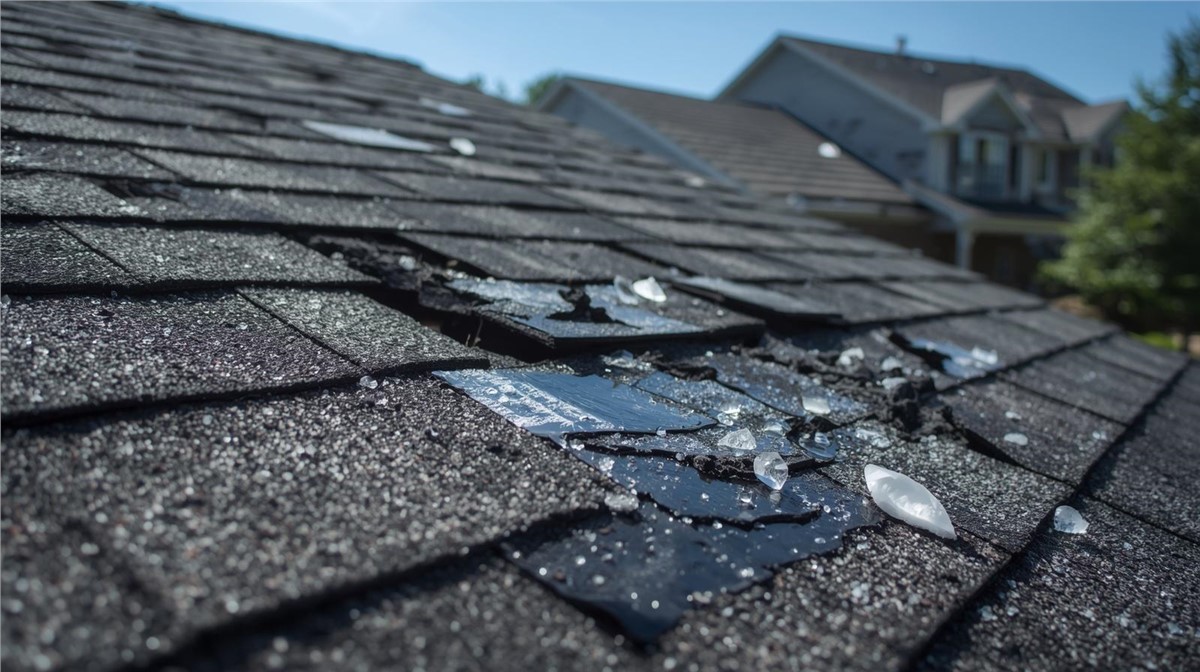
Hail damage is one of the most commonly missed forms of roof damage because it rarely looks dramatic from the ground. In Hampshire, IL, where severe hailstorms are a regular part of spring and summer weather, a roof that looks intact after a storm may have sustained significant hidden damage that shortens its remaining lifespan and voids its warranty. This guide covers what hail actually does to a roof, the signs worth taking seriously, and how to navigate the repair and insurance process effectively.
The Hail Problem Most Homeowners Miss
After a hailstorm rolls through Hampshire, most homeowners do a quick scan of the yard, check the cars for dents, and look at the windows. If nothing is obviously broken, it is easy to conclude the house came through fine.
That conclusion is often wrong.
Hail damage to roofing is not like a broken window or a dented car panel. It is largely invisible from the ground, it does not cause immediate leaks in most cases, and it does not announce itself with any dramatic symptom in the days that follow. What it does is compromise the shingles at a material level — knocking off protective granules, bruising the asphalt mat beneath, and breaking the bond that holds the shingle together — in ways that accelerate deterioration over the months and years that follow.
By the time a hail-damaged roof starts leaking or showing obvious exterior signs of failure, the damage event that caused it may have happened one, two, or even three seasons earlier. At that point, the insurance claim window has typically closed, and the repair or replacement cost falls entirely to the homeowner.
Hampshire and the surrounding areas of Kane County sit in a part of northern Illinois that sees meaningful hail activity. Understanding what to look for — and when to look for it — is one of the more practical things a homeowner in this area can do to protect their investment.
What Hail Actually Does to a Roof
To understand the warning signs, it helps to understand the mechanism of damage first.
Asphalt shingles are constructed in layers. The base is a fiberglass or organic mat. Over that is a layer of asphalt that gives the shingle its waterproofing properties. On top of the asphalt is a layer of ceramic granules — the gritty surface you can feel on any asphalt shingle. Those granules serve several functions: they protect the asphalt layer from UV degradation, they give the shingle its fire resistance rating, and they contribute to its overall durability.
When a hailstone strikes an asphalt shingle, it does two things simultaneously. It dislodges granules from the impact point, exposing the asphalt mat beneath to direct sunlight and weather. And it compresses and bruises the mat itself, weakening the structural integrity of the shingle at that location.
The bruising is the part that matters most. A bruised shingle mat is softer, more porous, and more vulnerable to cracking under thermal stress. It will absorb more water than an intact shingle. It will fail faster under freeze-thaw cycling. And it will reach the end of its usable life significantly sooner than the surrounding undamaged shingles.
On a large hailstorm, this damage occurs across hundreds or thousands of individual impact points spread across the entire roof surface. No single point may be dramatic, but the cumulative effect is a roof that has lost years of remaining service life in a single weather event.
Hail Damage by Material Type
Hail behaves differently across different roofing and exterior materials, and Hampshire homes often have multiple exterior systems worth inspecting after a storm.
Asphalt shingles — As described above, the primary damage is granule loss and mat bruising. Visible signs include circular dark spots where granules have been knocked away, a dimpled or pitted texture on shingle surfaces, and significant granule accumulation in gutters immediately after the storm.
Metal roofing — Hail leaves visible dents on metal roofing panels and ridge caps. The denting is cosmetic in many cases but can compromise protective coatings and, on standing seam systems, stress the seam integrity over time.
Wood shakes and shingles — Hail splits and splinters wood roofing, leaving impact marks with a fresh wood color at the center surrounded by a darker weathered border. Impact damage on wood shakes tends to be more immediately visible than on asphalt.
Skylights and roof vents — Polycarbonate or glass skylights can crack or shatter under large hail. Aluminum roof vents and exhaust caps dent visibly and may have compromised seals at their base flashing after a significant impact event.
Gutters and downspouts — Aluminum gutters are one of the most reliable hail damage indicators on any property. Hail leaves a distinctive pattern of evenly spaced circular dents along the horizontal gutter runs. If you see that pattern on your gutters, your roof has almost certainly taken impacts as well — gutters and roofing experience the same storm simultaneously.
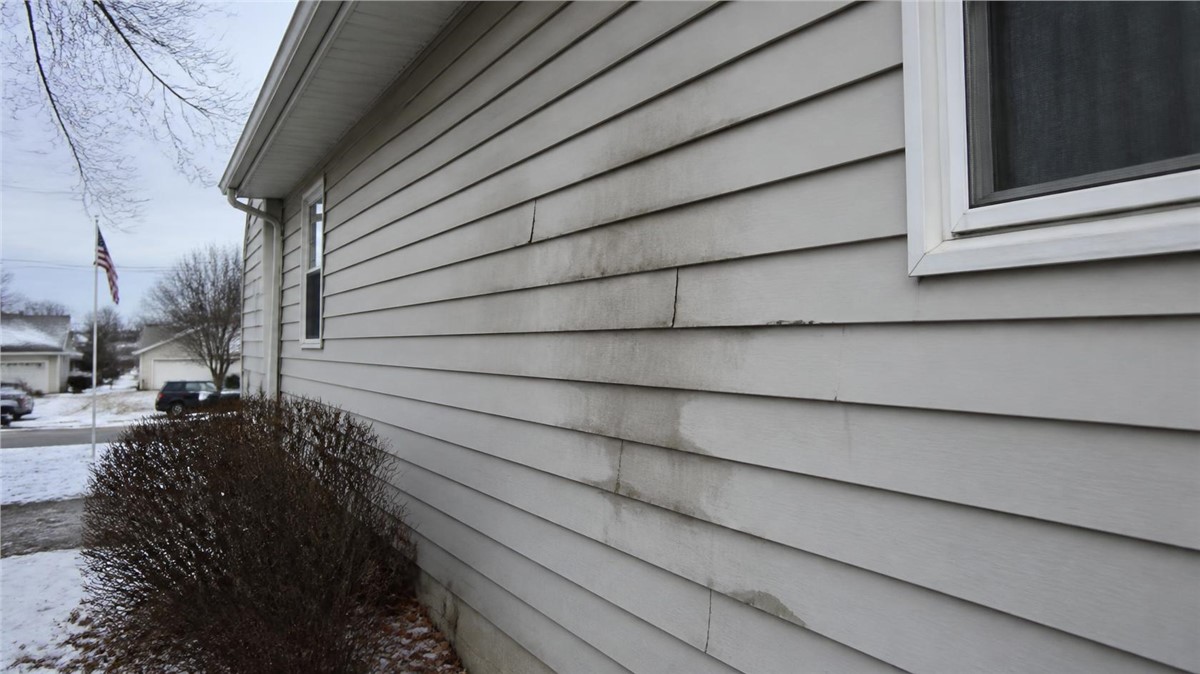
Siding — Vinyl siding cracks under hail impact. Aluminum siding dents. Fiber cement chips or fractures at impact points. Damage to siding alongside gutter denting is strong corroborating evidence of a significant hail event, even when roof damage is not immediately obvious from the ground.
Signs of Hail Damage You Should Not Ignore
Some of these are observable from the ground with careful attention. Others require a close-up inspection by a contractor.
Dented gutters and downspouts. This is the most accessible hail damage indicator for most homeowners. Walk the perimeter of your home after a hailstorm and look at your aluminum gutters carefully. A pattern of circular dents — evenly distributed along the gutter run — is a clear sign of hail impact. This finding alone justifies a professional roof inspection.
Granules in gutters or at downspout outlets. Some granule shedding is normal over a shingle's life. A significant volume of granules accumulated immediately after a storm — particularly if it represents a noticeable increase from what you have seen before — indicates impact-related granule loss that warrants closer inspection.
Dark spots or bare patches on shingles. From the ground with binoculars, or from a ladder at the eave level, look for circular dark spots scattered across the shingle surface. These are areas where granules have been knocked away, leaving the darker asphalt mat exposed. They are often most visible on south and west facing slopes, which take the most direct storm exposure in northern Illinois.
Soft or spongy feel on shingles. A contractor inspecting for hail damage will press firmly on shingles at suspected impact points. A healthy shingle has a firm, resilient feel. A bruised shingle mat feels softer or mushier under pressure — the tactile equivalent of the structural damage beneath the surface. This is one of the primary tests insurance adjusters and experienced contractors use to confirm hail bruising.
Damaged or cracked ridge cap shingles. Ridge caps are thicker and more exposed than field shingles, but they also take impacts more directly. Cracked, split, or granule-bare ridge cap shingles after a storm are a reliable indicator of significant impact energy across the full roof surface.
Dented or damaged flashing. Metal flashing at chimneys, vents, and skylights dents under hail impact similarly to gutters. Damaged flashing also loses its protective coating at impact points, accelerating corrosion and compromising the seal at roof penetrations.
New interior ceiling stains following a storm. A ceiling stain that appears in the days after a hailstorm may indicate that impact damaged a previously sound area of the roof, or that it worsened an existing vulnerability that was marginal before the storm. Either way, a new stain after a storm is a prompt-inspection situation.
The Insurance Claim Window — and Why It Matters
Homeowners insurance in Illinois typically covers sudden storm damage, including hail, under standard property policies. But that coverage comes with conditions that many homeowners do not fully understand until they need to use it.
Most policies require claims to be filed within a reasonable time after the damage event — in practice, many insurers expect claims within one year of the storm, and some have shorter windows. More importantly, insurers may dispute or deny claims when there is evidence that damage was not promptly reported or when the damage is difficult to attribute to a specific storm event.
This creates a practical problem: hail damage often does not produce obvious symptoms immediately. Homeowners who wait for a leak to appear before calling their insurer may be filing a claim two or three years after the event that caused the damage, against a policy that has limits on how long after a storm claims can be filed.
The solution is straightforward: inspect after every significant hail event, document what you find with photos and dates, and contact your insurer promptly if professional inspection confirms damage. A local contractor experienced in storm damage restoration can provide the written inspection report and damage documentation that insurers require to process a claim efficiently.
What a Professional Hail Damage Inspection Covers
A thorough hail damage inspection is not a quick visual scan. An experienced contractor will:
- Walk the full roof surface and examine every slope, not just the most accessible sections
- Probe shingles at suspected impact points to assess mat bruising beneath the surface
- Inspect all flashing points, ridge caps, and hip caps
- Document findings with photographs that include measurements and context shots
- Check gutters, downspouts, siding, and any other exterior surfaces affected by the same storm
- Provide a written report suitable for submission to your insurance company
This documentation is not just helpful for the current claim. It establishes a baseline condition record for your roof that can be useful in future claims or when making decisions about repair versus replacement.
Repair, Replace, or Wait — Making the Right Call After Hail
Not every hail event justifies a full roof replacement. The appropriate response depends on the severity of the storm, the size of the hailstones, the age and condition of the existing roof, and the extent of documented damage.
Repair is appropriate when damage is limited to a small number of discrete areas — a section of ridge cap, flashing at a single penetration, or a confined area of field shingles — and the surrounding roof is in sound, mid-life condition.
Replacement becomes the right conversation when the damage is widespread across multiple slopes, when the existing roof is already in the second half of its service life, or when an insurance claim is filed and the adjuster's assessment supports it. In many hail events of moderate to significant severity, replacement is the outcome — not because contractors push for it, but because the damage is genuinely distributed across the full roof surface in a way that makes repair impractical.
Waiting is the most common mistake. There is no benefit to delaying an inspection after a hailstorm. The damage does not heal, the insurance window narrows, and the roof continues to deteriorate from the compromised surface forward.
Protecting Your Hampshire Home After the Next Storm
Hailstorms in northern Kane County are not rare events. They are a regular part of living in northern Illinois, and the homes in Hampshire that fare best over time are the ones whose owners treat post-storm inspection as a routine rather than an emergency response.
Scheduling a professional inspection after every significant hail event, keeping documentation of what is found, and acting on confirmed damage within the insurance claim window are the practices that prevent a manageable repair from becoming a full out-of-pocket replacement years down the road.
Contact Huskie Exteriors for professional roofing, siding, window, gutter, and storm damage services in Illinois and Wisconsin. If your Hampshire home was in the path of a recent hailstorm — or if you have concerns about a storm from a previous season — our team is ready to inspect, document, and walk you through your options clearly and honestly.
Subscribe to Huskie Exteriors's Blog





Comments