Commercial roofing is a different animal from residential — different materials, different failure patterns, and much higher stakes when something goes wrong. If you own or manage a commercial property in Elgin, IL, understanding how your roof system works, what warning signs to watch for, and how to approach maintenance and replacement can protect your building, your tenants, and your bottom line. This guide covers what every Elgin business owner should know before a roofing problem forces the conversation.
Why Commercial Roofing Deserves Serious Attention
A leaking roof on a home is disruptive. A leaking roof on a commercial building can shut down operations, damage inventory, compromise electrical systems, displace tenants, and trigger liability concerns — all before a single repair has been scheduled.
Yet commercial roofing tends to get deferred. Flat roofs don't shed water visibly the way pitched residential roofs do, so problems develop quietly. Maintenance gets pushed to next quarter. Budgets get allocated elsewhere. By the time a facility manager or building owner notices something is wrong, the damage has often been accumulating for months.
Elgin is one of the larger cities in the Chicago metro area, with a substantial commercial and industrial real estate base across Kane County. From retail centers along Randall Road to warehouse and manufacturing facilities near the I-90 corridor, commercial properties here face the same punishing Midwest climate as everywhere else in northern Illinois — and the same consequences when roofing is neglected.
How Commercial Roofing Differs From Residential
Before getting into warning signs and maintenance, it helps to understand why commercial roofing is a distinct discipline.
Roof geometry. Most commercial buildings have flat or low-slope roofs. These do not shed water by gravity the way a steep residential roof does — they rely entirely on drains, scuppers, and proper slope built into the roof system to move water off the surface. When that drainage is compromised, water ponds. Ponding water is one of the primary causes of accelerated membrane deterioration and roof failure on commercial buildings.
Roofing systems and materials. Commercial roofs use systems that most homeowners never encounter:
- TPO (Thermoplastic Polyolefin) — A single-ply membrane that is heat-welded at seams. It is lightweight, reflective, and widely used on commercial buildings throughout northern Illinois. Seam integrity is critical; failed welds are a common failure point.
- EPDM (Ethylene Propylene Diene Monomer) — A rubber membrane that has been the commercial roofing standard for decades. It is durable and handles temperature extremes well, but adhesive-bonded seams can fail over time, particularly in climates with significant freeze-thaw cycling.
- TPO and EPDM are both single-ply systems — meaning the entire weather barrier is one layer of membrane. Installation quality and seam integrity matter enormously.
- Built-Up Roofing (BUR) — Multiple layers of felt and bitumen, sometimes finished with gravel. Older commercial buildings in Elgin frequently have BUR systems. They are durable when intact but heavy, and repairs can be complex.
- Modified Bitumen — A hybrid system that combines bitumen with polymer modifiers for improved flexibility. Common on smaller commercial and mixed-use buildings.
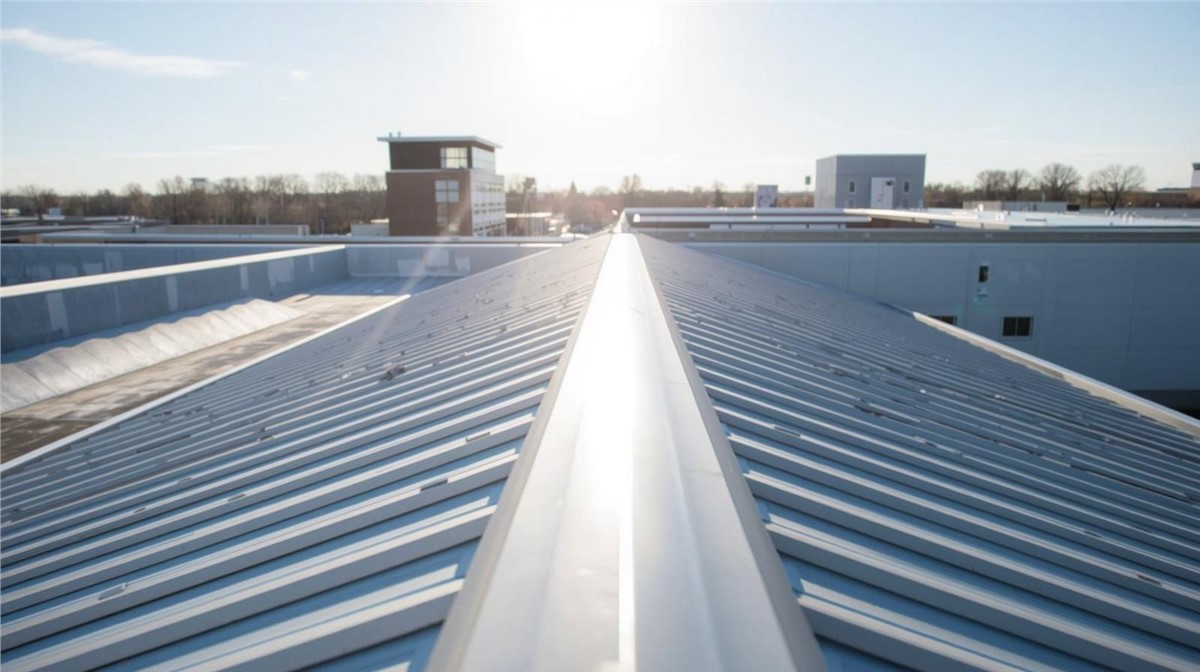
- Metal roofing — Increasingly used on commercial and industrial buildings for its longevity and low maintenance requirements. Standing seam metal roofs, in particular, perform well in northern Illinois winters.
Roof penetrations. Commercial roofs typically have far more penetrations than residential roofs — HVAC units, exhaust fans, plumbing vents, electrical conduits, skylights, and gas lines all punch through the membrane and create potential failure points. Each one requires proper flashing and regular inspection.
Scale and access. A commercial roof may cover tens of thousands of square feet. Problems in one section can go undetected for extended periods. Access for inspection requires planning, and repair logistics are more involved than on a typical residential job.
Warning Signs Elgin Business Owners Should Watch For
Some of these require getting eyes on the roof. Others show up inside the building first. Both matter.
From Inside the Building
- Water stains on ceiling tiles or structural decking — The most obvious interior indicator. Note that the stain location does not always correspond directly to where the roof is leaking; water travels along decking and structural members before it drips.
- Bubbling, sagging, or discolored ceiling finishes — Drywall or ceiling tile that has absorbed moisture repeatedly will begin to deform and stain even after the immediate leak has stopped.
- Mold or mildew odor in the building — Persistent musty odor, particularly in areas near exterior walls or below rooftop HVAC equipment, often indicates trapped moisture in the roof assembly or wall system.
- Increasing energy costs without explanation — A compromised roof membrane allows significant heat transfer, especially if insulation below has become wet. Wet insulation loses nearly all of its thermal value and is a major contributor to rising HVAC costs in commercial buildings.
- HVAC units working harder than usual — Rooftop units that are struggling to maintain temperature set points in mild weather may be compensating for heat loss or gain through a failing roof assembly.
From the Roof Surface
- Ponding water 48 hours after rain — Standing water that remains on the roof surface 48 hours after a rain event indicates a drainage problem that needs immediate attention. Chronic ponding accelerates membrane degradation and adds structural load.
- Membrane blistering or bubbling — Blisters in a roofing membrane indicate moisture or air trapped between layers. They are a sign of installation problems or advancing membrane failure.
- Open or lifted seams — On single-ply systems, seams are the most vulnerable point. Lifted or separated seams are an active leak pathway and need prompt repair.
- Cracks or splits in the membrane — Particularly common in aging EPDM or modified bitumen systems, and at corners, edges, and flashing transitions where the membrane flexes most.
- Deteriorating or missing flashing — At parapet walls, curbs around HVAC units, and penetrations throughout the roof. Failed flashing is responsible for a disproportionate share of commercial roof leaks.
- Gravel displacement on BUR systems — If your building has a gravel-surfaced built-up roof, bare patches where aggregate has washed away leave the underlying bitumen exposed to UV degradation.
- Rust or corrosion on metal components — Drains, scuppers, drain covers, and roof curbs that show significant rust have compromised their structural integrity and drainage effectiveness.
The Cost of Deferred Maintenance on a Commercial Roof
The financial case for proactive commercial roof maintenance is straightforward. Minor repairs — seam re-welding, flashing replacement, drain clearing — cost a fraction of what full replacement does. A single emergency repair following a significant interior water event often costs more than a season of scheduled preventive maintenance.
Beyond direct repair costs, consider the downstream consequences of a leaking commercial roof:
- Inventory or equipment damage
- Business interruption during repairs or remediation
- Tenant complaints, lease disputes, or vacancy
- Mold remediation, which can be extensive and expensive once moisture has been present in a wall or ceiling assembly for any length of time
- Reduced property value and complications during sale or refinancing
Most commercial roofing contractors recommend a formal inspection at least twice per year — once in spring and once in fall — along with an inspection following any significant storm event. Elgin and Kane County see their share of those: hailstorms capable of damaging membrane surfaces, wind events that stress flashings and edges, and winter ice loads that add weight and work ice into any existing vulnerability.
Repair vs. Restoration vs. Full Replacement
Commercial roof decisions are rarely binary. There are three realistic paths depending on the condition of the existing system:
Repair makes sense when damage is localized — a failed seam, damaged flashing around a single penetration, or a small puncture. The rest of the system is sound, the membrane has remaining service life, and a targeted fix will resolve the problem.
Roof restoration involves applying a liquid-applied coating system over an existing membrane that is still structurally sound but showing age. This extends the roof's service life, improves reflectivity, and addresses minor seam and surface issues — at a fraction of the cost of full replacement. Not every roof is a candidate; a professional assessment is required to determine whether the existing membrane and insulation are appropriate for restoration.
Full replacement is the right answer when the membrane has lost its integrity across significant areas, the insulation has been compromised by moisture infiltration, or the system is simply at the end of its service life. On most commercial roofing systems, that point comes somewhere between 15 and 25 years depending on the system type, installation quality, and maintenance history.
One consideration specific to commercial properties: many municipalities in Kane County require a permit for commercial roof replacement, and some have restrictions on the number of overlay systems allowed on a building before a tear-off is required. A local contractor familiar with Elgin's permitting requirements can help navigate that process.
What to Look for in a Commercial Roofing Contractor in Elgin
Commercial roofing is a specialized field. Not every contractor who does residential work is equipped to handle the materials, equipment, and project management demands of a commercial job. When evaluating contractors, look for:
- Demonstrated experience with the specific roofing system on your building — TPO, EPDM, BUR, or modified bitumen each require different expertise
- Familiarity with local permitting requirements and building codes in Kane County and the City of Elgin
- The ability to provide a detailed written scope of work, not just a price
- References from comparable commercial projects in the area
- Manufacturer certifications, which indicate that the contractor has been trained and approved to install specific roofing systems — and that manufacturer warranties will be honored
- A clear process for storm damage documentation and insurance claim support, since commercial roofs are frequently damaged in hail and wind events
Huskie Exteriors serves commercial and residential property owners across Illinois and Wisconsin, handling roofing, siding, windows, gutters, and storm damage restoration. For commercial clients, the team is experienced in assessing existing roof systems, identifying the right path forward — repair, restoration, or replacement — and managing the project from initial inspection through completion.
Protecting Your Elgin Commercial Property Starts at the Top
A commercial roof is not a line item to defer indefinitely. It is the system that protects everything else — the structure, the mechanical equipment, the finishes, the inventory, and the people inside the building.
The business owners and property managers who manage roofing costs most effectively are the ones who stay ahead of the maintenance cycle, catch problems early, and work with contractors who understand commercial systems and local conditions.
Contact Huskie Exteriors for professional roofing, siding, window, gutter, and storm damage services in Illinois and Wisconsin. If your Elgin commercial property is due for an inspection or you have concerns about your current roof system, our team is ready to take a look and give you a straight answer about what it needs.
Subscribe to Huskie Exteriors's Blog




Comments