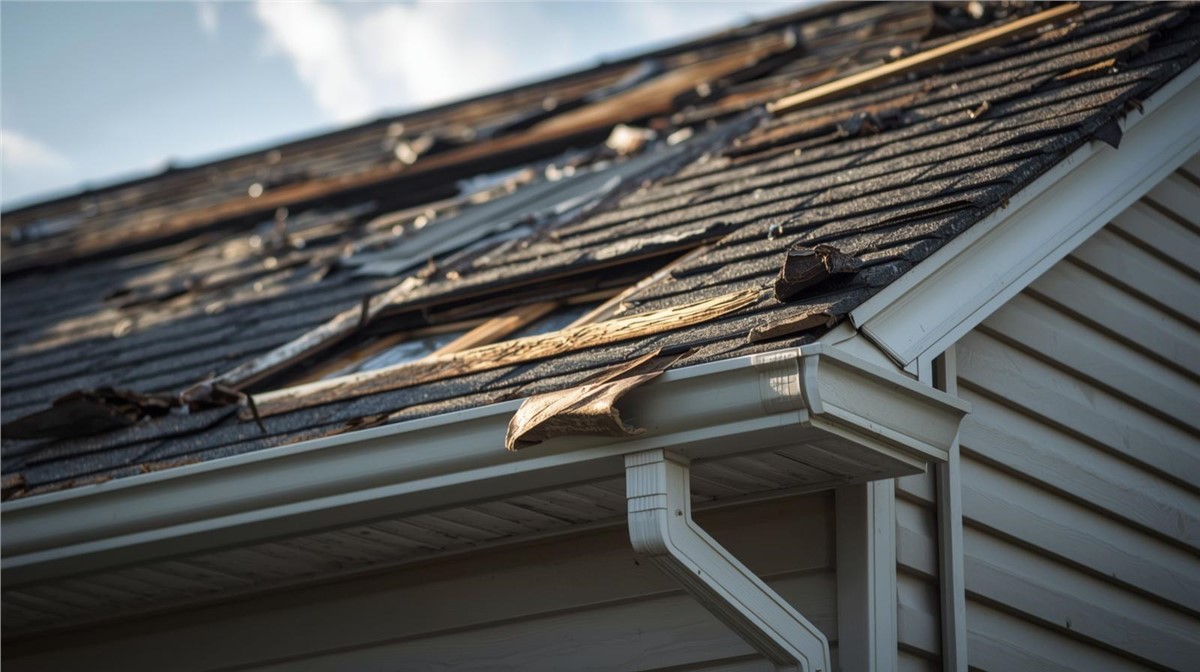
A storm can move through Byron in a matter of hours and leave behind damage that takes weeks to fully reveal itself. Ogle County sees its share of severe weather: summer thunderstorms rolling off the Rock River corridor, fast-moving hail events, straight-line winds that top 60 mph, and winter ice storms that stress every exposed surface on a building.
The problem most property owners face isn't that the damage is hard to fix — it's that it's easy to miss right after a storm. A small crack in a siding panel, a few bent gutter spikes, or a barely-lifted shingle edge can look like nothing in the days that follow. By the time water starts showing up inside the walls or ceilings, the window to file a timely insurance claim may have narrowed significantly.
This guide gives homeowners and commercial property owners in the Byron area a practical, system-by-system checklist for assessing storm damage, understanding what to prioritize, and knowing when to call a professional.
Why Byron, IL Properties Are Particularly Vulnerable to Storm Damage
Byron sits along the Rock River in a part of northern Illinois that funnels storm systems from multiple directions. The open terrain surrounding the city gives high winds fewer natural barriers, which means gusts tend to arrive with more force than they might in more heavily wooded or built-up areas.
The area also experiences pronounced freeze-thaw cycling through late fall and early spring. Water that gets into a small gap in the roofline or behind a siding panel will expand when it freezes and open that gap wider with each cycle. What was a hairline crack in October can become a significant breach by March.
Commercial buildings — particularly those with large flat-roof sections, metal panel siding, or older storefront facades — face their own set of vulnerabilities, including pooling water from clogged drainage and wind uplift on low-slope membrane roofing.
The Storm Damage Checklist: What to Inspect After a Major Weather Event
Work through each system below as soon as it is safe to do so after a storm. Stay on the ground for your initial walk-around — do not climb onto a wet or potentially compromised roof. A professional inspection is always the safest next step for anything above eye level.
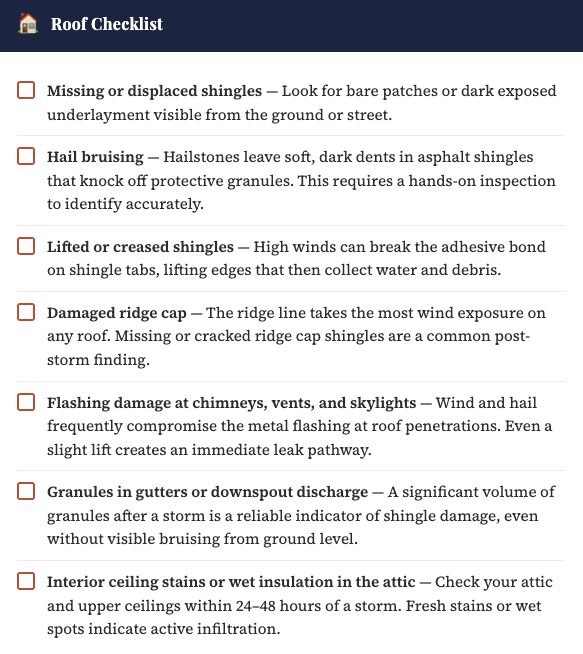
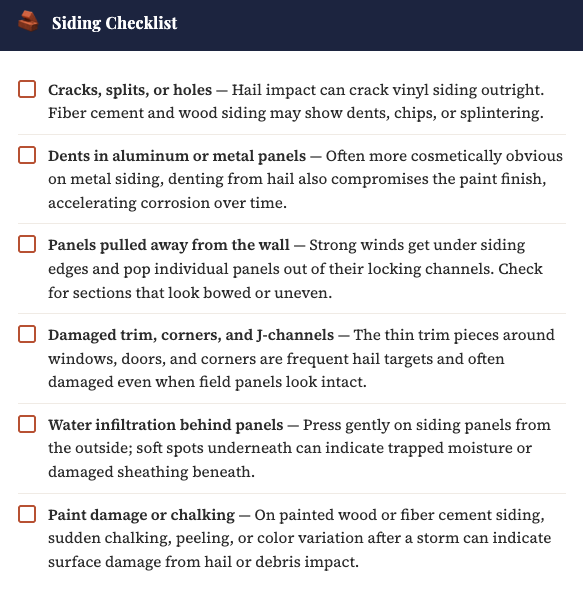
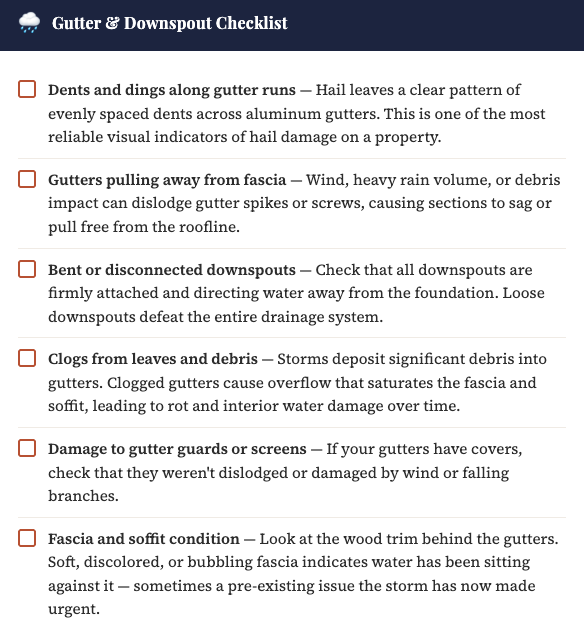
Insurance companies typically require storm damage claims to be filed within a set window after the event. Delaying inspection — even by a few weeks — can give adjusters reason to question whether the damage is truly storm-related. Photograph everything as soon as safely possible, and contact a restoration contractor to provide a professional damage assessment.
What to Do After You've Completed the Walk-Around
Once you've gone through the checklist, here is a practical sequence to follow:
- Document everything with photos and video. Walk the full perimeter of the structure, photograph every system, and note the date and time. Include wide shots for context and close-ups of specific damage.
- Apply temporary protection if safe to do so. If there is an active leak or a large open area on the roof or siding, a tarp can prevent additional water intrusion while you arrange a professional inspection. Do not attempt to tarp a steep or wet roof yourself.
- Contact your insurance provider. Report the storm event and initiate a claim. Have your documentation ready. Ask your insurer what they need from a contractor for the claim to proceed.
- Schedule a professional exterior inspection. An experienced contractor can identify damage that is not visible from the ground and provide the written documentation your insurance company needs. Look for a contractor with storm damage restoration experience, not just general roofing.
- Get a written scope of work before any repairs begin. A reputable contractor will provide a detailed estimate that itemizes every repair needed across all affected systems — roof, siding, gutters, and any related trim or flashing.
Watch Out for Storm Chasers After Severe Weather
After any significant hail or wind event in northern Illinois, out-of-area contractors often arrive quickly — sometimes door-to-door — promising fast repairs and easy insurance approvals. These operations are commonly referred to as storm chasers, and they can leave property owners with substandard repairs, voided warranties, and no local recourse if something goes wrong.
A few things to watch for:
- Contractors who show up unsolicited immediately after a storm with a clipboard and a hard sell
- No verifiable local address, license number, or references in the area
- Pressure to sign a contract or assignment of benefits agreement on the spot
- Extremely low bids that seem too good relative to the scope of damage
- No mention of permits, manufacturer warranties, or written guarantees
Working with a contractor who has an established presence in the Illinois and Wisconsin market — and a track record in communities like Byron — gives you accountability throughout the process, not just at the point of sale.
Why a Local Storm Damage Contractor Makes the Difference
Storm damage restoration is more than replacing shingles or straightening a gutter. It involves coordinating multiple exterior systems, navigating the insurance claims process, sourcing materials that match your existing exterior, and ensuring the work is completed to code for your municipality.
A contractor who works regularly in Ogle County and the surrounding northern Illinois region understands local building codes, knows which materials perform best in the Midwest climate, and has the relationships with material suppliers to source what your property needs without unnecessary delays.
Huskie Exteriors handles roofing, siding, windows, gutters, and storm damage restoration across Illinois and Wisconsin. The team is experienced in working alongside homeowners and commercial property owners through the entire claims and restoration process — from initial damage documentation to final inspection.
Taking Action After the Storm Passes
Byron's weather doesn't wait, and neither should you when storm damage is involved. The checklist above is a starting point — a way to move from uncertainty to action with a clear picture of what your property has been through.
Not every item on the list will apply to every storm. But the discipline of going through it system by system, documenting what you find, and getting a professional set of eyes on anything that concerns you is the most reliable way to protect your investment and keep your insurance claim on solid ground.
Storm Hit Your Byron Property?
Contact Huskie Exteriors for professional roofing, siding, window, gutter, and storm damage services in Illinois and Wisconsin. We'll assess the damage, document what we find, and help you understand your options — including working with your insurance provider.
Subscribe to Huskie Exteriors's Blog





Comments