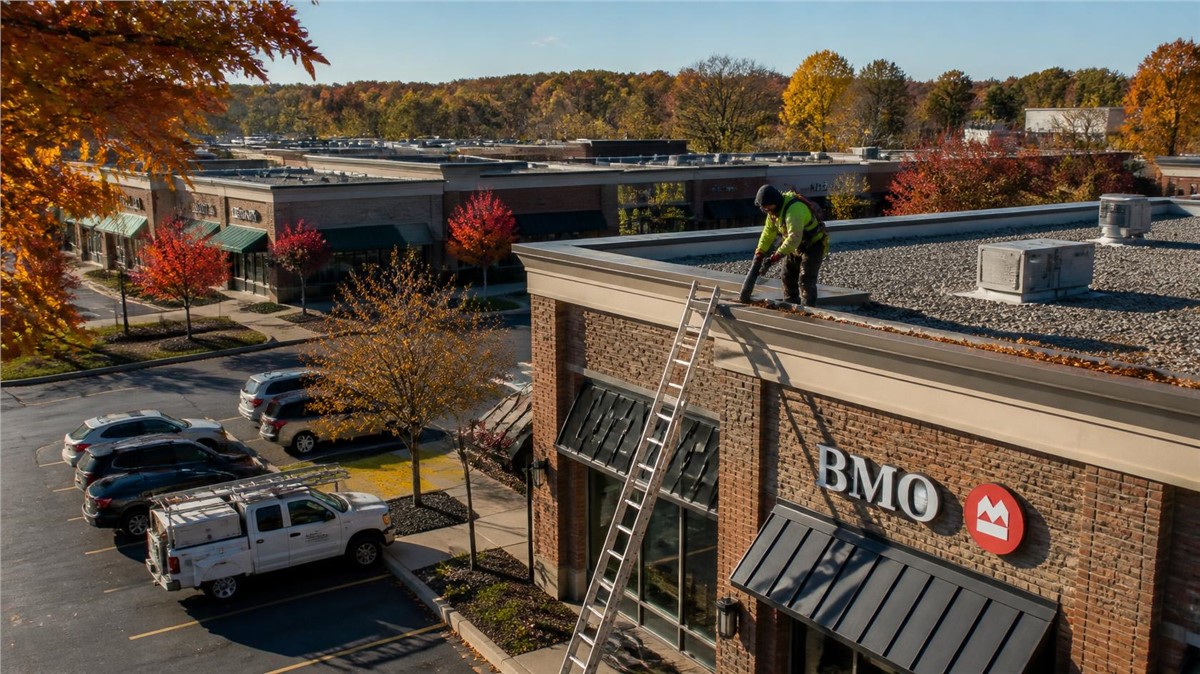
Fall is one of the most important times to inspect and maintain commercial gutters. Leaves, twigs, roof debris, and storm buildup can clog gutters and downspouts before winter weather begins. Once freezing temperatures arrive, trapped water can turn into ice, adding weight to the gutter system and increasing the risk of damage.
For commercial properties in South Elgin, IL, fall gutter maintenance helps reduce winter problems such as ice buildup, roof edge damage, water intrusion, slippery walkways, and drainage issues around entrances. A well-maintained gutter system helps protect the full exterior, not just the roofline.
This guide explains what property owners and managers should check before winter.
Why Fall Gutter Maintenance Matters
Commercial gutters manage large amounts of water from roof surfaces. When gutters clog, overflow, or pull away from the building, water can damage several areas at once.
Fall maintenance helps reduce the risk of:
- Gutter overflow
- Ice buildup
- Roof edge damage
- Fascia and soffit moisture
- Siding stains
- Foundation pooling
- Basement or lower-level moisture
- Slippery entrance areas
- Winter emergency repairs
Preparing before freezing weather can help avoid more serious winter damage.
Clear Leaves and Debris
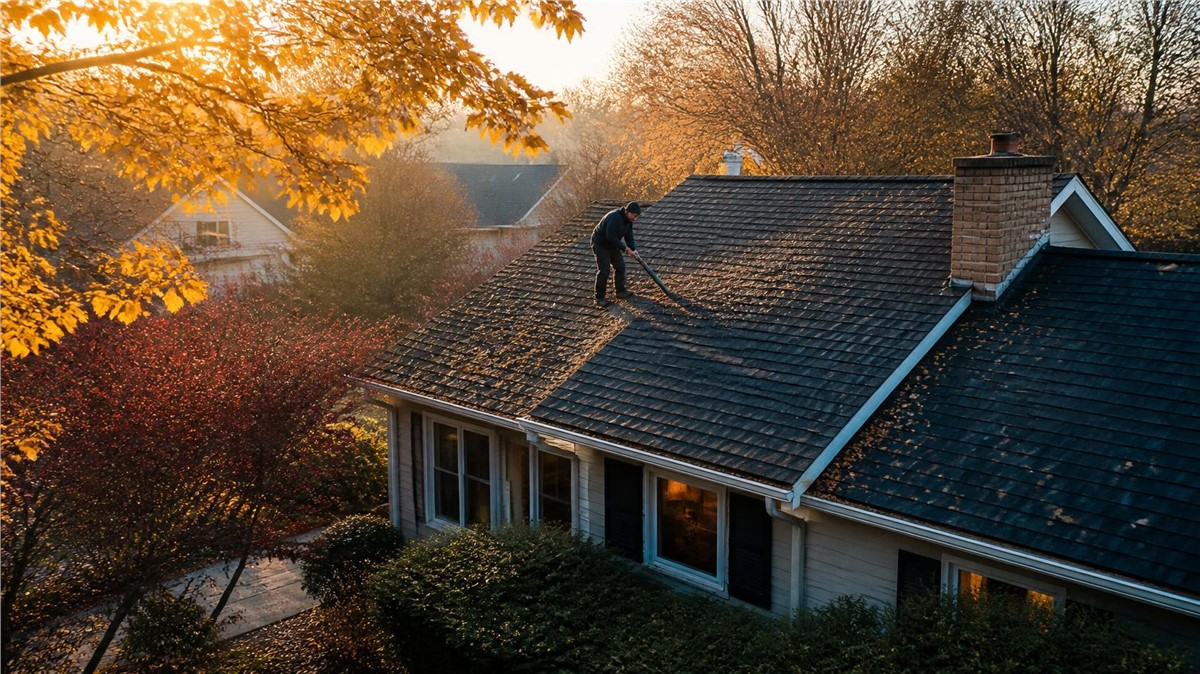
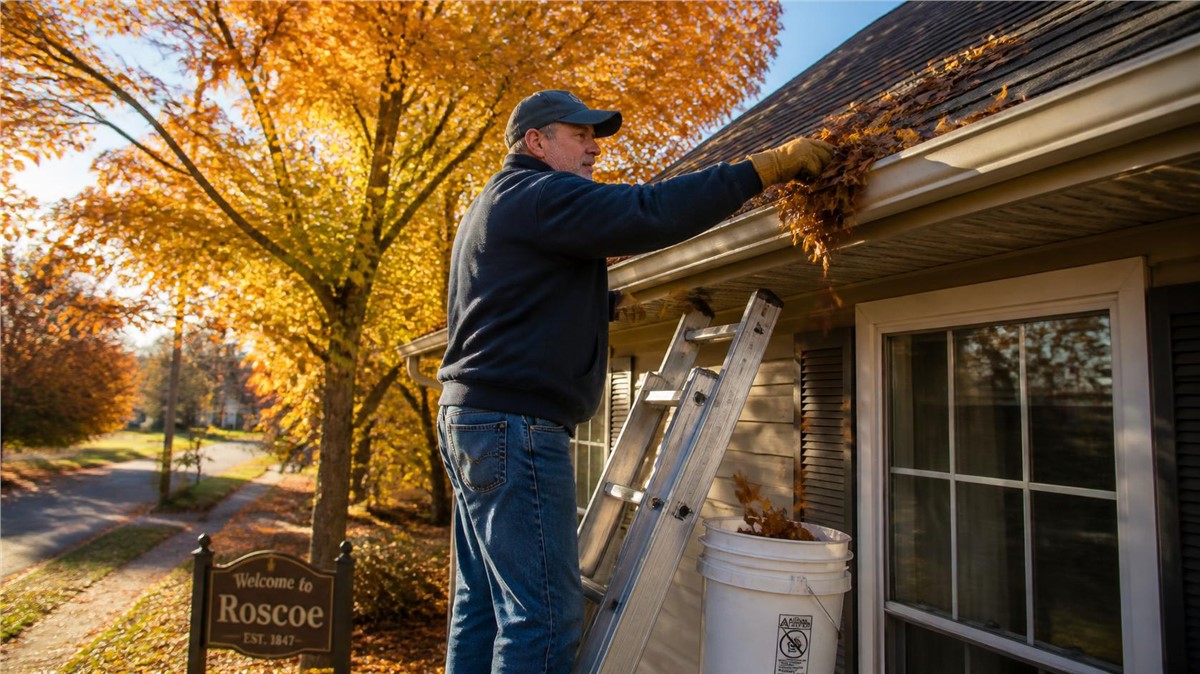
Fall leaves are one of the biggest causes of gutter clogs. Commercial properties near trees may need more frequent cleaning, especially after wind or rain.
Gutters may collect:
- Leaves
- Twigs
- Seed pods
- Dirt
- Roofing granules
- Branch fragments
- Animal nesting material
- Wind-blown debris
If debris blocks water flow, gutters may overflow during rain or freeze when temperatures drop.
Check Downspouts
Downspouts are just as important as the gutter channels. If downspouts are clogged, water cannot move away from the roofline.
Look for:
- Water backing up in gutters
- Little or no water exiting downspouts
- Loose elbows
- Disconnected sections
- Crushed or bent downspouts
- Water pooling near the building
- Debris at the outlet
A clean gutter will not perform well if the downspout is blocked or draining too close to the foundation.
Inspect Gutter Hangers and Attachments
Commercial gutters can become heavy when filled with water, debris, snow, or ice. Loose hangers and weak attachments should be repaired before winter.
Check for:
- Sagging gutter sections
- Gaps between gutter and fascia
- Loose fasteners
- Gutters pulling away
- Uneven gutter lines
- Sections that hold standing water
If gutters are not securely attached, winter ice can make the problem worse.
Look for Leaking Seams and Corners
Gutter seams, corners, outlets, and end caps can separate over time. Fall is a good time to identify leaks before freezing weather expands the problem.
Warning signs include:
- Drips from corners
- Stains below seams
- Water marks on siding
- Rust or discoloration
- Separated joints
- Leaks near downspout outlets
- Water dripping near entrances
Leaks can damage siding, trim, fascia, and walkways if ignored.
Check for Proper Drainage
Commercial gutter systems should direct water away from the building, entrances, sidewalks, loading areas, and landscaping.
Inspect drainage near:
- Main entrances
- Side doors
- Walkways
- Loading docks
- Parking lot edges
- Foundation walls
- Lower-level windows
- Dumpster or delivery areas
Water should not collect where employees, tenants, customers, or vendors walk. Poor drainage can create slippery conditions once temperatures drop.
Watch for Water Behind Gutters
Water should flow into the gutter, not behind it. If water is running behind the gutter, the problem may involve loose gutters, damaged fascia, roof edge issues, missing drip edge, or improper installation.
This can affect:
- Fascia
- Soffit
- Siding
- Exterior trim
- Roof edges
- Interior wall areas
Water behind gutters should be inspected before winter freezing makes damage worse.
Inspect Fascia and Soffit
Fascia and soffit areas support and protect the roof edge. Gutter problems often show up in these areas first.
Look for:
- Soft fascia
- Peeling paint
- Water stains
- Loose soffit panels
- Gaps near gutters
- Pest entry points
- Sagging gutter attachments
If fascia or soffit is damaged, gutter repair alone may not solve the full issue.
Check Roof Edge Areas
Commercial gutter maintenance should include a review of the roof edge. Roof edge problems can affect how water enters the gutter system.
Watch for:
- Loose edge metal
- Damaged flashing
- Debris at roof edges
- Low spots near gutters
- Open seams
- Shingle or membrane wear
- Signs of past overflow
Roof edge concerns should be checked before snow and ice add stress to the system.
Prepare for Snow and Ice
Winter can be hard on commercial gutters. Water trapped in clogged gutters can freeze, creating heavy ice buildup.
Before winter, make sure:
- Gutters are clean
- Downspouts are clear
- Hangers are secure
- Seams are sealed
- Drainage extensions are in place
- Water does not pool near entrances
- Roof edges are inspected
Good fall maintenance helps the building enter winter with fewer preventable drainage problems.
Document Maintenance
Property owners and managers should keep records of gutter cleaning, inspections, and repairs.
Helpful records include:
- Cleaning dates
- Inspection photos
- Repair notes
- Storm dates
- Leak reports
- Tenant or staff complaints
- Contractor recommendations
- Gutter replacement history
Documentation helps track recurring problems and plan future repairs or upgrades.
Repair vs Replacement
Some gutter problems can be repaired if they are limited. Others may require replacement if the system is no longer draining properly.
Repair may make sense if:
- One seam is leaking
- A few hangers are loose
- One downspout is blocked
- A short extension is needed
- Pitch can be corrected
Replacement may be better if:
- Gutters sag in several areas
- Seams leak repeatedly
- Sections are bent or damaged
- Water keeps running behind gutters
- Drainage problems keep returning
- Fascia damage is widespread
A professional inspection can help determine the right solution.
Why a Full Exterior Inspection Helps
Commercial gutter problems are often connected to roofing, siding, fascia, soffit, windows, doors, trim, drainage, and foundation areas. Overflowing gutters can stain siding, damage roof edges, soak fascia, and create water problems near entrances.
Huskie Exteriors provides roofing, siding, window, gutter, and storm damage restoration services, helping commercial property owners prepare their buildings for winter weather.
Conclusion
Fall commercial gutter maintenance in South Elgin, IL helps property owners prepare for winter by clearing debris, checking downspouts, securing hangers, repairing leaks, and improving drainage. Clean and functional gutters help protect the roof edge, siding, fascia, soffit, foundation, entrances, and interior spaces from water-related damage.
If your commercial property has clogged gutters, sagging sections, leaking seams, water behind gutters, drainage problems, or winter preparation concerns, Huskie Exteriors can inspect your building and recommend the right next step.
Contact Huskie Exteriors for professional roofing, siding, window, gutter, and storm damage services in Illinois and Wisconsin.
Subscribe to Huskie Exteriors's Blog






Comments