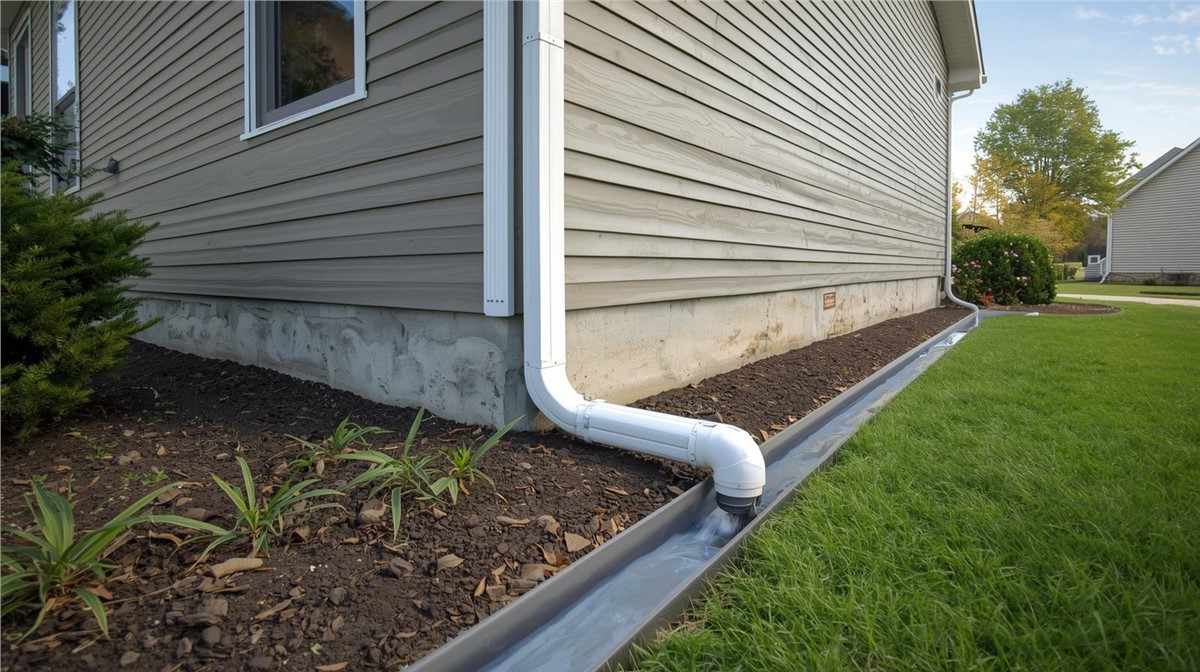
In Elgin, IL, the best downspout drainage solution depends on how much runoff your roof creates, where water currently collects, and how far it needs to be moved away from the foundation. For many homeowners, the most practical fixes are downspout extensions, splash blocks, underground drain lines, regrading, dry wells, or rain gardens, especially when current drainage is causing pooling water, erosion, or basement moisture. Elgin also has a Private Property Drainage Assistance program for certain long-standing drainage problems, and homeowners should verify permit requirements before starting larger drainage work.
Why This Matters in Elgin, IL
Downspout drainage matters in Elgin, IL because gutter and downspout systems do more than carry water off the roof. They help protect the foundation, siding, fascia, landscaping, and lower wall areas by directing runoff away from the house. When downspouts discharge too close to the home or into a poorly drained area, even normal rain can lead to ponding, erosion, and wet basement or crawlspace conditions.
That local context matters because stormwater is a real issue in Elgin, not just a maintenance detail. The city recognizes private-property drainage issues and has published information related to drainage assistance, stormwater handling, and permit review. For homeowners, that means drainage is something worth addressing early instead of treating as a minor yard nuisance.
For homeowners in Elgin, IL, the real question is not just where the downspout ends now. It is whether water is being moved far enough, safely enough, and consistently enough to keep it away from the foundation and from low spots in the yard. If it is not, the home may be slowly taking on avoidable moisture and drainage problems every time it rains.
Common Signs You Need a Better Downspout Drainage Solution
- Water pooling near the foundation
If runoff collects close to the house after rain, the downspouts may not be carrying water far enough away. - Erosion around flower beds, mulch, or walkways
Concentrated roof runoff can wash out soil and disturb landscaping quickly. - Basement dampness or moisture near foundation walls
Persistent drainage issues often show up first as moisture problems below grade. - Ponding water that lingers after storms
Standing water that remains for days is a sign the yard is not draining properly. - Downspouts dumping directly onto hard surfaces
Water discharged onto driveways, sidewalks, or patios can still flow back toward the home or collect in problem spots. - Overflow near one side of the house after heavy rain
This often means one drainage area is overloaded or poorly directed. - Repeated gutter or downspout clogging
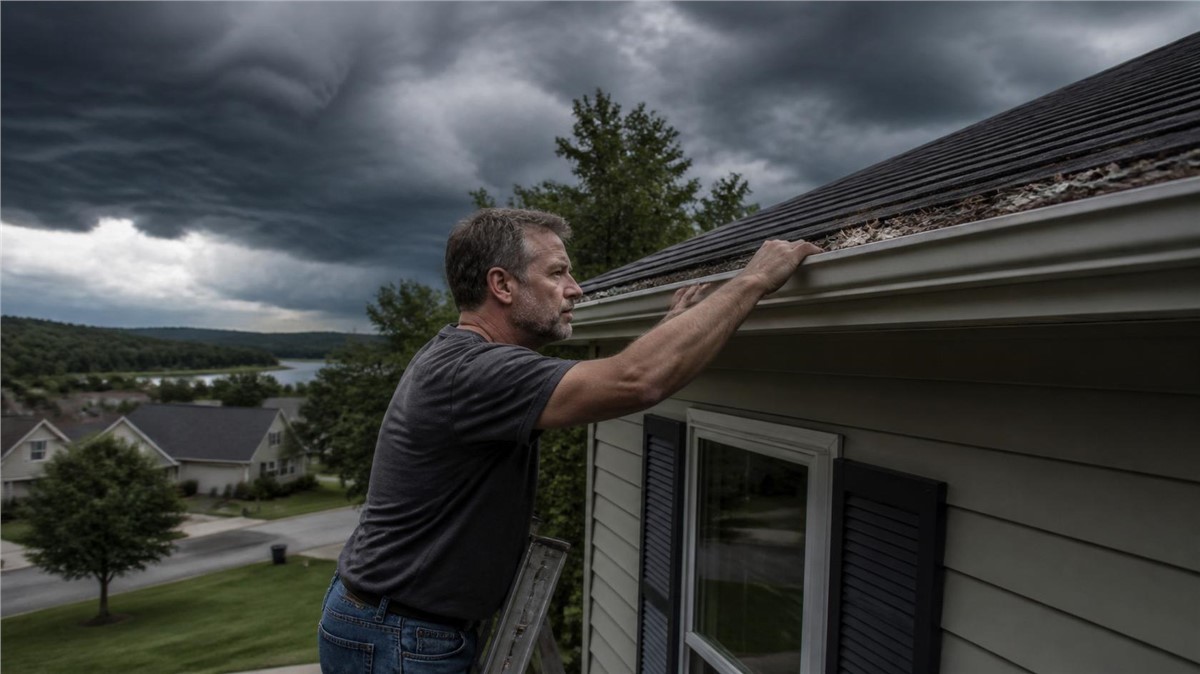
Even good downspouts will underperform if the gutter system above them is not draining correctly.
When to Schedule It (Best Timing + What to Do First)
The best time to address downspout drainage in Elgin, IL is before recurring runoff turns into structural or yard damage. If you already know where water collects, there is no real advantage to waiting for another major rain event to confirm the problem again.
First: Watch Where Water Actually Goes
The best first step is simple observation during or right after a moderate rain. Look for:
- where each downspout discharges
- whether water flows back toward the foundation
- whether it creates ruts or erosion
- whether it runs onto hard surfaces
- whether it ponds in low spots
- how long standing water remains afterward
This matters because a drainage fix should be based on the actual runoff pattern, not just on guesswork.
Next: Decide Whether the Problem Is Small or Systemic
Some homes only need a basic extension or splash block. Others need a larger solution because:
- the lot pitches poorly
- the yard has a low collection area
- multiple downspouts discharge into one trouble spot
- the home already shows signs of foundation or moisture stress
Larger drainage issues often call for solutions such as underground drain lines, dry wells, regrading, or rain gardens rather than a simple plastic extension.
Then: Verify Whether Permit Review Applies
Elgin’s permit guidance tells homeowners to confirm whether a permit is required for a project. Because drainage work can range from simple above-ground extensions to underground piping or grading changes, your contractor should verify what applies before installation begins.
What a Professional Downspout Drainage Evaluation Includes
A professional drainage evaluation should focus on how water moves across the property, not just on the downspout itself.
Typical checklist:
- Roof runoff review
The contractor should identify which roof areas create the most water volume. - Downspout discharge assessment
This includes checking whether the current outlet point is too close to the house or too concentrated in one area. - Grading review
Slope matters. If the yard pitches back toward the home, even a decent gutter system may still allow drainage problems. - Soil absorption and low-area review
The contractor should look for spots where water naturally lingers or where runoff can safely disperse. - Recommendation of the right solution type
Common options include:- splash blocks
- above-ground downspout extensions
- buried drain lines
- dry wells
- rain gardens
- regrading
- Connection and discharge planning
Any proposed underground or storm-related discharge setup should be checked against local requirements before work begins.
At Huskie Exteriors, the goal is to help homeowners understand whether the property needs a simple runoff correction or a broader drainage plan.
What This Typically Costs in Elgin, IL (2026 Pricing)
For homeowners in Elgin, IL, downspout drainage cost depends on the solution type, how many downspouts are being corrected, how far water needs to be moved, and whether excavation or grading is involved.
Realistic 2026 ranges often look like this:
- Splash blocks or basic above-ground extensions: low-cost, often the most affordable starting point
- Longer above-ground downspout extensions: moderate cost depending on length and routing
- Underground downspout drain lines: higher cost because trenching, slope planning, and discharge design are involved
- Dry wells, regrading, or rain gardens: can range from moderate to more involved project totals depending on yard conditions
- Larger drainage correction projects: rise further when multiple downspouts, grading changes, or chronic ponding issues are involved
Top five cost factors:
Solution Type
A simple extension is much cheaper than a buried drain line or regrading project.
Distance to Safe Discharge
The farther water must be carried from the home, the more material and labor the project requires.
Excavation and Grading
Underground solutions usually cost more because they involve trenching and slope control.
Yard Conditions
Tight access, landscaping, patios, or hardscape features can complicate the project.
Number of Downspouts Involved
Correcting one trouble spot is different from redesigning the drainage strategy for the whole house.
In simple terms, the most affordable solution is not always the best one. A cheap extension that still leaves water near the foundation is not really solving the problem. The right answer is the one that keeps water moving away from the home consistently.
Insurance / Permits / Local Notes in Elgin, IL
For most homeowners, downspout drainage improvements are a property-protection or drainage-management decision rather than an insurance claim issue. Insurance may become more relevant only if runoff has already contributed to a covered loss or if a storm event damaged related exterior components.
A few local notes matter here:
- Elgin has a Private Property Drainage Assistance program aimed at certain long-standing drainage problems.
- Eligible project types in that program can include solutions such as rain gardens, dry wells, drain tile, sump pump connections to approved storm sewer points, and regrading.
- Elgin’s stormwater materials remind residents that storm sewers discharge directly into local waterways, which is why storm drainage should be handled correctly.
- The city says homeowners should confirm permit requirements for residential projects through its permit guidance or by contacting Community Development.
These local details matter because they show drainage is taken seriously at the city level. For homeowners, that means the right drainage fix is not just about convenience. It is about protecting the house and making sure runoff is being handled responsibly.
How to Choose the Right Contractor in Elgin, IL
The right contractor should explain how the drainage solution works, not just recommend “burying the downspouts” without a plan.
Questions to ask:
- Where is the water going now, and why is that a problem?
- Is a simple extension enough, or does this yard need a bigger solution?
- How far will the water be moved from the foundation?
- Will the solution create ponding somewhere else?
- Are you planning any underground discharge, and have you checked local requirements?
- Are you insured for exterior drainage work in Illinois?
- Will you provide a written scope of the drainage plan?
Red flags:
- no inspection of runoff patterns
- no discussion of grading
- no explanation of final discharge location
- recommending underground drainage without checking local requirements
- vague scope with no clear plan for where the water ends up
Mistakes Homeowners Make (And How to Avoid Them)
- Extending a downspout only a few feet and assuming that is enough
- Letting runoff discharge onto walkways or driveways
- Ignoring standing water that lingers after storms
- Treating a grading issue like a gutter-only issue
- Installing underground drains without confirming where they discharge
- Comparing options only by lowest upfront price
- Waiting until basement or foundation symptoms become obvious
FAQs
What is the best downspout drainage solution in Elgin, IL?
It depends on the property. For some homes, a longer above-ground extension or splash block is enough. For others, underground drains, regrading, dry wells, or rain gardens make more sense, especially when runoff repeatedly ponds near the foundation.
How far should downspouts drain away from the house?
The exact distance depends on grading and site conditions, but the goal is to move water far enough that it does not flow back toward the foundation or collect in low spots.
Are underground downspout drains worth it?
Often yes, when simple extensions are not enough or when homeowners want a cleaner look and more controlled drainage path. They usually cost more because trenching and proper discharge planning are involved.
Can Elgin homeowners get help with drainage problems?
Sometimes. Elgin has a Private Property Drainage Assistance program for certain long-standing drainage issues that contribute to property damage or affect multiple properties.
Do I need a permit for downspout drainage work in Elgin, IL?
Possibly, depending on scope. Elgin says homeowners should confirm permit requirements through the city’s permit guidance or by contacting Community Development.
Get a Free Estimate in Elgin, IL
If you need better downspout drainage in Elgin, IL, Huskie Exteriors is here to help with honest evaluations and practical water-management solutions built for Midwest weather. We serve homeowners across Northern Illinois and Southern Wisconsin with gutters, roofing, siding, and windows designed for long-term performance.
Schedule your free estimate with Huskie Exteriors today. We will inspect how water moves around your home, explain which drainage solution makes the most sense, and help you protect your foundation and exterior before the next heavy rain.
Subscribe to Huskie Exteriors's Blog





Comments