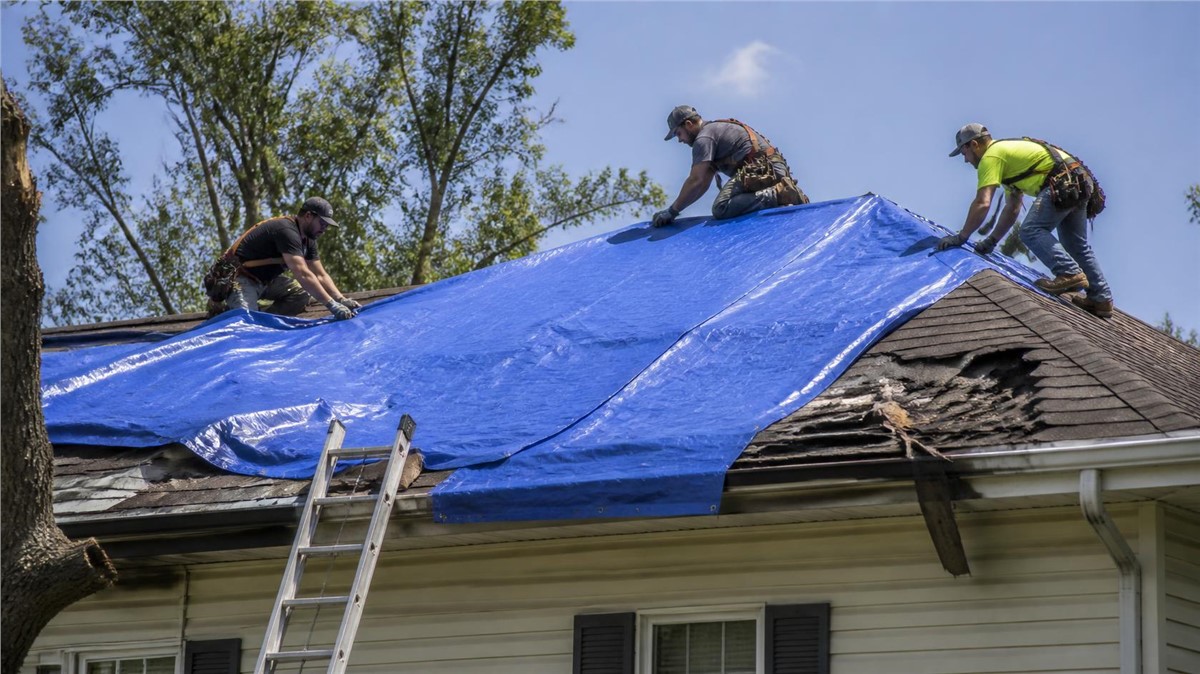
Roof damage can happen quickly during a storm. High winds may lift shingles. Hail can weaken roof materials. Falling branches may puncture the roof. Heavy rain can expose flashing problems. Snow and ice can damage roof edges. When the roof is no longer fully protecting the home, water can enter fast.
For homeowners in Monroe, WI, emergency tarping can be an important temporary step after roof damage. It helps cover vulnerable areas and reduce additional moisture while a permanent repair plan is being prepared. However, tarping is not a final fix. It should be handled safely and followed by a full roof and exterior inspection.
This guide explains when emergency tarping helps, what it can and cannot do, and what homeowners should check after roof damage.
What Is Emergency Roof Tarping?
Emergency roof tarping is the process of covering a damaged roof area with a durable temporary tarp. The goal is to reduce water entry until permanent roof repairs can be completed.
Tarping may be used after:
- Wind damage
- Hail damage
- Missing shingles
- Fallen tree or branch impact
- Exposed roof decking
- Storm-related leaks
- Damaged flashing
- Ice-related roof damage
- Roof punctures
- Emergency roof openings
A tarp helps protect the damaged section, but it does not restore the roof system.
When Emergency Tarping Helps
Emergency tarping is helpful when the roof has an exposed or vulnerable area that may allow rain, snowmelt, or moisture into the home.
Tarping may help when:
- Shingles are missing
- Roof decking is exposed
- Water is entering the attic
- Ceiling stains appear after a storm
- Flashing has been damaged
- A branch has punctured the roof
- Ridge caps are missing
- Roof vents are damaged
- A roof leak needs temporary protection
If there is active water intrusion, temporary protection may help reduce additional damage while waiting for repairs.
When Tarping May Not Be Enough
A tarp can help reduce water entry, but it cannot solve every roof problem. Some leaks come from areas that are hard to cover or require repair rather than temporary protection.
Tarping may not be enough if:
- The roof has widespread damage
- The leak source is unclear
- Flashing is failing in multiple areas
- The roof is structurally unsafe
- Water is entering through walls or siding
- Gutters are overflowing badly
- Ice dams are causing backup
- The roof is near the end of its life
In these cases, tarping may still help temporarily, but a full inspection is needed quickly.
Safety Comes First
Homeowners should not climb onto a damaged roof. After a storm, the roof may be wet, slippery, unstable, or weakened. Damaged shingles, loose decking, branches, ice, or hidden soft spots can make the roof unsafe.
Avoid:
- Walking on the roof
- Using ladders in wet or windy conditions
- Touching downed wires
- Pulling branches off the roof
- Standing under damaged tree limbs
- Entering rooms with active water near electrical fixtures
- Trying to tarp a steep or damaged roof yourself
Emergency tarping should be handled by someone with the right equipment and experience.
Signs Your Roof May Need Emergency Tarping
Not every roof issue needs a tarp, but certain warning signs should be taken seriously.
Call a contractor if you notice:
- Missing shingles
- A visible hole in the roof
- Shingles in the yard
- Water dripping indoors
- Ceiling stains after a storm
- Wet attic insulation
- Damaged roof vents
- Exposed wood
- Fallen branch impact
- Loose flashing
- Roof debris after high winds
If rain is expected soon, temporary protection may be especially important.
Interior Signs That Tarping May Be Needed
Sometimes homeowners first notice roof damage from inside the home. Water may travel through the attic, insulation, framing, or drywall before becoming visible.
Interior warning signs include:
- Brown ceiling stains
- Damp drywall
- Bubbling paint
- Water dripping
- Musty odors
- Wet insulation
- Dark roof decking
- Stains near exterior walls
- Water near light fixtures
If water appears near electrical fixtures, avoid touching the area and contact a professional.
Common Storm Damage That Leads to Tarping
Storms can damage the roof in several ways. In Monroe, WI, roof damage may be caused by wind, hail, heavy rain, snow, ice, or falling debris.
Common storm-related issues include:
- Lifted shingles
- Missing shingles
- Bruised shingles from hail
- Cracked shingles
- Damaged ridge caps
- Punctures from branches
- Damaged flashing
- Loose pipe boots
- Dented roof vents
- Torn underlayment
A tarp may be used when these issues expose the home to water.
Wind Damage and Emergency Tarping
High winds can lift shingles, break the seal between shingles, loosen ridge caps, or tear roofing materials away.
Wind damage may require tarping if:
- Shingles are missing
- Roof decking is exposed
- Ridge caps are gone
- A roof section is open
- Wind-driven rain has entered the attic
- Flashing has pulled loose
- Materials are still shifting
Even if shingles settle back down, the seal may be compromised and should be inspected.
Hail Damage and Emergency Tarping
Hail damage does not always require immediate tarping, especially if there is no opening or leak. However, hail can weaken roofing materials and create water risks.
Tarping may be needed after hail if:
- Shingles are cracked or broken
- Hail impact caused an opening
- Roof vents are damaged
- Flashing is loosened
- Interior leaks appear
- Hail damage is combined with wind damage
A professional inspection can help determine whether the damage needs temporary protection or scheduled repair.
Fallen Branch or Tree Damage
Falling branches are one of the clearest reasons emergency tarping may be needed. A branch can puncture shingles, damage decking, or create an opening in the roof.
After branch impact, check for:
- Visible punctures
- Broken shingles
- Exposed decking
- Interior leaks
- Damaged gutters
- Cracked siding
- Loose fascia or soffit
- Debris on the roof
Do not remove large branches yourself if doing so could make the damage worse or create a safety hazard.
Flashing Damage
Flashing protects vulnerable roof transitions. If flashing is damaged during a storm, water may enter around chimneys, skylights, walls, vents, or roof valleys.
Flashing areas to check include:
- Chimneys
- Skylights
- Roof vents
- Pipe boots
- Dormers
- Wall transitions
- Roof valleys
- Roof edges
Depending on the location, tarping may help temporarily until flashing repairs are completed.
Roof Vents and Pipe Boots
Roof vents and pipe boots are common leak points after storms. Hail, wind, branches, and age can damage these areas.
Warning signs include:
- Cracked pipe boots
- Loose vent covers
- Dented roof vents
- Missing vent caps
- Water stains below vents
- Moisture in the attic
- Open gaps around penetrations
If a roof penetration is damaged and rain is expected, temporary protection may help reduce water entry.
What Emergency Tarping Can Protect
A properly installed tarp may help protect several parts of the home from additional moisture.
It can help reduce damage to:
- Roof decking
- Attic insulation
- Rafters
- Ceilings
- Drywall
- Interior paint
- Flooring
- Furniture
- Electrical areas
- Personal belongings
The sooner temporary protection is installed, the more damage may be avoided.
What Emergency Tarping Cannot Do
Emergency tarping is temporary. It does not replace damaged shingles, repair flashing, restore roof decking, fix ventilation issues, or solve structural concerns.
A tarp cannot:
- Permanently repair the roof
- Guarantee no water will enter
- Fix hidden moisture damage
- Replace damaged underlayment
- Correct poor ventilation
- Repair damaged gutters
- Solve ice dam causes
- Restore warranty coverage
After tarping, the roof still needs professional inspection and repair planning.
How Long Should a Roof Tarp Stay On?
A tarp should stay on only as long as necessary before permanent repairs can be completed. Weather, roof condition, tarp quality, and installation method all affect how long temporary protection lasts.
A tarp can loosen or fail because of:
- Wind
- Heavy rain
- Snow
- Ice
- UV exposure
- Poor attachment
- Roof movement
- Debris impact
Homeowners should treat tarping as a temporary emergency step, not a long-term roof solution.
Document the Damage Before and After Tarping
Documentation helps homeowners stay organized, especially if storm damage may involve insurance.
Helpful documentation includes:
- Photos of roof damage
- Photos of interior leaks
- Photos of fallen branches
- Storm date notes
- Photos of damaged gutters or siding
- Contractor inspection findings
- Emergency tarping invoice
- Temporary repair receipts
- Notes about when water appeared
If insurance may be involved, contact your insurance provider for policy-specific guidance.
Should You Call Insurance Before or After Tarping?
If water is entering the home, preventing further damage is usually the priority. However, homeowners should contact their insurance provider as soon as possible to understand policy-specific steps, documentation requirements, deadlines, and claim guidance.
Helpful steps may include:
- Taking photos before cleanup
- Keeping receipts
- Recording storm dates
- Saving contractor reports
- Avoiding permanent repairs before guidance when possible
- Following the insurance provider’s instructions
Every policy is different, so homeowners should rely on their provider for claim instructions.
Temporary Interior Protection
While waiting for roof tarping or repairs, homeowners can reduce interior damage if it is safe to do so.
Temporary interior steps may include:
- Moving furniture away from leaks
- Placing buckets under drips
- Protecting floors
- Removing valuables from wet areas
- Taking photos of damage
- Avoiding wet electrical areas
- Ventilating damp areas when safe
- Keeping children and pets away from damaged spaces
These steps do not replace roof tarping or repairs, but they may help limit damage.
What Happens After the Roof Is Tarped?
After tarping, the roof should be inspected to determine the permanent repair plan.
A contractor may check:
- Shingles
- Underlayment
- Roof decking
- Flashing
- Roof vents
- Pipe boots
- Ridge caps
- Gutters
- Fascia and soffit
- Attic moisture
- Interior water damage
- Storm damage areas
The inspection helps determine whether targeted repair or replacement is needed.
Repair vs Replacement After Emergency Tarping
Emergency tarping buys time, but the next step depends on the extent of damage.
Repair may make sense if:
- Damage is isolated
- A few shingles are missing
- One roof penetration is damaged
- Flashing can be repaired
- Decking is still solid
- No widespread storm damage is present
Replacement may be better if:
- Damage is widespread
- The roof is aging
- Several slopes are affected
- Decking is damaged
- Leaks are recurring
- Shingles are brittle
- Repairs would not last
- Storm damage affected multiple areas
A professional inspection can help determine the best scope.
Check Gutters and Roof Edges Too
Roof damage often affects gutters, fascia, soffit, and roof edges. A tarp may cover the roof opening, but drainage problems can still create water issues.
Check for:
- Sagging gutters
- Water behind gutters
- Loose downspouts
- Damaged fascia
- Soffit stains
- Ice buildup
- Bent gutter sections
- Blocked downspouts
A full exterior review helps make sure water is managed after the emergency.
Check Siding and Windows After Storm Damage
If the roof was damaged by wind, hail, or debris, siding and windows may also be affected.
Look for:
- Cracked siding
- Loose panels
- Broken trim
- Dented gutters
- Torn screens
- Window leaks
- Water stains below windows
- Damaged fascia
- Loose soffit panels
Storm damage can affect multiple exterior systems during the same event.
What Should Be Included in an Emergency Roof Inspection?
An emergency roof inspection should focus on immediate water risks and the permanent repair plan.
A contractor may evaluate:
- Source of the leak
- Size of damaged area
- Roof safety
- Need for tarping
- Shingle condition
- Flashing condition
- Decking concerns
- Attic moisture
- Interior damage
- Gutter and drainage issues
- Storm-related exterior damage
This helps homeowners move from temporary protection to long-term repair.
Why a Full Exterior Inspection Helps
Emergency tarping protects the damaged area temporarily, but roof damage may be connected to siding, gutters, flashing, fascia, soffit, windows, attic ventilation, and drainage. Looking only at the tarped area may miss other storm-related problems.
A full exterior inspection may include:
- Roofing and shingles
- Roof vents and pipe boots
- Flashing
- Gutters and downspouts
- Siding and trim
- Windows and doors
- Fascia and soffit
- Attic and interior moisture signs
- Storm damage areas
Huskie Exteriors provides roofing, siding, window, gutter, and storm damage restoration services, helping homeowners evaluate the full exterior after roof damage.
Why Local Exterior Experience Matters
A local contractor understands how Wisconsin weather affects roofing systems. In Monroe, WI, homes need roofs that can handle wind, hail, heavy rain, snow, ice, falling branches, humidity, and freeze-thaw cycles.
Local experience helps homeowners determine whether roof damage is caused by storm impact, missing shingles, damaged flashing, ice buildup, poor drainage, aging materials, or hidden moisture.
Conclusion
Emergency tarping after roof damage in Monroe, WI can help reduce further water intrusion when shingles, flashing, vents, decking, or roof sections are exposed. It is especially helpful after wind damage, hail damage, fallen branches, active leaks, or storm-related roof openings. However, tarping is only temporary and should always be followed by a professional inspection and permanent repair plan.
If your home has roof damage, missing shingles, active leaks, exposed decking, damaged flashing, ceiling stains, or storm-related moisture concerns, Huskie Exteriors can inspect your exterior and recommend the right next step.
Contact Huskie Exteriors for professional roofing, siding, window, gutter, and storm damage services in Illinois and Wisconsin.
Subscribe to Huskie Exteriors's Blog






Comments