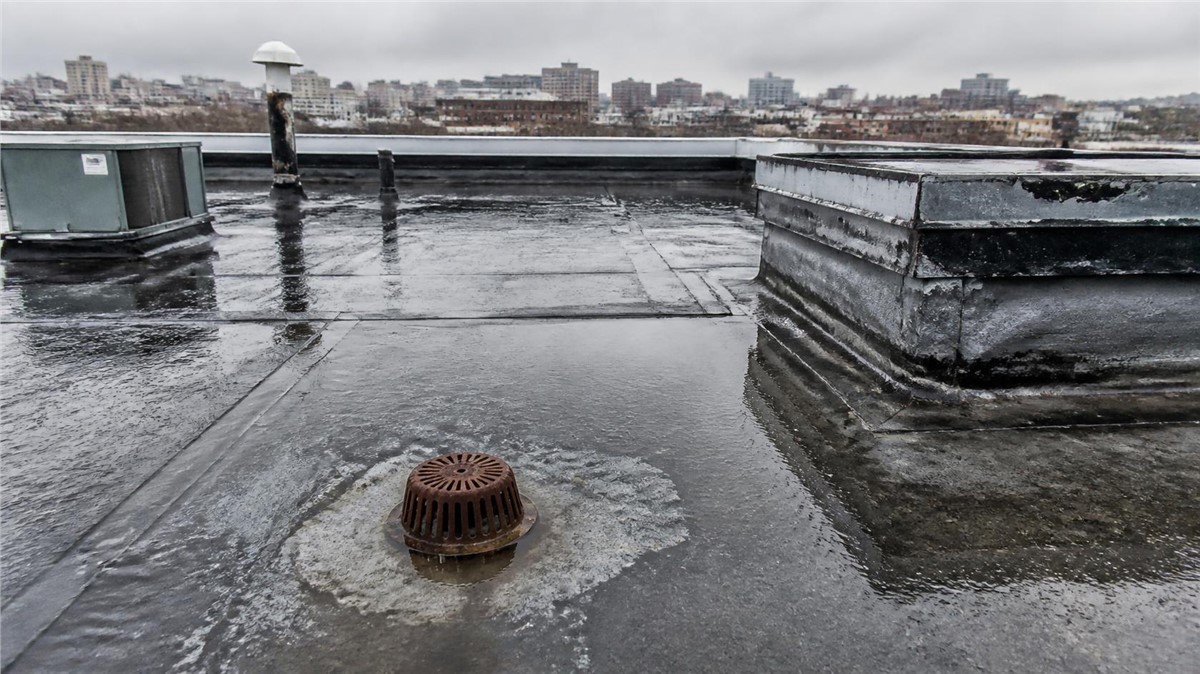
Flat roofs are common on commercial buildings, offices, retail spaces, warehouses, additions, and some residential structures. While they are practical for many properties, flat and low-slope roofs require careful drainage and maintenance. When water does not move properly, leaks can develop around seams, flashing, drains, roof edges, and rooftop equipment.
For property owners in Rock Falls, IL, flat roof leak detection is especially important because northern Illinois weather can bring heavy rain, wind, hail, snow, ice, humidity, and freeze-thaw cycles. These conditions can stress roof materials and expose weak points.
This guide explains common flat roof leak problem areas and what building owners should check.
Why Flat Roof Leaks Can Be Hard to Find
Flat roof leaks are not always directly above the interior stain. Water can travel under roofing materials, along insulation, through seams, around penetrations, or across decking before it appears inside.
This means a leak may show up as:
- Ceiling stains
- Dripping water
- Wet insulation
- Musty odors
- Damp walls
- Bubbling paint
- Soft roof areas
- Water near rooftop equipment
- Stains near exterior walls
A proper inspection looks at both the roof surface and the interior signs.
Common Problem Area 1: Roof Seams
Many flat roofs use membrane systems with seams. If seams separate, crack, lift, or lose adhesion, water can enter beneath the surface.
Seam problems may include:
- Open seams
- Split seams
- Loose edges
- Wrinkled membrane
- Failed sealant
- Water stains below seam areas
- Debris trapped along seams
Seams are one of the first places a contractor may inspect when searching for a flat roof leak.
Common Problem Area 2: Flashing
Flashing protects transitions where the roof meets walls, curbs, edges, vents, and other building features. On flat roofs, flashing is especially important because water may sit near these areas longer than on steep roofs.
Flashing concerns include:
- Loose flashing
- Cracked sealant
- Open gaps
- Rusted metal
- Separated edges
- Water stains near walls
- Movement around roof curbs
- Damaged counterflashing
If flashing fails, water can enter the building envelope even if the roof membrane looks mostly intact.
Common Problem Area 3: Roof Drains
Flat roofs depend on drains to move water off the roof. If drains are clogged, blocked, damaged, or poorly maintained, water can collect and create leak risks.
Drain problems may include:
- Leaves or debris around drains
- Slow drainage
- Standing water
- Loose drain rings
- Cracked drain seals
- Water stains below drain areas
- Ice buildup in winter
- Overflow during heavy rain
Drains should be checked before and after major storms.
Common Problem Area 4: Scuppers
Scuppers allow water to exit through roof edges or parapet walls. If scuppers are blocked or damaged, water may back up across the roof.
Scupper warning signs include:
- Debris blocking openings
- Water stains below scuppers
- Overflow at wall areas
- Ponding water near roof edges
- Loose metal
- Cracked sealant
- Ice buildup around openings
Scuppers should be kept clear so water can leave the roof properly.
Common Problem Area 5: Ponding Water
Ponding water is a major concern on flat and low-slope roofs. Water that remains after rain may reveal drainage problems, low areas, compressed insulation, or structural settling.
Ponding water can lead to:
- Membrane wear
- Open seams
- Wet insulation
- Roof surface deterioration
- Algae or debris buildup
- Increased leak risk
- Added weight on the roof
Standing water should be inspected, especially if it appears in the same area after every storm.
Common Problem Area 6: Rooftop Equipment
Commercial flat roofs often have HVAC units, vents, pipes, exhaust fans, and other equipment. These areas create openings through the roof and need proper flashing and sealing.
Equipment-related leak sources may include:
- HVAC curbs
- Pipe penetrations
- Exhaust vents
- Loose sealant
- Damaged flashing
- Condensate drainage problems
- Foot traffic damage nearby
- Open gaps around equipment
Rooftop equipment areas should always be included in flat roof leak detection.
Common Problem Area 7: Roof Penetrations
Any opening through the roof can become a leak source if it is not sealed correctly. Over time, movement, weather, and aging materials can weaken these areas.
Penetrations may include:
- Plumbing vents
- Electrical conduits
- Exhaust pipes
- Roof hatches
- Satellite or sign mounts
- Mechanical supports
- Skylights
- Utility lines
Small gaps around penetrations can allow water into the roof system during heavy rain.
Common Problem Area 8: Roof Edges
Roof edges are exposed to wind, water, ice, and temperature changes. If edge metal, fascia, coping, or perimeter flashing fails, water can enter around the roofline.
Roof edge warning signs include:
- Loose edge metal
- Separated coping
- Open gaps
- Water behind gutters
- Damaged fascia
- Wind-lifted membrane
- Stains near exterior walls
- Missing fasteners
Roof edge leaks can affect walls, siding, insulation, and interior finishes.
Common Problem Area 9: Parapet Walls
Some flat roofs have parapet walls around the roof perimeter. These walls must be properly flashed and capped to prevent water entry.
Parapet problems may include:
- Cracked coping
- Loose wall caps
- Failed sealant
- Open masonry joints
- Water stains below wall areas
- Damaged membrane at wall transitions
- Freeze-thaw cracking
Parapet wall issues can allow water to enter from above or behind the roofing system.
Common Problem Area 10: Membrane Damage
Flat roof membranes can be damaged by weather, aging, foot traffic, debris, equipment work, hail, or sharp objects.
Membrane damage may look like:
- Punctures
- Tears
- Blisters
- Cracks
- Soft spots
- Surface wear
- Loose sections
- Exposed underlayers
Even a small puncture can create a leak if water reaches the layers beneath the membrane.
Common Problem Area 11: Wet Insulation
Wet insulation is a serious concern because moisture can spread within the roof system. It may reduce performance and make leak detection more difficult.
Signs of wet insulation may include:
- Soft roof areas
- Repeated leaks
- Musty odors
- Interior stains
- Higher heating or cooling demand
- Ponding water nearby
- Roof areas that feel spongy
If insulation is wet, repairs may need to go deeper than the surface membrane.
Common Problem Area 12: Gutters and Downspouts
Some flat or low-slope roofs use gutters and downspouts along roof edges. If these systems fail, water may back up near the roofline or run down exterior walls.
Gutter problems may include:
- Clogs
- Sagging sections
- Leaking seams
- Loose downspouts
- Water behind gutters
- Short extensions
- Ice buildup
- Overflow near entrances
Drainage problems can affect roofing, siding, fascia, soffit, foundations, walkways, and loading areas.
Interior Signs of a Flat Roof Leak
Interior signs can help narrow down where a leak may be starting. Building owners should document these signs before the inspection.
Look for:
- Ceiling stains
- Active dripping
- Damp insulation
- Bubbling paint
- Musty odors
- Water near walls
- Stained ceiling tiles
- Mold or mildew concerns
- Water near light fixtures
- Moisture after heavy rain
If water appears near electrical systems, avoid the area and contact a professional.
Weather Conditions That Expose Flat Roof Leaks
Flat roof leaks often appear during or after certain weather patterns. In Rock Falls, IL, local conditions can expose weak areas quickly.
Leaks may appear after:
- Heavy rain
- Wind-driven rain
- Hailstorms
- Snowmelt
- Ice buildup
- Freeze-thaw cycles
- Long periods of humidity
- Repeated storms
Knowing when the leak appears can help identify the likely source.
What Property Owners Can Check Safely
Property owners and managers can perform a basic visual review from safe areas, but they should avoid walking on the roof unless trained and equipped.
Safe checks may include:
- Looking for ceiling stains
- Noting when leaks happen
- Checking downspout discharge
- Watching for gutter overflow
- Looking for exterior wall stains
- Checking interior moisture areas
- Taking photos
- Recording storm dates
A professional should handle roof access, membrane testing, and detailed leak detection.
What to Document Before Calling a Contractor
Good documentation helps a contractor locate the issue faster.
Helpful details include:
- Leak location inside the building
- Date and time the leak appeared
- Weather conditions
- Photos of stains or water
- Whether the leak happens during wind
- Whether the leak happens during snowmelt
- Nearby rooftop equipment
- History of past repairs
- Areas where water ponds
Patterns are important because flat roof leaks may travel before showing indoors.
Temporary Protection Before Repairs
If water is actively entering the building, temporary protection may be needed until permanent repairs can be completed.
Temporary steps may include:
- Moving inventory or equipment
- Marking wet floor areas
- Protecting documents or electronics
- Placing containers under active drips
- Avoiding wet electrical areas
- Securing access to affected areas
- Taking photos before cleanup
Temporary protection can reduce damage, but it does not replace permanent repair.
Repair vs Replacement
Flat roof problems may be repaired if damage is isolated. Replacement may be better if the roof system is aging, saturated, or failing in several areas.
Repair may make sense if:
- One seam is open
- Flashing damage is limited
- One drain area needs repair
- A small puncture is found
- Ponding can be corrected
- No widespread wet insulation is present
Replacement may be better if:
- Leaks keep returning
- Membrane damage is widespread
- Insulation is wet in several areas
- Ponding water is severe
- The roof is near the end of its life
- Repairs no longer last
- Storm damage affects large areas
A professional inspection helps determine the correct scope.
Storm Damage and Insurance Considerations
If the leak may be related to wind, hail, or severe weather, property owners should contact their insurance provider to understand coverage, deductibles, deadlines, documentation requirements, and claim steps.
Helpful records may include:
- Storm date notes
- Photos of roof or exterior damage
- Interior leak photos
- Contractor inspection findings
- Temporary repair receipts
- Adjuster communication
Every policy is different, so claim guidance should come directly from the insurance provider.
What Should Be Included in a Flat Roof Inspection?
A flat roof inspection should review the roof surface, drainage system, roof edges, penetrations, and interior moisture signs.
A contractor may check:
- Membrane condition
- Seams
- Flashing
- Drains
- Scuppers
- Gutters and downspouts
- Roof edges
- Parapet walls
- Rooftop equipment
- Ponding water areas
- Wet insulation concerns
- Interior leak locations
The goal is to find the source of the leak, not just cover the visible symptom.
Why a Full Exterior Inspection Helps
Flat roof leaks can be connected to the full exterior system. Roofing, gutters, siding, windows, fascia, soffit, flashing, wall panels, trim, and drainage all affect how water moves around the building.
A full exterior inspection may include:
- Flat roof surface
- Roof drainage
- Gutters and downspouts
- Siding or wall panels
- Windows and doors
- Flashing and trim
- Fascia and soffit
- Interior moisture signs
- Storm damage areas
- Foundation drainage
Huskie Exteriors provides roofing, siding, window, gutter, and storm damage restoration services, helping property owners evaluate the full exterior system.
Why Local Exterior Experience Matters
A local contractor understands how Illinois weather affects flat and low-slope roofs. In Rock Falls, IL, buildings need roof systems that can handle heavy rain, wind, hail, snow, ice, humidity, and freeze-thaw cycles.
Local experience helps property owners determine whether leaks are caused by seams, flashing, drains, ponding water, rooftop equipment, roof edges, storm damage, aging materials, or hidden moisture.
Conclusion
Flat roof leak detection in Rock Falls, IL should focus on common problem areas such as seams, flashing, drains, scuppers, ponding water, rooftop equipment, roof penetrations, roof edges, parapet walls, membrane damage, wet insulation, gutters, and interior moisture signs. Because water can travel beneath flat roof materials, finding the true source requires careful inspection.
If your building has flat roof leaks, ponding water, damaged flashing, open seams, drainage problems, wet insulation concerns, or storm damage, Huskie Exteriors can inspect your exterior and recommend the right next step.
Contact Huskie Exteriors for professional roofing, siding, window, gutter, and storm damage services in Illinois and Wisconsin.
Subscribe to Huskie Exteriors's Blog







Comments