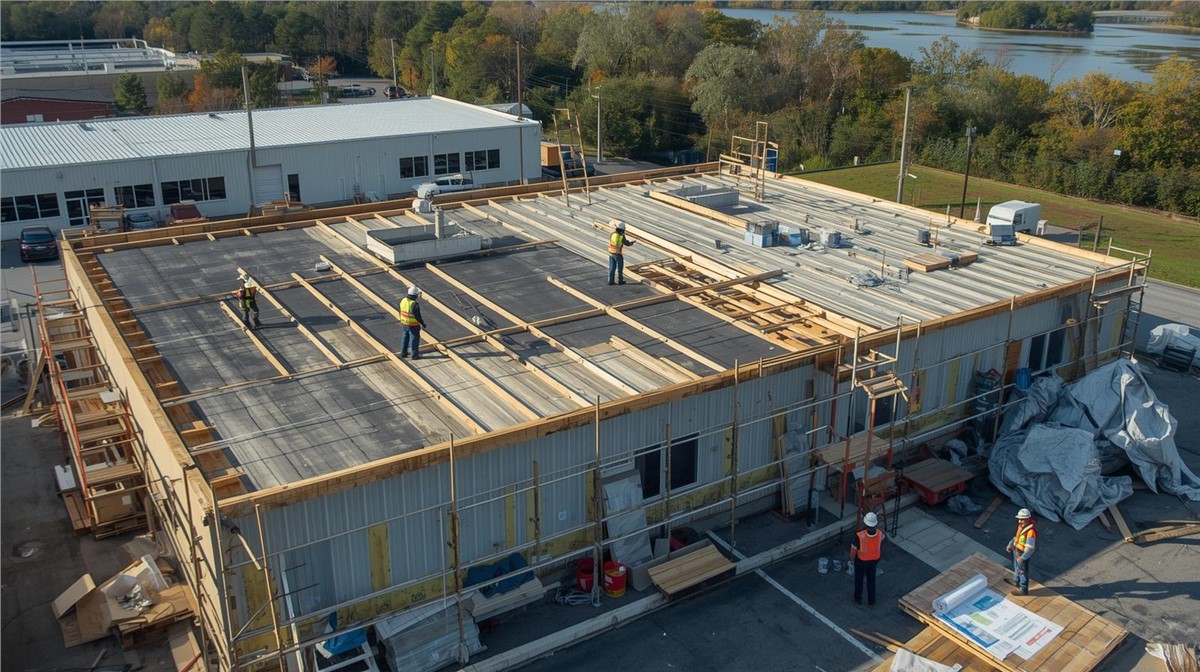
Replacing a commercial roof is a major project. It affects building protection, tenant comfort, business operations, maintenance planning, and long-term property value. Because commercial roofs are often larger and more complex than residential roofs, planning ahead is important.
For property owners and managers in Lake Carroll, IL, commercial roof replacement should begin with the right priorities. Before choosing materials or scheduling installation, the current roof condition, drainage system, leak history, building use, and exterior details should all be reviewed.
A clear plan helps reduce surprises and keeps the project organized from inspection to completion.
Start With a Professional Roof Inspection
The first step in commercial roof replacement planning is a full roof inspection. This helps determine whether replacement is necessary, how urgent the project is, and what areas may need extra attention.
A commercial roof inspection may include:
- Roof surface condition
- Membranes, shingles, or metal panels
- Flashing
- Seams
- Roof edges
- Penetrations
- Vents and rooftop equipment
- Drainage areas
- Ponding water
- Interior leak signs
- Storm damage
- Existing repair areas
The inspection helps create a realistic project scope before decisions are made.
Review Leak History and Interior Damage
Leak history matters when planning a commercial roof replacement. Even if a roof is not leaking during the inspection, past leaks may reveal weak points.
Property managers should review:
- Previous leak locations
- Ceiling stains
- Wet insulation
- Damaged ceiling tiles
- Tenant complaints
- Moisture near exterior walls
- Leaks around vents or equipment
- Repeated repairs in the same area
Recurring leaks may indicate a larger roofing system failure rather than one isolated issue.
Check Roof Drainage First
Drainage is one of the most important parts of commercial roof performance. Flat and low-slope roofs need proper drainage to prevent standing water.
Drainage concerns may include:
- Ponding water
- Clogged drains
- Blocked scuppers
- Sagging gutter sections
- Poor roof slope
- Water collecting near roof penetrations
- Downspouts draining poorly
- Ice buildup in winter
If drainage problems are not corrected during replacement, the new roof may face the same issues as the old one.
Evaluate the Existing Roof System
Before replacement, the current roof system should be reviewed. Different commercial buildings may have different roofing types, layers, and details.
The evaluation may include:
- Roofing material type
- Number of existing roof layers
- Deck condition
- Insulation condition
- Fastener condition
- Moisture trapped under the surface
- Edge metal condition
- Flashing design
- Rooftop equipment layout
This step helps determine whether the old roof can be recovered in some cases or whether a full tear-off is needed.
Consider Building Use and Operations
Commercial roof replacement planning should account for how the building is used. A warehouse, office, retail space, facility, apartment building, or mixed-use property may each have different needs.
Planning should consider:
- Tenant access
- Customer entrances
- Employee parking
- Delivery areas
- Loading docks
- Sensitive equipment
- Inventory protection
- Noise expectations
- Work hours
- Safety zones
The goal is to complete the work while reducing disruption as much as possible.
Prioritize Urgent Repairs Before Replacement
Sometimes a full roof replacement is needed, but certain repairs may still need to happen first. If there are active leaks or unsafe areas, temporary protection may be required before the full project begins.
Urgent concerns may include:
- Active water intrusion
- Loose roof materials
- Damaged flashing
- Exposed decking
- Open seams
- Interior ceiling damage
- Storm-damaged roof edges
- Drainage blockages
Temporary repairs should not replace long-term planning, but they can help protect the building until replacement begins.
Choose the Right Roofing Material
Commercial roof materials should be selected based on building design, slope, budget, drainage, durability, and maintenance needs.
Common commercial roofing options may include:
- Low-slope roofing systems
- Asphalt shingles for steep-slope sections
- Metal roofing
- Roof coatings in some situations
- Specialty systems depending on the building
The right material depends on the structure and how the roof needs to perform through Midwest weather.
Think About Insulation and Energy Performance
Commercial roof replacement is also an opportunity to review insulation and energy performance. Poor insulation can affect heating and cooling demand, indoor comfort, and moisture control.
During planning, property owners may consider:
- Existing insulation condition
- Wet or damaged insulation
- Energy efficiency goals
- Interior temperature concerns
- Ventilation needs
- Moisture control
- Code-related requirements
Replacing the roof without addressing wet insulation or poor ventilation may leave performance problems behind.
Plan for Midwest Weather
Lake Carroll buildings need roofing systems that can handle changing Illinois weather. Severe weather can shorten roof life and create hidden damage.
Local weather concerns include:
- Hail
- Strong wind
- Heavy rain
- Snow buildup
- Ice near roof edges
- Freeze-thaw cycles
- Storm debris
- Summer heat
Weather should also be considered when scheduling the project. Heavy rain, high wind, snow, or ice can affect work timing and safety.
Inspect Gutters, Siding, and Exterior Walls
A commercial roof replacement should not be planned in isolation. Roofing works with gutters, downspouts, siding, windows, trim, fascia, soffit, and exterior drainage.
Before replacement, check:
- Gutters and downspouts
- Roof edge metal
- Fascia and soffit
- Siding near rooflines
- Wall flashing
- Window areas
- Exterior trim
- Drainage near the foundation
If these areas are damaged, they may affect the performance of the new roof.
Huskie Exteriors provides roofing, siding, window, gutter, and storm damage restoration services, helping commercial property owners evaluate the full exterior system.
Budget for More Than the Roof Surface
Commercial roof replacement costs can vary depending on more than the visible roofing material.
Budget factors may include:
- Roof size
- Roofing material
- Tear-off requirements
- Insulation needs
- Deck repairs
- Drainage corrections
- Flashing work
- Rooftop equipment
- Access and staging
- Safety requirements
- Weather delays
- Cleanup and disposal
A detailed inspection helps property owners understand what may affect the final scope.
Schedule Around Access and Safety
Commercial roof replacement requires safe access for crews, materials, and equipment. Property managers should plan for staging areas and clear communication.
Scheduling may involve:
- Designated work zones
- Parking adjustments
- Entryway protection
- Tenant notices
- Delivery coordination
- Material staging
- Safety barriers
- Cleanup expectations
Clear planning helps keep tenants, customers, employees, and visitors away from active work areas.
Repair vs Replacement
Commercial roof repair may be enough if the damage is isolated and the roof is still performing well overall.
Repair may make sense if:
- One flashing area is leaking
- Damage is limited to one section
- Drainage issues are minor
- The roof surface is still in good condition
- No widespread moisture damage is found
Replacement may be better if:
- Leaks keep returning
- Roofing materials are worn throughout
- Storm damage affects multiple areas
- Ponding water is frequent
- Wet insulation is present
- Repairs are becoming costly
- The roof is near the end of its useful life
A professional inspection helps determine which option is more practical.
Why Local Exterior Experience Matters
A local contractor understands how Illinois weather affects commercial roofing systems. In Lake Carroll, IL, commercial roofs need to handle hail, wind, heavy rain, snow, ice, temperature swings, and freeze-thaw cycles.
Local experience also helps property owners plan for drainage, material selection, exterior repairs, storm damage concerns, and scheduling around building operations.
Conclusion
Commercial roof replacement planning in Lake Carroll, IL should begin with inspection, leak review, drainage evaluation, building use, material selection, and budget planning. The best results come from understanding the full condition of the roof and surrounding exterior before work begins.
If your commercial roof is leaking, aging, storm-damaged, ponding water, or requiring repeated repairs, Huskie Exteriors can inspect the property and recommend the right next step.
Contact Huskie Exteriors for professional roofing, siding, window, gutter, and storm damage services in Illinois and Wisconsin.
Subscribe to Huskie Exteriors's Blog




Comments