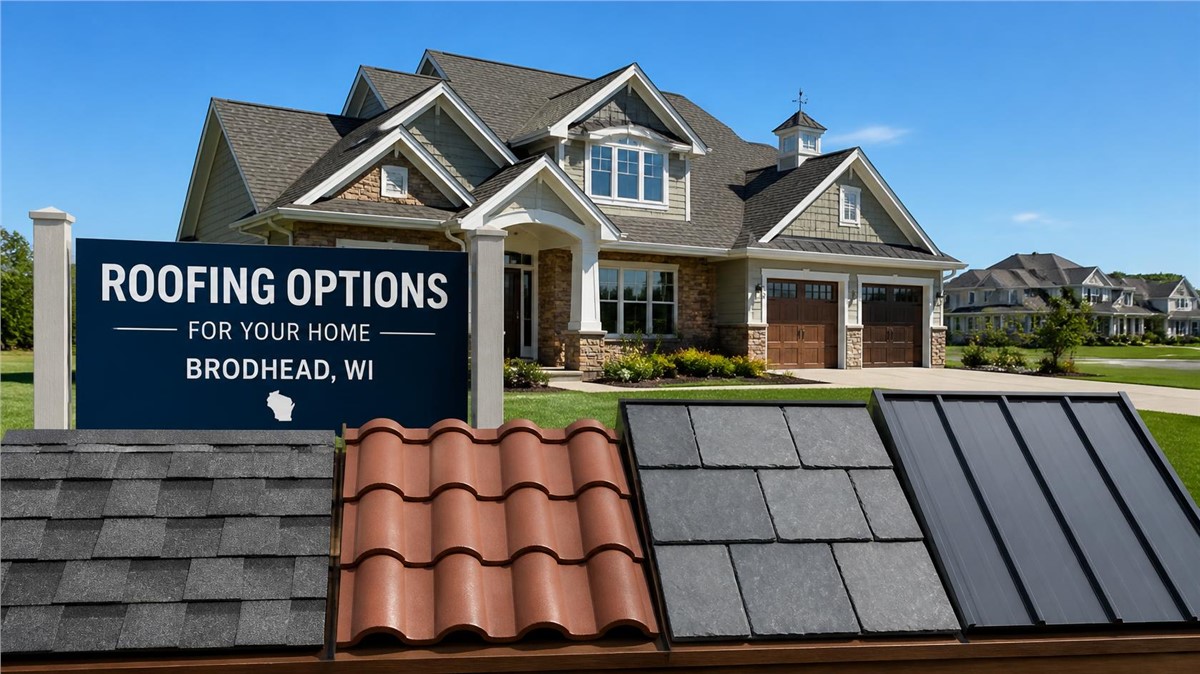
A roof is one of the most important parts of a home’s exterior. It protects against rain, snow, wind, hail, ice, heat, and moisture. It also affects curb appeal, energy comfort, maintenance needs, and long-term property value.
For homeowners in Brodhead, WI, choosing the right roofing material means thinking beyond color and price. The best roof should fit the home’s structure, weather exposure, roof slope, neighborhood style, budget, and maintenance expectations.
This guide explains common roofing materials and what homeowners should compare before making a decision.
Why Roofing Material Choice Matters
Different roofing materials perform differently over time. Some are more affordable upfront. Some offer stronger impact resistance. Some require more maintenance. Some fit certain roof slopes better than others.
The right roofing material can help with:
- Weather protection
- Curb appeal
- Long-term durability
- Leak prevention
- Maintenance planning
- Energy comfort
- Storm resistance
- Resale value
- Warranty confidence
A roof replacement is a major investment, so choosing the right material matters.
Consider Brodhead’s Weather
Wisconsin weather can be hard on roofing materials. A roof in Brodhead needs to handle different conditions throughout the year.
Local weather concerns include:
- Heavy rain
- High winds
- Hail
- Snow loads
- Ice buildup
- Freeze-thaw cycles
- Summer heat
- Humidity
- Tree debris
- Storm damage
A roof material should be selected with these conditions in mind.
Asphalt Shingles
Asphalt shingles are one of the most common roofing materials for residential homes. They are widely used because they are practical, available in many colors, and usually more budget-friendly than many specialty roofing materials.
Benefits of asphalt shingles may include:
- Familiar appearance
- Wide color selection
- Good value
- Easier repair options
- Availability of matching materials
- Suitable for many home styles
Asphalt shingles may be a good fit for homeowners who want a dependable roof without the higher cost of specialty materials.
Architectural Shingles
Architectural shingles are a popular upgrade from standard three-tab shingles. They are thicker, more dimensional, and often provide a more refined appearance.
Homeowners may choose architectural shingles for:
- Improved curb appeal
- More dimensional texture
- Better durability compared to basic shingles
- Wider style options
- Stronger visual depth
- Good fit for many Wisconsin homes
Architectural shingles are often a strong choice for homeowners who want a balance of performance, appearance, and value.
Three-Tab Shingles
Three-tab shingles have a flatter, more uniform look. They are usually more basic than architectural shingles.
They may appeal to homeowners looking for:
- Lower upfront cost
- Simple appearance
- Basic roof coverage
- Easier material familiarity
However, many homeowners compare three-tab shingles against architectural shingles because architectural options may provide a better long-term value depending on the roof and budget.
Metal Roofing
Metal roofing can be a durable option for some homes. It is available in different styles, including standing seam panels and metal shingles.
Potential benefits include:
- Long service potential
- Strong weather resistance
- Good snow-shedding ability
- Distinct appearance
- Lower maintenance needs in some cases
- Fire-resistant material properties
Metal roofing may cost more upfront than asphalt shingles, so homeowners should compare installation requirements, style, noise concerns, warranty, and long-term value.
Wood Shake or Wood Shingle Roofing
Wood roofing can provide a natural, traditional look, but it may require more maintenance than other roofing materials. It may also have specific code, insurance, or neighborhood considerations.
Homeowners should compare:
- Maintenance needs
- Moisture resistance
- Fire rating
- Local requirements
- Long-term upkeep
- Appearance goals
- Cost
- Availability of experienced installers
Wood roofing may look beautiful, but it is not the right fit for every Wisconsin home.
Synthetic Roofing Materials
Synthetic roofing materials are designed to mimic the appearance of slate, shake, or other premium materials. They may offer a lighter-weight alternative to natural materials.
Homeowners may compare synthetic roofing for:
- Style options
- Weight
- Impact resistance
- Maintenance needs
- Product warranty
- Cost
- Appearance match
- Long-term performance
Because synthetic materials vary by manufacturer, it is important to review product details carefully.
Slate or Tile Roofing
Slate and tile roofing can create a premium look, but they are not practical for every home. These materials can be heavy and may require structural review before installation.
Homeowners should consider:
- Roof framing strength
- Material weight
- Installation experience
- Cost
- Repair complexity
- Weather suitability
- Long-term maintenance
- Home style compatibility
For many Brodhead homes, slate or tile may be more of a specialty option than a standard replacement choice.
Low-Slope Roofing Areas
Some homes have low-slope sections over porches, additions, garages, or transitions. These areas may need different roofing materials than the main steep-slope roof.
Low-slope areas may require:
- Membrane roofing
- Proper drainage
- Correct flashing
- Careful seam work
- Ice and water protection
- Attention to ponding water
Using the wrong material on a low-slope area can increase leak risk.
Compare Roof Pitch
Roof pitch affects which materials may be appropriate. A steep roof sheds water differently than a low-slope roof.
When comparing materials, ask:
- Is this material approved for my roof slope?
- Does this roof section need special underlayment?
- Are there low-slope areas?
- How does water drain from valleys?
- Are ice and snow concerns present?
A roofing contractor should evaluate pitch before recommending materials.
Compare Durability
Durability matters because roofs in Wisconsin face many types of weather. Hail, wind, ice, and temperature changes can all wear down materials.
Compare:
- Wind resistance
- Impact resistance
- Granule loss
- Moisture protection
- Freeze-thaw performance
- Manufacturer specifications
- Installation requirements
- Warranty coverage
Durability is not only about the material itself. Installation quality also affects performance.
Compare Maintenance Needs
Some roofing materials require more maintenance than others. Homeowners should choose a material they are comfortable maintaining over time.
Maintenance may include:
- Clearing debris
- Cleaning gutters
- Inspecting flashing
- Checking roof valleys
- Watching for loose materials
- Checking attic ventilation
- Reviewing storm damage
- Scheduling inspections after severe weather
A lower-maintenance option may be worth considering for busy homeowners.
Compare Appearance and Curb Appeal
The roof is a major part of the home’s exterior appearance. Color, texture, and material style should fit the home’s siding, trim, gutters, windows, and neighborhood.
Consider:
- Roof color
- Siding color
- Trim color
- Home style
- Neighborhood appearance
- Texture
- Shingle profile
- Future exterior updates
A good roofing choice should protect the home and look natural with the rest of the exterior.
Compare Energy and Comfort Factors
Roofing materials can affect attic temperature, ventilation, and overall home comfort. Color, underlayment, ventilation, and insulation all play a role.
Homeowners should review:
- Attic ventilation
- Roof color
- Heat absorption
- Insulation condition
- Air sealing
- Moisture control
- Ice dam risk
Energy comfort is not only about the roof material. The full attic and roof system should work together.
Compare Warranty Details
Roofing warranties can vary by manufacturer, product line, installation method, ventilation requirements, and contractor qualifications.
Before choosing a material, ask about:
- Manufacturer warranty
- Workmanship warranty
- Wind coverage
- Algae resistance coverage
- Transferability
- Registration requirements
- Ventilation requirements
- Exclusions
A strong warranty is helpful, but homeowners should understand what it actually covers.
Compare Cost and Long-Term Value
The lowest-cost roofing material is not always the best long-term choice. Homeowners should compare upfront cost with expected performance, maintenance, appearance, and repair needs.
Compare:
- Material cost
- Installation cost
- Tear-off needs
- Underlayment
- Flashing
- Ventilation work
- Warranty value
- Repair availability
- Expected maintenance
- Long-term durability
A better roof system may cost more upfront but provide stronger value over time.
Compare Storm Resistance
Storm resistance is important in Wisconsin. Hail, wind, and heavy rain can damage roofing materials and expose weak installation details.
Storm-related features to compare include:
- Wind ratings
- Impact resistance options
- Fastener methods
- Flashing quality
- Underlayment
- Ridge cap materials
- Roof edge protection
- Gutter performance
A roof should be evaluated as a system, not just a surface material.
Do Not Ignore Underlayment and Flashing
Roofing material gets most of the attention, but underlayment and flashing are critical. These details help protect vulnerable areas from water intrusion.
Important areas include:
- Valleys
- Chimneys
- Skylights
- Roof vents
- Pipe boots
- Dormers
- Wall transitions
- Roof edges
Poor flashing or underlayment can cause leaks even when the shingles look new.
Ventilation Matters Too
Proper attic ventilation helps manage heat and moisture. Poor ventilation can shorten roof life, contribute to condensation, and increase ice dam concerns.
Ventilation concerns may include:
- Heat buildup in summer
- Moisture in winter
- Frost in attic spaces
- Mold or mildew concerns
- Uneven roof temperatures
- Ice dams
- Shingle wear
A roof replacement is a good time to review attic ventilation.
When Repair May Be Enough
Not every roofing concern requires replacement. Some issues may be repaired if the roof is otherwise in good condition.
Repair may make sense if:
- Damage is isolated
- A few shingles are missing
- Flashing needs repair
- One roof vent is damaged
- The roof is not near the end of its life
- No hidden moisture is present
A professional inspection can help determine whether repair is reasonable.
When Replacement May Be Better
Replacement may be better when the roof has widespread damage, aging materials, recurring leaks, or storm damage across several areas.
Replacement may make sense if:
- Shingles are curling or cracking
- Granules are heavily worn
- Leaks keep returning
- Roof damage is widespread
- Materials are brittle
- Flashing problems are extensive
- The roof is near the end of its service life
- Repairs no longer last
A full roof replacement also gives homeowners the chance to upgrade materials and improve related details.
What Should Be Included in a Roofing Estimate?
A roofing estimate should be clear and detailed. Homeowners should understand what is included before comparing prices.
Ask about:
- Roofing material type
- Shingle style or panel type
- Underlayment
- Ice and water protection
- Flashing
- Ventilation
- Ridge caps
- Tear-off and disposal
- Decking inspection
- Gutter or roof edge concerns
- Cleanup
- Warranty details
A clear estimate helps homeowners compare quality, not just price.
Why a Full Exterior Inspection Helps
Roofing materials are connected to gutters, siding, windows, flashing, fascia, soffit, attic ventilation, and drainage. A roof problem may be connected to gutter overflow, ice dams, poor ventilation, or siding and trim issues.
A full exterior inspection may include:
- Roofing and shingles
- Roof valleys
- Flashing
- Gutters and downspouts
- Fascia and soffit
- Siding and trim
- Windows and doors
- Attic moisture signs
- Storm damage areas
Huskie Exteriors provides roofing, siding, window, gutter, and storm damage restoration services, helping homeowners evaluate the full exterior system before choosing roofing materials.
Why Local Exterior Experience Matters
A local contractor understands how Wisconsin weather affects roofing materials. In Brodhead, WI, homes need roofs that can handle wind, hail, heavy rain, snow, ice, humidity, sun exposure, and freeze-thaw cycles.
Local experience helps homeowners compare roofing materials based on climate, roof design, maintenance needs, storm risk, appearance, and long-term value.
Conclusion
Choosing roofing materials for homes in Brodhead, WI means comparing more than color and price. Homeowners should review durability, storm resistance, maintenance, appearance, roof pitch, ventilation, underlayment, flashing, warranty, and long-term value. Asphalt shingles, architectural shingles, metal roofing, synthetic products, and specialty materials each have different strengths.
If your roof is aging, leaking, storm-damaged, missing shingles, showing granule loss, or ready for replacement, Huskie Exteriors can inspect your exterior and recommend the right roofing option for your home.
Contact Huskie Exteriors for professional roofing, siding, window, gutter, and storm damage services in Illinois and Wisconsin.
Subscribe to Huskie Exteriors's Blog




Comments