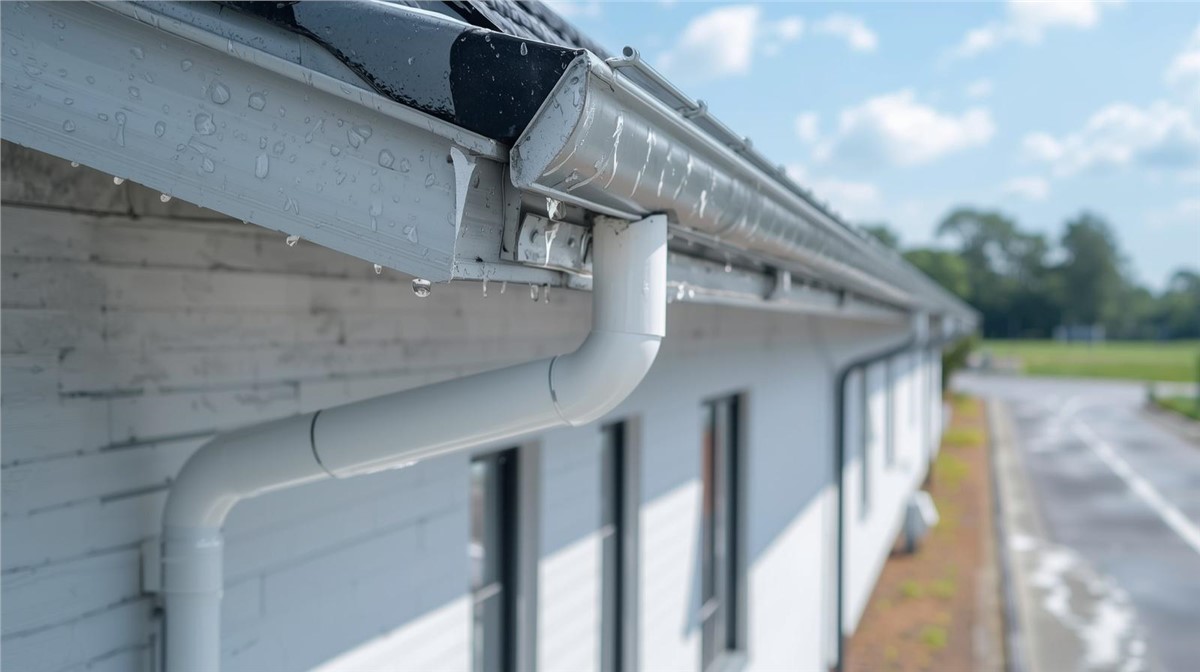
Drainage is one of the most consequential and consistently underinvested systems on a commercial property. In Loves Park, IL, where seasonal precipitation is substantial and freeze-thaw cycling adds structural stress to every exterior system, a commercial gutter installation that is properly sized, correctly sloped, and integrated with the building's full drainage plan protects the foundation, the cladding, the parking areas, and the building's long-term structural integrity. This guide covers what commercial drainage actually involves, what failure looks like, and what property owners should expect from a quality installation.
The Drainage Problem Most Commercial Property Owners Underestimate
Ask a commercial property owner in Loves Park what their building's most important exterior system is and the answers typically involve roofing, cladding, or HVAC. Gutters rarely come up. They are functional infrastructure — invisible when working, noticed only when failing — and they tend to receive maintenance attention proportional to their profile, which is to say not much.
That neglect has consequences that are disproportionate to the modest cost of getting drainage right.
A commercial building produces dramatically more roof runoff than a residential home. A 10,000 square foot flat roof sheds roughly 6,000 gallons of water per inch of rainfall. In Loves Park, which receives around 37 inches of precipitation annually — distributed across rain events, snowmelt, and freeze-thaw cycling through every season — that volume adds up to an enormous amount of water that needs to be collected, directed, and discharged away from the structure continuously.
When the drainage system that manages that water is undersized, improperly sloped, clogged, or structurally failing, that water goes somewhere else. It runs down cladding. It pools at foundation walls. It infiltrates below-grade spaces. It saturates soil adjacent to the building, undermining grade and creating the hydrostatic pressure against foundation walls that leads to cracking, bowing, and eventual structural compromise.
Loves Park is a city in Winnebago County with a substantial commercial and light industrial base — retail corridors along North Second Street, office and service properties throughout the city, and warehouse and manufacturing facilities that represent a significant share of the local commercial real estate inventory. Each property type has its own drainage characteristics and its own set of consequences when drainage is mismanaged.
How Commercial Drainage Differs From Residential
The principles of drainage are the same across residential and commercial applications — collect water at the roof, move it to downspouts, discharge it away from the building. The scale, complexity, and consequences are different enough that commercial drainage deserves to be treated as a distinct discipline.
Roof area and water volume. The volume of water a commercial roof produces during a significant rain event is dramatically larger than a residential roof. Sizing errors that produce minor overflow on a residential system produce substantial overflow on a commercial one. A gutter or drain system that is adequate for the design rainfall rate for Winnebago County needs to be sized based on actual roof area, roof pitch or drainage slope, and the intensity of design storm events — not estimated or defaulted to whatever was there before.
Flat and low-slope roofs. Most commercial buildings have flat or low-slope roofs that drain internally through roof drains rather than — or in addition to — perimeter gutters. Internal roof drain systems connect to underground piping that discharges to storm sewers or detention areas. These systems require their own maintenance attention — drain screens that collect debris, drain bodies that can develop cracks, and piping that can be compromised by root infiltration or ground movement. A complete commercial drainage assessment covers both the perimeter gutter system and the internal roof drain system.
Pavement and site drainage. Commercial properties have parking areas, loading docks, and paved access routes that need to drain effectively. Water that runs off an overflowing gutter onto a parking surface creates ice hazards in winter, accelerates pavement deterioration, and can find its way toward the building foundation rather than away from it. Site drainage — the grading and drainage infrastructure that manages water across the full property — is connected to the building drainage system in ways that residential drainage rarely is.
Liability and operational continuity. A commercial property where water pools at entries, where ice forms at downspout discharge points, or where foundation drainage has been compromised has liability exposure that a residential property does not. Tenant complaints, lease disputes, and the operational disruption of drainage-related repairs all create costs well beyond the repair itself.
What a Properly Designed Commercial Gutter System Includes
A commercial gutter installation is not simply a larger version of a residential one. It involves specific design decisions that affect long-term performance — and that distinguish a contractor who understands commercial drainage from one who installs residential gutters at a larger scale.
Sizing the System Correctly
Commercial gutter sizing is based on the rainfall intensity for the geographic area — expressed in inches per hour for a design storm event — multiplied by the roof area and the roof pitch factor that affects how fast water moves toward the collection point.
In Winnebago County, the design rainfall intensity used for gutter sizing is significantly higher than the average annual rainfall figure — it reflects the peak intensity of storm events that the system needs to handle without overflowing. Using average rainfall to size a commercial gutter system produces a system that performs adequately in typical conditions and overflows in the storms that matter most.
Gutter profile and size. Commercial applications commonly use 6-inch K-style or box gutters rather than the 5-inch residential standard. For large roof areas or concentrated drainage runs, custom box gutters — fabricated to the specific dimensions required — provide capacity that standard profiles cannot. Downspout sizing needs to match — a 6-inch commercial gutter paired with a standard 2x3 inch residential downspout creates a bottleneck that defeats the purpose of the larger gutter.
Downspout quantity and placement. The number of downspouts on a commercial building needs to be determined by drainage calculation, not by aesthetics or convention. Too few downspouts, or downspouts spaced too far apart on a long gutter run, create overflow conditions at the midpoints of runs even when the downspouts themselves are adequately sized.
Slope and Drainage Direction
Commercial gutters require consistent slope toward downspouts — the same quarter-inch-per-ten-feet principle that applies to residential installations, executed with more precision over longer runs.
On a commercial building where a single gutter run may span 50, 100, or more feet, maintaining consistent slope across that length requires careful layout and hanger placement. Low spots that develop from hanger spacing that is too wide or from hanger failure allow water to pond — adding weight, promoting corrosion, and creating freeze-thaw stress points in winter.
Drainage direction planning on a commercial property also involves deciding where downspouts discharge and ensuring that discharge points direct water away from the building, away from paved entries and loading areas, and toward drainage infrastructure — storm sewer connections, detention areas, or landscape zones designed to accept runoff.
Material Specification for Commercial Applications
The material demands on commercial gutters are higher than residential — larger spans, greater water volume, more fastener stress, and in some cases exposure to industrial or commercial activity that residential gutters never see.
Aluminum remains the standard for most commercial gutter applications — it does not rust, handles freeze-thaw cycling well, and is available in heavier gauges than residential stock. Commercial aluminum gutter material typically runs .032 inches rather than the .027 inches standard in residential applications. The heavier gauge resists deflection across longer spans and handles the mechanical stress of commercial water volumes better.
Galvanized and Galvalume steel are specified for commercial applications where impact resistance or structural rigidity requirements exceed what aluminum provides — loading dock areas, industrial facilities, or locations where forklift or vehicle proximity makes impact damage a realistic concern. Steel requires more attention to corrosion protection at cut edges and fasteners than aluminum.
Copper is occasionally specified on commercial buildings where architectural character and longevity justify the premium — historic buildings, institutional properties, and high-end commercial developments. Its durability and patina development over time make it appropriate for specific contexts, though the cost premium is substantial.
Gutter Guards and Debris Management
Commercial properties with significant tree coverage — or located in areas where wind carries debris from adjacent properties — benefit from gutter protection systems that reduce the frequency of cleaning and the risk of clogged downspouts during storm events.
The consequences of a clogged downspout on a commercial building during a significant rain event — water backing up and overflowing at the gutter, running down cladding, pooling at the foundation — are proportional to the roof area and water volume involved. Quality micro-mesh gutter protection systems that block debris while admitting water are a practical addition to commercial installations where debris load is a documented maintenance concern.
What Commercial Gutter Failure Looks Like
Recognizing the signs of a failing commercial drainage system is the first step toward addressing it before the secondary damage accumulates.
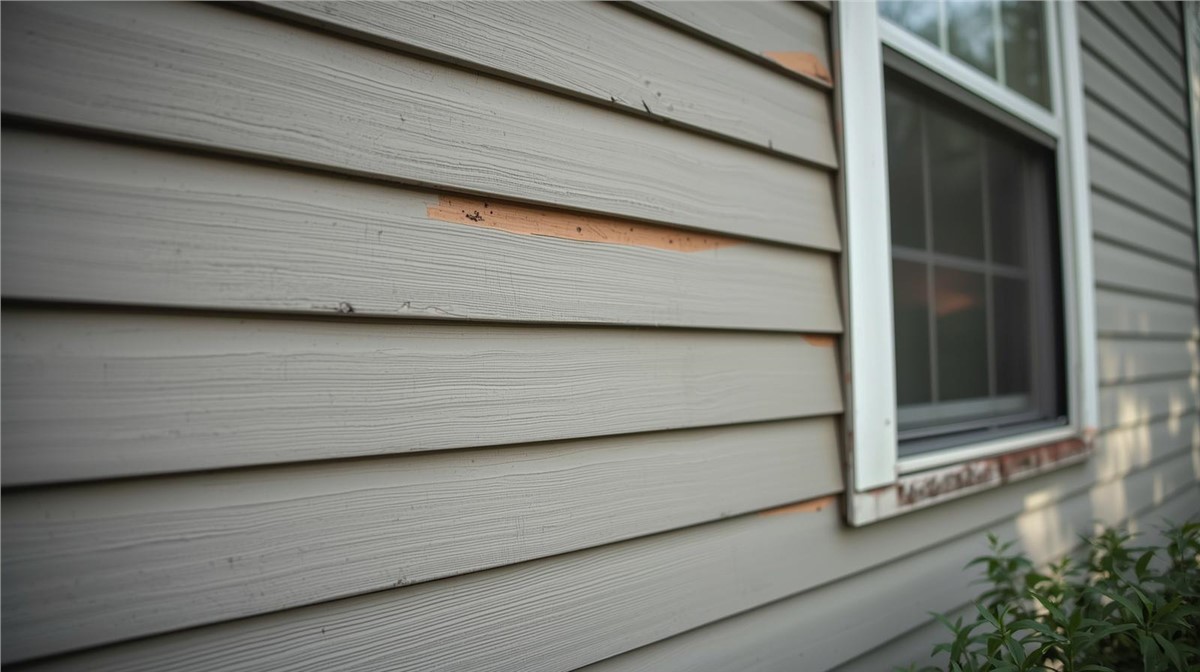
Overflow staining on cladding. Water lines, mineral deposits, and biological staining on cladding below the gutterline indicate chronic overflow — water running down the face of the building rather than through the drainage system. This is one of the most visible failure indicators and one of the easiest to attribute correctly.
Ponding at foundation perimeter. Water that consistently pools within a few feet of the building foundation after rain events indicates that downspout discharge is inadequate, that site grading has reversed toward the building, or that the drainage system is overwhelmed during peak events. Any of these conditions creates ongoing hydrostatic pressure against the foundation.
Ice formation at entries and walkways. Downspouts that discharge near building entries, or gutters that overflow above entry areas, create ice hazards that are both a liability concern and a visible indicator of drainage failure. In a Loves Park winter, this is not a rare occurrence — it is a predictable consequence of a drainage system that is not managing water effectively.
Gutter sections pulling from the wall. Commercial gutters that have pulled away from their attachment points — whether from hanger failure, fascia deterioration, or the weight of standing water and debris — are not collecting or directing roof runoff. They are decorative at that point, and they are causing the fascia behind them to deteriorate further.
Interior moisture in below-grade spaces. Basement or below-grade storage areas that develop moisture problems after rain events — without any other obvious infiltration source — often trace back to inadequate surface drainage. Water that pools at the foundation perimeter finds pathways into below-grade spaces that are invisible until moisture accumulation makes them obvious.
Pavement deterioration near downspouts. Concentrated discharge from downspouts that is not diffused or directed away from paved surfaces accelerates pavement cracking and deterioration at discharge points. In freeze-thaw cycling conditions, water infiltrating pavement cracks and freezing expands those cracks progressively.
Maintenance: What Commercial Drainage Systems Actually Need
A commercial drainage system that is properly designed and installed still requires maintenance to perform as intended across its service life.
Cleaning schedule. Commercial gutters should be cleaned at minimum twice per year — spring and fall — and inspected after any significant storm event that deposits substantial debris. Properties with heavy tree coverage or located near industrial operations that generate airborne material may need more frequent cleaning. Clogged downspouts are the most common cause of drainage system failure during storm events and the most preventable.
Hanger and fastener inspection. Commercial gutter hangers carry more load than residential equivalents and are subject to more thermal cycling stress across longer runs. Annual inspection of hanger condition and fastener integrity — with prompt replacement of any failed or marginal hangers — prevents the progressive sagging and eventual separation that develops when hanger problems are allowed to accumulate.
Sealant inspection at joints and outlets. The sealant at downspout outlets, end caps, and any mitered corners or transitions requires periodic inspection and replacement as it ages. Failed sealant at these points allows water to drip behind the gutter and against the fascia rather than through the drainage system.
Downspout and drain connection inspection. Underground downspout connections and any pop-up emitters at discharge points should be inspected for blockage, root infiltration, and structural integrity. A buried downspout line that has been infiltrated by roots or has cracked from ground movement is directing water into the soil adjacent to the building rather than away from it.
Post-storm inspection. After any hail event, high-wind storm, or significant ice event, commercial gutters should be inspected for impact denting, hanger displacement, and debris accumulation at downspout inlets. Hail denting on commercial aluminum gutters is both a performance concern and a documentation item for insurance purposes.
Why a Local Commercial Contractor Matters for Loves Park Properties
Commercial drainage installation is not a scale-up of residential gutter work. It involves drainage calculations, material specifications, and project coordination requirements that distinguish contractors with genuine commercial experience from those who have expanded from residential work without the corresponding capability development.
A contractor with established commercial presence in Winnebago County and the broader northern Illinois market understands local design rainfall intensities, Loves Park permitting requirements for commercial exterior work, and the material supplier relationships that ensure commercial-grade product availability.
They also understand the project management requirements of commercial work on occupied properties — coordinating around business hours, staging equipment without disrupting customer access, and sequencing work on larger buildings to maintain drainage function throughout the installation process.
Huskie Exteriors serves commercial and residential property owners across Illinois and Wisconsin, handling roofing, siding, windows, gutters, and storm damage restoration. For commercial properties in Loves Park and throughout Winnebago County, the team brings the drainage design knowledge, commercial material specification, and installation experience that these projects require.
Drainage Done Right Protects Everything Else
The investment in a properly designed and installed commercial drainage system protects the foundation, the cladding, the pavement, and the below-grade spaces that represent the bulk of a commercial property's value. It prevents the ice hazards and water intrusion that create liability exposure. And it eliminates the recurring maintenance costs and repair bills that inadequate drainage generates across a building's operational life.
Getting drainage right is not a glamorous project. It is a foundational one — and in Loves Park's climate, it is one that pays reliably across every season.
Contact Huskie Exteriors for professional roofing, siding, window, gutter, and storm damage services in Illinois and Wisconsin. If your Loves Park commercial property is due for a drainage assessment or gutter system upgrade, our team is ready to evaluate what you have, design what you need, and install it correctly the first time.
Subscribe to Huskie Exteriors's Blog





Comments