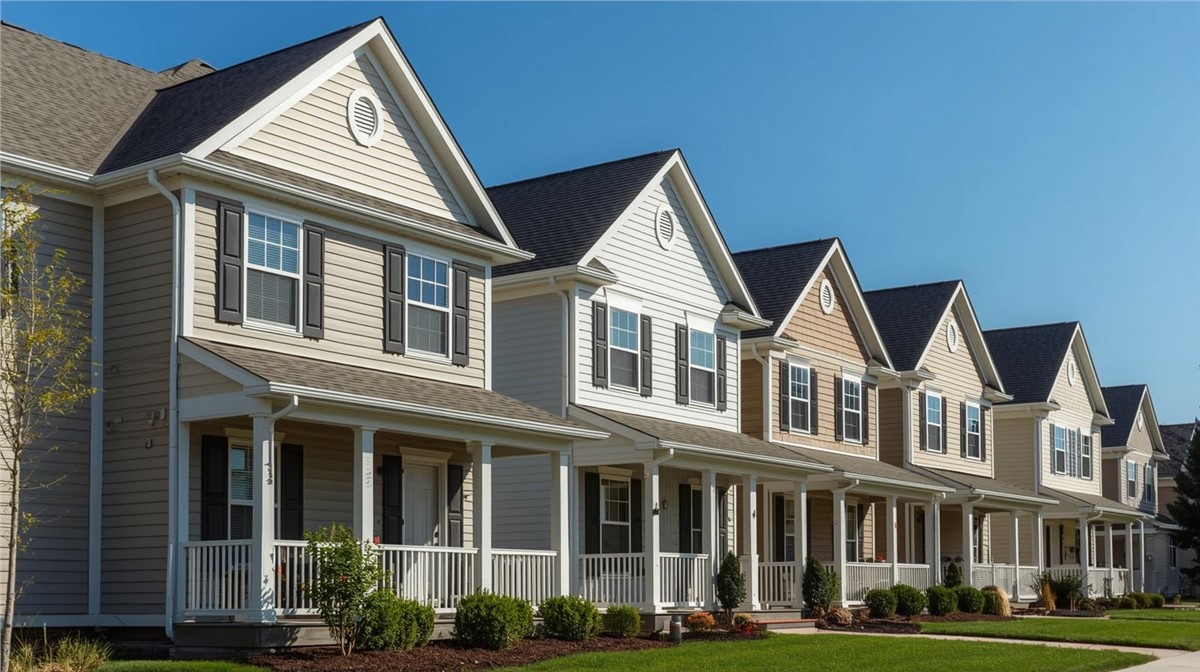
Choosing siding for a home in Winnebago, IL means balancing appearance, durability, maintenance demands, and cost against a climate that tests exterior materials across every season. This guide covers the most practical siding options available to northern Illinois homeowners, the trade-offs each one involves, and the factors that should drive the decision for your specific home — without defaulting to whatever the lowest bid specifies.
Why Siding Selection Deserves More Thought Than It Usually Gets
Most homeowners approach a siding project with a material already in mind — usually whatever is most familiar or whatever the first contractor they called recommended. That is not always wrong, but it skips the evaluation step that determines whether the selected material is actually the right one for the home, the climate, and the ownership horizon.
Siding is a 20 to 40 year decision. The material installed on a Winnebago, IL home this year will be managing weather, moisture, and temperature extremes well into the 2040s and beyond. Getting that decision right — based on an honest understanding of what each material does well and where it falls short — produces better outcomes than defaulting to the familiar or the cheapest option available.
Winnebago is a community in Winnebago County in northern Illinois, exposed to the same four-season weather stress that characterizes the broader region. Winters bring significant snow, ice, and freeze-thaw cycling. Springs deliver hail and heavy rain. Summers add UV intensity and thermal cycling that expand and contract every surface on the building envelope. Any siding material installed here needs to handle all of it — not just the easy seasons.
The Siding Materials Worth Considering for a Northern Illinois Home
Vinyl Siding
Vinyl remains the most widely installed siding material on residential homes across northern Illinois, and the reasons are straightforward enough to take seriously even if you are considering alternatives.
It does not rot, does not require repainting, resists insects, and handles moisture exposure better than wood in a climate with Winnebago County's rainfall and snowmelt exposure. Modern vinyl has improved substantially from earlier generations — thicker panels, better UV stabilizers, and more convincing surface textures have addressed the visual and durability complaints that gave it a poor reputation in earlier decades.
The case for vinyl in Winnebago:
- Lowest maintenance requirement of any cladding material — periodic cleaning, occasional caulk inspection, and impact damage repair as needed
- Widest range of profiles, colors, and textures available at any price point
- Handles freeze-thaw cycling well when properly installed with adequate allowance for thermal movement
- Most contractors in the northern Illinois market have significant vinyl installation experience
The honest trade-offs:
- Impact resistance is the primary vulnerability — hail above roughly one inch can crack vinyl panels, particularly in cold weather when the material is less flexible. Impact-resistant product lines are available and worth specifying in hail-prone areas
- Vinyl cannot be repainted effectively without specific preparation — color change requires replacement
- Thinner builder-grade panels (.040 inches) underperform in harsh climates. Mid-grade (.044 to .046 inches) or premium (.050 inches and above) is the appropriate specification for a Winnebago home
- Environmental profile is a consideration for some homeowners — vinyl is a petroleum-based product with specific disposal implications at end of life
Best fit: Most residential applications where low maintenance and cost-effectiveness are the primary drivers. The upgrade from builder-grade to mid-grade or premium product thickness is worth every dollar in a northern Illinois climate.
Fiber Cement Siding
Fiber cement — most widely known under the James Hardie brand, though other manufacturers produce it — is a composite material made from cement, sand, and cellulose fibers. It offers a dimensional appearance that closely approximates wood and handles northern Illinois weather in ways that wood cannot.
It does not rot, does not support insect damage, resists moisture infiltration better than wood, and holds paint significantly longer — typically 10 to 15 years between repaints versus 5 to 7 years for wood in a Midwest climate. It is also significantly more impact resistant than vinyl, making it a strong choice for homes in areas with frequent hail exposure.
The case for fiber cement in Winnebago:
- Impact resistance substantially better than vinyl — a meaningful advantage given McHenry and Winnebago County hail exposure
- Dimensional appearance that more closely approximates natural wood than any vinyl product
- Holds paint longer than wood, reducing long-term maintenance cost relative to painted wood alternatives
- Fire resistance — fiber cement is non-combustible, which matters for homes in tighter neighborhoods
- Available in lap siding, panel, shingle, and trim configurations that accommodate a wide range of architectural styles
The honest trade-offs:
- Higher material and labor cost than vinyl — fiber cement is heavier, requires more precise cutting, and demands specific installation practices that not every contractor executes correctly
- It is not maintenance-free — it requires repainting on a regular schedule, and neglected paint allows moisture to attack the substrate at edges and penetrations
- Improper installation — leaving insufficient clearance at grade, skipping back-priming of cut edges, using inadequate fasteners — compromises the material's durability significantly. Installation quality matters more with fiber cement than with vinyl
- Heavier weight adds modest structural loading and makes installation more physically demanding
Best fit: Homeowners who want a more premium appearance and greater impact resistance than vinyl provides, and who are prepared for the higher upfront cost and periodic repainting requirement. Particularly well-suited to homes where hail exposure is a consistent concern or where the architectural style benefits from a more dimensional material.
Engineered Wood Siding
Engineered wood products — LP SmartSide is the most widely recognized brand — are composite panels and lap siding made from wood strands bonded with resins and treated for moisture and insect resistance. They offer a wood-grain aesthetic with better dimensional stability and moisture resistance than natural wood.
For Winnebago homeowners who want the look of natural wood without wood's maintenance demands, engineered wood is a practical middle ground between vinyl and fiber cement — more affordable than fiber cement, more dimensionally stable than natural wood, and better performing in moisture exposure than the solid wood products it largely replaced.
The case for engineered wood in Winnebago:
- Wood-grain appearance that reads as more natural than most vinyl profiles
- Better moisture resistance than natural wood — treated substrates resist the rot that untreated wood develops in high-moisture exposures
- More cost-effective than fiber cement at comparable panel sizes
- Takes paint and stain well, allowing color change and refinishing over time
The honest trade-offs:
- Requires periodic repainting — typically every 8 to 10 years in a northern Illinois climate — and attention to paint integrity at edges and cut surfaces
- Grade clearance at foundation and flashing at penetrations are critical — engineered wood that sits in contact with moisture at grade or behind failed flashing will fail faster than the surrounding material
- Impact resistance is better than natural wood but below fiber cement
- Less widely installed than vinyl in northern Illinois — fewer contractors have deep experience with it, which affects installation quality availability
Best fit: Homeowners who prefer a natural wood aesthetic and are prepared for the maintenance commitment that involves, but want better moisture performance and dimensional stability than solid wood provides.
Natural Wood Siding
Natural wood — cedar, redwood, and pine are the most common species used for exterior cladding — has been used on homes in Illinois for as long as homes have been built here. It is dimensionally rich, takes stain and paint beautifully, and carries a warmth and authenticity that no composite material fully replicates.
For a home in Winnebago, however, natural wood siding requires an honest conversation about what it demands in a northern Illinois climate.
The honest trade-offs:
- Requires the most active maintenance of any siding material — repainting or restaining every 4 to 7 years in a Midwest climate, annual inspection of caulk joints and paint integrity, and prompt repair of any areas where moisture has breached the finish
- Susceptible to rot when moisture management details are neglected — at grade, around penetrations, at window and door surrounds, and anywhere paint has been allowed to fail
- Susceptible to insect damage from carpenter ants, carpenter bees, and wood-boring beetles present in northern Illinois
- Higher long-term cost than vinyl when total maintenance expenditure over a 20 to 30 year ownership horizon is calculated honestly
The case for natural wood:
- Unmatched aesthetic — for historic homes, craftsman-style architecture, and homeowners who genuinely value the appearance and feel of natural wood, no other material is a full substitute
- Repairable and refinishable in ways that composite materials are not — damaged sections can be replaced, filled, and refinished to match the surrounding material far more seamlessly than vinyl or fiber cement repairs
- Environmentally preferable profile for homeowners who prioritize sustainability
Best fit: Homeowners with the commitment and budget for active maintenance, and whose home's architectural character genuinely benefits from natural wood. Not the right choice for homeowners who want low-maintenance exterior performance in a northern Illinois climate.
Metal Siding
Metal siding — aluminum panels, steel panels, and standing seam metal — is increasingly considered for residential applications, particularly on contemporary, modern farmhouse, and industrial-aesthetic homes. It has been standard in commercial and agricultural construction for decades, and its durability profile translates well to residential use.
The case for metal siding in Winnebago:
- Exceptional longevity — quality metal siding with factory-applied finishes lasts 30 to 40 years or more
- No rot, no insect vulnerability, no moisture absorption
- High impact resistance — steel panels handle hail better than vinyl and comparably to fiber cement
- Fire resistance — metal is non-combustible
- Low maintenance — no repainting required under normal conditions when factory finish is intact
The honest trade-offs:
- Higher upfront cost than vinyl and comparable to or above fiber cement
- Denting from hail or debris impact is cosmetically visible — steel handles impact better than aluminum, but neither is dent-proof
- Thermal expansion requires careful installation detailing — metal panels expand and contract significantly across northern Illinois temperature extremes, and inadequate expansion joint allowance causes panel distortion and fastener stress
- Aesthetic fit is specific — metal siding suits contemporary, industrial, and modern farmhouse styles well but is visually misaligned with traditional and colonial residential architecture
Best fit: Homeowners with contemporary or modern architectural styles who prioritize longevity and minimal maintenance, and who understand the higher upfront cost as a long-term investment.
The Factors That Should Drive Your Decision
With five viable material options on the table, the decision comes down to five factors specific to your home and situation.
Climate performance priority. If hail resistance is your top concern — reasonable given Winnebago County's storm exposure — fiber cement and metal are the strongest performers. If moisture management in a high-rainfall environment is the priority, fiber cement and vinyl both handle it well. If freeze-thaw cycling durability is paramount, all of the above outperform natural wood.
Maintenance commitment. How much ongoing maintenance are you realistically prepared to do? Vinyl and metal demand the least. Fiber cement and engineered wood require periodic repainting. Natural wood demands the most consistent attention of any option. Be honest about this — a material that requires maintenance you will not perform is a poor choice regardless of its theoretical performance.
Upfront vs. long-term cost. Vinyl is the least expensive upfront and has minimal ongoing maintenance cost. Fiber cement costs more to install but holds paint longer than wood, reducing long-term cost relative to painted alternatives. Natural wood has lower upfront material cost but higher lifetime cost when maintenance is factored in. Metal has a higher upfront cost but very low ongoing maintenance expense. Evaluate on total cost of ownership over your expected ownership horizon.
Architectural fit. Material selection should suit the home's architectural style. Vinyl and fiber cement lap siding suit traditional and colonial residential styles well. Metal panel suits contemporary and modern farmhouse architecture. Natural wood suits craftsman, historic, and cottage styles authentically. An inappropriate material choice produces a result that looks off regardless of installation quality.
Installation quality availability. The best material on paper is only as good as the contractor available to install it correctly. Vinyl has the deepest installer base in the northern Illinois market. Fiber cement has a smaller but established installer base among experienced contractors. Metal siding and engineered wood have fewer qualified installers in the regional market. A material that requires specific installation expertise should be selected alongside a contractor who demonstrably has it.
Why Installation Quality Determines What the Material Choice Actually Delivers
This point is worth stating directly: the most common cause of siding failure in northern Illinois is not material selection — it is installation error.
Vinyl installed without adequate nail slot allowance for thermal movement buckles and distorts. Fiber cement installed without back-primed cut edges develops moisture infiltration at every cut surface within a few years. Engineered wood installed without clearance at grade and flashing at penetrations fails at those points regardless of the quality of the material in the field. Metal panels installed without adequate expansion joint accommodation distort and stress their fasteners across a season of temperature cycling.
Selecting the right material and the right contractor are not separate decisions. They are the same decision made together. A contractor who specifies the material appropriate for your home, installs it to manufacturer specifications, and stands behind the work with a meaningful workmanship warranty is what the material selection decision is ultimately aimed at producing.
Siding as Part of the Complete Exterior System
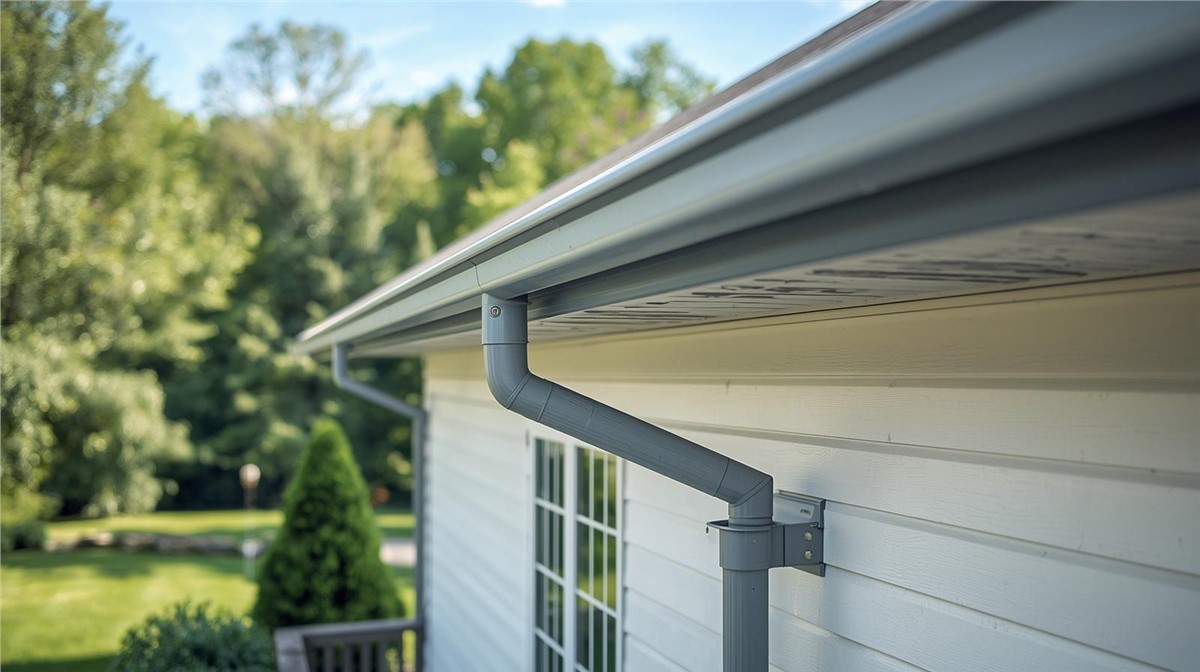
Siding does not perform in isolation. It connects to the roofline above, to window and door surrounds at every opening, to gutters at the eave, and to the foundation at grade. Each of those transitions requires flashing, sealant, and integration details that determine whether the siding system manages water effectively or simply looks like it does from the street.
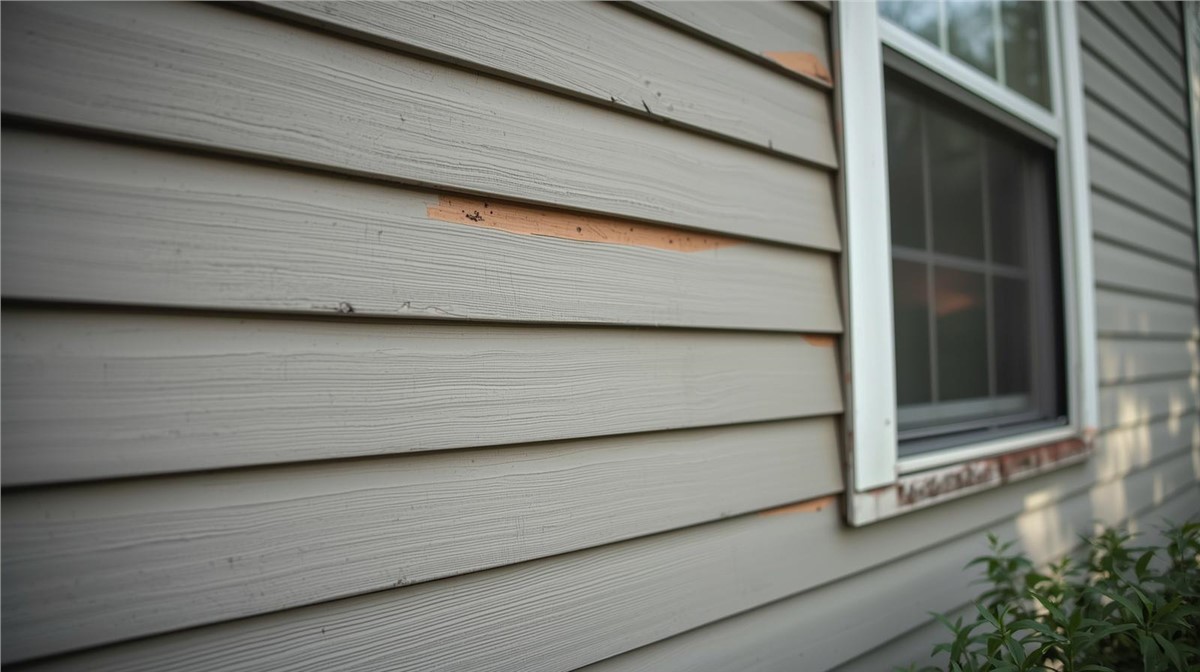
The most common source of moisture infiltration in a siding system is not a failed panel — it is a failed joint at a window surround, a gap at a penetration, or inadequate flashing at a roof-to-wall transition. Addressing those details correctly requires treating siding replacement as an exterior system project rather than a panel-by-panel replacement operation.
Huskie Exteriors serves homeowners and commercial property owners across Illinois and Wisconsin, handling roofing, siding, windows, gutters, and storm damage restoration. For Winnebago homeowners evaluating siding options, the team can assess the full exterior system, recommend the material appropriate for the home and climate, and provide a complete installation that addresses the transitions and details that determine how the siding performs over its full service life.
Making the Right Choice for Your Winnebago Home
There is no universally correct siding material for every home in Winnebago, IL. There is the material that best fits your home's architecture, your maintenance commitment, your budget horizon, and the specific weather exposures your property faces — installed by a contractor with the experience to do it correctly.
The evaluation framework above gives you the basis for that decision. A contractor worth working with will walk through it with you honestly — recommending what fits your situation rather than what is easiest to install or most profitable to sell.
Contact Huskie Exteriors for professional roofing, siding, window, gutter, and storm damage services in Illinois and Wisconsin. If your Winnebago home is ready for a siding evaluation or replacement project, our team is ready to help you make the right material decision and execute it correctly from the first panel to the last trim piece.
Subscribe to Huskie Exteriors's Blog




Comments