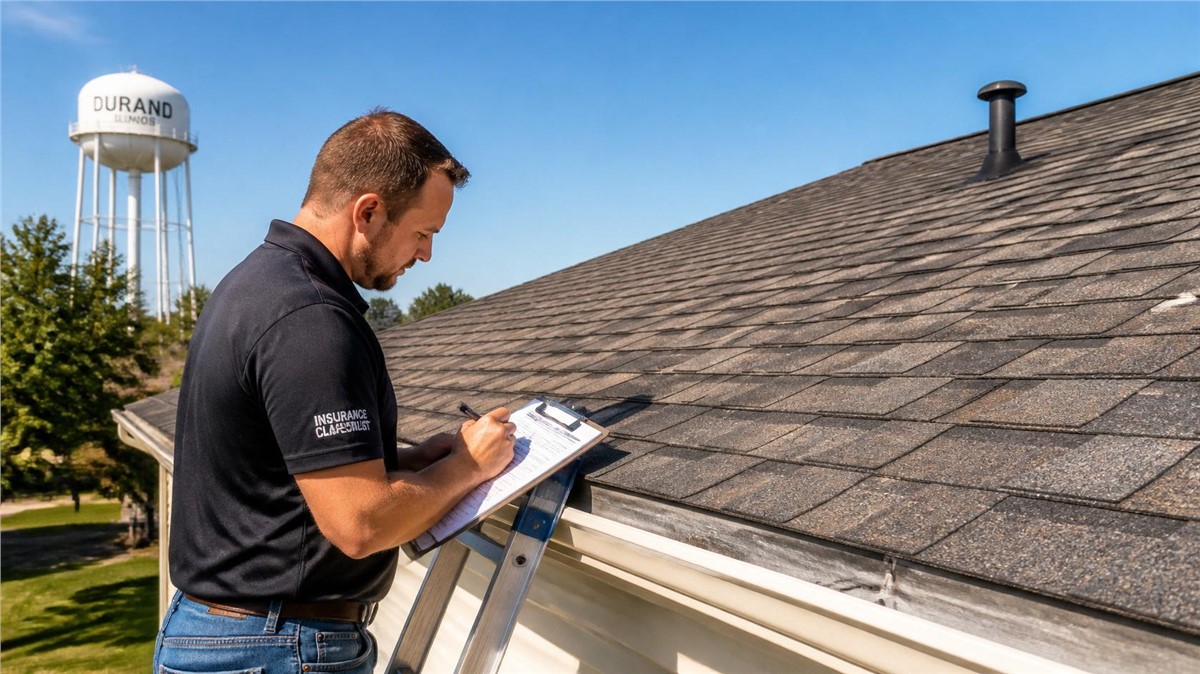
After wind, hail, heavy rain, or storm damage, homeowners often feel unsure about what to do first. The roof may have missing shingles, dented vents, leaks, damaged flashing, or granule loss. Gutters, siding, windows, fascia, and soffit may also be affected.
For homeowners in Durand, IL, choosing the right roofing contractor can make the storm repair process easier to understand. Northern Illinois weather can bring hail, wind, snow, ice, heavy rain, and freeze-thaw cycles, so storm damage should be inspected carefully.
This guide explains what to look for in a roofing contractor when insurance may be involved.
Why Contractor Choice Matters
Not every roofing contractor handles storm damage the same way. When insurance is involved, homeowners need clear documentation, honest recommendations, and a contractor who can explain what was found.
The right contractor can help with:
- Roof inspection
- Storm damage documentation
- Repair or replacement recommendations
- Photos of damaged areas
- Exterior system review
- Temporary protection if needed
- Clear estimate preparation
- Repair planning
The contractor should focus on damage and repairs, while the insurance provider determines coverage based on the policy.
Look for Storm Damage Experience
Storm damage can be hard to identify from the ground. Hail bruising, lifted shingles, flashing issues, and roof vent damage may require a closer inspection.
A contractor with storm damage experience should know how to check for:
- Missing shingles
- Lifted shingles
- Hail impact marks
- Granule loss
- Damaged ridge caps
- Dented roof vents
- Damaged flashing
- Soft roof areas
- Gutter dents
- Interior moisture signs
Storm damage experience is especially important after hail or wind events.
Look for Full Exterior Knowledge
Storms rarely damage only the roof. A good contractor should also check the surrounding exterior because roofing, gutters, siding, windows, fascia, soffit, trim, and drainage all work together.
A full exterior inspection may include:
- Roofing
- Gutters and downspouts
- Siding
- Windows and screens
- Flashing
- Fascia and soffit
- Roof vents
- Attic moisture signs
- Interior ceiling stains
- Drainage areas
If only the roof is checked, related damage may be missed.
Look for Clear Documentation
Documentation is one of the most important parts of storm damage repair. Homeowners should understand what damage was found and where it is located.
Good documentation may include:
- Photos of roof damage
- Photos of siding or gutter damage
- Notes about storm impact areas
- Interior water stain photos
- Inspection findings
- Repair recommendations
- Material notes
- Temporary repair details
Clear documentation helps homeowners stay organized during the repair and insurance process.
Look for Honest Inspection Findings
A trustworthy contractor should explain what they found without exaggerating. Not every mark on a roof means full replacement is needed, and not every issue is storm-related.
A good inspection should explain:
- What damage is visible
- What may have caused it
- Whether repair may be enough
- Whether replacement should be considered
- Whether other exterior systems are affected
- Whether temporary protection is needed
The goal should be clarity, not pressure.
Avoid Pressure Tactics
Homeowners should be cautious if a contractor pushes for an immediate signature, makes promises about insurance approval, or tries to rush the decision.
Be careful with contractors who:
- Promise a claim will be approved
- Offer to cover or waive deductibles
- Pressure you to sign immediately
- Avoid explaining the estimate
- Refuse to show photos
- Use fear-based language
- Push full replacement before inspection is complete
A professional contractor should give homeowners time to understand the findings.
Understand the Contractor’s Role
A roofing contractor can inspect damage, document findings, recommend repairs, and provide an estimate. The insurance company reviews the claim based on the policy.
The contractor may help by:
- Inspecting the roof and exterior
- Explaining visible damage
- Providing photos
- Preparing repair estimates
- Coordinating repair work
- Answering construction-related questions
Coverage decisions, deductibles, policy limits, and claim deadlines should come from the insurance provider.
Ask About Temporary Repairs
If the roof is actively leaking, temporary protection may be needed before permanent repairs begin.
Temporary repairs may include:
- Covering exposed areas
- Securing loose materials
- Redirecting water
- Protecting interior spaces
- Removing loose debris
- Marking unsafe areas
Temporary repairs should be documented, especially if storm damage may be part of an insurance claim.
Check Roofing Materials and Repair Scope
A good contractor should explain what materials may be needed and what the repair scope includes.
The estimate may include:
- Shingle replacement
- Flashing repair
- Ridge cap replacement
- Pipe boot replacement
- Roof vent repair
- Decking repair if needed
- Underlayment details
- Cleanup
- Warranty information
The estimate should be specific enough for homeowners to understand what work is being proposed.
Ask About Roof Replacement Details
If replacement is recommended, the contractor should explain why. The estimate should include more than a single price.
Roof replacement details may include:
- Tear-off or overlay
- Shingle type
- Underlayment
- Ice and water protection
- Flashing details
- Ventilation review
- Decking repair process
- Cleanup plan
- Warranty details
- Timeline expectations
This helps homeowners compare the repair scope clearly.
Ask About Gutters and Downspouts
Gutters are often damaged by hail and wind. They also affect roof edge and foundation protection.
A contractor should check for:
- Dented gutters
- Dented downspouts
- Leaking seams
- Sagging sections
- Loose hangers
- Water behind gutters
- Poor drainage
- Gutter overflow
If gutters are damaged, they may need repair or replacement along with roofing work.
Ask About Siding and Windows
Storm damage may also affect siding and windows. Hail can crack siding, dent trim, tear screens, or damage window seals.
Exterior areas to check include:
- Cracked siding
- Holes or punctures
- Loose siding panels
- Dented trim
- Torn screens
- Cracked glass
- Fogging between panes
- Water stains below windows
A full inspection gives homeowners a better view of the storm’s impact.
Ask About Attic and Interior Moisture
If the roof leaked during the storm, the attic and interior should be checked. Water may enter before it becomes visible inside the living space.
Warning signs include:
- Wet insulation
- Dark roof decking
- Rusted nails
- Musty odors
- Ceiling stains
- Bubbling paint
- Damp drywall
- Water around light fixtures
Moisture should be addressed before it spreads.
Look for Local Experience
A local contractor understands the weather patterns and exterior problems common in northern Illinois. In Durand, IL, homes may face wind, hail, snow, ice, rain, and freeze-thaw cycles.
Local experience can help with:
- Identifying storm patterns
- Understanding common roof damage
- Planning weather-appropriate repairs
- Checking gutters and drainage
- Reviewing winter-related roof issues
- Explaining material choices
A local contractor is also more likely to understand the repair needs of homes in the area.
Look for Good Communication
Insurance-related repairs can involve several steps, so communication matters. Homeowners should know what happens next and what information they need.
A good contractor should explain:
- Inspection findings
- Repair options
- Estimate details
- Material choices
- Timeline expectations
- Temporary repair needs
- Cleanup process
- Warranty information
Clear communication helps reduce confusion during the repair process.
Repair vs Replacement
Not every storm-damaged roof needs full replacement. The right option depends on the damage, roof age, material condition, and inspection findings.
Repair may make sense if:
- Damage is isolated
- A few shingles are missing
- One flashing area failed
- Gutters need minor repair
- No hidden moisture is found
- The roof is otherwise in good condition
Replacement may be better if:
- Damage is widespread
- Shingles are failing
- Leaks keep returning
- Decking is damaged
- Storm damage affects multiple slopes
- Repairs would not last
A professional inspection helps homeowners compare the options.
Insurance Considerations
If storm damage may be involved, homeowners should contact their insurance provider to understand coverage, deductibles, deadlines, documentation requirements, and the claim process.
Helpful records may include:
- Storm date notes
- Photos of visible damage
- Contractor inspection findings
- Interior water stain photos
- Temporary repair receipts
- Repair estimates
- Adjuster notes
Every policy is different, so claim guidance should come directly from the insurance provider.
Questions to Ask Before Hiring
Before choosing a roofing contractor, homeowners should ask practical questions.
Helpful questions include:
- Do you inspect the full exterior?
- Will you provide photos of damage?
- What repairs are recommended?
- Is replacement necessary or optional?
- What materials are included?
- How are hidden decking repairs handled?
- What is the expected timeline?
- What warranties apply?
- What cleanup is included?
Clear answers help homeowners choose with confidence.
Warning Signs of the Wrong Contractor
Homeowners should avoid contractors who make the process feel rushed or unclear.
Red flags include:
- No written estimate
- No photos or documentation
- Vague repair scope
- High-pressure sales tactics
- Promises about insurance approval
- No clear warranty explanation
- Poor communication
- Avoiding questions
- No full exterior review
A reliable contractor should be willing to explain the process clearly.
Why a Full Exterior Inspection Helps
Storm damage can affect roofing, siding, gutters, windows, flashing, fascia, soffit, trim, attic areas, and drainage. A full inspection helps identify related damage before repairs begin.
A full exterior inspection may include:
- Roofing and shingles
- Gutters and downspouts
- Siding
- Windows and screens
- Flashing
- Fascia and soffit
- Attic moisture signs
- Interior water stains
- Storm damage areas
- Foundation drainage
Huskie Exteriors provides roofing, siding, window, gutter, and storm damage restoration services, helping homeowners evaluate the full exterior system after storm damage.
Why Local Exterior Experience Matters
A local contractor understands how Illinois storms affect homes. In Durand, IL, roofing systems must handle hail, wind, heavy rain, snow, ice, humidity, heat, and freeze-thaw cycles.
Local experience helps homeowners determine whether roof damage is caused by storm impact, aging materials, flashing problems, gutter damage, poor ventilation, or hidden moisture.
Conclusion
Choosing a roofing contractor for insurance claims in Durand, IL means looking for storm damage experience, clear documentation, full exterior knowledge, honest communication, and a detailed repair scope. Homeowners should avoid pressure tactics and remember that the insurance provider determines coverage based on the policy.
If your roof has storm damage, missing shingles, leaks, dented gutters, damaged siding, window issues, or moisture concerns, Huskie Exteriors can inspect your exterior and recommend the right next step.
Contact Huskie Exteriors for professional roofing, siding, window, gutter, and storm damage services in Illinois and Wisconsin.
Subscribe to Huskie Exteriors's Blog






Comments