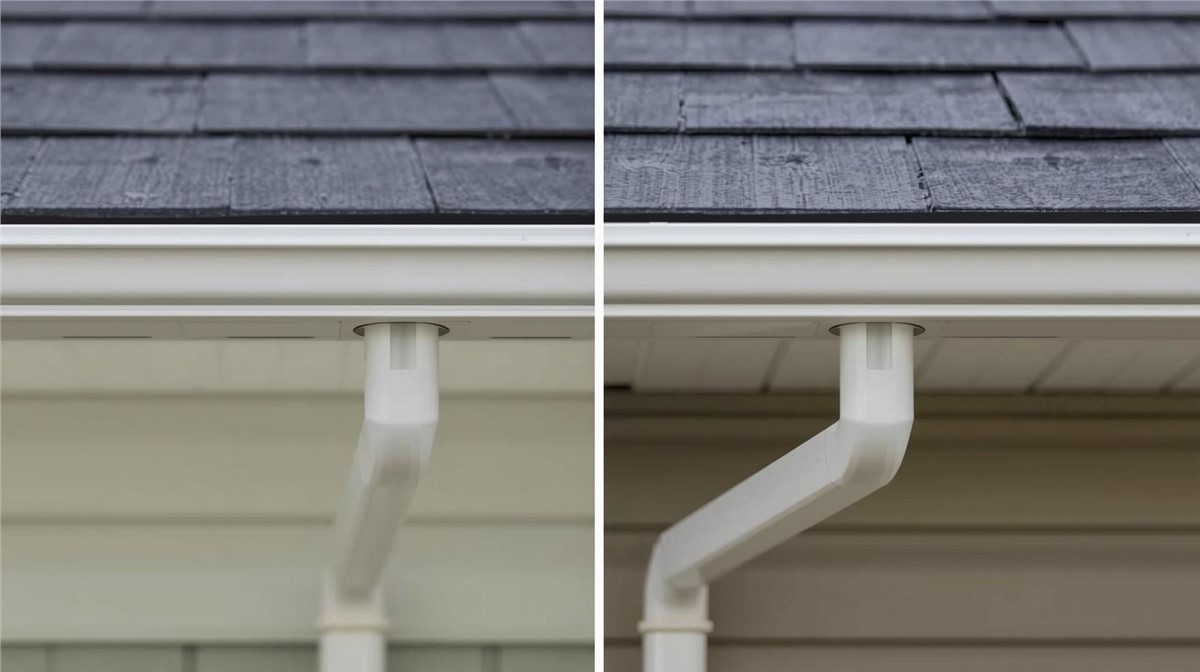
For many homes in Naperville, IL, 5-inch gutters are enough when the roofline is fairly standard and drainage problems have not been an issue. 6-inch gutters usually make more sense for larger roofs, steeper roof slopes, heavier water flow, or homes that have dealt with overflow before. Current guidance says most homes use 5-inch K-style gutters or 6-inch half-round gutters, and larger or steeper roofs may need more capacity. Guidance also notes that 6-inch gutters use larger downspouts, typically 3x4-inch, while 5-inch gutters commonly use 2x3-inch downspouts. Naperville’s public permit pages do not clearly spell out a simple gutters-only residential rule in the sources reviewed, so the safest move is to have the contractor verify the exact scope with the city before work starts.
Why This Matters in Naperville, IL
In Naperville, gutters do more than catch rainwater. They help direct runoff away from siding, fascia, walkways, landscaping, and the foundation. In a northern Illinois climate, that matters because homes deal with rain, snowmelt, and freeze-thaw conditions through the year. The size question matters because the wrong gutter size can increase the chance of overflow during heavy rain or fast runoff events. Current sizing guidance says larger or steeper roofs may require more gutter capacity, more outlets, or other drainage improvements to prevent overflow.
For homeowners in Naperville, the real question is not “Which size is better in general?” It is “How much water does my roof shed, and has the current system ever struggled to keep up?” That is what usually determines whether 5-inch gutters are enough or whether 6-inch gutters are the smarter upgrade.
What 5-Inch Gutters Usually Mean
For most homes, 5-inch gutters are the standard starting point. Most homes use 5-inch K-style gutters or 6-inch half-round gutters, and 5-inch K-style gutters are generally sufficient for many houses.
When 5-Inch Gutters Usually Make Sense
5-inch gutters are often a good fit when:
- the roof is a standard size
- the roof slope is not especially steep
- the house has not had overflow problems
- rainfall load is manageable
- the homeowner wants the lower-cost standard option
Because 5-inch gutters are so common, they are often the practical choice for standard residential gutter replacement. Current comparison guides describe 5-inch systems as the most common residential size and typically suitable for simpler roof designs.
Pros of 5-Inch Gutters
- lower upfront cost
- very common and widely available
- usually enough for many standard homes
- simpler to pair with standard downspout layouts
Cons of 5-Inch Gutters
- less water capacity than 6-inch systems
- may struggle more on large or steep roofs
- less margin during heavy runoff
- can be more likely to overflow if the house is already close to capacity
What 6-Inch Gutters Usually Mean
6-inch gutters are the larger residential option commonly chosen when a house needs more drainage capacity. Current comparison guidance says 6-inch gutters are often recommended for larger roofs, steeper roof pitches, or heavier runoff demands. Some recent sizing guides also say 6-inch gutters hold about 40% more water than 5-inch gutters, though that figure can vary by shape and configuration.
When 6-Inch Gutters Usually Make Sense
6-inch gutters are often the better fit when:
- the home has a large roof area
- the roof pitch is steeper
- the home has experienced overflow before
- there are long gutter runs
- heavier rain or snowmelt loads are a concern
- the homeowner wants more drainage margin
Current guidance says larger or steeper roofs may require additional gutter capacity, and separate sizing sources recommend upsizing to 6-inch gutters for larger roofs or steeper pitches.
Pros of 6-Inch Gutters
- more water capacity
- better performance on larger roofs
- lower risk of overflow in demanding conditions
- stronger fit for homes with known drainage problems
- usually paired with larger 3x4-inch downspouts for better flow
Cons of 6-Inch Gutters
- higher upfront cost
- may be more than some smaller homes need
- can be an unnecessary upgrade if drainage load is modest
What Actually Determines the Right Size
Roof Area
This is one of the biggest factors. Bigger roofs collect more water, which means the gutter system has to handle more runoff. Current sizing guidance consistently says roof size should be part of the decision.
Roof Pitch
Steeper roofs move water faster into the gutters. That added flow can justify a larger gutter system. Recent sizing guides specifically say steeper roof pitches often warrant 6-inch gutters.
Downspout Size and Placement
Gutter size is not the only factor. Downspouts also have to be sized correctly for the gutter system. A common guideline is 5-inch gutters with 2x3-inch downspouts and 6-inch gutters with 3x4-inch downspouts, with a downspout about every 30 to 40 feet of gutter.
History of Overflow
If the current gutters already overflow during hard rain, that is one of the clearest signs the home may need more drainage capacity. In that situation, 6-inch gutters are often worth considering even if 5-inch systems are common on similar homes.
Which Size Usually Makes More Sense in Naperville, IL?
For many Naperville homeowners:
- 5-inch gutters make sense when the home is fairly standard and drainage has not been a problem.
- 6-inch gutters make more sense when the roof is larger, steeper, or more demanding, or when overflow has already been an issue.
Because Naperville homes deal with meaningful rain and snowmelt, there is a good argument for choosing 6-inch gutters when the house is near the upper end of what a standard system can handle. Larger gutters and downspouts are often recommended for higher runoff conditions.
Local Notes for Naperville, IL
Naperville’s public permit pages reviewed provide general building permit contacts and permitting information, but they do not clearly state a simple residential gutters-only replacement rule. Because of that, a clean yes-or-no permit answer could not be confirmed from the city pages reviewed. The safest recommendation is for the contractor to confirm the city’s current requirement for the exact gutter scope before starting, especially if the work overlaps with fascia, soffit, siding, or roofing.
FAQs
Are 6-inch gutters better than 5-inch gutters?
Not automatically for every house. They are usually better when the home needs more drainage capacity, but 5-inch gutters are often enough for standard homes.
How much more water can 6-inch gutters handle?
Some recent sizing guides say 6-inch gutters can hold about 40% more water than 5-inch gutters, though the exact difference depends on shape and system design.
Are 5-inch gutters enough for most homes?
Often yes. Current guidance says 5-inch K-style gutters are standard and sufficient for many homes.
When should I upgrade to 6-inch gutters?
Usually when the home has a larger roof, steeper pitch, heavier runoff load, or a history of gutter overflow.
What downspout size goes with each gutter size?
A common guideline is 2x3-inch downspouts for 5-inch gutters and 3x4-inch downspouts for 6-inch gutters.
Get a Free Estimate in Naperville, IL
If you are comparing 5-inch vs 6-inch gutters in Naperville, IL, Huskie Exteriors can help inspect your roofline, explain what size makes the most sense for your drainage load, and recommend the right setup for your home.
Subscribe to Huskie Exteriors's Blog





Comments