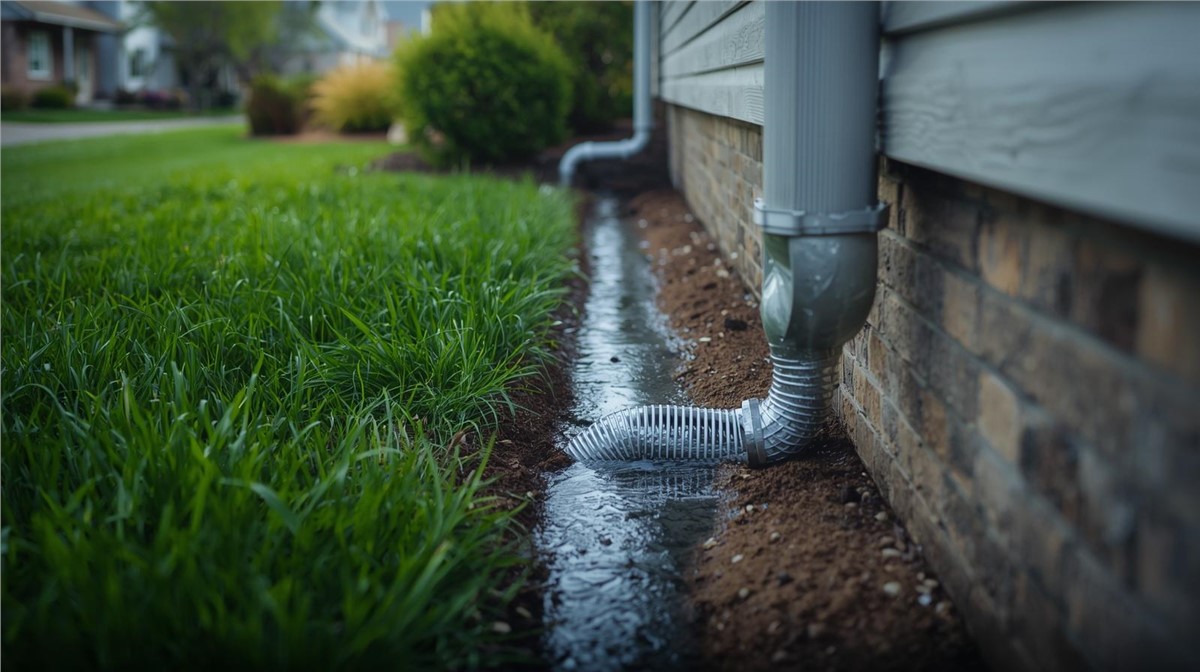
In Naperville, IL, the best downspout drainage solution usually depends on how much roof runoff your home handles, where that water lands now, and whether you are already seeing pooling, erosion, or foundation moisture. For many homes, the most practical first step is a downspout extension that carries water farther from the house. For more persistent drainage issues, buried drain lines, French drains, rain gardens, and grading improvements are often the stronger long-term fixes. Naperville’s stormwater guidance also says roofs should have gutters with downspouts extended away from the home’s foundation, and the city warns homeowners to obtain any required permits when improvements affect grading or drainage.
Why This Matters in Naperville, IL
Downspout drainage matters because water dumped too close to the house can do more than leave muddy spots in the yard. Naperville’s stormwater guidance says the ground around a home should slope away from the structure and that rooftop runoff should be carried away from the foundation.
That is especially important in northern Illinois conditions, where homes deal with strong rain, snowmelt, and freeze-thaw cycles. Naperville’s seepage-prevention material says missing gutters or short downspout discharge can direct a large volume of roof water into one concentrated area near the basement, and it recommends discharging water at least four feet beyond the wall.
For most homeowners in Naperville, the real question is not just “Do I need a longer downspout?” It is “Where is the water going after it leaves the gutter, and is that enough to keep it away from the house?” That is what usually determines whether a basic extension is enough or whether the property needs a more complete drainage solution.
Common Signs Your Downspouts Are Not Draining Well
- Water pooling near the foundation
Water should not be collecting near the home. - Soil erosion or washed-out mulch near the discharge point
Concentrated roof runoff can quickly wear out one area near the house. - Basement dampness or seepage concerns
Poor downspout discharge near the foundation can contribute to basement moisture problems. - Water running back toward the house
The ground should slope away, not send water back toward the structure. - Persistent soggy areas in the yard
This often means runoff is not being spread out or redirected well enough.
Best Downspout Drainage Solutions
1. Downspout Extensions
For many homes, this is the simplest and most effective first upgrade. Naperville guidance recommends extending downspouts away from the foundation, and local seepage-prevention guidance says discharge should land at least four feet beyond the wall.
Best for:
- minor drainage problems
- water dumping too close to the house
- homeowners who want the lowest-cost upgrade first
Pros
- simple
- affordable
- easy to add
- often enough for basic runoff problems
Cons
- visible above ground
- can get in the way near walkways or landscaping
- may not solve bigger drainage issues on their own
2. Splash Blocks
Splash blocks help spread out discharge where the downspout ends and reduce erosion near the house.
Best for:
- short-run discharge control
- reducing washout at one downspout location
- pairing with extensions
Pros
- inexpensive
- simple
- helps reduce erosion
Cons
- limited range
- not a full solution if water still stays close to the foundation
3. Buried Downspout Drain Lines
For a cleaner-looking and more permanent setup, underground drain lines are often the next step.
Best for:
- homeowners who do not want visible extensions
- stronger drainage control
- moving runoff to a safer discharge point farther away
Pros
- cleaner appearance
- more permanent
- better for larger runoff volumes
Cons
- more labor
- trenching required
- improper slope can cause drainage failure
4. French Drains
French drains are helpful when the yard itself stays wet or runoff needs help dispersing into the soil.
Best for:
- soggy ground
- low spots in the yard
- homes with broader drainage problems beyond the gutter discharge point
Pros
- helps with persistent wet areas
- works with buried downspout redirection
- can improve wider yard drainage
Cons
- more complex than basic extensions
- excavation required
- placement and design matter
5. Rain Gardens
Rain gardens are a more landscape-friendly option when you want runoff to soak into the soil instead of simply being piped away.
Best for:
- homeowners who want a natural-looking drainage solution
- areas with room for a basin and planting area
- combining drainage improvement with landscaping
Pros
- attractive
- helps manage runoff naturally
- can reduce puddling
- supports better stormwater infiltration
Cons
- needs enough yard space
- must be placed correctly
- not ideal for every soil condition
6. Regrading Around the House
Sometimes the downspout is not the only issue. Naperville guidance says the ground, walkways, and driveways around the home should slope away from the house.
Best for:
- homes where runoff flows back toward the house
- visible settling near the foundation
- properties where downspouts discharge properly but the grade still traps water
Pros
- addresses the root drainage pattern
- supports every other drainage upgrade
- important for long-term moisture control
Cons
- may require more yard work than a simple gutter fix
- can add cost if grading corrections are significant
What Usually Makes the Most Sense First
For many Naperville homes, the smartest order is:
- Check whether the downspouts discharge far enough away
- Add extensions or splash blocks if needed
- Fix grading if water still runs back toward the house
- Move up to buried drains, French drains, or a rain garden if the problem continues
That order makes sense because simple runoff redirection often solves smaller problems before the homeowner needs a bigger drainage project.
How Far Should Water Be Kept From the House?
Naperville’s seepage-prevention guidance says extensions and splash blocks should discharge water at least four feet beyond the wall. Rain-garden guidance commonly places infiltration features at least 10 feet from the foundation.
In practical terms, farther is usually safer when the yard layout allows it, especially if the home has any history of damp basements, seepage, or soggy soil.
Permit and Local Notes in Naperville, IL
Naperville’s stormwater guidance says homeowners should obtain any required permits and be careful not to alter grading or create obstructions when making yard or drainage improvements. The city’s general building-permit guidance also says residents are required to obtain necessary permits before beginning construction projects and that some site-related improvements may require permits.
A simple public one-line rule for every ordinary residential downspout extension or buried drain project was not confirmed here, so larger buried drainage or grading projects should be verified with the city before work begins.
FAQs
What is the easiest way to improve downspout drainage?
For many homes, a downspout extension is the simplest and most effective first step.
How far should a downspout discharge from the house?
Local guidance says at least four feet beyond the wall, while rain-garden style drainage areas are commonly placed at least 10 feet from the foundation.
When is a buried drain line better than an extension?
A buried drain line is often better when you want a cleaner look or need to move runoff farther away in a more permanent way.
Can a rain garden help with downspout runoff?
Yes. Rain gardens are commonly placed near downspouts, but away from the foundation, to help runoff soak into the ground.
Do I need a permit for downspout drainage work in Naperville?
For larger grading or drainage changes, Naperville says to obtain any required permits. A simple public rule for every basic downspout project was not confirmed here, so it is safest to verify the exact scope with the city before starting.
Get a Free Estimate in Naperville, IL
If you are dealing with overflow, pooling water, or foundation moisture concerns in Naperville, IL, Huskie Exteriors is here to help with practical drainage recommendations built for Midwest weather. We serve homeowners across Northern Illinois and Southern Wisconsin with gutters, roofing, siding, and exterior solutions designed for long-term performance.
Subscribe to Huskie Exteriors's Blog






Comments