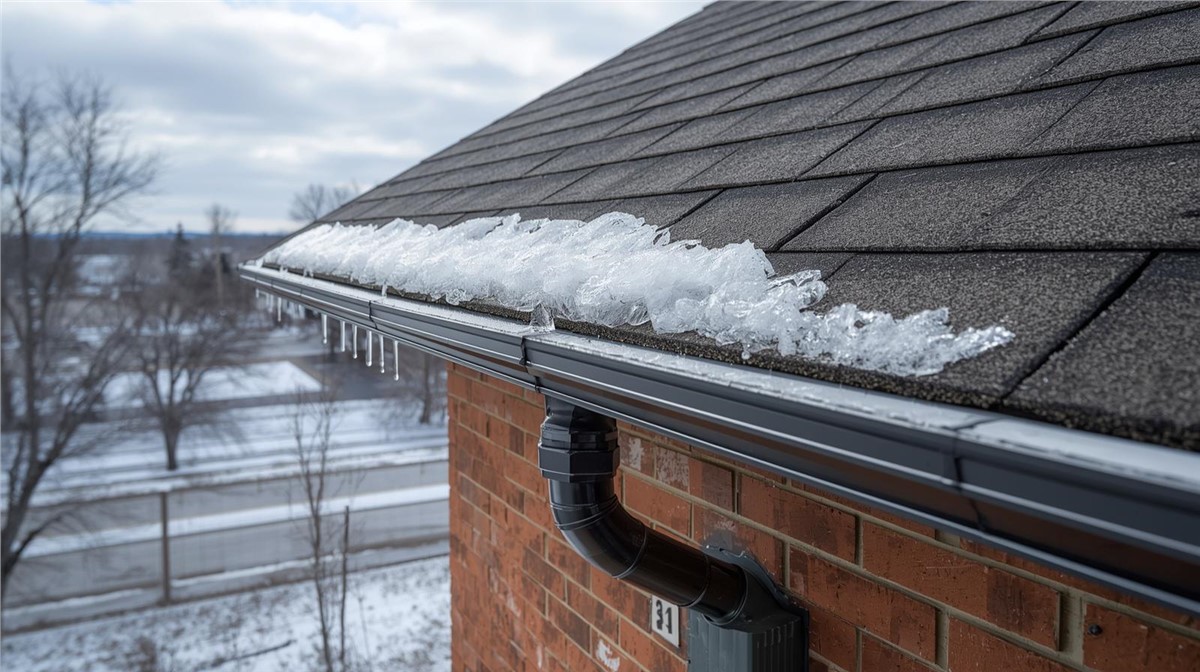
Ice dams form when roof snow melts over warmer sections of the roof, then refreezes at the colder eaves. In Schaumburg, IL, the fix is usually not just “better gutters” or just “better roofing.” It is the combination of attic insulation, attic ventilation, roof-edge protection, and clean, working gutters and downspouts. Clean gutters help melted water drain, but the deeper prevention work is stopping roof heat loss so meltwater does not start in the first place.
Why This Matters in Schaumburg, IL
Ice dams matter because they can do more than create icicles. When water backs up behind an ice dam, it can work under shingles and into the house, damaging roof decking, insulation, ceilings, walls, and trim.
For homeowners in Schaumburg, this is especially relevant because the Chicago-area climate regularly cycles through snow, melting, and refreezing. That pattern is exactly what allows ice dams to form along colder roof edges and gutters. Even when gutters are part of the problem, the roof system and attic conditions are usually what trigger the melt-and-refreeze cycle in the first place.
How Ice Dams Form
Ice dams usually form in a sequence:
1. Snow Builds Up on the Roof
Snow by itself does not create the leak. It becomes a problem when parts of the roof surface warm enough to melt it.
2. Heat Escapes Through the Roof
Warm air leaking from the house into the attic, along with poor insulation, can warm the roof deck from below. Insulation and air leakage are major causes of uneven roof temperatures.
3. Meltwater Runs Down to the Eaves
The upper roof may be warm enough to melt snow, but the overhangs and eaves stay colder because they extend past the heated house. The water flows downward until it reaches those colder edges.
4. Water Refreezes at the Edge
That refreezing creates a ridge of ice. More meltwater arrives behind it, and eventually water can back up under shingles.
This is why gutters and roofing work together in an ice dam problem. Gutters are not usually the root cause, but clogged or ice-filled gutters can make drainage worse once melting starts.
How Gutters Affect Ice Dams
Gutters do not usually create ice dams by themselves, but they can make them worse.
Clean Gutters Help Water Drain
If gutters and downspouts are free of leaves and debris, melted snow has a better path to move away from the roof edge. Clean and repaired gutters help reduce backup and improve drainage before winter.
Clogged Gutters Increase Backup Risk
When gutters are full of debris, meltwater cannot move as easily. That increases the chance that water will sit, refreeze, and worsen the ice buildup near the eaves.
Gutters Alone Are Not the Full Answer
Even perfect gutters will not fully solve an ice dam problem if the attic is losing heat and warming the roof unevenly. Long-term prevention still centers on insulation, air sealing, and ventilation.
How Roofing Affects Ice Dams
Roofing matters because the roof is where the melt-freeze cycle actually happens.
Shingles and Roof Edge Details Matter
If water backs up behind an ice dam, the roof covering is the first line of defense. In cold climates, roof-edge protection and water-resistant underlayment in vulnerable areas matter.
Roof Pitch and Design Can Influence Risk
Complex rooflines, valleys, and areas where snow collects can be more vulnerable to ice and water backup.
Roof Maintenance Still Matters
Damaged shingles, worn flashing, and roof leak points become more serious when ice dams force water upward. A roof already in poor condition is less likely to handle backed-up water well.
The Real Long-Term Fix: Gutters and Roofing Together
The best prevention plan usually combines several things.
1. Improve Attic Insulation
This helps keep indoor heat from warming the roof deck. Better insulation is one of the most important ice dam prevention steps.
2. Improve Attic Ventilation
A well-ventilated attic helps keep roof temperatures more even. Ridge vents paired with soffit vents are commonly used to circulate cold air under the roof and reduce ice-dam conditions.
3. Seal Air Leaks From the House Into the Attic
Warm air escaping around attic hatches, penetrations, and ceiling openings can contribute to localized roof warming.
4. Keep Gutters and Downspouts Clear
This does not stop ice dams by itself, but it supports proper drainage and reduces backup risk. Clean gutters and well-functioning downspouts are still an important part of the system.
5. Consider Heat Cables in Known Problem Areas
For some homes, heat cables can create drainage channels along roof edges, gutters, and downspouts. These are usually a targeted solution for known trouble spots, not a replacement for proper insulation and ventilation.
6. Use Roof Raking Carefully After Snow
Removing roof snow can help because it eliminates one of the ingredients necessary for ice dam formation. But it needs to be done carefully so shingles and roof edges are not damaged.
What to Do if You Already Have an Ice Dam
If you already have one, the priorities are different.
First: Watch for Interior Leaks
Water stains, damp insulation, or ceiling damage can mean water is backing up under the shingles.
Next: Avoid Dangerous DIY Removal
Do not chip aggressively at roof ice or climb onto an icy roof. Ice dam removal can be dangerous and can damage roofing materials if done the wrong way.
Then: Plan the Long-Term Fix
If ice dams are recurring, the smarter move is to correct the attic and drainage conditions rather than just treating the ice every winter.
Local Notes for Schaumburg, IL
Schaumburg’s official village site is the starting point for permit and project guidance. The public guidance I reviewed did not show a simple one-line residential rule specifically for ice-dam mitigation measures like insulation upgrades, gutter work, or heat cables bundled together, so the exact permit path should be verified with the village when the project goes beyond routine cleaning or maintenance.
FAQs
Do gutters cause ice dams?
Not usually by themselves. Ice dams are mainly caused by roof snow melting over warmer roof sections and refreezing at colder eaves, but clogged gutters can make the drainage problem worse.
Will cleaning gutters prevent ice dams?
Cleaning helps and is important, but it is usually not enough by itself. The bigger long-term fixes are attic insulation, air sealing, and ventilation.
Do gutter guards help with ice dams?
They can help by reducing clogs and allowing better drainage, but they do not fix the core heat-loss problem that causes most ice dams.
What is the best long-term fix?
For most homes, the best long-term fix is a combination of better attic insulation, better attic ventilation, reduced air leakage, and properly maintained gutters and downspouts.
Get a Free Estimate in Schaumburg, IL
If you are dealing with recurring ice dams in Schaumburg, IL, Huskie Exteriors can help inspect how your gutters, roofing, and attic conditions are working together. We serve homeowners across Northern Illinois and Southern Wisconsin with roofing, gutters, siding, and exterior solutions built for Midwest weather.
Subscribe to Huskie Exteriors's Blog







Comments