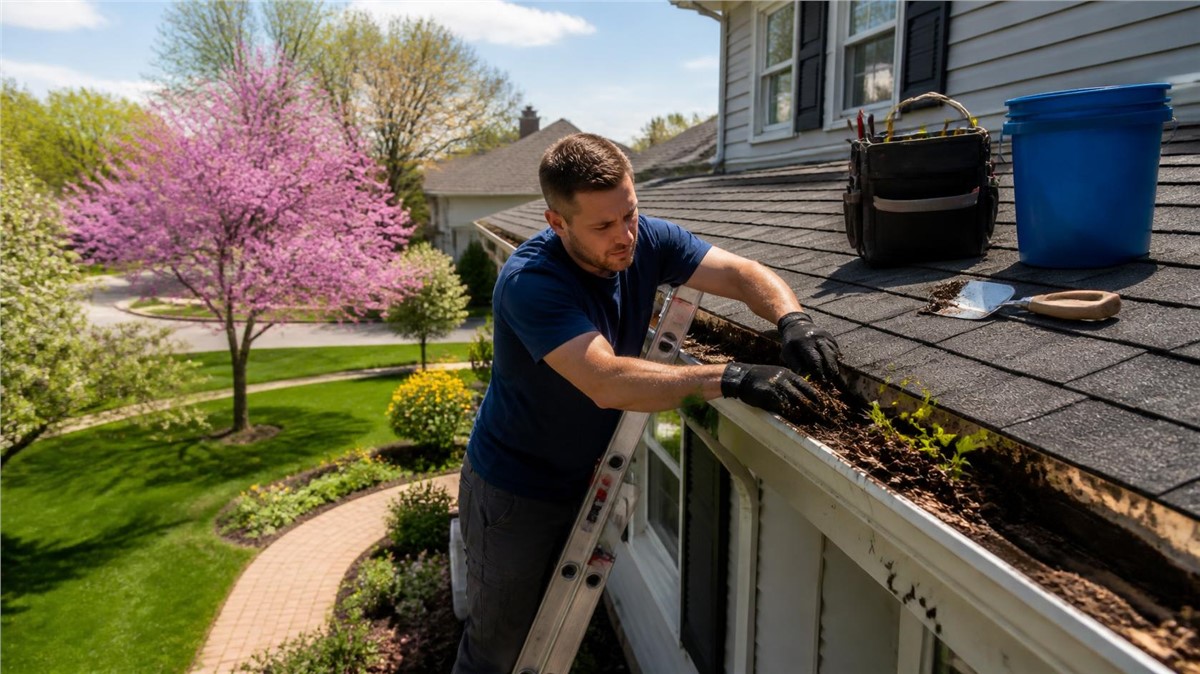
Spring is one of the most important times to check and clean your gutters. After winter, gutters may hold leaves, twigs, roof debris, shingle granules, ice-damaged materials, or dirt that collected during snow and wind. When spring rain arrives, clogged gutters can overflow and send water where it should not go.
For homeowners in Dekalb, IL, spring gutter cleaning matters because northern Illinois weather can bring heavy rain, wind, hail, humidity, and freeze-thaw cycles. A blocked gutter or downspout can quickly lead to roof edge damage, siding stains, foundation pooling, or basement moisture.
This guide explains what homeowners should know about spring gutter cleaning and when to call a professional.
Why Spring Gutter Cleaning Matters
Gutters are designed to move water away from the home. When they are clogged or damaged, water can spill over the edge, run behind the gutter, or pool near the foundation.
Spring gutter cleaning helps reduce the risk of:
- Roof edge leaks
- Fascia damage
- Soffit moisture
- Siding stains
- Foundation pooling
- Basement dampness
- Landscape erosion
- Ice-related damage left from winter
- Overflow during spring storms
Clean gutters support the full exterior system, not just the roofline.
What Can Build Up in Gutters?
Even if gutters were cleaned in fall, winter and early spring can leave debris behind.
Common gutter buildup includes:
- Leaves
- Twigs
- Roof granules
- Dirt
- Pine needles
- Seed pods
- Small branches
- Animal nesting material
- Loose roofing debris
If this debris blocks water flow, gutters may overflow during the first heavy rain.
Check Downspouts Too
Cleaning the gutter channel is only part of the job. Downspouts must also be clear so water can move from the roofline to the ground.
Signs of a downspout problem include:
- Little or no water coming out
- Water backing up into the gutter
- Overflow near one section
- Loose elbows
- Water pooling near the home
- Debris at the downspout outlet
A clear gutter will still fail if the downspout is blocked.
Look for Sagging Gutters
Gutters can sag after holding heavy debris, standing water, snow, or ice. Once a gutter sags, water may stop draining properly.
Warning signs include:
- Uneven gutter lines
- Water sitting in one section
- Loose hangers
- Gaps between gutter and fascia
- Overflow in the same area
- Gutters pulling away from the home
Sagging gutters may need repair, hanger replacement, pitch correction, or replacement.
Watch for Leaking Seams
Gutter seams, corners, outlets, and end caps can loosen or leak over time. Spring cleaning is a good time to check whether water stays inside the system.
Look for:
- Drips from corners
- Water marks below seams
- Rust or staining
- Separated joints
- Leaks near downspout outlets
- Water dripping near doors or walkways
Leaking seams can damage siding, trim, fascia, and foundation areas.
Check for Water Behind Gutters
Water should flow into the gutter, not behind it. If water runs behind the gutter, the issue may involve poor placement, damaged fascia, missing drip edge, loose fasteners, or roof edge problems.
Water behind gutters can affect:
- Fascia
- Soffit
- Siding
- Window trim
- Roof edges
- Foundation areas
This issue should be inspected because cleaning alone may not solve it.
Inspect Fascia and Soffit
Fascia and soffit sit near the roof edge and can show signs of gutter problems.
Check for:
- Peeling paint
- Soft wood
- Dark stains
- Loose soffit panels
- Gaps near gutters
- Pest entry points
- Sagging gutter attachments
If fascia or soffit is damaged, gutters may not attach securely or drain properly.
Make Sure Water Drains Away
Downspouts should move water away from the foundation. If water exits too close to the home, basement moisture and foundation pooling can become concerns.
Check for:
- Short downspout extensions
- Water near basement windows
- Soil erosion
- Pooling near the foundation
- Splashback on siding
- Water crossing walkways
A simple downspout extension may help, but larger drainage issues may need professional review.
Safety Tips for Homeowners
Gutter cleaning can be risky, especially on multi-story homes or uneven ground. Wet ladders, loose gutters, overhead wires, and roof edges can all create hazards.
Homeowners should avoid:
- Climbing onto the roof
- Using ladders in windy weather
- Leaning ladders against weak gutters
- Reaching too far from a ladder
- Cleaning near power lines
- Chipping ice from gutters
If the gutters are high, damaged, or difficult to access, call a professional.
When Cleaning Is Not Enough
Sometimes gutter cleaning reveals a larger issue. If gutters keep overflowing after debris is removed, another problem may be present.
Cleaning may not fix:
- Poor gutter pitch
- Undersized gutters
- Loose hangers
- Damaged fascia
- Blocked underground drains
- Bad downspout placement
- Leaking seams
- Roof edge problems
A professional inspection can help identify the source of repeated drainage trouble.
Repair vs Replacement
Some gutter issues can be repaired, while others may require replacement.
Repair may make sense if:
- One seam is leaking
- A few hangers are loose
- One downspout is blocked
- A short extension is needed
- Gutter pitch can be corrected
Replacement may be better if:
- Gutters sag in several areas
- Seams leak repeatedly
- Sections are bent or damaged
- Water keeps running behind gutters
- Fascia damage is widespread
- Drainage problems keep returning
The right option depends on the condition of the full gutter system.
Why a Full Exterior Inspection Helps
Gutter problems are often connected to roofing, siding, fascia, soffit, windows, trim, and foundation drainage. Overflowing gutters can stain siding, damage trim, soak fascia, and send water toward the basement.
Huskie Exteriors provides roofing, siding, window, gutter, and storm damage restoration services, helping homeowners evaluate the full exterior system before spring rain causes larger problems.
Conclusion
Spring gutter cleaning in Dekalb, IL helps homeowners prepare for heavy rain, reduce overflow, and protect the roof edge, siding, fascia, soffit, windows, foundation, and landscaping. Cleaning gutters and downspouts is important, but homeowners should also watch for sagging sections, leaks, water behind gutters, damaged fascia, and poor drainage.
If your home has clogged gutters, leaking seams, loose downspouts, siding stains, water near the foundation, or repeated gutter overflow, Huskie Exteriors can inspect your exterior and recommend the right next step.
Contact Huskie Exteriors for professional roofing, siding, window, gutter, and storm damage services in Illinois and Wisconsin.
Subscribe to Huskie Exteriors's Blog








Comments