
If you have an active roof leak in Naperville, IL, the first priorities are to protect the interior, limit additional water entry if it can be done safely, document the damage, and get a professional inspection quickly. For single-family homes in Naperville, the city says a building permit is not required to replace common damaged or deteriorating asphalt shingle roofing as long as the existing roof sheathing remains in place. Current 2026 pricing guidance also shows common repair ranges such as flashing repair around $150 to $600, vent repair around $250 to $600, valley repair around $300 to $1,000, and chimney flashing repair around $400 to $1,600.
Why This Matters in Naperville, IL
A roof leak is rarely just a roof-surface problem. Once water gets past shingles or flashing, it can reach decking, insulation, drywall, ceilings, trim, and even flooring. That is why emergency roof leak repair in Naperville, IL should be treated as a time-sensitive issue, not something to watch for a few more storms. A leaking roof needs immediate attention if you want to avoid much larger repair or replacement costs.
This is especially important in a northern Illinois climate, where rain, storms, snow, and freeze-thaw cycles put extra stress on roof edges, flashing, valleys, and penetrations. In many cases, the visible water stain inside the house is not directly below the point where the water got in, which is one reason emergency leaks can be tricky to diagnose without a proper inspection.
What Homeowners Should Do First
1. Protect the Inside of the Home
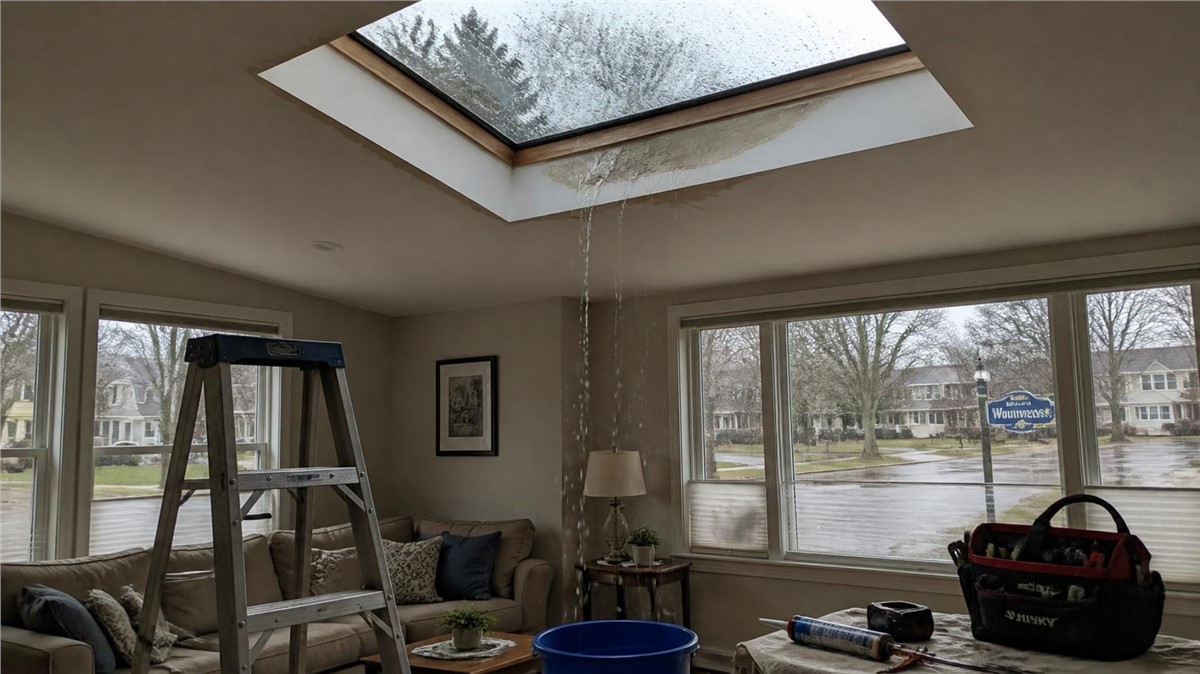
Move furniture, electronics, rugs, and valuables away from the leak if possible. Use buckets, towels, or plastic sheeting to catch dripping water and reduce interior damage.
If the ceiling is bulging, that can mean water is pooling above it. At that point, the situation is more urgent because the ceiling material may weaken further. Even if the roof leak looks small, the interior damage can spread quickly if water is allowed to keep soaking drywall or insulation.
2. Limit More Water Entry Only If It Is Safe
If you can safely reduce water entry from inside the attic or by using a temporary measure on the ground, that may help. But do not climb onto a wet or actively storm-damaged roof unless conditions are dry and safe.
A tarp can help temporarily protect a compromised area, but only when weather conditions are safe and the tarp is secured properly so water cannot run underneath it.
3. Document the Damage
Take photos of:
- the ceiling stain or leak
- attic moisture if visible
- any visible exterior damage from the ground
- damaged belongings
- the time and date the leak was first noticed
This matters because leak-related damage can expand quickly, and clear documentation helps both the contractor and, when relevant, the insurance process.
4. Call a Roofing Professional Quickly
An emergency roof leak usually needs a professional inspection as soon as possible. Hidden damage beneath shingles or flashing is common, especially after storms or active leaks.
Common Causes of Emergency Roof Leaks
Damaged or Missing Shingles
A few missing shingles may not look severe from the ground, but they can allow water to get under the roofing system quickly. This is one of the most common simpler repair categories.
Flashing Failure
Flashing is a major leak point around chimneys, vents, sidewalls, and roof transitions. Current 2026 repair pricing places general flashing repair around $150 to $600, while chimney flashing repairs can run around $400 to $1,600.
Roof Vent Leaks
Roof vents can leak when flashing fails or the vent assembly is damaged. Current pricing guidance places vent repairs around $250 to $600.
Valley Problems
Valleys carry a large volume of water, so once they fail, leaks can escalate quickly. Current 2026 guidance places valley repair around $300 to $1,000.
Blocked Drainage or Water Traps
Leaves, twigs, or blocked drainage points can contribute to water entry by preventing the roof from shedding water properly.
What a Professional Emergency Leak Visit Should Include
A proper emergency roof leak visit should do more than patch the first wet spot the contractor sees.
Typical checklist:
- inspection of shingles or roofing surface
- review of flashing and roof penetrations
- leak tracing from attic or interior signs
- check of valleys and drainage paths
- temporary protection if needed
- repair scope for the permanent fix
- review of whether decking or related materials may be wet
This matters because roof leaks often travel before showing up inside. A visible interior stain may not line up directly with the exterior entry point, so a real diagnosis is more important than a rushed surface patch.
What This Typically Costs in Naperville, IL (2026 Pricing)
For homeowners in Naperville, IL, realistic 2026 leak-related repair pricing often lines up with current asphalt-roof repair ranges such as:
- flashing repair: about $150 to $600
- vent repair: about $250 to $600
- valley repair: about $300 to $1,000
- chimney flashing repair: about $400 to $1,600
- minor chimney-flashing resealing: starting around $200
If the emergency leak turns out to be more than a localized repair and starts involving larger roof sections or wet decking, the cost can rise well beyond these numbers. Broader 2026 roof replacement guidance places average full replacement around $9,541, which shows how much more expensive things become when the issue is no longer limited to a repair.
Top Pricing Factors
Leak Source
Flashing and vent leaks usually cost less than broader valley or chimney-related repairs.
Roof Pitch and Access
Steeper or harder-to-reach roofs raise labor difficulty and cost.
Moisture Spread
If insulation, decking, or interior finishes are already wet, the final cost usually climbs beyond a simple exterior repair.
Permit / Insurance / Local Notes in Naperville, IL
Naperville’s current building-permit page says that for roofing, siding, and storm damage on single-family homes, a building permit is not required to replace the most common damaged or deteriorating roofing materials, including an asphalt composite shingle roof, as long as the existing roof sheathing remains in place.
That is helpful for straightforward repair or replacement scenarios, but the exact local requirement can still change if the project grows beyond a basic roof-surface repair. If the leak leads to broader structural work, your contractor should verify the city’s current requirement before starting.
For insurance, a roof leak may be either a maintenance issue or storm-related damage. If the leak follows a covered event like wind or storm impact, documentation and a prompt inspection are especially important.
FAQs
What should I do first if my roof starts leaking?
Protect the inside of the home, catch the water, document the damage, and get a roofing contractor involved quickly. If a temporary tarp can be installed safely, that may help reduce further water entry.
Is a roof leak always an emergency?
Not every leak means the roof is collapsing, but active roof leaks should be treated urgently because water can spread into insulation, ceilings, and framing fast.
How much does emergency roof leak repair cost in Naperville, IL?
It depends on the source. Common 2026 repair ranges include about $150 to $600 for flashing, $250 to $600 for vent repair, and $300 to $1,000 for valley repair.
Do I need a permit for emergency roof leak repair in Naperville, IL?
Naperville says a permit is not required for replacing common damaged roofing materials on single-family homes, including asphalt shingle roofing, as long as the roof sheathing remains in place. For bigger scope, the contractor should still verify the city requirement.
Get a Free Estimate in Naperville, IL
If you need emergency roof leak repair in Naperville, IL, Huskie Exteriors is here to help with honest inspections and practical repair recommendations built for Midwest weather. We serve homeowners across Northern Illinois and Southern Wisconsin with roofing, siding, gutters, and windows designed for long-term performance.
Schedule your free estimate with Huskie Exteriors today. We will inspect the leak, explain what is causing it, and help you decide on the right next step before more water causes bigger damage.
Subscribe to Huskie Exteriors's Blog





Comments