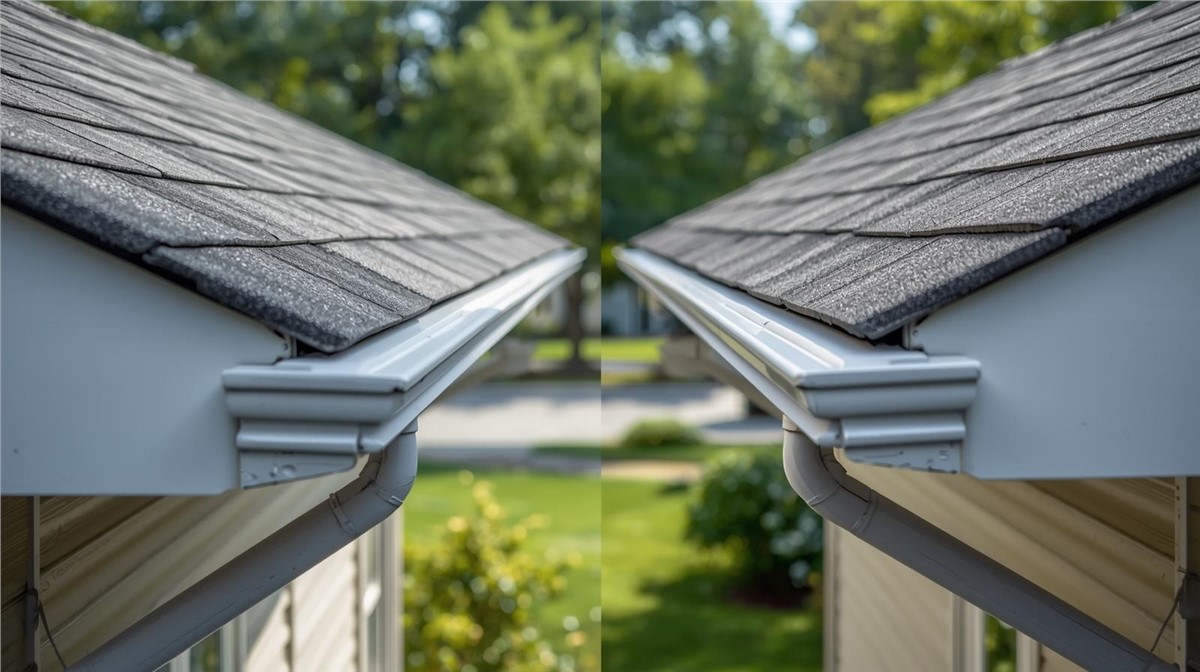
For many homes in Rockford, IL, 5-inch gutters are still a solid standard choice, especially on smaller, simpler rooflines. But 6-inch gutters are often the better fit for larger roofs, steeper pitches, heavier runoff areas, or homes that already deal with overflow during strong storms.
Why This Matters in Rockford, IL
Gutter size matters more in Rockford, IL than it might in a milder, lower-storm area. Northern Illinois gets strong thunderstorms, heavy rain, hail, and damaging wind events. That kind of weather puts extra demand on roof drainage systems.
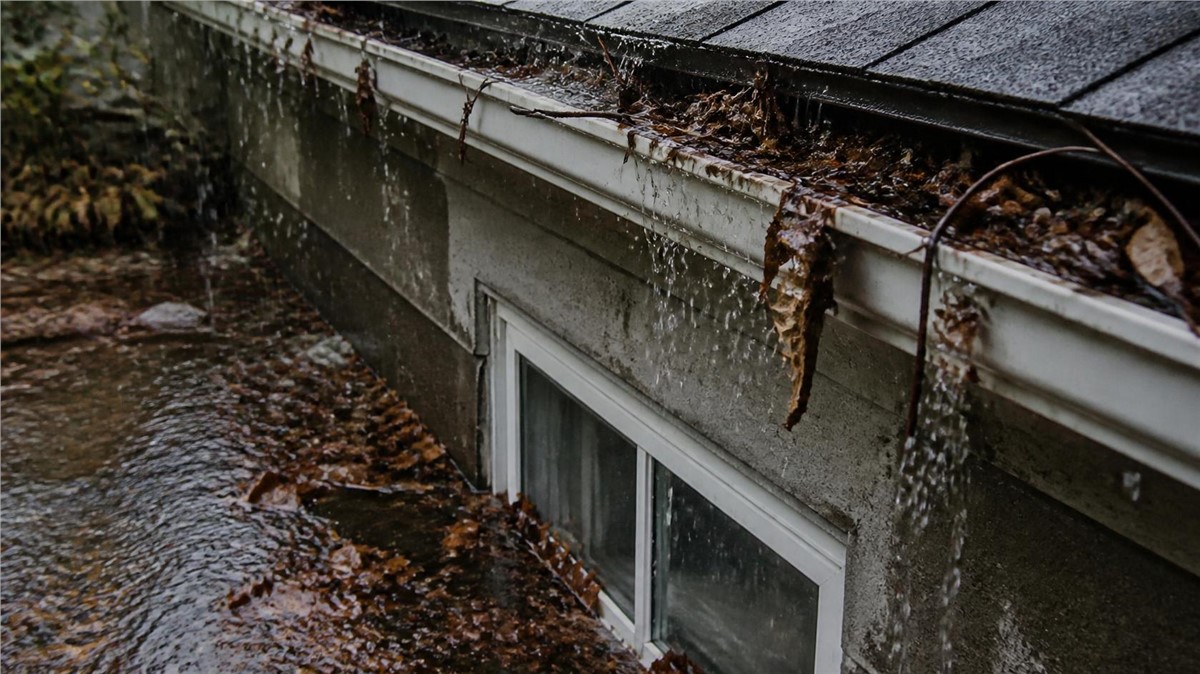
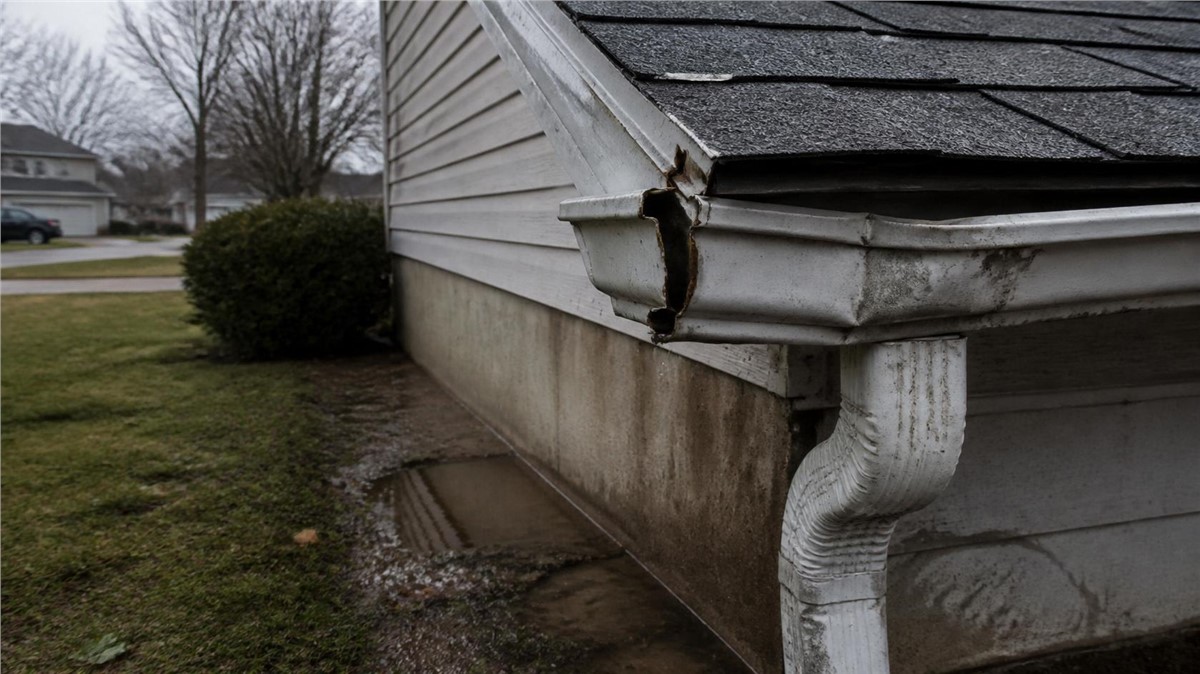
When gutters are undersized, water can spill over the edge during heavier rain, especially where large roof sections dump into one run. That overflow can soak fascia, stain siding, erode landscaping, and leave more water close to the foundation. In Rockford, IL, the question is not just which size costs less. It is which size handles your actual roof runoff well enough to prevent repeat drainage problems.
Common Signs You Need Larger Gutters
- Water spills over the gutter edge during storms
This often means the system cannot move water fast enough, especially if the gutters are clean and the downspouts are open. - You have a large roof or long gutter runs
Bigger roof sections send more runoff into the gutter system and may overwhelm a smaller profile. - Your roof pitch is steep
Steeper roofs move water faster, which can make 6-inch gutters the safer choice. - One or two downspouts handle a lot of roof area
Even a decent gutter size can struggle if too much runoff is concentrated into too few outlets. - You already have overflow despite regular cleaning
If debris is not the main issue, the system may simply be undersized. - You see erosion or pooling near heavy runoff points
That can be a sign that more water is leaving the roof than the current gutter size can comfortably manage. - You are replacing gutters anyway and want to avoid future upgrades
In many cases, moving from 5-inch to 6-inch during replacement is easier than resizing later.
When to Schedule It (Best Timing + What to Do First)
The best time to decide between 5-inch and 6-inch gutters in Rockford, IL is before repeated overflow turns into fascia or foundation damage. Spring through fall is usually the easiest time to install or replace gutters, but the right time to evaluate size is whenever your current system is clearly struggling.
First: Check Whether the Problem Is Really Size
Before assuming you need bigger gutters, make sure the current issues are not caused by:
- clogged gutters
- clogged downspouts
- poor gutter pitch
- loose sections
- too few downspouts
- damaged fascia or roof edge problems
A clean but overflowing gutter is a stronger sign of a sizing issue than a dirty one.
Next: Look at Roof Layout, Not Just House Size
What matters most is not just how big the home is. It is:
- how much roof drains into each gutter run
- how steep the roof is
- how many valleys or concentrated runoff areas there are
- how many downspouts serve that section
This is why two homes with similar square footage may need different gutter sizes.
Then: Compare Long-Term Performance
If your home already has heavy runoff, tree debris, or repeated overflow, upgrading to 6-inch gutters during replacement can be the smarter long-term move instead of reinstalling another 5-inch system that stays near its limit.
What a Professional Gutter Evaluation Includes
A professional gutter sizing evaluation should focus on water flow, not just what most homes use.
Typical checklist:
- Roof runoff assessment
The contractor should look at how much roof area drains into each gutter section. - Pitch and slope review
Steeper roofs move water faster and can justify a larger gutter profile. - Downspout count and placement
Proper downspout sizing and spacing matter just as much as gutter width. Even larger gutters can still overflow if downspouts are too few or poorly placed. - Overflow pattern review
Contractors should identify whether overflow happens across the full system or only at certain heavy-runoff areas. - Debris and maintenance pattern check
Larger gutters can also be a little more forgiving in debris-heavy conditions, though they are not a substitute for cleaning. - Current gutter condition inspection
Sagging, leaking, or poorly pitched gutters may still need correction even if you stay with the same size.
At Huskie Exteriors, we help homeowners understand whether 5-inch gutters are still a good fit or whether 6-inch gutters would solve a real drainage problem more effectively.
What This Typically Costs in Rockford, IL (2026 Pricing)
In Rockford, IL, 6-inch gutters usually cost more than 5-inch gutters, but the difference is often easier to justify when the home has bigger drainage demands.
Realistic 2026 installed ranges often look like this:
- 5-inch gutter system: usually the more budget-friendly option
- 6-inch gutter system: typically costs more per linear foot than 5-inch
- Upgrade difference: often a moderate increase rather than a complete pricing jump
- Total project cost: depends heavily on footage, downspouts, home height, material, and access
Top five cost factors:
Gutter Size
This is the obvious one. Six-inch systems cost more than 5-inch systems because they use more material and often pair with larger downspouts.
Downspout Size and Count
A larger gutter may also need upgraded downspouts for the full benefit, which can affect the final price.
Home Height and Access
Two-story homes, porches, steep grades, and complex rooflines increase labor time.
Roof Design
Long runs, valleys, and concentrated runoff areas often mean more custom planning and more drainage components.
Gutter Material
Aluminum is usually the most budget-friendly. Higher-end materials raise cost regardless of size.
In simple terms, 5-inch gutters usually save more upfront. Six-inch gutters often save more long term when they prevent overflow, water damage, and repeat drainage problems.
Insurance / Permits / Local Notes in Rockford, IL
For most homeowners, choosing 5-inch versus 6-inch gutters is a home-improvement and drainage decision rather than an insurance issue. Insurance is more likely to matter if the existing system was damaged by a covered storm event.
On the local side, exterior work in Rockford may require review depending on scope. For straightforward gutter replacement, contractors should still verify what applies to the exact project.
A few local notes matter here:
- Rockford-area storms can bring heavy rain, hail, and high winds, which makes runoff handling more important than in calmer climates.
- Homes with larger roof sections or chronic overflow are often stronger candidates for 6-inch gutters.
- If the current system already struggles during normal heavy rain, staying with the same size may not be the best value.
How to Choose the Right Contractor in Rockford, IL
The right contractor should size gutters based on runoff and roof layout, not just habit.
Questions to ask:
- Is my current overflow problem caused by clogs, pitch, downspouts, or gutter size?
- How much roof area drains into each gutter run?
- Would 5-inch gutters still be enough on this home?
- If you recommend 6-inch gutters, what problem does that solve?
- Will downspouts need to be resized too?
- Are you insured for exterior work in Illinois?
- Will you verify whether any local permit coordination is needed?
Red flags:
- recommending the same gutter size on every house
- no discussion of downspouts
- no review of roof pitch or runoff concentration
- focusing only on price per foot
- not explaining why a size change is or is not necessary
Mistakes Homeowners Make (And How to Avoid Them)
- Choosing 5-inch gutters just because they are standard
- Assuming 6-inch gutters are always better for every home
- Ignoring downspout sizing
- Treating overflow as only a cleaning issue
- Replacing gutters without checking pitch and runoff concentration
- Comparing quotes without confirming gutter size and downspout details
- Waiting until fascia or foundation issues show up
FAQs
Do most homes in Rockford, IL need 5-inch or 6-inch gutters?
Many homes still do fine with 5-inch gutters, especially if the roofline is simple and runoff is moderate. But homes with larger roofs, steeper pitches, or repeated overflow often benefit more from 6-inch gutters.
Are 6-inch gutters really better than 5-inch gutters?
They are not automatically better for every house, but they do handle more water. Six-inch systems are better suited to heavier runoff situations.
Should I upgrade to 6-inch gutters if my 5-inch gutters overflow?
Possibly, yes. If the gutters are clean, pitched correctly, and still overflowing, that is a strong sign that the system may be undersized or under-drained. A contractor should confirm whether the better fix is larger gutters, more downspouts, or both.
Do 6-inch gutters clog less?
They can be a bit more forgiving because they have more capacity and usually pair with larger outlets, but they still need maintenance. They reduce some clog-related pressure, but they do not eliminate cleaning.
Do I need a permit for gutter replacement in Rockford, IL?
It depends on the exact scope. Your contractor should verify whether your gutter project needs local coordination before work begins.
Get a Free Estimate in Rockford, IL
If you are trying to decide between 5-inch and 6-inch gutters in Rockford, IL, Huskie Exteriors is here to help with honest drainage evaluations and practical recommendations. We serve homeowners across Northern Illinois and Southern Wisconsin with gutters, roofing, siding, and exterior systems built for real Midwest weather.
Schedule your free estimate with Huskie Exteriors today. We will inspect your current gutter system, explain which size makes the most sense for your roof, and help you choose the option that protects your home best.
Subscribe to Huskie Exteriors's Blog





Comments