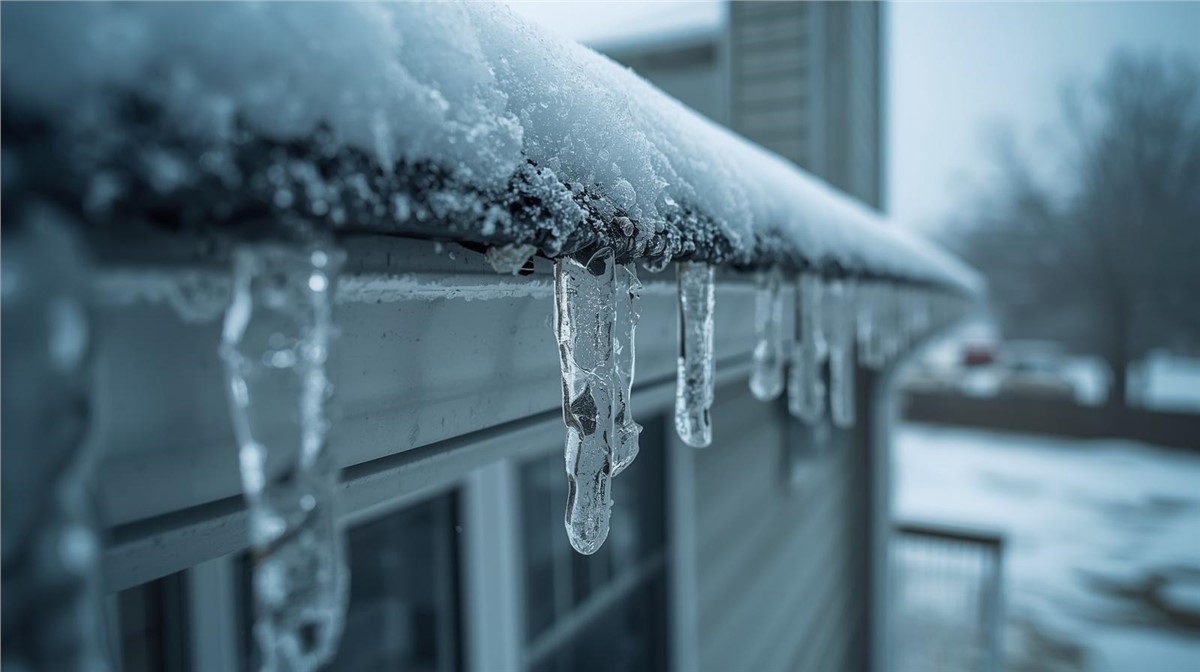
Those thick, sparkling icicles hanging from your roof might look beautiful on a cold Illinois day. But for many homeowners, they're the first warning sign of a hidden and costly problem: an ice dam.
This thick ridge of ice at your roof's edge acts like a clog, trapping melting snow and forcing water back under your shingles where it can leak into your home. True ice dam prevention starts with understanding the real cause—not just snow, but heat escaping from your house. Let's explore the emergency fixes for today and the permanent solutions for tomorrow to keep your home safe and dry.
What an Ice Dam Actually Looks Like on Your Roof
While a few icicles are normal in an Illinois winter, the real trouble sign is a thick, solid ridge of ice building up on the roof's edge, often right behind the gutters. The danger isn't what’s hanging off your roof, but what’s sitting on top of it.
This barrier creates a dam. As snow on the warmer, upper part of your roof melts, the water runs down and gets trapped behind this frozen wall, forming a pool with nowhere to drain. That trapped water is the real danger, as it can back up underneath your shingles and leak into your attic, ceilings, and walls.
The Hidden Cause: Why a Warm Attic is the Real Culprit
For most Chicago area homes, what causes ice dams is a warm attic. Heat from your living space rises and escapes into the attic through small, unsealed gaps often called “attic bypasses.” These hidden holes are found around recessed lights, plumbing pipes, or a loosely sealed attic hatch.
This escaping warmth heats the roof from underneath, melting the bottom layer of snow. The resulting water trickles down to the freezing-cold roof edge (the eaves) and refreezes, creating the dam. This is why an ice dam is a tell-tale sign of poor insulation and a need for air sealing attic bypasses.
Emergency Fix: How to Safely Use a Roof Rake
When a heavy snowstorm hits, a long-handled roof rake is your first line of defense. This tool helps you clear snow off the lower three to four feet of your roof, removing the "fuel" an ice dam needs. You are not trying to break up existing ice—just clearing fresh snow before it can melt and refreeze.
The most critical rule for safely using a roof rake is to always stand firmly on the ground, well away from where snow and ice will fall. Never use one while on a ladder. Trying to chip at thick ice is ineffective and can damage shingles. If a dam is already severe, the high cost of professional ice dam steaming is still much cheaper than major water damage repairs.
Raking is a reactive chore you’ll have to repeat all winter. It’s one of the best methods for emergency roof snow removal, but it doesn’t fix the warm attic problem causing the melting.
Seasonal Prep: The Critical Role of Clean Gutters
Clean gutters are a key part of any Chicago winter home maintenance checklist. Gutters clogged with autumn leaves create an instant foundation for ice. Any water melting off the roof hits this blockage, freezes solid, and forms a "starter dam" for a much larger problem.
A clean gutter system gives meltwater a safe escape route. Getting this chore done after the last leaves have fallen ensures water drains away properly. While this helps manage the water, the best long-term strategy is to stop the melt from happening at all.
The Permanent Fix: Creating a "Cold Roof" with Insulation and Air Sealing
The most effective solution for recurring ice dam problems is to create a "cold roof," which means your attic should be as cold as the air outside. A cold attic can't heat your roof from underneath, stopping the snow from melting and breaking the entire ice dam cycle.
The crucial first step is air sealing attic bypasses. A professional will find and seal the tiny gaps around light fixtures, plumbing pipes, and chimneys that let your expensive heated air escape.
Once those air leaks are plugged, the final step is to properly insulate the attic for winter. A thick, continuous blanket of insulation keeps warmth in your living space below. This one-two punch—air sealing first, then insulation—is the permanent cure for ice dams.
Symptom vs. Cure: Heating Cables or Better Attic Ventilation?
You’ve likely seen homes with zigzagging heating cables along the roof edge. While they can melt channels for water to escape, they’re an expensive band-aid that only treats the symptom—the ice—not the underlying cause of heat loss, all while running up your electric bill.
In contrast, proper attic ventilation is a key part of the permanent cure. It works with insulation and air sealing to maintain a "cold roof." By constantly flushing out any warm air that enters the attic, ventilation attacks the root cause, saving you money and preventing damage year after year.
The main benefits of soffit and ridge vents are that they work together like your attic's lungs. Cool, outside air is drawn in through vents under your roof's overhang (soffits), and any lingering warm air is pushed out at the top (the ridge), keeping the entire roof deck cold.
Your Action Plan for a Leak-Free Illinois Winter
By understanding that icicles can be a warning sign from a warm attic, you can better protect your home. Here is a simple checklist for effective ice dam solutions:
Right Now (During Winter): Safely use a roof rake on the first 3-4 feet of snow after a storm.
This Fall (Seasonal Task): Get your gutters professionally cleaned after all leaves have fallen.
The Long-Term Fix: Contact an insulation contractor to inspect your attic for air leaks and proper insulation.
By shifting from reacting to winter damage to proactively protecting your home from the inside out, you've taken the most important step in ice dam prevention.
Subscribe to Huskie Exteriors's Blog





Comments