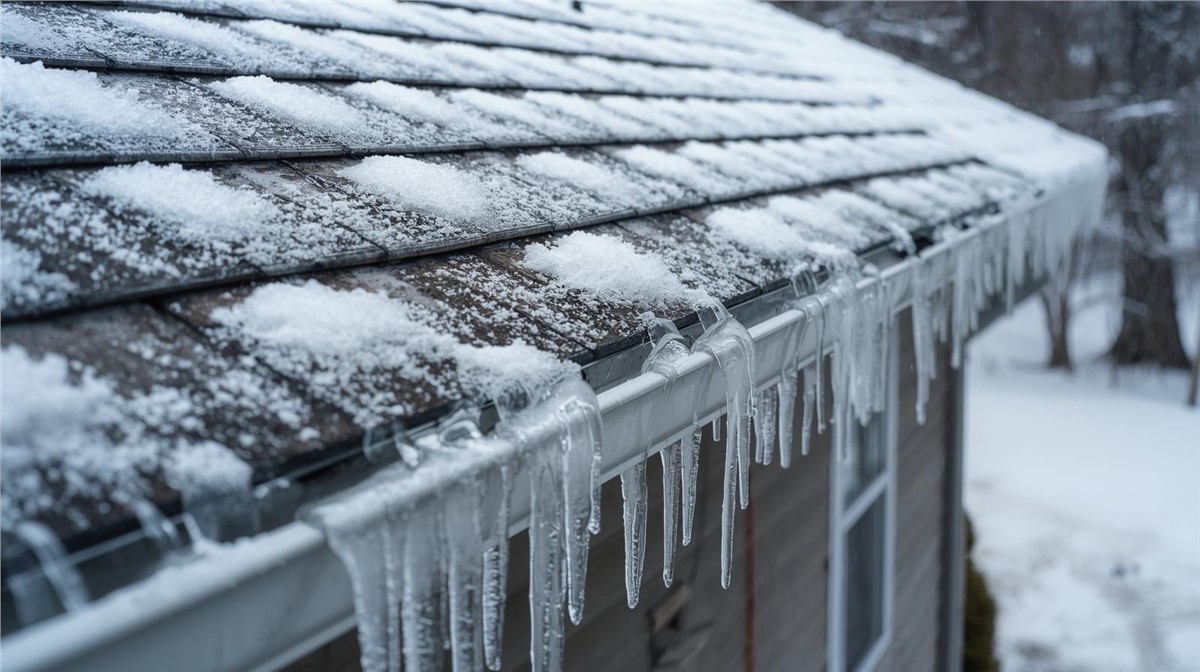
Those giant, glistening icicles hanging from your roof might look picturesque, but they're often a warning sign of a costly problem. This ridge of ice, known as an ice dam, traps melting snow and can force water back under your shingles, leading to stained ceilings, damaged walls, and preventable water damage.
Fortunately, the causes are understandable and the solutions are manageable. Here’s what's happening on your roof, how to handle an existing issue, and the permanent fixes that prevent future problems.
What Causes Ice Dams? (Hint: It's Not Your Gutters)
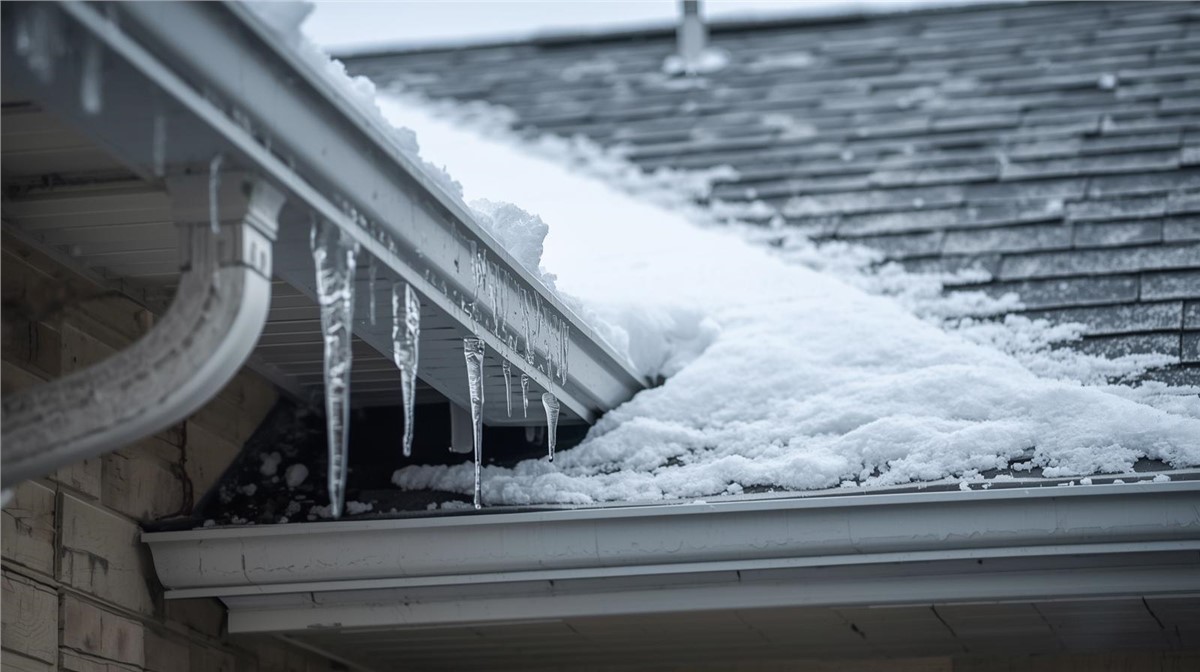
An ice dam is a ridge of ice that forms at your roof’s edge, trapping water behind it. Many homeowners blame their gutters, but the real engine driving ice dam formation is a warm attic that melts snow from the bottom up. The process happens in four stages:
Heat Escapes: Warm air from your living space leaks into the attic, heating the underside of your roof.
Snow Melts: This warmth melts the snow on your roof, creating a flow of water down the shingles.
Water Refreezes: The water reaches the cold, unheated edge of the roof and refreezes, forming a wall of ice.
Water Backs Up: More melting snow gets trapped behind this dam, creating a pool that seeps under your shingles and into your home.
The most common cause of a warm attic is poor insulation and hidden air leaks. Gaps around light fixtures, plumbing pipes, and attic hatches act like tiny chimneys, funneling warm air straight to the underside of your roof. Clogged, frozen gutters only make matters worse by giving the dam a solid foundation to build upon, but they are not the root cause.
Ice Dam Emergency? 3 Safe Steps to Take Right Now
If an ice dam has already formed, your priority is to safely stop it from getting worse. For a manageable dam, use a long-handled roof rake from the ground to pull snow off the roof. By removing the snow—the dam's fuel—you stop more water from melting and feeding the ice. The goal isn’t to remove the ice itself, just the snow several feet above it.
For significant ice buildup, multi-story homes, or any active leak, the safest solution is to call a professional. Look for a company that uses low-pressure steam to gently melt channels through the ice, allowing trapped water to escape without damaging your shingles. This is the industry-standard method for immediate, safe removal.
Safety First: Do This / Don't Do This
DO: Use a roof rake from solid, non-icy ground.
DO: Call a professional who uses low-pressure steamers for large or leaking dams.
DON'T: Use a ladder on icy ground or get on the roof yourself.
DON'T: Use a hammer, chisel, or pressure washer, which can destroy your shingles.
DON'T: Use rock salt or salt pucks; they are ineffective and can damage your roof, gutters, and landscaping.
How to Prevent Ice Dams for Good: 3 Permanent Fixes
Once the immediate danger has passed, you can focus on a permanent solution by creating a cold, stable attic environment. This is achieved through a three-part system of insulation, air sealing, and ventilation.
Insulation: The most important step is adding insulation to your attic floor to act as a barrier, keeping heat in your living space. For most Midwest homes, this means a uniform depth of at least 16 inches.
Air Sealing: Even with deep insulation, small gaps around light fixtures and pipes can funnel warm air to the roof. A professional can use foam and caulk to seal these hidden leaks, stopping hot spots from forming.
Ventilation: A healthy attic should be cold in the winter. Proper vents constantly flush the space with outside air, ensuring any small amount of heat that escapes is carried away before it can warm the roof.
When this system works correctly, your roof stays cold and snow melts evenly in the spring, not in the middle of a January deep freeze.
Are Heat Cables or Heated Gutter Guards a Good Solution?
Products like heat cables and heated gutter guards don’t stop snow from melting; they are a bandage for the symptom, not a cure for the cause. They use electricity to create warm channels for water to flow through ice that has already formed.
While these systems can keep drainage paths clear, they must run whenever ice is a threat, which adds to your winter electricity bill. Heat cables become a practical last resort for homes with complex rooflines where improving insulation and ventilation is extremely difficult or costly. In these cases, they provide a necessary safety net to prevent water damage when a permanent fix isn't feasible.
Your Winter Roof Protection Action Plan
Giant icicles are a clear sign of heat escaping your attic, but now you have a plan. Use this checklist for effective ice dam prevention:
This Winter: Safely use a roof rake from the ground, watch for indoor leaks after heavy snow, and call a professional for large, existing dams.
Next Spring/Summer: Schedule an attic inspection to assess and improve insulation, air sealing, and ventilation.
Following this checklist does more than just stop ice dams. It helps you see your home as a system where a warm house and a cold attic work together. This knowledge empowers you to protect your investment, lower energy bills, and enjoy Midwest winters with peace of mind.
Subscribe to Huskie Exteriors's Blog




Comments