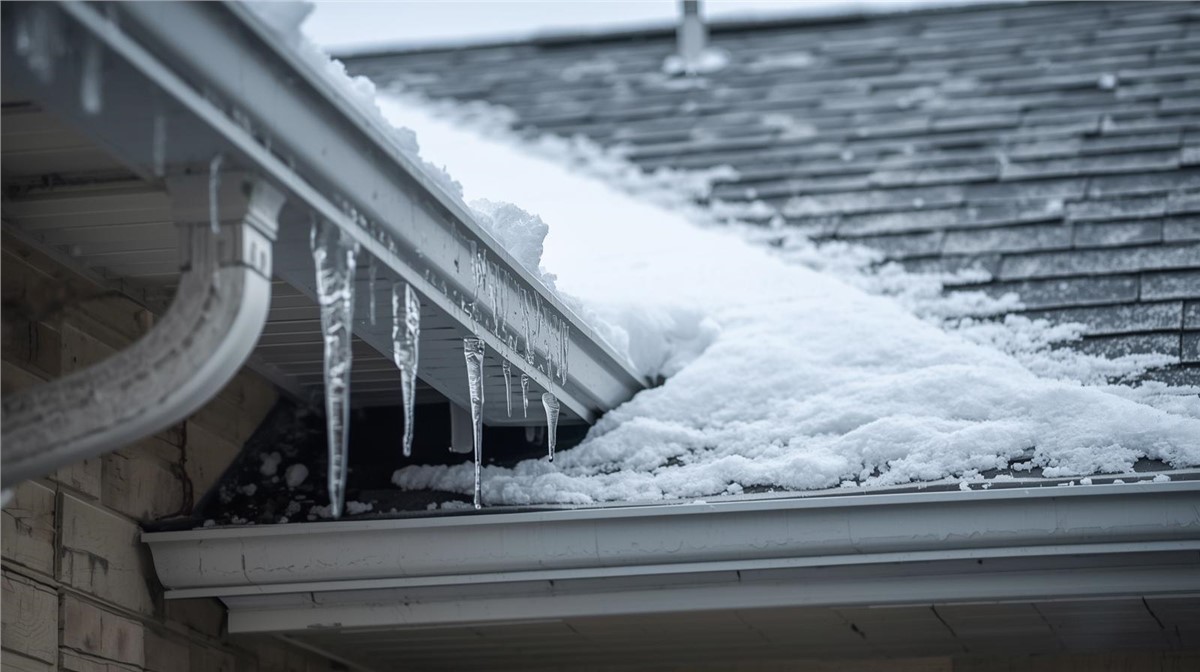
That classic Wisconsin winter scene—a house draped in a thick blanket of snow, with sparkling icicles—is beautiful, but it can also bring a quiet anxiety for homeowners. What's really happening under all that weight and ice?
While a single leak is an obvious worry, most winter roof damage stems from three threats: the sheer weight of snow, the destructive cycle of melting and refreezing, and the infamous ice dams that form at your roof’s edge. This guide will help you spot the essential damage signs and know when it’s time to call a pro.
How Much Snow is Too Much for Your Roof?
After a major storm, the critical question isn't how many feet of snow have fallen, but how heavy that snow is. A foot of light powder places far less stress on a roof than six inches of the wet, compacted snow common in late winter. This dense, water-logged snow adds immense weight, putting a constant load on your home’s structure.
Your house will often tell you when the load is becoming too much. Listen for new or unusual creaking, groaning, or popping noises coming from your attic or ceilings; these are key signs the frame is adjusting under stress and shouldn’t be ignored.
The most serious warning sign is visible sagging or bowing along your roofline. While modern homes are built to handle a Wisconsin winter, these audible and visual cues indicate a critical level of stress. For most homes, however, the immediate threat isn't collapse—it's what happens when all that snow starts to melt.
Why Ice Dams Are the Real Winter Threat to Your Roof
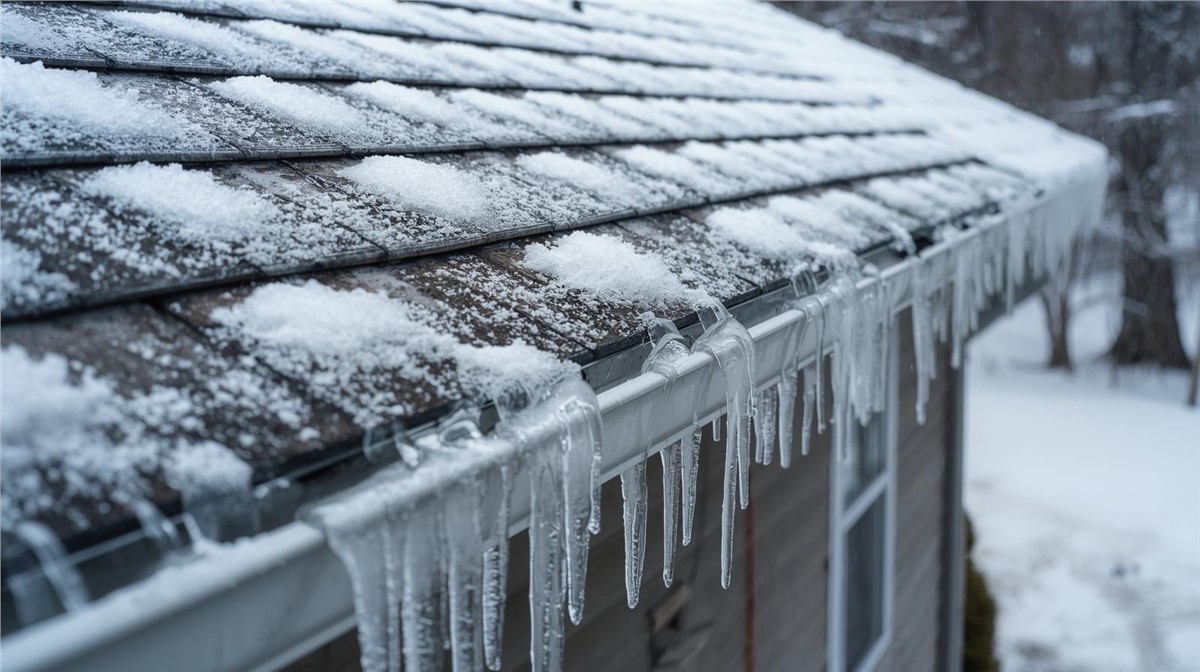
When snow melts, the runoff can create an ice dam—a thick ridge of ice that forms at the edge of your roof, blocking drainage. While the resulting icicles can be impressive, they are often a visible warning sign of this hidden and far more destructive problem.
This dangerous cycle is driven by heat escaping from your attic, which melts the snow on your roof from underneath even when the air is below freezing. This water runs down your roof until it hits the cold, unheated edge and refreezes. Day after day, this process builds the ice dam bigger, trapping a growing pool of water behind it.
The danger isn't the ice itself, but the water it traps. Your roof's shingles are designed to shed falling water, not hold back a standing pool. This trapped water has nowhere to go but up and under your shingles, leading to silent leaks that can damage your attic, insulation, and even the walls inside your home.
The #1 Cause of Ice Dams: Is Your Attic Working Against Your Roof?
The culprit behind this escaping heat almost always starts in your attic, due to a combination of inadequate attic insulation and poor roof ventilation.
Proper insulation keeps the heat you pay for in your living space. When insulation is thin, old, or improperly installed, that warmth easily escapes upward into the attic. At the same time, good ventilation allows cold, outside air to circulate in the attic, flushing out any stray heat. This keeps the underside of the roof cold, stopping the melt-freeze cycle before it begins. Together, these systems prevent ice dams and condensation in the attic during winter.
Your 5-Minute Winter Roof Checkup (From the Safety of the Ground)
A quick walk around your house after a heavy snowfall is the simplest way to perform a winter roof inspection and spot early clues of a problem. This is your chance to catch issues caused by heat loss or ice buildup before they lead to serious damage, like water seeping into your walls.
Pay close attention to the edges of your roof. Seeing any of these red flags is a clear warning that water isn't draining correctly, which can cause frozen gutter damage to roof and hidden leaks. Look for:
Unusually large, thick icicles concentrated in one area.
Ice forming behind or underneath your gutters.
Dark, discolored water stains on exterior siding or soffits.
Any new water spots or drips on ceilings inside your home.
Gutters that appear bent or are pulling away from the house.
Safe Roof Snow Removal: What You Can Do (and What You Absolutely Shouldn't)
The single most important rule of safe roof snow removal is to stay on the ground. A snowy roof is dangerously slick, and a fall can be catastrophic. The only tool a homeowner should use for roof snow removal is a long-handled roof rake, which lets you work safely from below.
Your goal isn't to clear the whole roof, which risks damaging your shingles. Instead, focus on gently pulling down the snow from the first three or four feet along the eaves. This is the critical zone where ice dams start.
Clearing this lower edge removes the fuel for an ice dam. When snow higher up the roof melts, the water now has a clear path to drain away instead of pooling and refreezing. It's a simple, preventative action that directly addresses how to remove ice dams before they can form.
Protect Your Investment: Your Simple Winter Roof Action Plan
That classic scene of a snow-covered home no longer has to be a source of worry. Now you can distinguish between harmless icicles and the real warning signs of an ice dam, turning anxiety into informed awareness.
Your strategy is simple: after a storm, check the snow depth and periodically inspect your eaves for ice buildup. Remember that a cold attic is a happy attic, making proper insulation and ventilation your most powerful tools.
Ultimately, a healthy roof is about proactive care, not reactive panic. A little attention now safeguards your home and prevents a massive headache later.
Subscribe to Huskie Exteriors's Blog





Comments