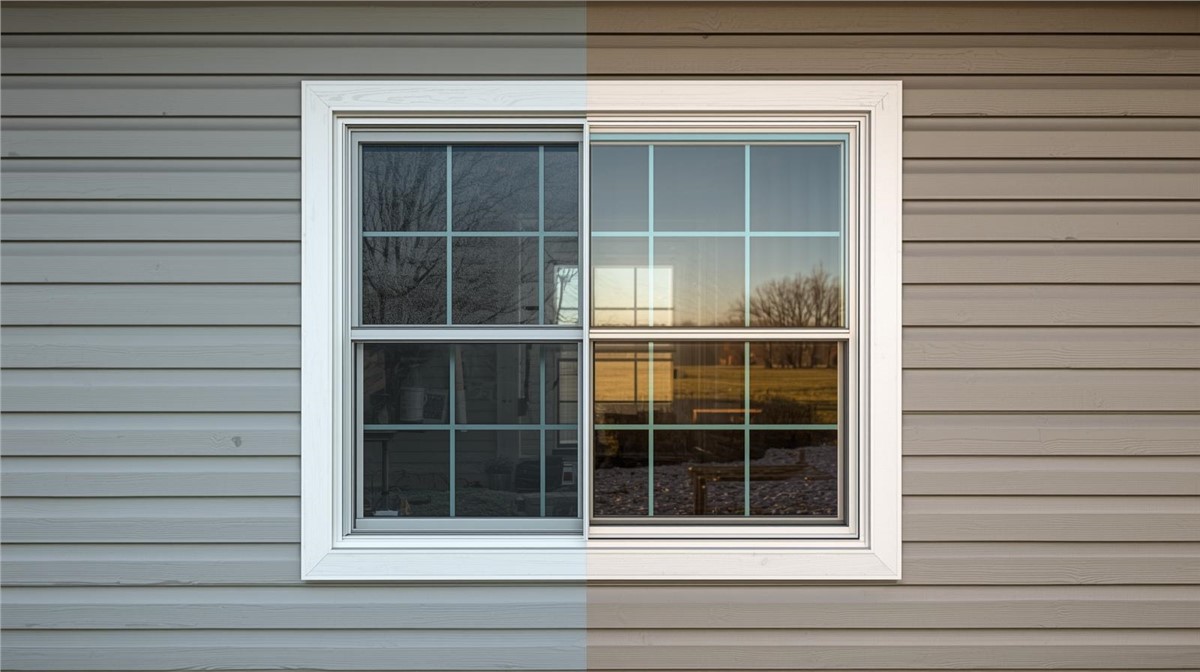
Do you avoid sitting near your windows on a cold January night? If you've ever felt that icy draft or watched your heating bill climb, your old windows are likely the culprit. When it's time for an upgrade, the big question is often double-pane vs. triple-pane.
That extra pane of glass can add 15-25% to the total cost, leaving homeowners wondering if the investment is a necessity or a luxury. However, the number of panes is only part of what makes a window energy-efficient. Understanding what that extra cost buys in comfort and savings is key to choosing the right windows for your home and budget.
More Panes, More Warmth: Why Window 'Layers' Matter in a Polar Vortex
Think about dressing for a cold Midwest winter. A single shirt offers little protection, but adding a jacket creates a pocket of trapped air that keeps you much warmer. Your windows work the same way. An old, single-pane window is like that single shirt—a poor barrier against freezing temperatures. This is why you feel a chill standing next to them and why your furnace works overtime.
Modern double pane windows solve this by creating a sealed, insulating gap between two sheets of glass. That trapped space dramatically slows down how fast your home’s expensive heat can escape. The result is a more comfortable room, fewer drafts, and a noticeable improvement in window insulation over any single-pane window.
Triple pane windows take this further, adding a third sheet of glass to create two separate insulating gaps. This extra layer significantly boosts performance, providing maximum protection against brutal winter cold. But the number of panes is only part of the story; what goes between the glass is just as crucial.
Beyond the Glass: The Secret Ingredients That Boost Window Performance
Modern windows include a game-changing feature: an invisible Low-E coating. Think of it as a smart, heat-filtering film on the glass. In summer, it reflects the sun’s intense heat away from your home to ease the load on your AC. In winter, it does the opposite, reflecting your furnace's heat back into the room instead of letting it escape. This single feature works year-round to improve comfort and lower energy bills.
The space between the panes is also upgraded. Instead of plain air, manufacturers fill this gap with argon gas. This harmless, clear gas is denser than air, creating a more effective insulating blanket. It dramatically slows the escape of heat through the window, which is crucial for keeping your home's temperature stable. A window with an argon fill offers significantly better insulation than one without.
Crucially, a high-performance double-pane window with both Low-E coatings and argon gas can outperform a basic triple-pane window that lacks them. You can't judge a window by pane count alone; these upgrades are what truly deliver comfort and energy savings.
How to Read a Window's 'Nutrition Label': Making Sense of U-Factor and SHGC
To compare products objectively, look for the sticker from the National Fenestration Rating Council (NFRC) on the glass. Think of this as the official “nutrition label” for windows—it provides unbiased ratings so you can see a product’s true performance.
The most important number for any Midwestern home is the U-factor. It’s like a golf score for insulation: the lower the number, the better the window is at keeping your home’s heat inside during our brutal winters. While a basic window might have a U-factor near 0.30, you should look for a window with a U-factor of 0.25 or lower for superior comfort and energy savings.
You’ll also see the Solar Heat Gain Coefficient (SHGC), which measures how much heat from the sun a window lets in. A lower SHGC helps keep your home cooler in the summer, reducing A/C costs. For a heating-dominated climate like ours, however, that low U-factor is your top priority. Armed with these numbers, you can confidently cut through sales pitches and compare what truly matters.
Is the Extra Cost for Triple-Pane Windows Worth It in Illinois and Michigan?
Triple-pane windows typically cost 15-25% more than their double-pane counterparts. For a whole-house project, that could mean an extra $3,000. Is that investment a smart one, or just an expensive luxury for homeowners in Illinois and Michigan? The answer often comes down to simple math.
You can figure this out with a quick calculation called the payback period. Divide the extra cost of the windows by your estimated annual energy savings. For example, if that $3,000 upgrade saves you $250 a year on heating, your payback period is 12 years ($3,000 ÷ $250). After that point, the annual savings go right back into your pocket.
Crucially, this payback period shrinks the colder your climate gets. The ROI on triple-pane windows will be faster for a home in the Upper Peninsula of Michigan than for one in southern Illinois because they save more energy each year. But the financial calculation only tells part of the story. For many, the immediate upgrade in how your home feels is equally valuable.
Beyond the Bills: How Triple-Pane Windows Boost Comfort and Quiet
Beyond long-term savings, the immediate comfort upgrade is often what convinces homeowners to choose triple-pane. With triple-pane, you can sit by the window on a frigid January night without feeling a chill. The extra insulation keeps the interior glass near room temperature, erasing the cold, drafty spots that make a room uncomfortable.
The third pane of glass also creates a quieter home. It dampens sound waves, turning the drone of traffic or a neighbor's early-morning snowblower into a distant murmur. For those living on a busy street or seeking a more peaceful environment, this sound reduction is a significant quality-of-life improvement.
Finally, better insulation helps win the battle against window condensation. Because the innermost pane of glass stays warm, moisture from your home’s air is far less likely to condense into water or frost. This not only keeps your view clear but also protects your window sills and walls from long-term moisture damage.
Your Final Verdict: A Quick Guide to Choosing the Right Windows
Your choice comes down to balancing budget with your priorities for comfort and long-term performance. The final step is clear:
Choose High-Performance DOUBLE-Pane If: Your budget is the top priority, you live in a more moderate Midwest zone (e.g., Missouri, southern Illinois), or you're replacing very old windows where any upgrade will feel significant.
Choose TRIPLE-Pane If: Maximum comfort and eliminating cold spots are non-negotiable, you live in the northern Midwest (MN, WI, ND, MI), noise reduction is a major goal, or you plan to stay in your home long-term.
By focusing on performance ratings over pane count, you're not just buying glass—you're investing in decades of comfort and efficiency tailored perfectly for your home.
Subscribe to Huskie Exteriors's Blog





Comments