Tired of dragging out that wobbly ladder every fall? For homeowners in Northern Illinois, cleaning gutters is a risky, repetitive chore. But the stream of water cascading over the edge during a storm is more than an annoyance—it's a warning sign. When home gutter systems fail, the overflow can saturate the ground, carving trenches through landscaping and pooling directly against your foundation.
This guide to Gutter Guard Installation in Northern Illinois outlines practical options to prevent overflow while keeping maintenance simple.
Over time, this constant saturation puts immense pressure on foundation walls, leading to cracks, shifting, and even basement leaks. That persistent musty smell or mysterious damp spot is often a sign of this slow-moving disaster. Preventing clogged gutters in Chicagoland isn't just about convenience—it's about protecting your home's structural integrity and value.
Choosing Your Defender: The Main Types of Gutter Guards for Illinois Homes
Choosing the right shield for your home depends entirely on the types of trees in your yard. Finding the right fit means matching the guard to your specific debris. For most Northern Illinois homes, the choice comes down to these three popular types:
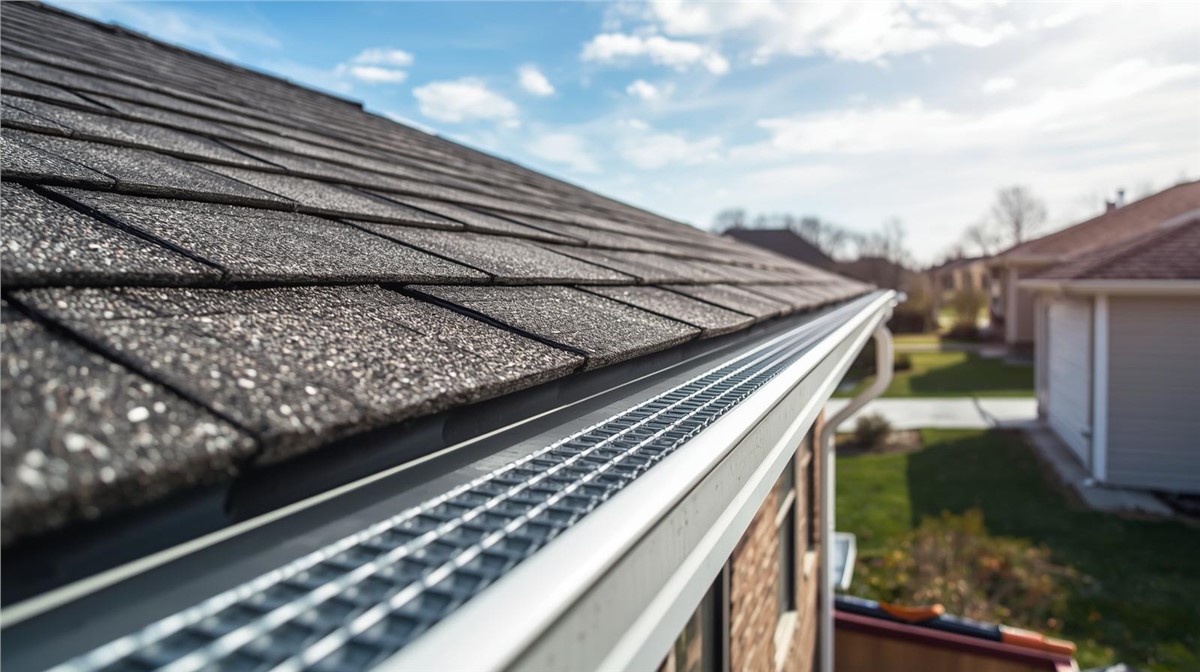
- Micro-Mesh Guards: This is the ultimate filter. A high-quality micro-mesh system uses a screen so fine that it blocks everything from large oak leaves to tiny pine needles and even shingle grit. It's the most effective solution for keeping your gutters completely clear.
- Screen Guards: An affordable and common option, these simple screens have larger holes designed to keep big leaves out. They work well for trees like maples or oaks, but smaller debris like pine needles can still get through.
- Reverse-Curve Guards: These solid-hood systems guide water around a curved edge and into the gutter, while leaves and debris are meant to slide off the top. They excel in heavy downpours but can struggle with the fine, sticky debris common in our area.
Beyond the type, the material also matters. Guards made from aluminum won't rust or become brittle, while cheaper vinyl or plastic options can warp in the summer heat and crack during our harsh winters.
The #1 Challenge: How Gutter Guards Handle Northern Illinois Snow and Ice
Those long, dramatic icicles hanging from your gutters often signal an ice dam. This occurs when snow on your roof melts, runs down, and refreezes at the colder edge, creating a block of ice that prevents water from draining. The trapped water can then back up under your shingles, causing leaks inside your home.
Unfortunately, many flat, cheap gutter guards can make this problem worse. Instead of letting snow and slush slide off, they create a frozen shelf that allows ice dams to form more easily. This is a common failure point for DIY-grade products not designed for our harsh winters.
For true ice dam prevention, the best systems are professionally installed to match your roof's slope, which helps snow and ice slide off naturally. For homes in heavily shaded areas, some systems can even be fitted with a gentle heating element—creating heated gutter guards that maintain a clear channel for meltwater all winter long.
DIY vs. Professional Gutter Guard Installation: A Cost-Benefit Breakdown
Tackling a project yourself to install gutter guards can be rewarding, but a small mistake can lead to a big headache. Many DIY products require you to lift and slide the guard under your roof shingles. Doing this improperly can break the waterproof seal your roofer installed, potentially voiding your roof's warranty and leaving you responsible for costly leak repairs.
Beyond the warranty, performance is key. A professional installer ensures your gutter guards are set at the correct pitch—the same angle as your roof. This detail is crucial, as it allows leaves, pine needles, and even snow to slide off. An incorrect angle can create a shelf where debris and ice build up, defeating the purpose of the system.
The choice between DIY and professional installation comes down to risk versus reward. While you might save money upfront, the potential for a voided warranty, an ineffective system, or a fall from a ladder often makes professional installation the more secure investment.
What Do Gutter Guards Cost in Northern Illinois?
For professional gutter guard installation in Illinois, you can typically expect a range of $15 to $35+ per linear foot, depending on the system's quality and features.
Your final quote depends on three main factors: the material you choose (like durable steel vs. plastic), the total length of your gutters, and your home's complexity, such as a second story or steep roof pitches that require more time and safety equipment.
While the number can seem high, it's best viewed as an investment. Compare this one-time cost to the recurring expense of gutter cleaning or the potential for foundation damage. A reliable system protects your home and keeps you safely off the ladder for good.
Your Action Plan: 5 Questions to Ask Before Hiring a Gutter Guard Installer
When getting quotes from a local gutter guard company, use this checklist to ensure you find a permanent, high-quality solution for your home.
- What is the material, and will it rust or warp?
- How is it installed, and will it affect my roof warranty?
- What is the warranty on materials and labor?
- How does your system handle pine needles and shingle grit?
- Can I see recent gutter guard reviews from local homeowners?
Subscribe to Huskie Exteriors's Blog






Comments