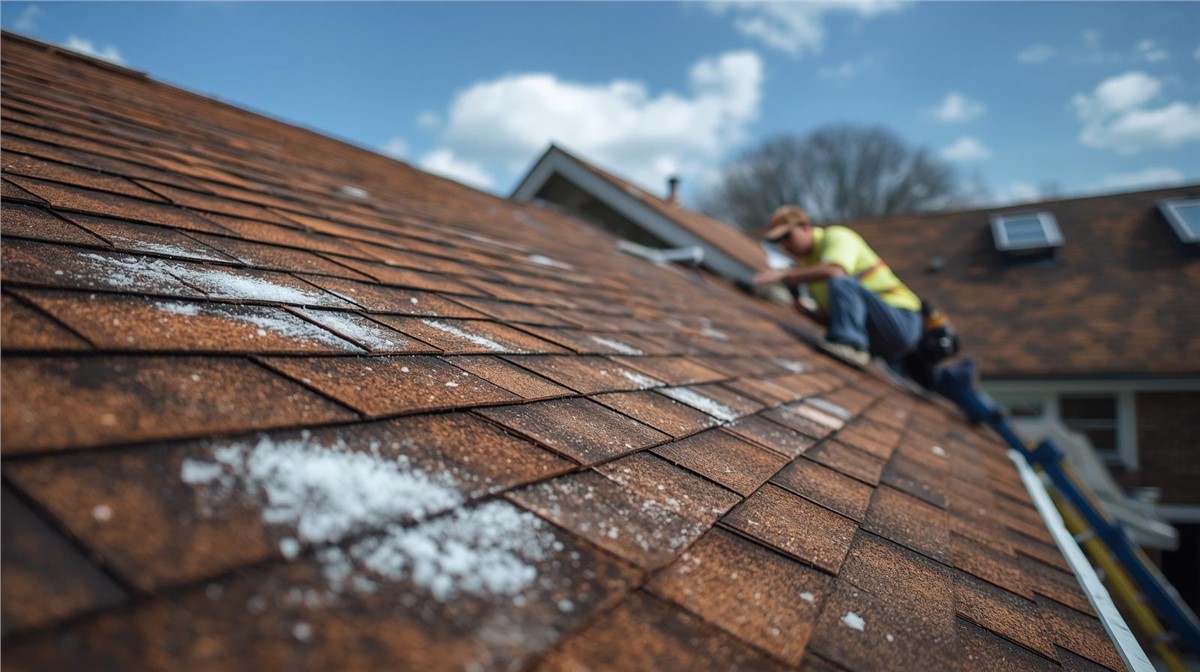
Severe storms are a regular occurrence in northern Illinois, and homeowners in Naperville, IL are no strangers to weather that brings heavy rain, strong winds, and hail. While many storms pass quickly, the hail they produce can cause damage that isn’t always visible right away. Even relatively small hailstones can weaken roofing materials, dent gutters, and damage siding.
Because hail damage often goes unnoticed immediately after a storm, many homeowners may not realize their roof has been affected until problems such as leaks, water stains, or missing shingles begin to appear. This is why scheduling a hail damage roof inspection in Naperville, IL is an important step in protecting your home after severe weather.
A professional roof inspection helps identify storm damage early and ensures that any issues are addressed before they develop into more expensive repairs.
Signs Your Roof Has Hail Damage
After a hail storm, there are several warning signs that may indicate damage to your roof. Some of these signs can be spotted from the ground, while others may require a closer inspection.
Common indicators of hail damage include:
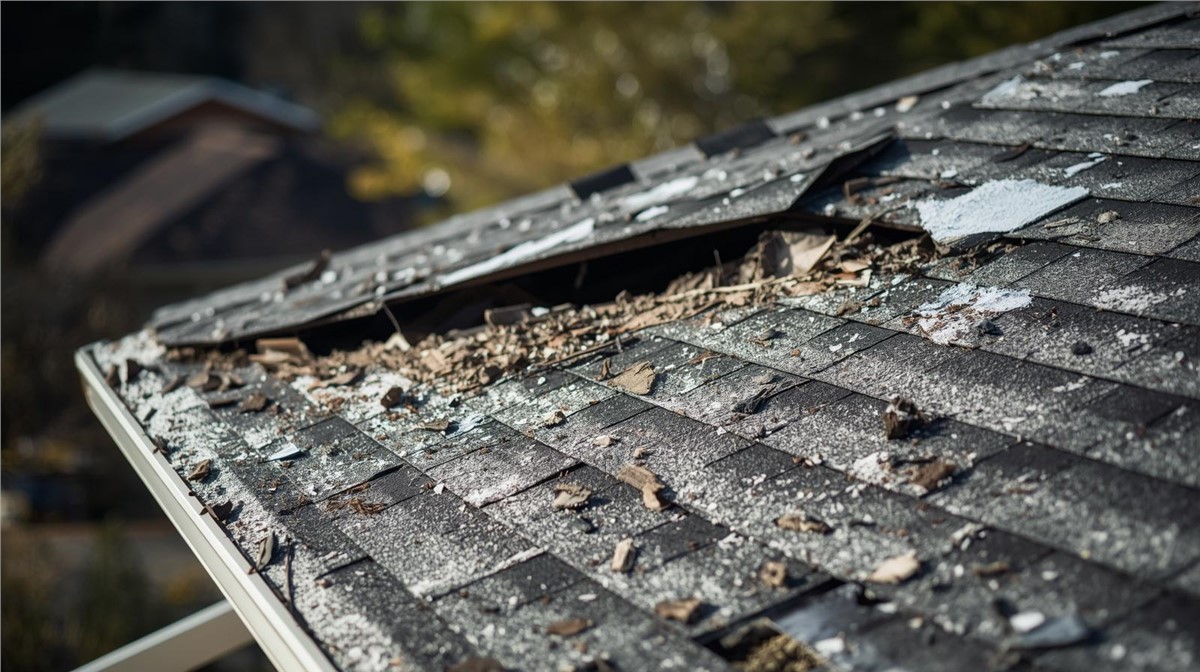
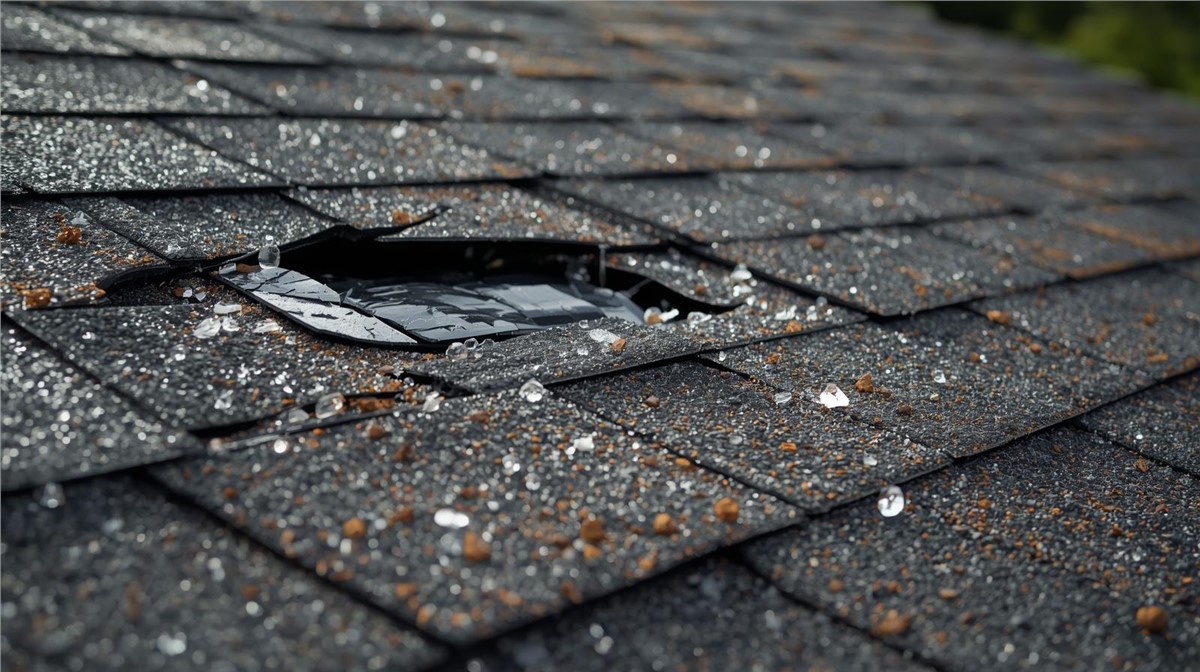
cracked or broken shingles
dark bruises or impact marks on asphalt shingles
granules from shingles accumulating in gutters
dents in roof vents or flashing
debris from roofing materials around the yard
Granule loss is one of the most common forms of hail damage. Asphalt shingles rely on protective granules to shield the roof from sunlight and moisture. When hail knocks these granules loose, the shingles become more vulnerable to deterioration.
Another indicator of hail damage is dented metal surfaces on the roof. Components such as flashing, vents, and metal trim may show visible dents after hail impacts, which often suggests that the shingles may have also been affected.
How Hail Storms Damage Roofing Systems
Hail storms can damage roofing systems in several ways depending on the size of the hailstones, the strength of the wind, and the age of the roofing materials.
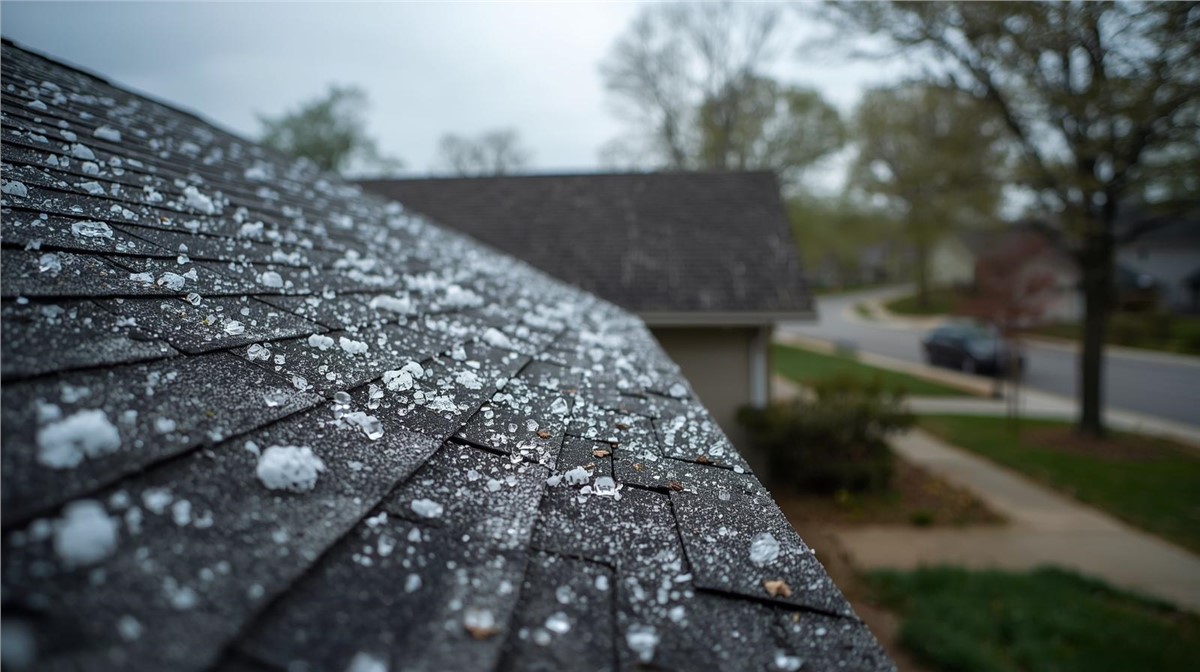
When hail strikes asphalt shingles, it can create small impact marks that weaken the internal structure of the shingle. Over time, these bruises may lead to cracks or allow moisture to penetrate beneath the roof surface.
Common forms of hail-related roof damage include:
bruised or dented shingles
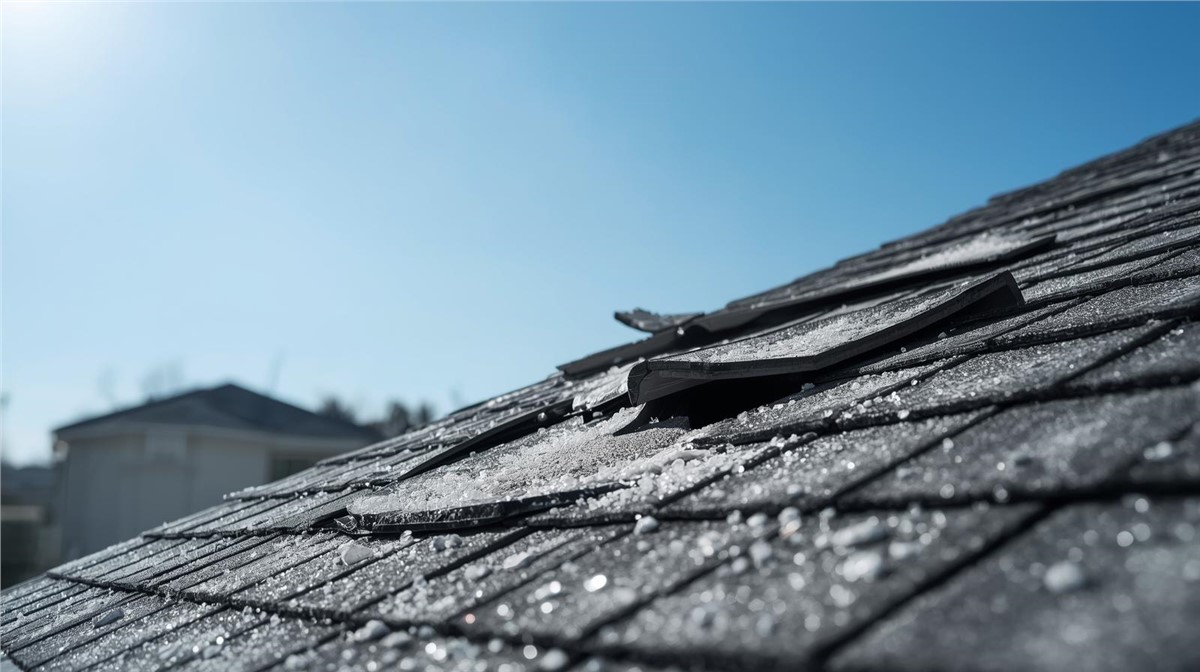
cracked or split shingles
granule loss exposing the asphalt layer
loosened shingles caused by wind
bent flashing or ventilation components
These issues may not immediately cause leaks, but they can reduce the lifespan of the roofing system and lead to more serious problems if left untreated.
Other Exterior Areas Hail May Damage
While roofs often receive the most damage during hail storms, other parts of the home’s exterior may also be affected.
After severe weather, homeowners should inspect areas such as:
Siding Panels
Vinyl and aluminum siding can crack or dent when struck by hailstones. Damaged siding may allow moisture to penetrate behind the panels and affect the structure underneath.
Gutters and Downspouts
Hail can dent gutters and disrupt the drainage system. Proper drainage is essential for directing water away from the roof and foundation.
Windows and Frames
Window frames, seals, and screens may also suffer damage during hail storms. Even small cracks can lead to drafts or moisture intrusion if not addressed.
Because hail damage often affects several exterior components, a full inspection is recommended to ensure all damage is properly identified.
Why a Professional Roof Inspection Matters
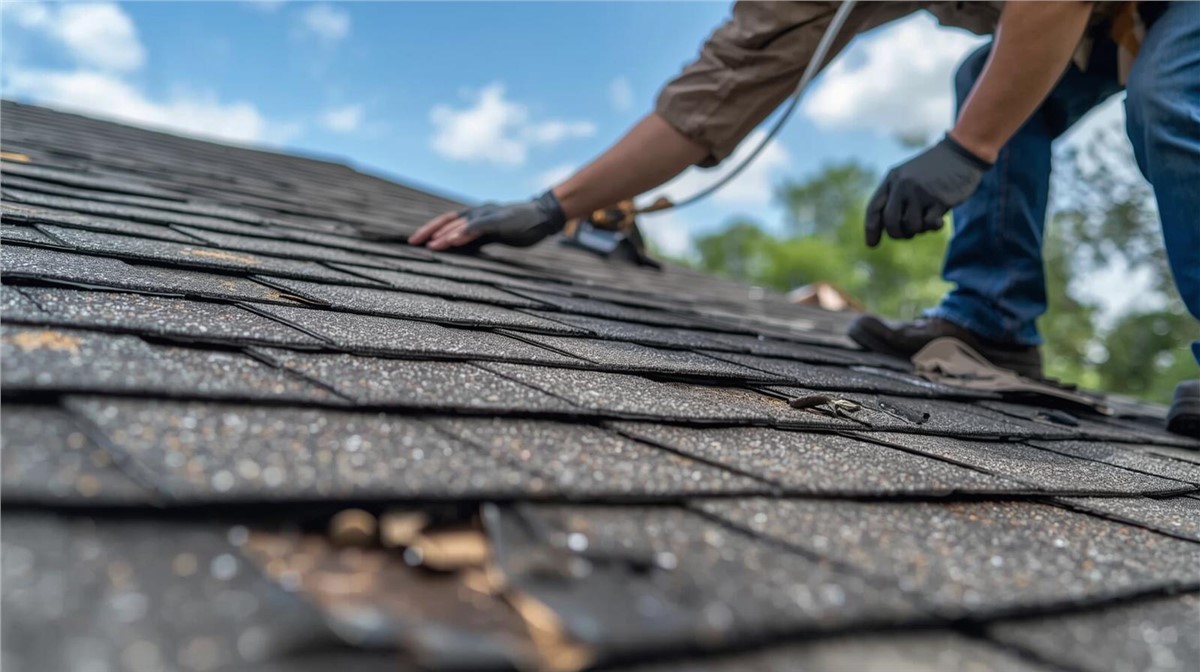
Although homeowners can look for visible signs of damage from the ground, a professional roof inspection provides a much more detailed evaluation.
Roofing professionals are trained to identify subtle signs of hail damage that homeowners may overlook. During an inspection, experts evaluate:
roofing shingles and granule loss
flashing and ventilation components
gutters and drainage systems
siding panels and exterior trim
windows and surrounding seals
A thorough inspection helps determine whether repairs or replacement may be necessary and ensures no damage is missed.
Insurance Claims and Hail Damage
Many homeowners insurance policies include coverage for storm damage caused by hail. However, insurance companies often require documentation that proves the damage occurred during a recent storm.
A professional roof inspection can provide detailed reports and photographs that help homeowners support their insurance claims.
Inspection reports typically include:
photographs of damaged areas
descriptions of impacted materials
recommendations for repairs or replacement
These documents help insurance adjusters evaluate the damage and determine whether coverage applies.
How Soon Should You Schedule a Roof Inspection?
It’s best to schedule a roof inspection as soon as possible after a hail storm. Waiting too long can allow small issues to worsen and may complicate insurance claims.
Early inspections help homeowners:
identify storm damage quickly
prevent leaks and interior damage
ensure insurance deadlines are met
avoid costly repairs later
If severe weather recently passed through Naperville, scheduling an inspection promptly can help protect your home.
Schedule a Roof Inspection in Naperville, IL
If your property experienced hail or severe storms recently, a professional roof inspection can help determine whether your home was affected.
At Huskie Exteriors, we provide detailed roof inspections for homeowners in Naperville, IL and surrounding communities. Our team carefully evaluates roofing systems, siding, gutters, and windows to identify storm damage and recommend the right repair solutions.
Addressing hail damage early can help prevent leaks, protect your home’s structure, and maintain the long-term value of your property.
Subscribe to Huskie Exteriors's Blog





Comments